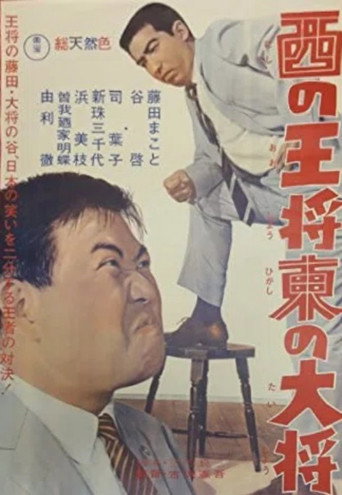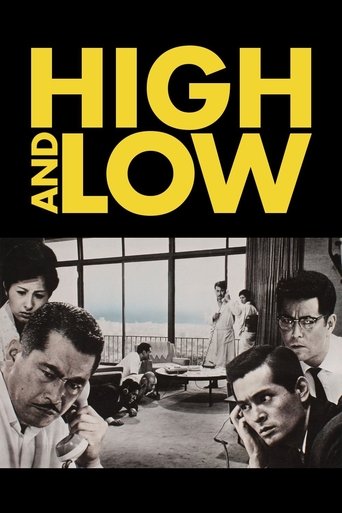
A Yokohama shoe executive faces a wrenching choice when kidnappers mistakenly seize his chauffeur’s son but demand the ransom anyway.
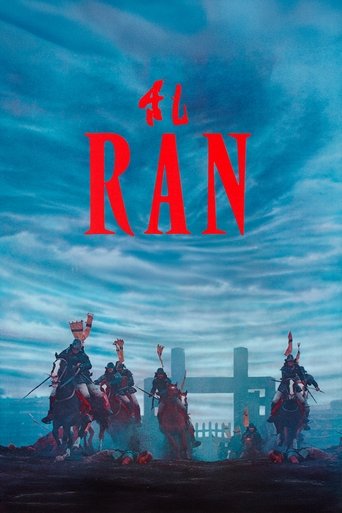
A samurai answers a village's request for protection after he falls on hard times. The town needs protection from bandits, so the samurai gathers six others to help him teach the people how to defend themselves, and the villagers provide the soldiers with food.
Shakespeare's King Lear is reimagined as a singular historical epic set in sixteenth-century Japan where an aging warlord divides his kingdom between his three sons.
A blind female assassin lives alone in a remote house; her superiors occasionally send her "clients" / targets that she shoots right after having sex with them in her completely darkened bedroom.
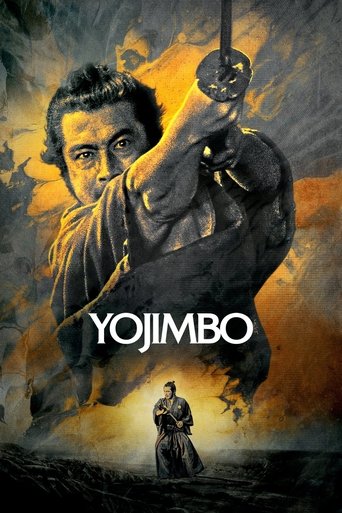
A nameless ronin, or samurai with no master, enters a small village in feudal Japan where two rival businessmen are struggling for control of the local gambling trade. Taking the name Sanjuro Kuwabatake, the ronin convinces both silk merchant Tazaemon and sake merchant Tokuemon to hire him as a personal bodyguard, then artfully sets in motion a full-scale gang war between the two ambitious and unscrupulous men.
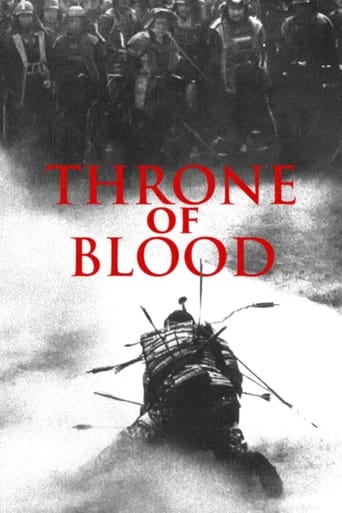
Returning to their lord's castle, samurai warriors Washizu and Miki are waylaid by a spirit who predicts their futures. When the first part of the spirit's prophecy comes true, Washizu's scheming wife, Asaji, presses him to speed up the rest of the spirit's prophecy by murdering his lord and usurping his place. Director Akira Kurosawa's resetting of William Shakespeare's "Macbeth" in feudal Japan is one of his most acclaimed films.
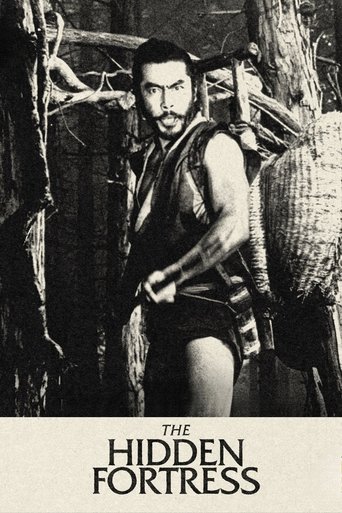
In feudal Japan, during a bloody war between clans, two cowardly and greedy peasants, soldiers of a defeated army, stumble upon a mysterious man who guides them to a fortress hidden in the mountains.
In this loose adaptation of "Hamlet," illegitimate son Kôichi Nishi climbs to a high position within a Japanese corporation and marries the crippled daughter of company vice president Iwabuchi. At the reception, the wedding cake is a replica of their corporate headquarters, but an aspect of the design reminds the party of the hushed-up death of Nishi's father. It is then that Nishi unleashes his plan to avenge his father's death.
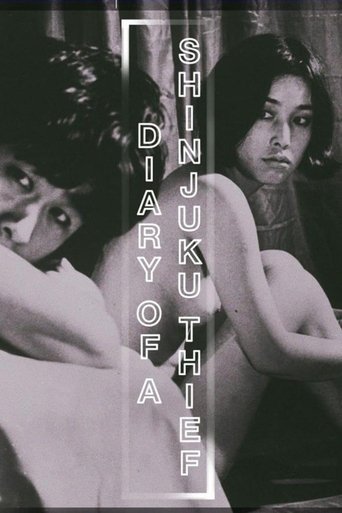
In Tokyo's Shinjuku district, the lives of a young man prone to theft, a young woman he meets at a bookstore, and a kabuki actor intersect.
Based on the "2.26 Incident", an attempted coup d'état in Japan 1936, launched by radical ultra-nationalist parts of the military. Several leading politicians were killed and the center of Tokyo was briefly held by the insurgents before the coup was suppressed.
Gengobe Satsuma, an exiled samurai cast out as an Asano clan retainer, is given a second chance to join his brothers in arms to become the 48th Ronin against the Shogunate. His faithful servant gathers the 100 ryo required for his acceptance. Gengobe is also in love with a greedy geisha named Koman. About to be sold to another man, Gengobe learns that in order to keep her, her debt is exactly 100 ryo.
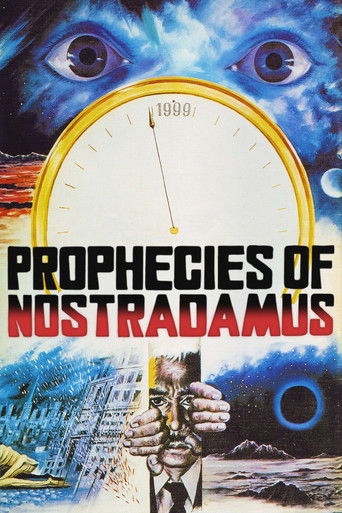
Professor Nishiyama, after studying and interpreting the prophecies of Nostradamus, realizes that the end of the world is at hand. Unfortunately, nobody listens to him until it is too late. As the effects of mankind's tampering of the earth - radioactive smog clouds, hideously mutated animals, destruction of the ozone layer - rage out of control, the world leaders hurtle blindly toward the final confrontation. The film sparked controversy in Japan and was subsequently pulled out of circulation, with no official video release of the uncut film.
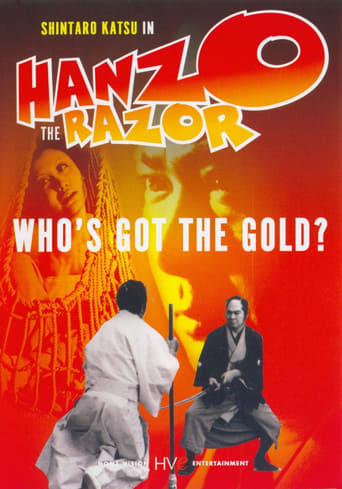
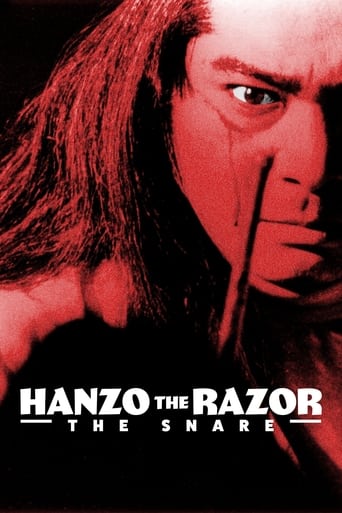
Hanzo extracts a confession from a ghost using his assaulting methods, foils thieves, connects with Heisuke Takei a friend from his youth, offers protection to a forward-thinking physician Genan Sugino who has defamed his ruler, discovers a pleasure ring of young wives and a blind music teacher, and cuckolds a corrupt official under his very nose.
1967 Nikkatsu film.
Kazu attacks a bar in Kabukicho, a Tokyo red-light district, and flees to his hometown with abducts Machiko, a pole dancer he's been stuck on. They begin living together, but their happiness is short lived as their pasts torment them both.
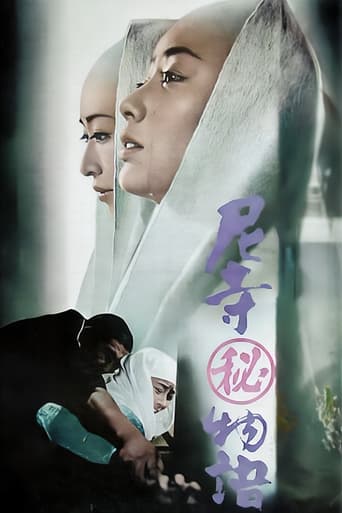
In Settsu Province, young women related to castle steward Tanaka Shūzen are being killed, each with fang-like bite marks on their chests. The priest Chinen suspects a vengeful plot. The next targets could be Shūzen’s daughter Myō or her fiancé Iori’s sister, Matsue. Despite Iori’s vigilance, Matsue is attacked by her koto teacher, Yamamura Kengyō, and his daughter Kaede—who are revealed to be vengeful vampires.
This is a story of love between a society girl and a yakuza boy. Mami lives an ordinary life in Tokyo, being with her friends and studying. Her biggest interest is ladies hats. She is rather well off, as her father is the ambassador of Japan in Spain. One day when she is out driving, she is attacked by a group of yakuza, but is saved by the honorable yakuza Jiro. This will change her life forever.
Movie based on a book by Kakou Senda about the use of women as sexual slaves by the Japanese Army during WW2.
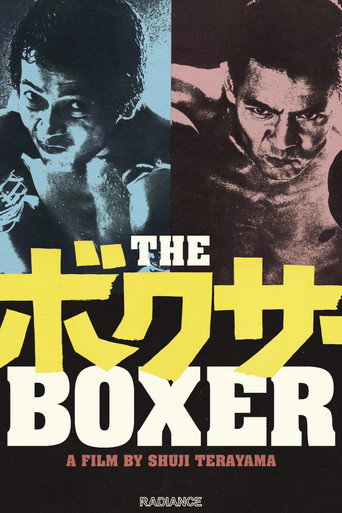
In the midst of a match, Hayato, a successful boxer, has had enough of the sport. He lets himself get knocked out, and quits boxing, leaving his wife and living alone with his mangy dog. One day a young mediocre boxer knocks at the door and wants to be Hayato's apprentice.
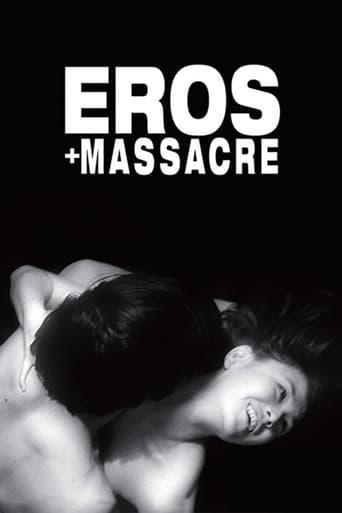
Two interwoven stories. The first is a biography of anarchist Sakae Osugi which follows his relationship with three women in the 1920s. The second centers around two 1960s students researching Osugi's theories.
Based on the mass murder spree of Richard Speck in 1966, a young man who broke into a nurses’ home in Chicago, mutilating and killing several of the inmates, Wakamatsu’s film is a precise, sad delineation of a particular aspect of masculine sexual consciousness.
In Osaka during the Edo period, ruler Sanada Yukimura was in losing position, fearing Toyotomi's blood descendents would end, he impregnates one of five Shinano female ninja with the seed of Toyotomi Hideyoshi in hopes of continuing the bloodline. Princess Sen and the five female ninja escape from Osaka castle by blending in with the handmaidens. Lord Tokugawa Ieyasu who was supposed to rule all under the heavens was informed of this secret. So Ieyasu orders five samurai of the Iga Ninja clan (brought by Hattori Hanzo) to stop the Toyotomi bloodline by killing the Kunoichi ninja. An attack of ninja magic arts unfolds in a battle of the sexes.
Two yakuza, one of whom frequently reflects on an uncomfortable past taking advantage of Korean women, meet a stowaway on Japanese soil from across the Genkai Sea.
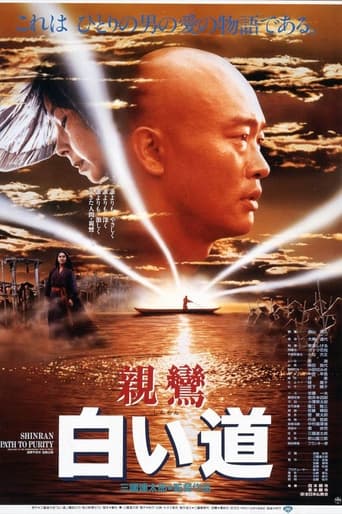
In the 12th century, Buddhism was still a relatively new religion in Japan. At that time, one school (Shingon) offered extensive training in complex and very demanding practices which might eventually bring about spiritual purification and realization. Various Zen schools offered students a lengthy path, literally composed of a blank wall and unceasing meditation. Yet another school (Tendai) emphasized complex metaphysics and the study of philosophical systems. Basically, all of them were designed to cater to the few who were able to give up everything else in their lives and focus on liberation, such as scholars and noblemen. In this historical and biographical drama, this is the situation that the young Shinran (1173-1263) discovered when he began exploring Buddhism as an alternative to the violence and ceaseless civil wars that racked Japan at the time.
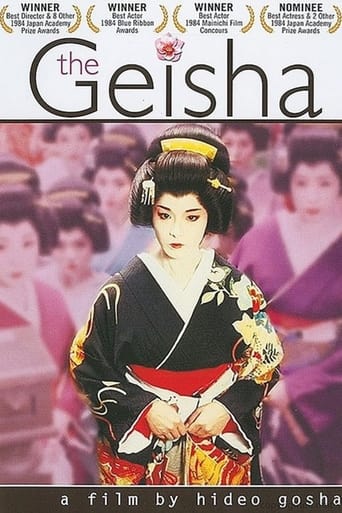
Yokiro was the most successful Geisha house in Western Japan during the first half of the 20th century and remains open to this day. At its peak, it was home to over 200 geisha, however behind the fabulous facade, there were many battles - between family members, men and women, and with the Yakuza. Momokawa was sold to Yokiro at age 12, and despite being the top geisha, her many complicated relationships provide unending challenges throughout her glamorous but turbulent life.
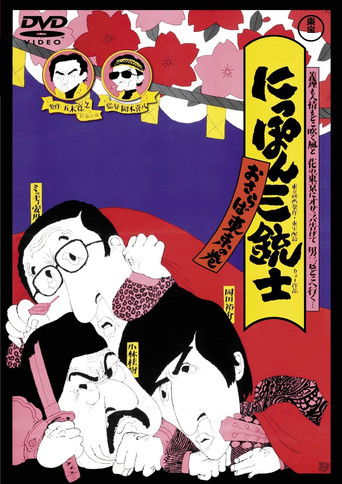
Nakadai is an English teacher at a local school. He’s put-upon like the patron figure of dozens of films and televisions shows. Viewers who are especially fans of Nakadai will appreciate how the actor comically rants about here. His home life is almost disastrous, with a ditzy (but attractive) wife, three young children, a loud school nearby that’s controlled by a corrupt businessman he loathes, and frequent visits from layabout friends. And the grey-furred, green-eyed cat!
At the end of WWII, Japanese doctor Akagi searches for the cure for hepatitis in the prisoner-of-war camp.
A playboy bartender pretends to be gay in order to approach women. He is in cahoots with another opportunist, a young woman who is trying to seduce a rich married man. Their attempts at making easy money can only end tragically.
Oichi the Blind helps a woman escape the clutches of a high government official to go off with the man she loves. The official puts a reward on her head of fifty gold pieces and soon a menagerie of bounty hunters are after her skin. Three of them band together to accomplish this, one an expert swordsman, another a huge judo master and the third is deadly with a chain. To escape, she heads for the fishing town of Itso but soon comes face to face with Sankuro, the swordsman...
Against the backdrop of the Edo treasury devaluing currency and driving many into poverty, Hanzo Itami enforces the law without regard to status. He shows inadequate respect to the treasurer, who wants him dead.
Three men with completely different backgrounds and beliefs—one in his forties who lived through the war, one in his thirties who grew up in the postwar era, and one in his twenties who has never experienced the war—hit it off and cause a great commotion.
Based on the life and career of novelist Fumiko Hayashi, she bitterly struggles for literary recognition in the first half of the 20th-century – her affairs with feckless men, the jobs she took to survive (peddler, waitress, bar maid), and her arduous, often humiliating attempts to get published in a male-dominated culture.
A story of friendship between a lone wolf judo expert and a youth.
"Youth After School" takes Tokyo and Kyoto as the stage, and tells the story of a family that develops around the daughter's marriage. The play was broadcast on NHK TV in 1963, but the program recording technology was not mature at that time, and relevant people called it "phantom TV drama (幻のドラマ)". However, this TV series that was originally thought to be lost has been rediscovered after 50 years.
A Yokohama shoe executive faces a wrenching choice when kidnappers mistakenly seize his chauffeur’s son but demand the ransom anyway.
Shares a lead actor
A nameless ronin, or samurai with no master, enters a small village in feudal Japan where two rival businessmen are struggling for control of the local gambling trade. Taking the name Sanjuro Kuwabatake, the ronin convinces both silk merchant Tazaemon and sake merchant Tokuemon to hire him as a personal bodyguard, then artfully sets in motion a full-scale gang war between the two ambitious and unscrupulous men.
Shares a lead actor
A jazz musician seeks refuge from a lynch mob on a remote island, where he meets a hostile game warden and the young object of his attentions.
Viewers also picked
An elderly couple journey to Tokyo to visit their grown children, only to find them preoccupied and self-involved.
Viewers also picked
In a small village in a valley everyone who reaches the age of 70 must leave the village and go to a certain mountain top to die. If anyone should refuse they would disgrace their family. Old Orin is 69. This winter it is her turn to go to the mountain. But first she must make sure that her eldest son Tatsuhei finds a wife.

Viewers also picked
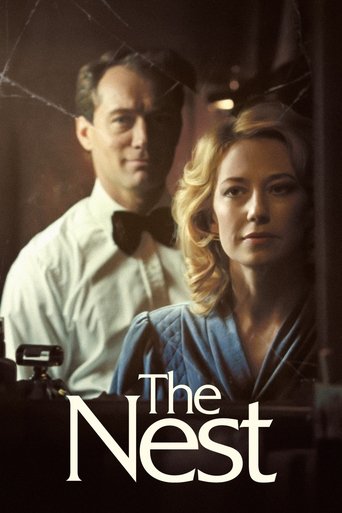
Rory is an ambitious entrepreneur who brings his American wife and kids to his native country, England, to explore new business opportunities. After abandoning the sanctuary of their safe American suburban surroundings, the family is plunged into the despair of an archaic '80s Britain and their unaffordable new life in an English manor house threatens to destroy the family.
Viewers also picked
Based on the true story of a black girl who was born to two white Afrikaner parents in South Africa during the apartheid era.
Viewers also picked
Based on the mass murder spree of Richard Speck in 1966, a young man who broke into a nurses’ home in Chicago, mutilating and killing several of the inmates, Wakamatsu’s film is a precise, sad delineation of a particular aspect of masculine sexual consciousness.
Shares 2 cast members
An aimless young man who is scalping tickets, gambling and drinking, agrees to coach a Little League team from the Cabrini Green housing project in Chicago as a condition of getting a loan from a friend.
Viewers also picked
An odyssey through time and memory, centered on a place in New Jersey where—from wilderness, and then, later, from a home—love, loss, struggle, hope and legacy play out between couples and families over generations.
Viewers also picked