
FILM
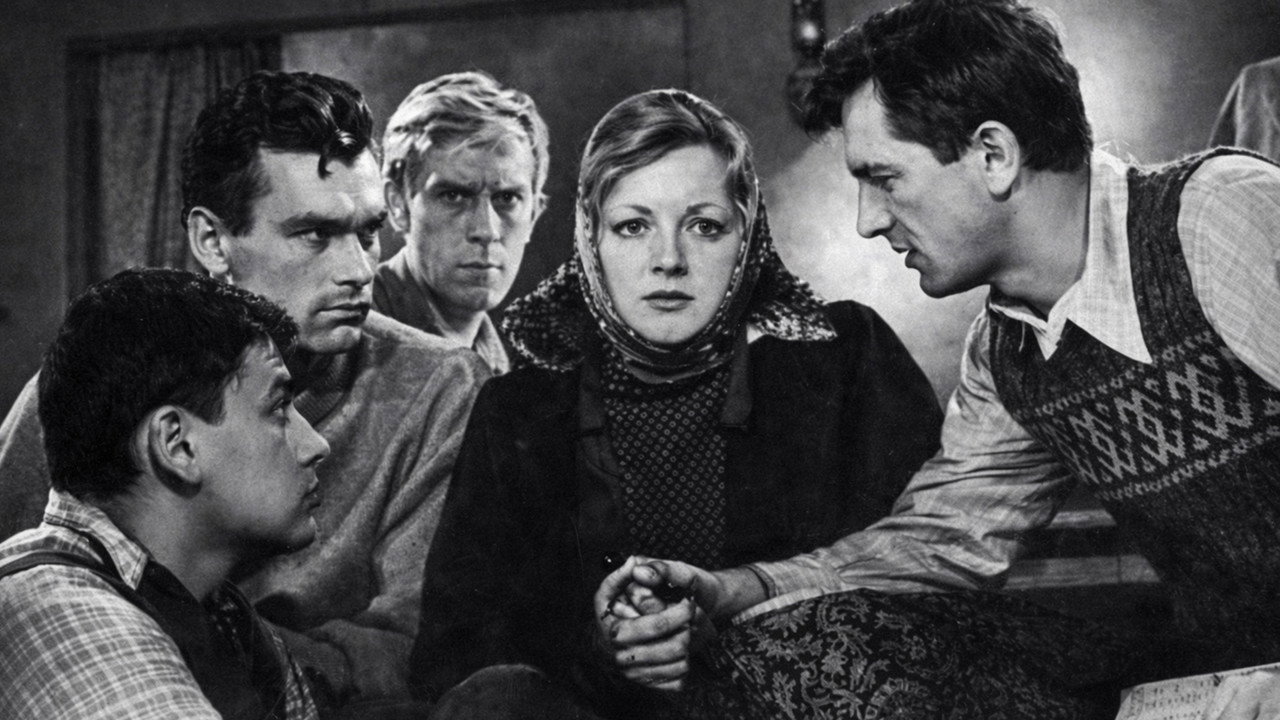
Svetlana, young pretty girl, works as a trolleybus driver in a small town and almost all her permanent passengers are at least a little bit in love with her.
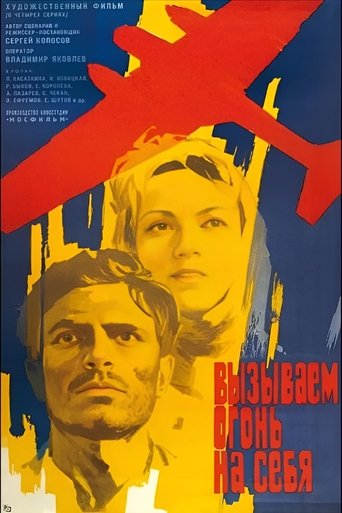
Mini-series set in times of WW II about Soviet underground fighters led by brave Anna Morozova. They are establishing connection with Polish people who work on German airfield. And even small victories cost a lot sometimes.
Svetlana, young pretty girl, works as a trolleybus driver in a small town and almost all her permanent passengers are at least a little bit in love with her.

The love story of young Countess Natasha Rostova and Count Pierre Bezukhov is interwoven with the Great Patriotic War of 1812 against Napoleon's invading army.
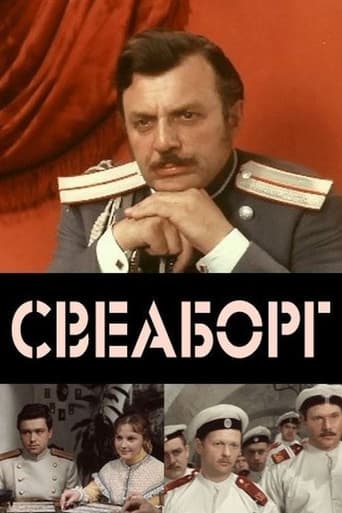
The film is based on history of the Russian Military garrison in Sveaborg (Suomenlinna, near Helsinki) in Finland, which was an autonomous part of Russian Empire. In 1906 Russia had about 12 thousand troops stationed in Sveaborg fortress. The riots were provoked by the Socialist - Revolutionaries who spread influence on the minds of Sveaborg garrison. First acts of un-subordination broke on July 17, 1906, when revolutionary sailors were supported by mine-men. Minemen were arrested and disarmed by the infantry regiment. Gunners decided to release their comrades. The following fight ignited a bloody revolt, that was headed by lieutenants A. Yemelyanov and Y. Kohansky, members of the Lenin's Bolshevik party. A general strike began in Helsinki on the next day. The revolt lasted three days and was crushed by the Baltic Fleet naval bombardment. Over 40 men were executed, hundreds were sentenced to prison.

As 1809 nears its end, Natasha attends her first ball, where Andrei falls in love with her with the intent of marriage. However, as her father demands they wait, the prince travels abroad, leaving Natasha in desperate longing. But she meets Anatol Kuragin and forgets Andrei. Part two of the four-part adaptation of Leo Tolstoy's 1869 novel.
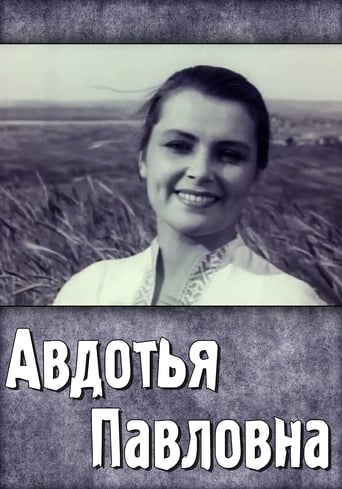
The first postwar years. The Director of a small breeding station Avdotya Pavlovna is not immediately convinced of the anti-science of the official Lysenkov direction in biology. But making sure leaving the farm as an ordinary agriculturist, where he works on breeding new wheat varieties on the basis of the persecuted Lysenkova chromosome theory of heredity.
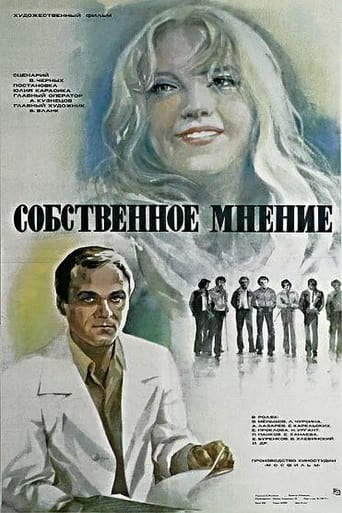
Psychologist Petrov and sociologist Burtsev are invited by Basov, the director of a factory, to study the basic problem of production.

As Moscow is set ablaze by the retreating Russians, the Rostovs flee their estate, taking wounded soldiers with them, and unbeknownst to them, also Andrei. Pierre, dressed as a peasant, tries to assassinate Napoleon but is taken prisoner. As the French are forced to retreat, he's marched for months with the Grande Armée, until being freed by a raiding party. Part four of the four-part adaptation of Leo Tolstoy's 1869 novel.

Antonio is a retired aviator in an unnamed country ruled by a military junta which violently suppresses any free thought. He falls in love with a member of the resistance against the dictatorship. He is arrested but escapes with his love. The code word among the resisters is: ‘Life is Beautiful’.

Nobody likes to be made a fool of, especially no the mafia. So, when it comes to light that a number of men from The Mob in New York have fallen for a Russian mail-order bride, who has blatantly ripped each of them off, their boss is not impressed. In fact, Tony Santini thinks the only way to prove that you shouldn't mess with the mob is to send his nephew to Russia to bring back the beautiful but manipulative Nina.
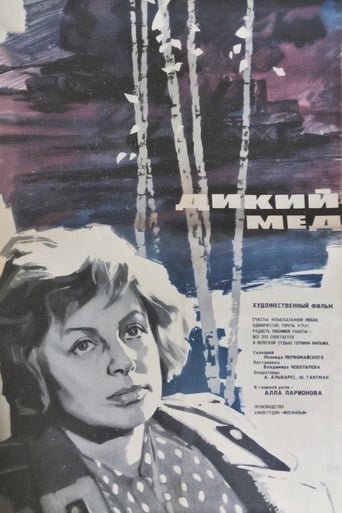
1943 year. On the instructions of the military newspaper, the photojournalist Varvara Knyazhich goes to the front line to take some pictures of the knocked-down powerful German tank "Tiger". In a combat situation, she has to face a difficult relationship between officers and subordinates. During the execution of a journalistic assignment, Varya is literally two steps from death. But it is here that she is destined to find her love...
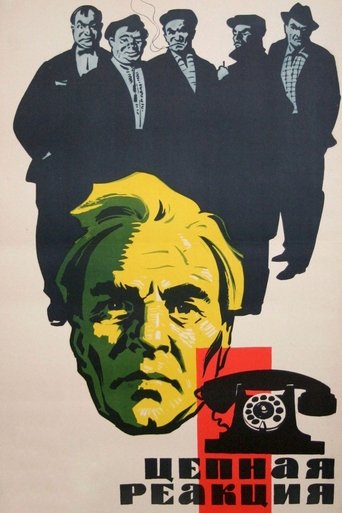
An old pickpocket named "Cardinal", during the days of the International Festival of Youth and Students, decides to gather old “personnels” to prepare small and large thefts from the festival participants. During the "conference" it turns out that a complete "personnel crisis" has come. The ensuing meeting with the former bootlegger — Senka-Moroz, who broke with his past and found happiness in his family and honest work, leads the Cardinal to confusion and mental confusion. A conversation with Professor Muromtsev, a terminally ill person who nevertheless cares about the fate of others, shock the "Cardinal" and he takes the first but decisive step towards a new life, breaking with the criminal world.
The tragic story of the Karamazov family takes place in a Russian province in the late 19th century. The relations of their father and three brothers are very complicated and contradictory. One of the brothers is accused of killing his father, whom he did not commit. The brothers are unable to help him, and only a loving girl follows him to hard labour.
Immediately after their wedding, a young family of archaeologists comes to Central Asia for excavations. The plague epidemic that broke out there separates the newlyweds for a while and forces the girl's mother to turn to her ex-husband for help.
The November Revolution of 1918 in Germany, famine and social upheaval evoke a response from the young Soviet government in Russia. To provide food assistance, trains with bread are being formed. One of them, on the personal instructions of V.I. Lenin is accompanied by the young revolutionary Tatyana . On the way, she meets a former German prisoner of war, Kurt . A romantic relationship arises between them. The train with bread, despite all the difficulties, was delivered. In a clash with a detachment of counter-revolutionary German troops, Tatyana was wounded. She returns to Moscow, and Kurt goes to Berlin to continue the revolutionary struggle.
An unexpected romance occurs for a female Red Army sniper and a White Army officer.
Pregnant German woman is trapped behind Russian lines. When she goes into labor, three Soviet soldiers deliver her to a field hospital: a newly graduated officer, an affable truck driver, and a soldier shell-shocked into muteness. The dangerous trip to the hospital ends up a rite of passage for all concerned.

The newly elected secretary of the city Komsomol committee, Andrei Kolobov, introduces the slogan of spiritual mentorship and strives to implement it in practice. He helps a talented young man, Petya Gorokhov, find the right path in life, directly participating in atheist propaganda. In the work of the Komsomol committee, Kolobov promotes a creative approach to working with the youth. He wins the love and trust of the city's Komsomol members, and at the report conference, the youth elect him as the first secretary once again.
In one of the steppe regions of Kazakhstan arrives on Komsomol youth squad. Severe frosts, spring mud flows, exhausting work than their specialty - the development of virgin land does not come easy. But the young are young - they work, enjoy life, fall in love. In the center of the story - the touching romance secretary of the Komsomol organization and tractor driver Anne.
The construction of the Vakhsh Canal, one of the largest new buildings of the first five-year plan, is underway. Two Americans are coming here under contract. A seasoned spy, Colonel Bailey, who introduced himself as the harmless traveler Mr. Murry, would later be caught red-handed and exposed. And Mr. Clark, who came to the "make money" channel, will gradually become convinced that work and politics are not such different concepts. Not accepting socialism, he quite sincerely sympathizes with the enthusiasm of the Soviet people. Love for the translator - Komsomol member Maria Polozova - helps Clark to comprehend what is happening.

The story of a man who routinely dodges all responsibility, bemoans fate, spends his days boozing, and refuses to work. The act of playing long-lost father to a pretty teenager spurs him to turn over a new leaf.
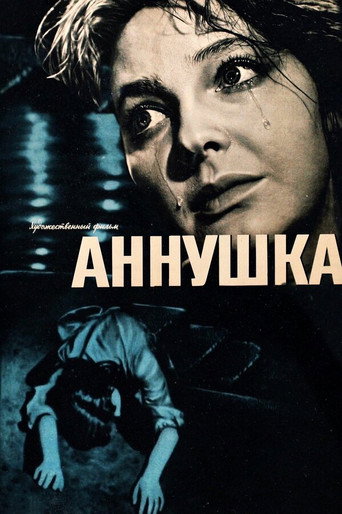
The main character, Anna Denisova, is a simple Russian woman, on whose shoulders all the hardships of wartime fell. Like all her compatriots, Annushka did everything in her power to bring Victory Day closer. In this war, she lost her husband, Pyotr, but managed to save the lives of her three children — Sasha, Nina and Granata. The trials of Annushka didn't end with the end of the war. In the first years of peace, all survivors had to survive the famine and spend their last strength on rebuilding the country.
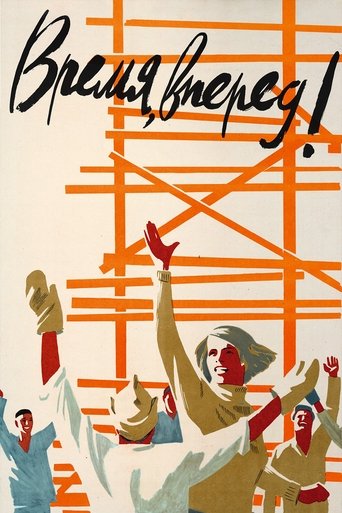
The film is set in the 1930s in the USSR. The film tells about one day of the construction of the Magnitogorsk Iron and Steel Works. The heroes of the film are simple construction workers who are burning at work. Upon learning that their colleagues in Kharkov have set a record, they mobilize to break it. The entire construction site was engulfed in immense socialist competition. The teams are ready to complete the work on time at any cost. A Moscow journalist who has come to cover the scale of the great construction project is looking for the hero of his report...

In Dzhezkazgan, to work in the mines, come Sapar and Sharip, just that graduated from school, but did not enter the institute. Sapar - a hot, enthusiastic and responsive young man, and Sharip - a style and cynic. About how their further fate, about how both of them found their place in life and became good miners, and tells the film.
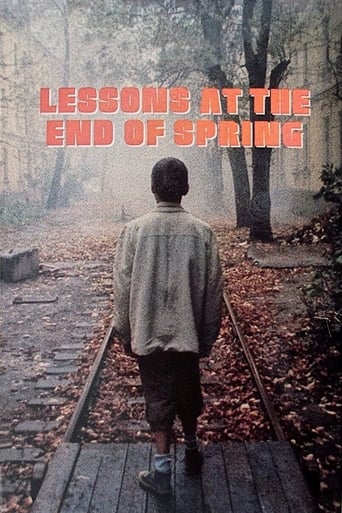
A young boy loses his innocence in a pre-perestroika Russian prison during the chaotic last months of the Khrushchev regime
The film is based on history of the Russian Military garrison in Sveaborg (Suomenlinna, near Helsinki) in Finland, which was an autonomous part of Russian Empire. In 1906 Russia had about 12 thousand troops stationed in Sveaborg fortress. The riots were provoked by the Socialist - Revolutionaries who spread influence on the minds of Sveaborg garrison. First acts of un-subordination broke on July 17, 1906, when revolutionary sailors were supported by mine-men. Minemen were arrested and disarmed by the infantry regiment. Gunners decided to release their comrades. The following fight ignited a bloody revolt, that was headed by lieutenants A. Yemelyanov and Y. Kohansky, members of the Lenin's Bolshevik party. A general strike began in Helsinki on the next day. The revolt lasted three days and was crushed by the Baltic Fleet naval bombardment. Over 40 men were executed, hundreds were sentenced to prison.
Shares a lead actor · Same director

A conflict develops between a troubled Vietnam veteran and the sister he lives with when she becomes involved romantically with the army buddy who reminds him of the tragic battle they both survived.
Viewers also picked
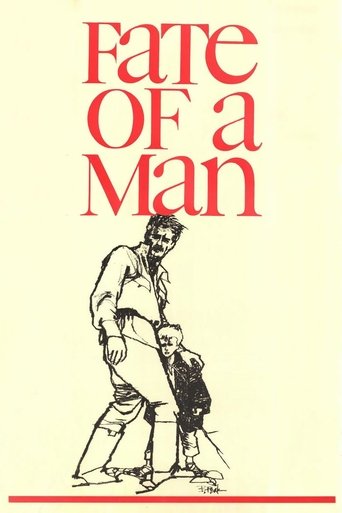
The story of a man whose life was ruthlessly crippled by World War II. His wife and daughters were killed during the bombing of his village, he spent some time as a prisoner, and his only son was killed in action only a few days before the victory...
Viewers also picked

In the center of the story are three main characters - Lieutenant Colonel Soshnikov, Captain Muravyov and Major Zakharov. Three ages, three different characters, three different destinies, which are destined to meet at the Khmeimim military base.
Viewers also picked
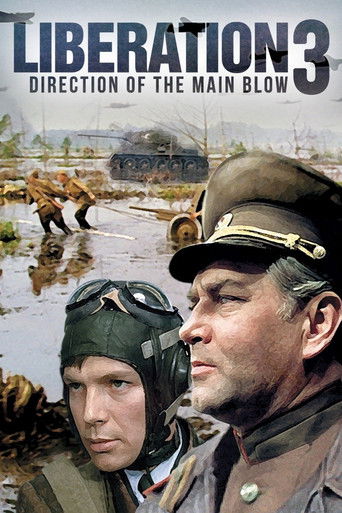
This five part epic war drama gives a dramatized detailed account of Soviet Union's war against Nazi Germany during world war two. Each of the five parts represents a separate major eastern front campaign.
Viewers also picked

During the harrows of WWII, Jo, a young shepherd along with the help of the widow Horcada, helps to smuggle Jewish children across the border from southern France into Spain.
Viewers also picked
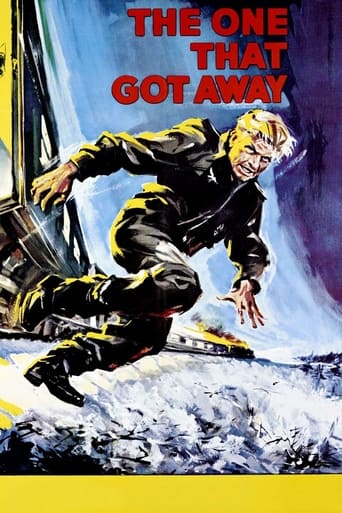
Based on the true story of Oberleutnant Franz von Werra, the only German prisoner of war captured in Britain to escape back to Germany during the Second World War.
Viewers also picked
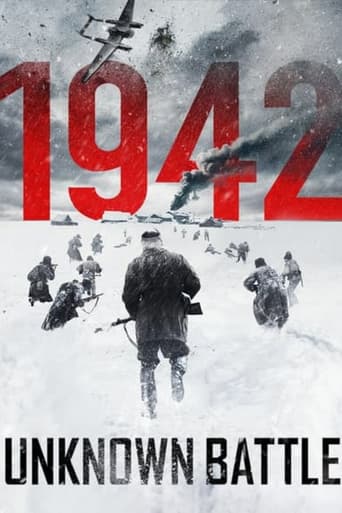
WWII 1942: Rzhev, USSR. Stuck in a crucial strategical position, a small company from the Red Army does whatever it takes to fend off the Nazis.
Viewers also picked

In Korea, on 6 September 1950, Lieutenant Benson's platoon finds itself isolated in enemy-held territory after a retreat. Soon they are joined by Sergeant Montana, whose overriding concern is caring for his catatonic colonel. Benson and Montana can't stand each other, but together they must get the survivors to Hill 465, where they hope the division is waiting. It's a long, harrowing march, fraught with all the dangers the elusive enemy can summon.
Viewers also picked
Beginning of WWII. Zinaida, a Russian woman, is taken prisoner by the Germans and sent to Auschwitz concentration camp together with several other women. She is imprisoned with her baby son, Gena, who is learning to walk and takes his first steps in the snow, in the concentration camp. They spend a few years together in the camp until they are separated, first within Auschwitz itself, then, for good, when the Germans are losing the war and decide to evacuate.
Shares a lead actor · Same director

A poor girl was given an impossible task by her stepmother: to gather snowdrops in a winter forest. Suddenly she stumbled across twelve brothers who happened to be the twelve months.
The classic story about a musicians from Bremen is told in not so classical way.
A diamond smuggling operation goes wrong when an ordinary Soviet citizen becomes unwittingly involved, and the criminals are forced to court him to retrieve their diamonds.

The childhood of a sixteen-year-old dreamer was spent in a shack with an always-drunk father. The only joy for the boy was walking to the pier, where he imagined himself as the captain of a brigantine sailing across the distant and mysterious sea. One night, he secretly left home and sailed away on a steamship, embarking on a journey filled with romantic and beautiful adventures. This marked the beginning of the unfulfilled journey of the writer Alexander Grin.
Caring Svetlana wants to give her close friend Natalia and secretly sends her data to the dating bureau. After some time, on the threshold of the apartment of unsuspecting Svetlana, two men appear in full bloom ...
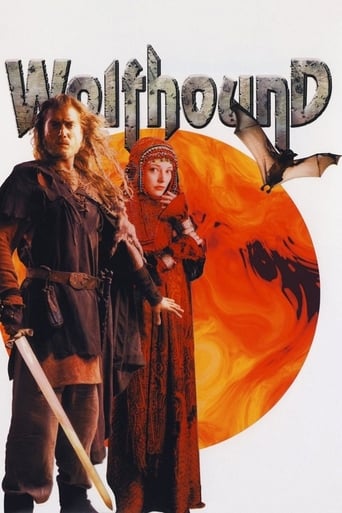
He was doomed to die, but managed to survive, and now his mission is to revenge for the annihilation of his tribe. He is the great warrior who calls himself Volkodav, and is the last man from the tribe of Serie Psi (Grey Hounds). After escaping certain death, Volkodaw — accompanied by Neletuchaya Mysh — is on a mission to kill Ludoed who is responsible to what happened to Serie Psi.

A young actress before playing in the movie legendary partisan, looking for everyone who knew her character. And suddenly learns that the fearless guerrilla is alive and works as the Director of resort hotel where the film crew stopped. Then follow the exciting meeting of the rising movie star with the heroine of the glorious past and the truth of life…
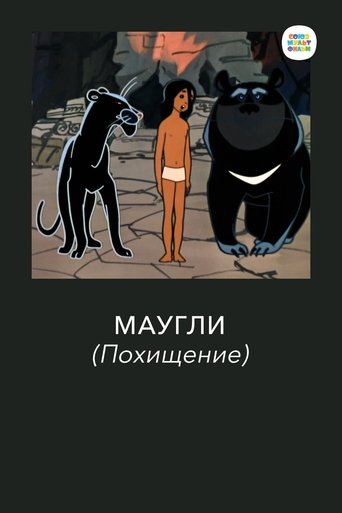
Episode 2. Mowgli — the adopted son of a wolf family. He grows quickly and learns from his mentors. The rumor that the wolf pack living human child, comes to banderlogs. The monkey tribe, decided to make Mowgli their leader. They steal Mowgli and transfer it into a towns ruins in the jungle.
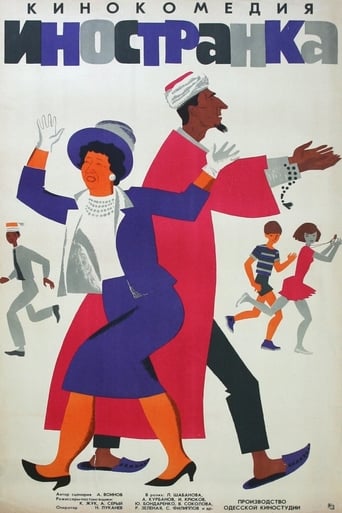
Hoping to receive compensation for the house belonging to her before the revolution, Madame Joubert comes to Odessa with her granddaughter Madeleine. While Madame is at war with enterprising Odessa citizens, her granddaughter meets Soviet peers and realizes the advantages of socialism.
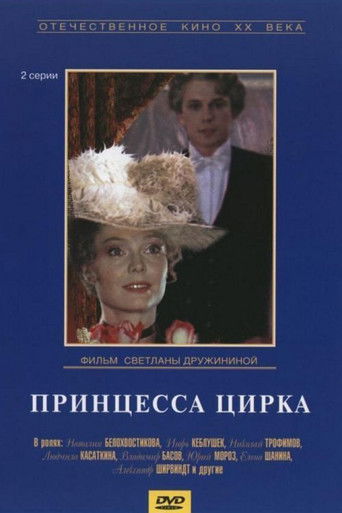
The whole city is rushing to the circus to see the deadly act of the famous masked artist, the mysterious Mr. X. Among the guests is a rich widow, Countess Palinskaya, for whom any man is ready to perform a feat. But only the mysterious X is able to ignite the flame of love in the heart of the inflexible Countess...
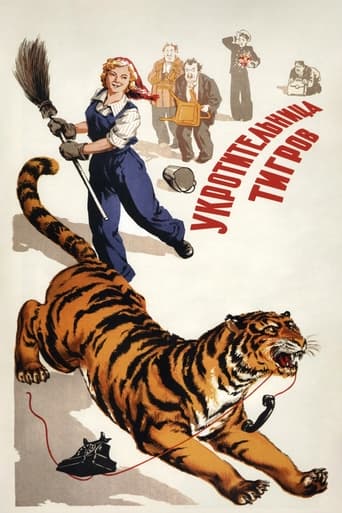
The story is about heiress of the circus family who organizes show "Let's get married" right in the cage for the tigers. Famous motorcyclist Fedya Yermolaev is invited to the circus for a ‘death-defying number’ – to perform a jump on a motorcycle under the big dome! Lena, a custodian at the circus, dreams of becoming a tiger tamer. Stray tigers growl and frighten. Lena enters the cage and...
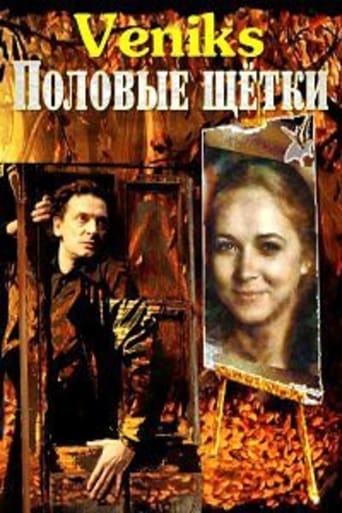
A poor Parisian artist unexpectedly becomes a millionaire as a result of a scam involving floor brushes and nudity and marries a charming immigrant from Russia.
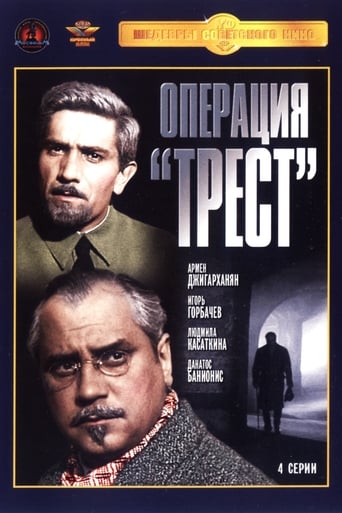
A story about CHeKa operation against a foreign spies during the early years of Soviet Russia.

One evening, in the company of his friends, the bachelor Stas for the sake of entertainment called the number, the numbers of which were called by his friends, putting a comic condition: “If a woman answers, you marry her.” A really pleasant female voice responded. Stas didn't dare to admit his company in this, again wanted to hear it, but couldn't remember the phone number. Then he asked everyone to remember their number. Having got acquainted with Lyudmila, Stas realizes that she is the woman of his dreams.
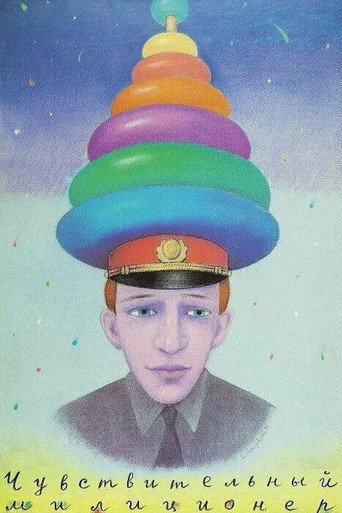
In this affectionate, leisurely paced comedy, an Odesa policeman is out walking his beat when he discovers an adorable infant abandoned in a cabbage patch. He does his duty and takes the baby to an orphanage, but later he and his wife, who have an unusually affectionate and cozy relationship, decide to try and adopt the little one. What they must go through to accomplish that goal is anything but straightforward.
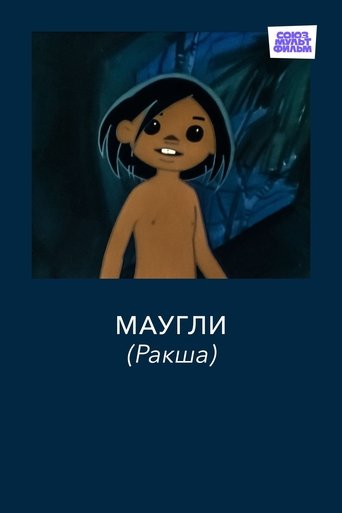
Episode 1. A small child falls into the jungle in the wolf family. He liked the mother wolf Raksha, which gave him the tiger Sher Khan. The wolves raised a human baby named Mowgli. But life in a wolf pack is subject to the law of the jungle. The Council of the pack should decide whether Mowgli live among the beasts or eaten by Shere Khan.

Satirical comedy based on the notebooks and short stories by Anton Pavlovich Chekhov: "Romance with Double-Bass","On the Harmful Effects of Tobacco", "Misery", "Grateful", "Polinka", "The Cynic", "The Ninny".