Iconic songstress Barbra Streisand culminates her 13-city tour in Miami with dazzling ballads, Broadway standards and stories from behind the scenes.
Barbra: The Music ... The Mem'ries ... The Magic!
Also tagged opera live performance
I Lombardi alla prima crociata (The Lombards on the First Crusade) was Verdi’s fourth opera and received its first performance at La Scala, Milan, in February 1843. The grandiloquent subject matter is fleshed-out with broad-brushed musical and dramatic effects and lavish choral scenes created a correspondingly impressive impact. A great success in Milan, it spread to the rest of Europe within a matter of only a few years.
Iconic songstress Barbra Streisand culminates her 13-city tour in Miami with dazzling ballads, Broadway standards and stories from behind the scenes.
Also tagged opera live performance
A musical adaptation of Victor Hugo's novel "Notre Dame de Paris" which follows the gypsy dancer Esmeralda and the three men who vie for her love: the kind hunchback Quadimodo, the twisted priest Frollo, and the unfaithful soldier Phoebus.
Also tagged opera live performance
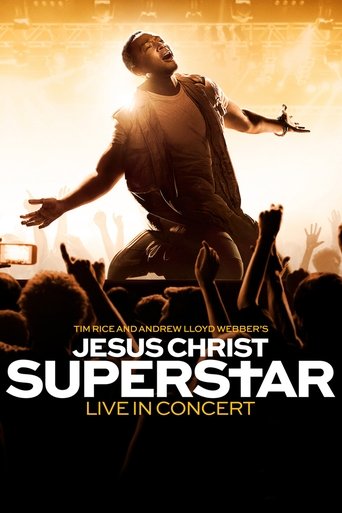
The award-winning show is re-imagined as a live concert event, featuring an all-star cast of recording artists, set during the last week of Jesus' life as he deals with betrayal, love and jealousy, and told from the perspective of Judas.
Also tagged opera live performance
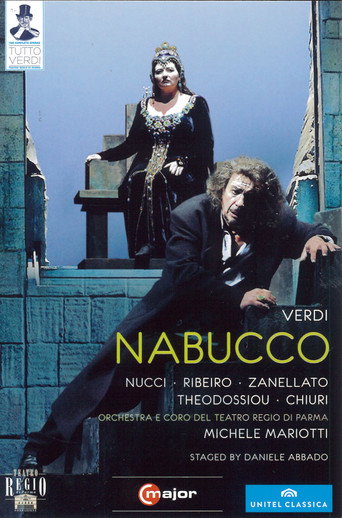
‘Nabucco’, or ‘Nebuchadnezzar’ (Italian: Nabucco), is an opera by Giuseppe Verdi with a libretto by T. Solera, based on events described in the Bible. (Nabucco is a shortened Italian rendering of the name of King Nebuchadnezzar II). It was this opera, the third in Verdi’s oeuvre, that brought him true fame. It tells of the tribulations of the Jews, their captivity by the Babylonians, and their subsequent release to their homeland by Nebuchadnezzar, King of Babylon. Giuseppe Verdi’s opera ‘Nabucco’, is a monumental work that tells the story of the enslavement of the Hebrew people by the Babylonian king Nebuchadnezzar (Nabucco) and their journey towards redemption. The premiere took place on 9 March 1842 at La Scala in Milan. The first performance of the final version was held at the Teatro San Giacomo in Corfu in September 1844. From the box set of 27 Verdi operas, ‘Tutto Verdi’. Recorded live at the Teatro Regio in Parma, 12–14 October 2009.
"Giovanna d'Arco; ossia, la pulzella d'Orléans" is an operatic dramma lirico with a prologue and three acts by Giuseppe Verdi to an Italian libretto by Temistocle Solera. The opera partly reflects the story of Joan of Arc and is based on a play by Friedrich von Schiller, although claimed by the librettist to be "an entirely original Italian drama." If the thought of Anna Netrebko strutting her stuff in a suit of armour and tin hat sets your factor tingling then this is a must. It's an inconsistent opera but has some quite wonderful music along the way. The rest of the cast is good and the production won't offend either. Get it for Ms Netrebko's incredible performance alone.
As per tradition, the 2021/22 season opened in December at La Scala in Milan, this time with a new production of Giuseppe Verdi's 'Macbeth' directed by Davide Livermore and conducted by Riccardo Chailly. Verdi's Shakespeare drama features a star-studded cast: Anna Netrebko and Luca Salsi embody the regicide Macbeth and his lady.
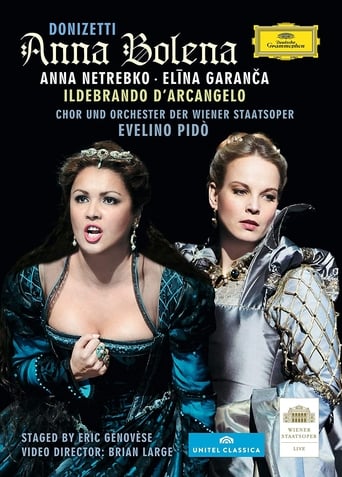
Gaetano Donizetti and his librettist Felice Romani kept the focus of their opera ANNA BOLENA on the personal rather than the political in this fictionalized Tudor tale: Henry VIII of England wants to get rid of his second wife, Anne Boleyn, so that he can marry her lady-in-waiting, Jane Seymour. He brings Lord Richard Percy, Anne's first love, back from exile so that he can find an excuse to accuse her of adultery. With the unwitting aid of Smeaton, a court musician, and Lord Rochefort, Anne's brother, the trap is easily sprung. This 2011 live recording from the Wiener Staatsoper showcases Anna Netrebko as she "scored a personal triumph" in her debut as the hapless Tudor Queen, while her stage partners - notably Elīna Garanča as Jane Seymour and Ildebrando D'Arcangelo as Henry VIII - were likewise showered with critical acclaim.
Part of Tutto Verdi series - La battaglia di Legnano (2012) Trieste. 'La battaglia di Legnano' ('The Battle of Legnano') is an opera in four acts, with music by Giuseppe Verdi to an Italian-language libretto by Salvadore Cammarano. Most of the early Verdi operas are sort of rare for a reason. They do not rise to the heights of genius that his middle period and late period operas did. However, there are always some beautiful arias or choruses and most of them are great fun......sort of like bel canto on steroids! What I mean is that you can hear that he was coming from the bel canto tradition, but he liked to inject a lot more power into the characters and their music.
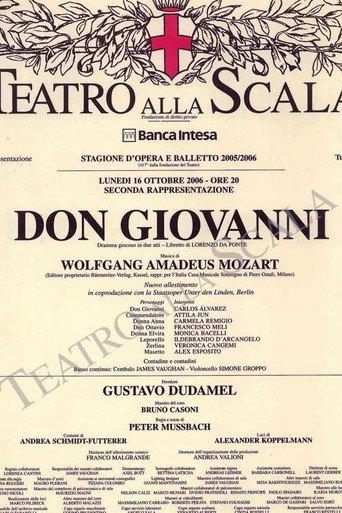
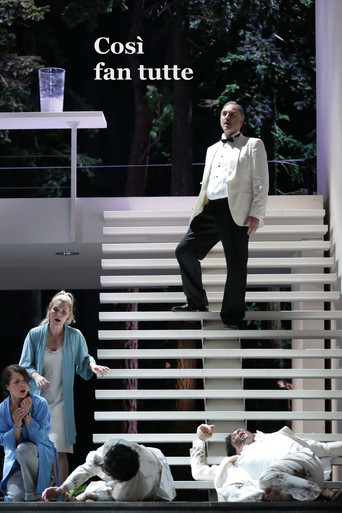
Mozart’s Don Giovanni returned to Teatro alla Scala in October 2006 in a new production directed by Peter Mussbach, who also designed the sets, with Gustavo Dudamel conducting the orchestra and chorus. Blending psychological intensity with stark, contemporary theatrical imagery, the staging explores the darker dimensions of Mozart’s drama of seduction, power and moral reckoning. Carlos Álvarez stars as the defiant libertine, with Ildebrando D’Arcangelo as his resourceful servant Leporello, alongside Anna Samuil as Donna Anna, Francesco Meli as Don Ottavio and Monica Bacelli as Donna Elvira. A co-production with the Staatsoper Unter den Linden in Berlin, this interpretation brings fresh dramatic tension to the timeless story of a man who refuses to face the consequences of his actions.
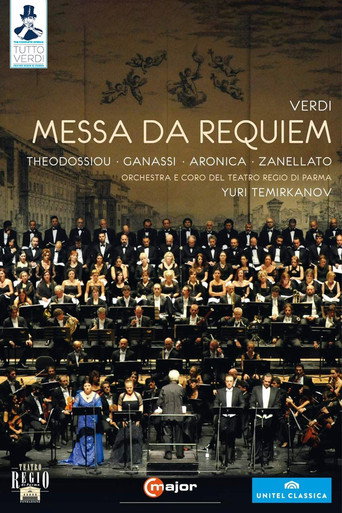
A requiem inspired by the death, on May 22, 1873, of the Italian poet and writer Alessandro Manzoni, author of the novel “The Betrothal”. Giuseppe Verdi’s “Messa da Requiem” (more commonly known as the “Verdi Requiem”) is a requiem mass for soloists (soprano, mezzo-soprano, tenor, and bass), double choir, and orchestra, premiered on May 22, 1874, at the Church of San Marco in Milan. The Requiem is Verdi’s only major composition not intended for the opera. From the 27-opera Verdi box set “Tutto Verdi.” Recorded live at the Teatro Farnese in Parma on October 8, 2011.
Jacopo, son of Doge Francesco Foscari, was accused of murder and banished from Venice. Longing for his homeland, he writes to the Duke of Milan asking him to intercede with the city council. The letter is intercepted, and Jacopo is brought back to Venice to face further questioning. An opera in three acts by Giuseppe Verdi, with an Italian libretto by Francesco Maria Piave, based on a historical play by George Byron. Premiered on 3 November 1844. From the box set of 27 Verdi operas, ‘Tutto Verdi’. Recorded live at the Teatro Regio in Parma on 3, 6, 8, 11 and 19 May 2005.
Donna Leonora, daughter of the Marquis of Calatrava, is about to flee secretly with her lover Don Alvaro (son of the Viceroy of Mexico and an Inca princess). The Marquis bursts in unexpectedly. Alvaro hesitates to raise his weapon against his lover’s father and throws his pistol. As it falls, the pistol goes off and the Marquis is mortally wounded. As he lies dying, he curses his daughter. Don Carlo di Vargas, Leonora’s brother, resolves to avenge his sister and her fiancé for their father’s death. In the turmoil of the chase, Leonora and Alvaro lose track of one another... ‘La forza del destino’ is an opera in four acts by Giuseppe Verdi, with a libretto by Francesco Maria Piave, adapted from the play ‘Don Álvaro o la fuerza del destino’ (Spain, 1835) by Ángel de Saavedra, the Duke of Rivas. Premiered on 10 November 1862 at the Imperial Theatre in Saint Petersburg. From the box set of 27 Verdi operas “Tutto Verdi”. Recorded live at the Teatro Regio in Parma on 2 and 5 February 2011.
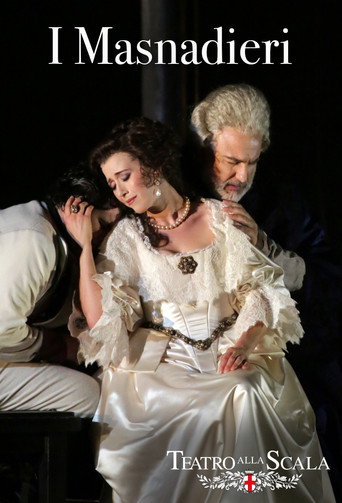
Verdi’s I Masnadieri returned to Teatro alla Scala in June 2019 in a new production directed by David McVicar and conducted by Michele Mariotti. Based on Friedrich Schiller’s play The Robbers, this rarely performed early Verdi opera explores the destructive consequences of family rivalry, betrayal and the struggle between idealism and corruption. McVicar’s staging brings the work’s dark Romantic atmosphere and intense emotional conflicts to the forefront, supported by sets designed by Charles Edwards and costumes by Brigitte Reiffenstuel. The cast features Fabio Sartori as Carlo, Michele Pertusi as Massimiliano, Massimo Cavalletti as Francesco and Lisette Oropesa as Amalia, making her La Scala debut.
In Boston, at the governor’s palace. The courtiers, divided into friends and foes—including Tom and Samuel—await the arrival of the governor, Count Riccardo di Warwick. He makes his entrance, and his page, Oscar, hands him the guest list for the masked ball scheduled for the following day. Among the guests is Amelia, whom he secretly loves, but who is the wife of his adviser and friend Renato. Renato arrives and believes he has guessed the cause of his master’s visible distress: a plot being hatched against his life. But Riccardo wishes to ignore this plot and its instigators; in vain does Renato implore him not to take the matter lightly... ‘Un ballo in maschera’ is an opera by Giuseppe Verdi, with a libretto by Antonio Somma based on a story by Eugène Scribe. It premiered on 17 February 1859 at the Teatro Apollo in Rome. From the ‘Tutto Verdi’ box set of 27 Verdi operas. Recorded live at the Teatro Regio di Parma on 1, 5, 9, 13, 20 and 23 October 2011.
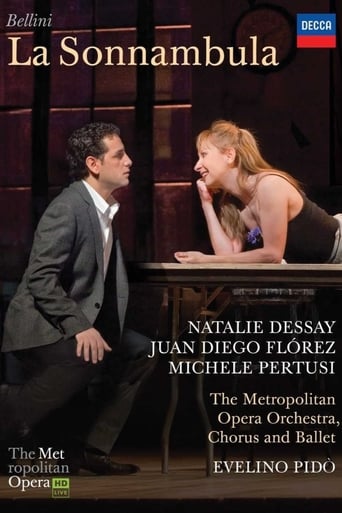
Just as a young woman is about to marry her sweetheart, she is discovered—by the entire village, to say nothing of her fiancé—asleep in the bedroom of a stranger. It takes the young man two acts to figure out that sleepwalking is to blame, and everything ends happily. Natalie Dessay as Amina and Juan Diego Flórez as Elvino deliver bel canto magic and vocal fireworks in Mary Zimmerman’s 2009 production. The Tony award-winning director transfers Bellini’s bucolic tale to a rehearsal room in contemporary New York, where an opera company rehearses La Sonnambula—and where the singers are truly in love with each other.
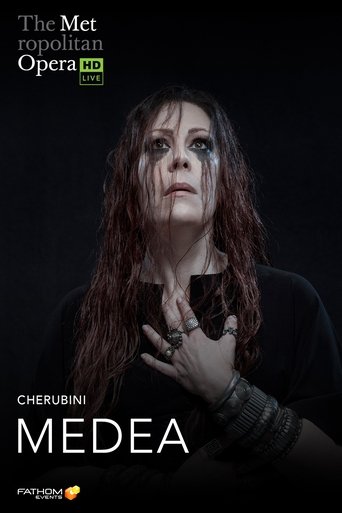
Having triumphed at the Met in some of the repertory’s fiercest soprano roles, Sondra Radvanovsky stars as the mythic sorceress who will stop at nothing in her quest for vengeance. Joining Radvanovsky in the Met-premiere production of Cherubini’s rarely performed masterpiece is tenor Matthew Polenzani as Medea’s Argonaut husband, Giasone; soprano Janai Brugger as her rival for his love, Glauce; bass Michele Pertusi as Glauce’s father, Creonte, the King of Corinth; and mezzo-soprano Ekaterina Gubanova as Medea’s confidante, Neris. Carlo Rizzi conducts.
As part of the Viva Verdi initiative organized by the Ministry of Culture, the Teatro Comunale di Bologna presents an evening dedicated to the masterpieces of Giuseppe Verdi at the Comunale Nouveau venue. Conducted by Daniel Oren.
I due Foscari was Verdi's sixth opera and based on Lord Byron's play The Two Foscari. Rich in intrigue, the plot tells of the final days of the famous Venetian doge, Francesco Foscari, and his illegal overthrow in 1457.
In Aquileia, around the middle of the 5th century. Odabella, daughter of the city’s lord, lost her family during the sacking carried out by Attila and intends to take revenge by killing him (Santo di patria indefinito amor). She herself was spared by Uldino, one of Attila’s slaves. Impressed by her courage, Attila gives her his sword. General Ezio, sent from Rome, proposes to Attila a deal to divide the Empire (Avrai tu l'universo, resti l'Italia a me!). But Attila denounces him as a traitor and refuses. Attila is an opera in a prologue and three acts by Giuseppe Verdi, with a libretto by Temistocle Solera based on Zacharias Werner’s tragedy, Attila, König der Hunnen, and premiered at the Teatro la Fenice in Venice on March 17, 1846. From the box set of 27 Verdi operas, “Tutto Verdi.” Recorded live at the Teatro Verdi in Busseto on October 21 and 25, 2010.
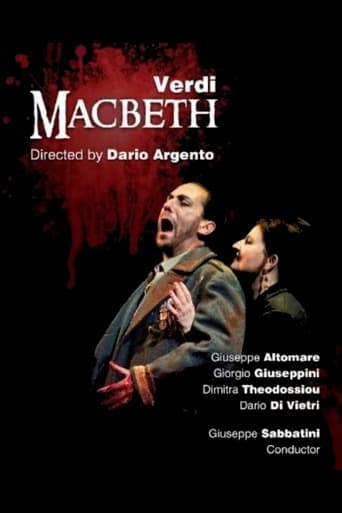
Giuseppe Verdi's opera "Macbeth" staged by Dario Argento, directed by Marco Scalfi.
An outsider—a hunchbacked jester—struggles to balance the dueling elements of beauty and evil that exist in his life.
In medieval Spain, the gypsy Azucena abducted the son of the Count of Luna to avenge her mother, whom the old count had sent to the stake. She raised him as her own son, under the name of Manrico. In the service of Urgel and banished by the King of Aragon, Manrico nevertheless falls in love with Leonora, the Queen’s lady-in-waiting. ‘Il trovatore’ is an opera in four acts by Giuseppe Verdi, with a libretto by Salvatore Cammarano and Leone Emanuele Bardare, based on the Spanish drama ‘El Trovador’ (1836) by Antonio García Gutiérrez. It premiered on 19 January 1853 at the Teatro Apollo in Rome, and was subsequently performed in Paris, at the Théâtre-Italien, in its original version, on 23 December 1854. From the box set “Tutto Verdi”, featuring 27 of Verdi’s operas. Recorded live at the Teatro Regio in Parma on 5 and 9 October 2010.
The recording took place in Teatro Farnese di Parma, a kind of "mini-Verona" stage, but under roof. Probably good acoustics. But that doesn't rescue this perfomance of the Requiem mass, the fault is mainly being the conductor's, Yuri Temirkanov. He doesn't at all seems inspired of this work and not interested in whats happens on stage, if judged by the video. Particularly, he seems unintersted in the choir. The tenor, Francesco Meli, delivers a very inspired Ingemisco, but the other soloists are probably affected by the conductor.
Starring Ferruccio Furlanetto, Giuseppe Filianoti & Dimitra Theodossiou. From Teatro Massimo, Palermo, Sicily
‘Nabucco’, or ‘Nebuchadnezzar’ (Italian: Nabucco), is an opera by Giuseppe Verdi with a libretto by T. Solera, based on events described in the Bible. (Nabucco is a shortened Italian rendering of the name of King Nebuchadnezzar II). It was this opera, the third in Verdi’s oeuvre, that brought him true fame. It tells of the tribulations of the Jews, their captivity by the Babylonians, and their subsequent release to their homeland by Nebuchadnezzar, King of Babylon. Giuseppe Verdi’s opera ‘Nabucco’, is a monumental work that tells the story of the enslavement of the Hebrew people by the Babylonian king Nebuchadnezzar (Nabucco) and their journey towards redemption. The premiere took place on 9 March 1842 at La Scala in Milan. The first performance of the final version was held at the Teatro San Giacomo in Corfu in September 1844. From the box set of 27 Verdi operas, ‘Tutto Verdi’. Recorded live at the Teatro Regio in Parma, 12–14 October 2009.
Same franchise · Shares 2 cast members
Part of Tutto Verdi series - La battaglia di Legnano (2012) Trieste. 'La battaglia di Legnano' ('The Battle of Legnano') is an opera in four acts, with music by Giuseppe Verdi to an Italian-language libretto by Salvadore Cammarano. Most of the early Verdi operas are sort of rare for a reason. They do not rise to the heights of genius that his middle period and late period operas did. However, there are always some beautiful arias or choruses and most of them are great fun......sort of like bel canto on steroids! What I mean is that you can hear that he was coming from the bel canto tradition, but he liked to inject a lot more power into the characters and their music.
Same franchise · Shares a lead actor
Jacopo, son of Doge Francesco Foscari, was accused of murder and banished from Venice. Longing for his homeland, he writes to the Duke of Milan asking him to intercede with the city council. The letter is intercepted, and Jacopo is brought back to Venice to face further questioning. An opera in three acts by Giuseppe Verdi, with an Italian libretto by Francesco Maria Piave, based on a historical play by George Byron. Premiered on 3 November 1844. From the box set of 27 Verdi operas, ‘Tutto Verdi’. Recorded live at the Teatro Regio in Parma on 3, 6, 8, 11 and 19 May 2005.
Same franchise · Shares a lead actor
A requiem inspired by the death, on May 22, 1873, of the Italian poet and writer Alessandro Manzoni, author of the novel “The Betrothal”. Giuseppe Verdi’s “Messa da Requiem” (more commonly known as the “Verdi Requiem”) is a requiem mass for soloists (soprano, mezzo-soprano, tenor, and bass), double choir, and orchestra, premiered on May 22, 1874, at the Church of San Marco in Milan. The Requiem is Verdi’s only major composition not intended for the opera. From the 27-opera Verdi box set “Tutto Verdi.” Recorded live at the Teatro Farnese in Parma on October 8, 2011.
Same franchise · Shares 2 cast members
In Aquileia, around the middle of the 5th century. Odabella, daughter of the city’s lord, lost her family during the sacking carried out by Attila and intends to take revenge by killing him (Santo di patria indefinito amor). She herself was spared by Uldino, one of Attila’s slaves. Impressed by her courage, Attila gives her his sword. General Ezio, sent from Rome, proposes to Attila a deal to divide the Empire (Avrai tu l'universo, resti l'Italia a me!). But Attila denounces him as a traitor and refuses. Attila is an opera in a prologue and three acts by Giuseppe Verdi, with a libretto by Temistocle Solera based on Zacharias Werner’s tragedy, Attila, König der Hunnen, and premiered at the Teatro la Fenice in Venice on March 17, 1846. From the box set of 27 Verdi operas, “Tutto Verdi.” Recorded live at the Teatro Verdi in Busseto on October 21 and 25, 2010.
Same franchise · Shares a lead actor
In medieval Spain, the gypsy Azucena abducted the son of the Count of Luna to avenge her mother, whom the old count had sent to the stake. She raised him as her own son, under the name of Manrico. In the service of Urgel and banished by the King of Aragon, Manrico nevertheless falls in love with Leonora, the Queen’s lady-in-waiting. ‘Il trovatore’ is an opera in four acts by Giuseppe Verdi, with a libretto by Salvatore Cammarano and Leone Emanuele Bardare, based on the Spanish drama ‘El Trovador’ (1836) by Antonio García Gutiérrez. It premiered on 19 January 1853 at the Teatro Apollo in Rome, and was subsequently performed in Paris, at the Théâtre-Italien, in its original version, on 23 December 1854. From the box set “Tutto Verdi”, featuring 27 of Verdi’s operas. Recorded live at the Teatro Regio in Parma on 5 and 9 October 2010.
Same franchise · Shares a lead actor
In Germany, at the castle of the Count of Stankar, on the banks of the Salzbach and in the vicinity of Salzburg, in the early 19th century. Upon his return from his travels, Pastor Stiffelio recounts his adventures: a boatman had handed him the wallet of a man who, fleeing from a woman’s bedroom, had thrown himself into the river. In the spirit of forgiveness, Stiffelio destroys the piece of evidence, unaware that it is proof that his wife, Lina, is guilty of adultery. ‘Stiffelio’ is an opera in three acts by Giuseppe Verdi, with a libretto by Francesco Maria Piave, based on ‘Le Pasteur ou l’évangile au foyer’ by Émile Souvestre and Eugène Bourgeois. Premiered in its original version on 26 December 1968 at the Teatro Regio in Parma. From the box set of 27 Verdi operas, “Tutto Verdi”. Recorded live at the Teatro Regio in Parma on 18 and 24 April 2012.
Same franchise · Same director
Part of Tutto Verdi series - Alzira (2012) Dobbiaco. This is a concert performance. Alzira is an opera in a prologue and two acts by Giuseppe Verdi to an Italian libretto by Salvatore Cammarano, based on the play Alzire, ou les Américains by Voltaire. The first performance was at the Teatro San Carlo, Naples, on 12 August 1845.
Same franchise · Same director
Around 1850, in Paris. At a soirée, Alfredo Germont, a young man from a respectable Provençal family, falls in love with Violetta Valéry, a courtesan. Deeply in love, Violetta gives up her profession and devotes herself entirely to Alfredo. However, Mr Germont senior, in the name of bourgeois respectability, persuades her to break up with his son. Violetta then writes a letter of separation to Alfredo without revealing the real reason for her decision. The fatal illness from which she was already suffering then flares up once more. A month later, Alfredo learns from his father that Violetta never stopped loving him... ‘La traviata’ is a 3 act opera by Giuseppe Verdi, with a libretto by Francesco Maria Piave based on the novel ‘The Lady of the Camellias’ by Alexandre Dumas, fils (1848) and its stage adaptation (1852). Premiered on 6 March 1853 at La Fenice in Venice. From the 27-opera Verdi box set “Tutto Verdi”. Recorded live at the Teatro Regio in Parma on 4 April 2012.
Same franchise · Same director
In Boston, at the governor’s palace. The courtiers, divided into friends and foes—including Tom and Samuel—await the arrival of the governor, Count Riccardo di Warwick. He makes his entrance, and his page, Oscar, hands him the guest list for the masked ball scheduled for the following day. Among the guests is Amelia, whom he secretly loves, but who is the wife of his adviser and friend Renato. Renato arrives and believes he has guessed the cause of his master’s visible distress: a plot being hatched against his life. But Riccardo wishes to ignore this plot and its instigators; in vain does Renato implore him not to take the matter lightly... ‘Un ballo in maschera’ is an opera by Giuseppe Verdi, with a libretto by Antonio Somma based on a story by Eugène Scribe. It premiered on 17 February 1859 at the Teatro Apollo in Rome. From the ‘Tutto Verdi’ box set of 27 Verdi operas. Recorded live at the Teatro Regio di Parma on 1, 5, 9, 13, 20 and 23 October 2011.
Same franchise · Shares a lead actor