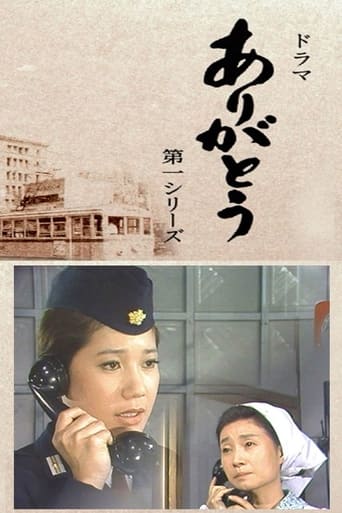
A family drama series that follows the lives of the Okakura family, focusing on the parents and their five daughters. It explores personal struggles, and societal issues through the interactions and conflicts among the family members.
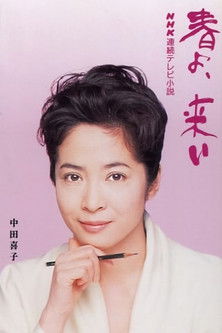
A successful screenwriter looks back on her life when she learns her husband has cancer. A year-long series, starring Narumi Yasuda.
Satoshi Itomura is an assistant police investigator who belongs to the Metropolitan Police Department’s Scientific Investigation Team. Reenactments, fingerprint and voice data collections, profiling... His team collects scientific evidence and pieces together fragments of information in order to help build evidences. However, Itomura often does not care about the scientific approach and instead pays a great deal of attention to the things that the victims always carried with them or treasured. And he focuses on these things because they usually carry the victim’s dying wishes, understanding that last message not only helps solve the cases but also brings closure to the depressed family of victims.
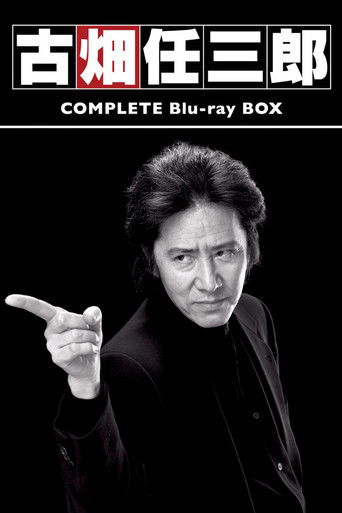
Furuhata Ninzaburō is a Japanese television series that ran periodically on Fuji Television from 1994 until its final episodes in 2006. It was written by Japanese playwright Kōki Mitani and is often referred to as the Japanese version of Columbo. The series is a police detective drama starring actor Masakazu Tamura as Furuhata Ninzaburo and Masahiko Nishimura as his stereotypically bumbling sidekick, Shintaro Imaizumi. The program aired weekly and featured a guest villain each time, usually a famous talent in Japan. Pop-stars like SMAP, television hosts like Sanma Akashiya and even sports figures like Ichiro Suzuki have been featured on this program. It was one of the most popular television dramas in the history of Japanese television, having spawned several seasons and TV specials.
Ohisama is a Japanese television drama that aired on NHK in 2011 in the Asadora time slot. Set in Nagano prefecture, "Ohisama" covers the life of Yoko Sudo (Mao Inoue) through World War II. Yoko Sudo with her smile is able to bring brightness to those around her & she follows her mother's motif to laugh through the hard times. During the onset of WW II, Yoko is a high school student and "Ohisama" follows her as she eventually becomes a teacher and then gets married and has a child. Yoko then opens a soba restaurant with her student. --asianwiki
The 3rd NHK Asadora. Starring Shin Saburi as a professor who quits the university to become a painter.
A television serial that was in turn adapted from a radio series and a novel, My Daughter And I featured a Japanese novelist who is married to a French woman who have one daughter. The man and his daughter begin a new life when the woman dies. Having difficulty spending time with his daughter, the man sends his daughter to a Christian boarding school. He remarries and brings his daughter back home. After the end of the World War his lot improves professionally, yet his second wife dies.
Rin Tachibana, nicknamed Hanekonma, grew up in Soma, Fukushima. Together with her parents, her sister and brother, and her grandparents, the story revolves around the Tachibana family and Rin's life throughout many years.
The First Investigative Division is the star unit of the Tokyo Metropolitan Police Department. Jun'ichi Ōiwa, the head of the division, leads around 400 elite detectives. He has an extremely heavy responsibility: attends initial investigations at the scenes of all brutal crimes that occur within the metropolis, decides on the course of action of the investigations at the same time as he directs many investigation task forces and gets into investigations himself at the critical phase. However, Ōiwa is definitely not a superman. Amid his suffering, Ōiwa overcomes this grave responsibility and is quite simply a "life-size hero" and "ideal boss" to his subordinates.
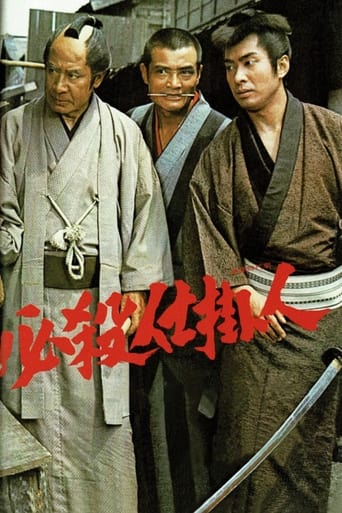
A shikakenin was an under-the-cover trade that undertook killing in Edo. Hanemon of Otowa, an agency that introduced laborers and maids, was also one of these. Katsugoro Iseya was a timber dealer who had come in as a client. His target was the constructions magistrate Hanno, and the Tatsumiya who sipped on the benefits. Hanemon who had a stong code towards killing, where he would only kill those who do no good to be in the world, accepts this request. Baian Fujieda, a needle doctor would carry out the killing. However, the professional killer Baian fails to bring down Tatsumiya. Hanemon then looks to another shikakenin, the ronin Sanai Nishimura for the role. Although Sanai's ability with the sword is good, he lives poorly in a tenement, and accepts this commission on the condition that it is kept a secret from his wife and child. Here, they close in on Hanno and Tatsumiya again...
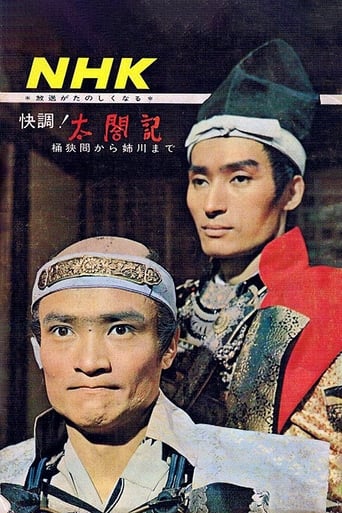
Based on the life of Hideyoshi Toyotomi (February 2, 1537 – September 18, 1598) a Sengoku period daimyo who unified Japan.
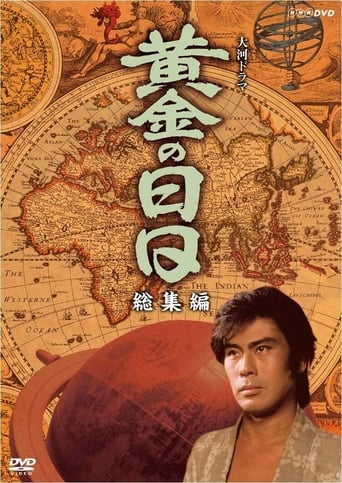
Luzon Sukezaemon is a merchant who imports vases from the Philippines. The vases are highly valued as tea utensils and he makes a huge profit. This was the first taiga drama to concentrate on the lives of commoners and the reviled merchant class of the Tokugawa period. It documents the rise and fall of the merchant city of Sakai, as seen by its most famous resident, the semilegendary Luzon.
Hotaru Kusakari is married to Gorō Kusakari, and she works as a pharmacist. She holds a secret that she is really a ninja and part of the Kōka ninja clan. Her husband holds a routine job as a postal delivery man, but he has a secret as well. He is also a ninja and part of the Iga ninja clan. Even though Hotaru and Gorō are a married couple, they are each unaware that their partner is a ninja.
The story chronicles the life of Ii Naosuke.
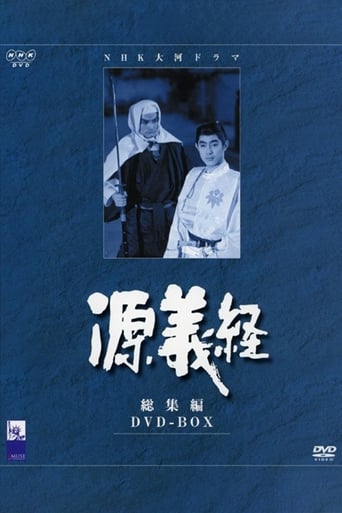
The chronicles of the life of Minamoto no Yoshitsune (1159 - May 17th, 1189). He was a late Heian and early Kamakura general of the Minamoto clan of Japan. Yoshitsune was the ninth son of Minamoto no Yoshitomo. His older brother Minamoto no Yoritomo founded the Kamakura shogunate.
Heisuke teaches at his alma mater, an all-boy’s Buddhist high school and leads a very ordinary life, except for the fact that he is still tortured by the memory of an unfortunate incident that took place there involving him and his school 14 years ago. In hopes of closure, he strikes upon a plan to jointly hold this year’s Culture Festival with a nearby girl’s school, with which there are chilly relations. Determined at all costs to make the event a success, Heisuke finds himself dealing with a constant stream of problems along the way.
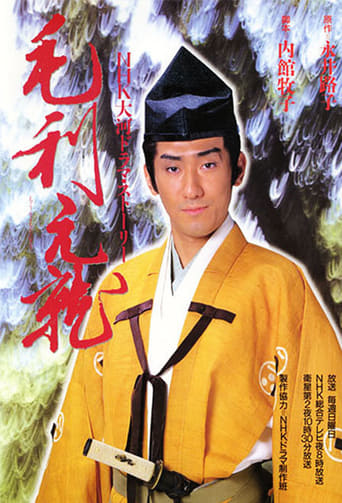
The 36th NHK Taiga Drama is Mori Motonari. This series chronicles the life of Mori Motonari, a warlord of the early 1500s who stood at the vanguard of the Warring States era. All Japanese school textbooks contain the Mitsuya no kyokun, Mori's famous lesson to his three sons that teaches that while one arrow is easily broken, three arrows together cannot be broken. In 1997, 500 years after his birth, NHK dramatizes Motonari's rise from a chief of the region of Aki (now Hiroshima) to a daimyo who rules over ten provinces of the Chugoku region. Motonari was 64 years old and already the patriarch of a powerful dynasty about the time Oda Nobunaga and Takeda Shingen appeared on the scene. And even after his death, the Mori family figured prominently in Japanese history. His grandson Terumoto became a loyal Toyotomi vassal. Defeated at the Battle of Sekigahara, Ieyasu confiscated most of his lands, leaving him only with Suwo and Nagato, later known as Choshu. But 260 years later, the Mori got their ultimate revenge, leading the imperial forces against the Tokugawa in the Meiji Restoration.
In an alternative feudal Japan, a strange disease that only affects males caused a massive population reduction, leaving females to fill the vacant jobs, therefore changing the social structure. Now, 80 years after the initial outbreak with a 1:4 male:female ratio, Japan is a completely matriarchal society. Females hold all important political positions, and males are their consorts. Only the most powerful female—head of Tokugawa shogunate—may keep a harem of handsome and unproductive males, known as "Ōoku".
The mystery of how Kazama Kimichika became so ruthless and unmatched will be revealed. Kyojo Zero depicts the time before he was assigned to the police academy, when he was working as an instructor in charge of training new detectives...
At the end of Edo period, Shoji Rui hands over her birthright to her relatives with the death of her father and begins running an inn "Kawasemi" in Ōkawabata. And she settles the matters in their daily lives with her lover Kamibayashi Tōgo, doshin (a sort of constable) Une Genzaburō, physician Amanō Sotarō, and O-Kichi.
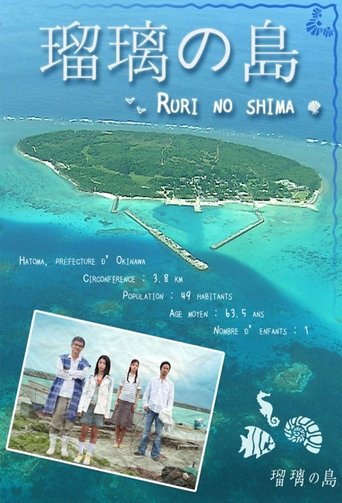
Ruri, having been abandoned by her mother to a foster care facility, lives a life of reckless abandonment. When Nakama Yuzo, a kind man but for a trigger-happy temper, runs into Ruri he realizes that perhaps she's the child he's been looking for. Yuzo lives in Hatomijima, a small insland in Okinawa where the population is 49 and the average age group is 61. There are no children. The island has only one school - a primary school. If a child is not enrolled in the school, it will be closed. As a result, society will abandon the island and in a few years, it will cease to have any inhabitants. To save their island, the locals decide to bring in a foster child. Ruri is their candidate, and with her she brings the hope of the island's survival.
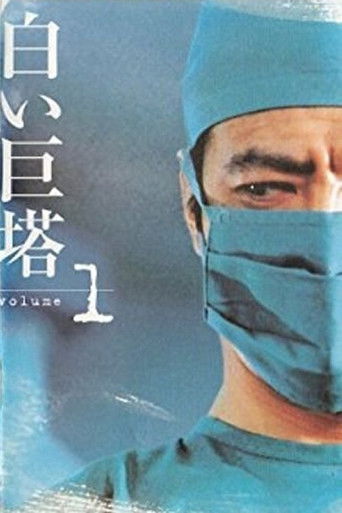
The story contrasts the life of two doctors, former classmates and now both assistant professors at Naniwa University Hospital in Osaka. The brilliant and ambitious surgeon Goro Zaizen stops at nothing to rise to a position of eminence and authority, while the friendly Shuji Satomi busies himself with his patients and research.
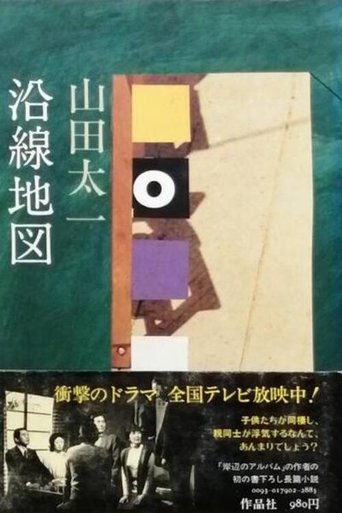
Set in a neighborhood near a private railway station in the suburbs of Tokyo, this cheerful home drama depicts various events that occur in the homes of merchants and businessmen, as well as love affairs between men and women of all ages. It is a story of people of goodwill and kindness.
A girl survives a massacre of villagers by Japanese soldiers in a remote mountain village, and a member of the Self-Defense Force who stumbled upon the scene of the massacre during training - this suspenseful drama depicts a huge conspiracy in the Tohoku region centered on these two people.
On approaching her 20th birthday, Yuki happily returns to Japan to see her penpal, Junpei. However, Junpei doesn't want to see her as he is the one who had caused her brother's death three years ago. Though the truth reveals one day, Yuki still loves him. The couple finally decides to get married despite the strong objection from Yuki's father and aunt. And just two days before their wedding bells ring, Junpei gets stabbed by his ex-accomplice. To keep his promise, Junpei bears the pain and completes the wedding ceremony with Yuki
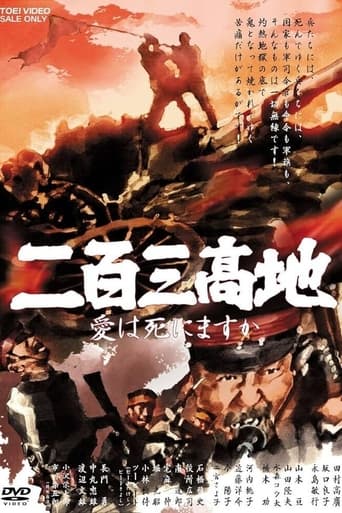
An epic of love and death that depicts how soldiers and ordinary people lived and fought during the Russo-Japanese War, when Japan's very existence was at stake in the face of the great power of Russia.
Tetsuo, the son of a bicycle shop owner, and his sister Hanako rescue Megumi Kuroki and Kiyotaka Sawada from a gang of bikers. As a thank you, they are invited to Kiyotaka's home. The siblings, who fell in love at first sight with Megumi and Kiyotaka, hope this will be the perfect opportunity to be alone together. However, the Sawada family is the home of the president of a major bicycle manufacturer, who brought down Tetsuo's father, Taichi, from his position at the company. Hanako soon develops feelings for Kiyotaka, and Tetsuo, wishing for his sister's happiness, fights against pressure to prevent their arranged marriage. Meanwhile, Kiyotaka's father, Ryuichi, the company president, invites Tetsuo's mother, out to apologize for his past treatment. The two eventually disappear. Tetsuo and Hanako search for their mother but find only Ryuichi, who has been burned beyond recognition and Shizuko is missing. The key to uncovering the truth lies with Taichi's sister, Sumire, but...
Two couples are confronted with the fact that their children have dropped out of high school and started living together. This drama questions the meaning of “life” as they overcome a series of incidents.

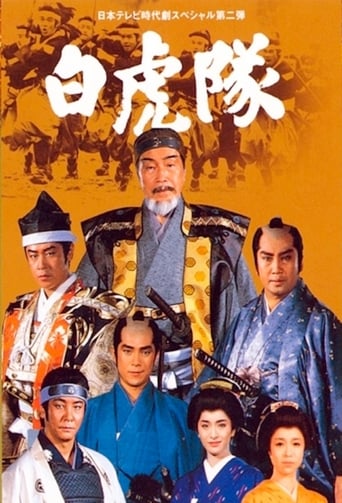
Byakkotai was part of Aizu's four-unit military, set up in the domain's drive to finalize its military modernization, in the wake of the Battle of Toba-Fushimi. The other three units were Genbutai, Seiryūtai, and Suzakutai. Each of the four was named after the protecting gods of compass directions. Byakkotai was meant to be a reserve unit, as it was composed of the young teenage 16 to 17 year old sons of Aizu samurai in a group around 350, who fought in the Boshin War (1868–1869)
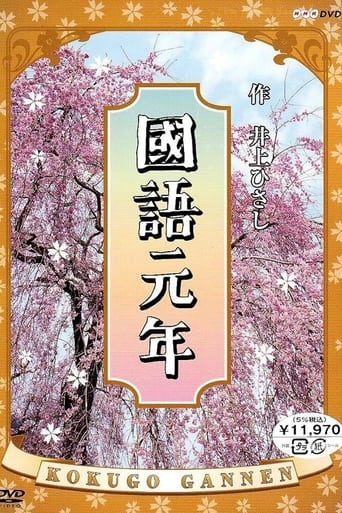
Set in 1874 at the residence of an official of the Ministry of Education of Japan who was ordered with establishing a common national spoken language, this humorous drama focuses on how the national language used today was created.
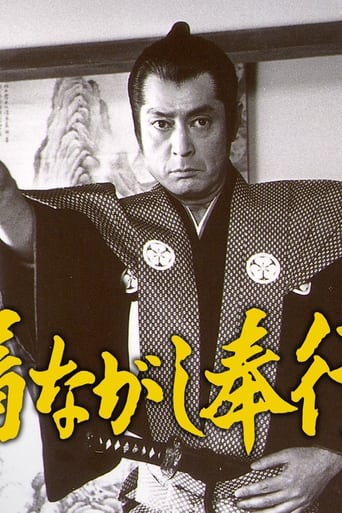
Koheita, a newly appointed magistrate, never shows his face in the magistrate's office, instead spending his time in the 'Horisoto', a den of evil where anything goes, from theft to prostitution to murder. However, this man is about to clean up the city in an unconventional way!
A human drama based on the "Date Riots".
The journey of a book smart teen whose life is forever transformed when he moves from the streets of west Philadelphia to live with his relatives in one of LA’s wealthiest suburbs.
Viewers also picked
Life, death and drama at 20,000 feet. The series weaves together intense character journeys and high-stakes medical rescues, as we follow the triumphs, heartbreaks and tribulations of budding nurses and pilots flying air ambulances in remote Northern Canada. They’re all in over their heads, and on their own, with no one to rely on but each other.
Viewers also picked
When a young mother from a sheltered cult crosses paths with a mysterious stranger, she embarks on a risky affair that awakens desires and dark secrets.
Viewers also picked
The trials and tribulations of the very large, colorful and imperfect Braverman family.
Viewers also picked
An ordinary Manchester suburb becomes a minefield of lies and violence when Leo gives neighbour Clive his spare key.
Viewers also picked
North of 60 is a mid-1990s Canadian television series depicting life in the sub-Arctic northern boreal forest. It first aired on CBC Television in 1992 and was syndicated around the world. It is set in the fictional community of Lynx River, a primarily Native-run town depicted as being in the Dehcho Region, Northwest Territories. Most of the characters were Dene. Some non-native characters had important roles: the restaurant/motel owner, the band manager, the nurse and the town's main RCMP officer. The show explored themes of Native poverty, alcoholism, cultural preservation and conflict over land settlements and natural resource exploitation. Originally somewhat light-hearted, it quickly became a more dramatic and ponderous series.
Viewers also picked
After Neurosurgeon Maggie Sullivan’s personal and professional life are thrown into turmoil she returns home to Sullivan’s Crossing. While there, Maggie is forced to navigate her complicated present while confronting the painful past she has chosen to ignore for years.
Viewers also picked
An exuberant drama set in Melbourne's Fitzroy, centering on Nina Proudman and her struggle to deal with her fabulously messy family, her hunt for a decent love life and her tendency to overthink and fly off into fantasy.
Viewers also picked
An unconventional relationship in a world on the cusp of change; a star newsreader and an ambitious bisexual reporter join forces in a ruthless 1986 newsroom, as events unfold that will change their lives.
Viewers also picked
Army Wives is an American drama series that follows the lives of four army wives, one army husband, and their families.
Viewers also picked