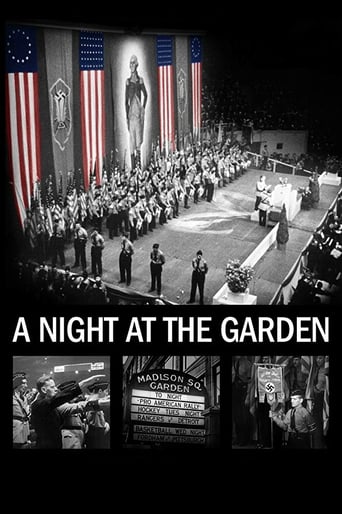
Archival footage of an American Nazi rally that attracted 20,000 people at Madison Square Garden in 1939, shortly before the beginning of World War II.
A Night at the Garden
Also tagged nsdap (nazi party), political rally
Follows the Fifth Nazi Party Rally (Nuremberg, 30 August–3 September 1933) and shows the then close relationship between Adolf Hitler and Ernest Rõhm.
Archival footage of an American Nazi rally that attracted 20,000 people at Madison Square Garden in 1939, shortly before the beginning of World War II.
Also tagged nsdap (nazi party), political rally

How did 20th Century Europe's most liberal democracy fall into the hands of fascists? From Hitler's political scheming that turned Germany's parliament into a House of Cards, his War on Truth leading to book burning, and his scapegoating of minorities, this series explores in extraordinary detail the events leading up to the outbreak of World War II.
Also tagged nsdap (nazi party), nazi
This documentary follows the 2002 mayoral campaign in Newark, New Jersey, in which a City Councilman, Cory Booker, attempted to unseat longtime mayor Sharpe James.
Also tagged political rally
Following the 1974 French presidential campaign with Valéry Giscard d’Estaing.
Also tagged political rally
When Dr. Indiana Jones – the tweed-suited professor who just happens to be a celebrated archaeologist – is hired by the government to locate the legendary Ark of the Covenant, he finds himself up against the entire Nazi regime.
Also tagged nazi
An elite private school conceals dark secrets. When a teacher disappears, students embark on a perilous journey, facing obstacles and revelations before the gripping conclusion.
Also tagged nazi
Documentary film series that examines Adolf Hitler and the Nazis' rise to power, their zenith, their decline and fall, and the consequences of their reign featuring archive footage and interviews with eyewitnesses.
Also tagged nsdap (nazi party)
This gripping docuseries examines Adolf Hitler and the Nazis' rise, rule and reckoning from pre-WWII to the Holocaust to the Nuremberg trials.
Also tagged nazi
A six-part French documentary about the Second World War composed exclusively of actual footage of the war as filmed by war correspondents, soldiers, resistance fighters and private citizens. The series is shown in color, with the black and white footage being fully colorized, save for some original color footage. The only exception to the treatment are most Holocaust scenes, which are presented in the original black and white.
Also tagged nazi
As Minister of Propaganda, Joseph Goebbels creates films and pictures used to prepare the Germans for Total War and the Holocaust. When the war is lost, he conceives his last staging, the most radical propaganda act still possible to him.
Also tagged nsdap (nazi party), nazi propaganda
An inexperienced U-boat crew has to survive a secret mission and a young German woman is torn between loyalty for her home country and the French resistance in the WWII drama.
Also tagged nazi
Film journalist and critic Rüdiger Suchsland examines German cinema from 1933, when the Nazis came into power, until 1945, when the Third Reich collapsed. (A sequel to From Caligari to Hitler, 2015.)
Also tagged nazi propaganda
Produced and presented as evidence at the Nuremberg war crimes trial of Hermann Göring and twenty other Nazi leaders, this film consists primarily of dead and surviving prisoners and of facilities used to kill and torture during the World War II.
Also tagged nsdap (nazi party)
During World War II, the British Army assigns a group of competent soldiers to carry out a mission against the Nazi forces behind enemy lines... A true story about a secret British WWII organization — the Special Operations Executive. Founded by Winston Churchill, their irregular warfare against the Germans helped to change the course of the war, and gave birth to modern black operations.
Also tagged nazi
A Cleveland grandfather is brought to trial in Israel, accused of being the infamous Nazi death camp guard known as Ivan the Terrible.
Also tagged nazi
In a quest for world domination, the Nazis built some of the biggest and deadliest pieces of military hardware and malevolent technology in history. This is the stories of the engineers who designed them and how these structures sparked a technological revolution that changed warfare forever.
Also tagged nazi
A structure-free, four-part examination of the rise and fall of the Third Reich. Each part explores a different topic, from Hitler's cult of personality in propaganda to how said propaganda was associated with pre-Nazi German cultural, spiritual, and national heritage to the Holocaust and the ideology behind it, particularly from Himmler's point of view.
Also tagged nsdap (nazi party), nazi propaganda
Adolf Hitler (1889-1945) was a mediocre who rose to power because of the blindness and ignorance of the Germans, who believed he was nothing more than an eccentric dreamer. But when the crisis of 1929 devastated the economy, the population, fearful of chaos and communism, voted for him. And no one defended democracy. As the dictatorship extended its relentless shadow, the leader claimed peace, but was preparing the Apocalypse.
Also tagged nazi
Meet the real-life airmen who inspired Masters of the Air as they share the harrowing and transformative events of the 100th Bomb Group.
This is not a film about gun control. It is a film about the fearful heart and soul of the United States, and the 280 million Americans lucky enough to have the right to a constitutionally protected Uzi. From a look at the Columbine High School security camera tapes to the home of Oscar-winning NRA President Charlton Heston, from a young man who makes homemade napalm with The Anarchist's Cookbook to the murder of a six-year-old girl by another six-year-old. Bowling for Columbine is a journey through the US, through our past, hoping to discover why our pursuit of happiness is so riddled with violence.
A brilliant documentary about the growth of Israel into the Jewish homeland. Seventy-three years of struggle for religious freedom is vividly recorded using rare archive film footage and photographs of historic events in the development of 20th century Israel. Beginning with the Dreyfus Affair in 1894, the film covers Theodor Herzl, founder of modern Zionism; the earliest immigration and settlements; the formation of kibbutzim; the Balfour Declaration; the rise of European anti-Semitism; the British occupation of Palestine; Arab confrontations; the United Nations resolution; the "Exodus" incident, and the Six Day War.
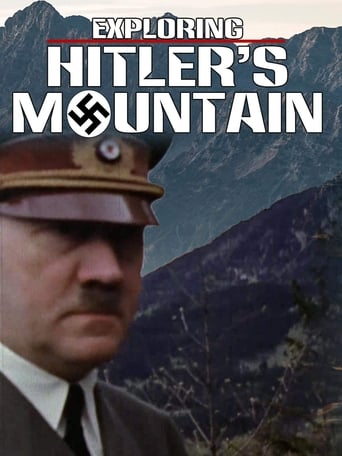
Adolf Hitler spent over 1,000 days on the Obersalzberg, his mountain holiday refuge near Berchtesgaden. It was there he made his decisions about war and destruction. The producers, through special permits, explore the abandoned concrete tunnels in search of the relics of history of Hitler’s mountain and to tell almost forgotten tales of the people who lived there, high up in the shadow of power.
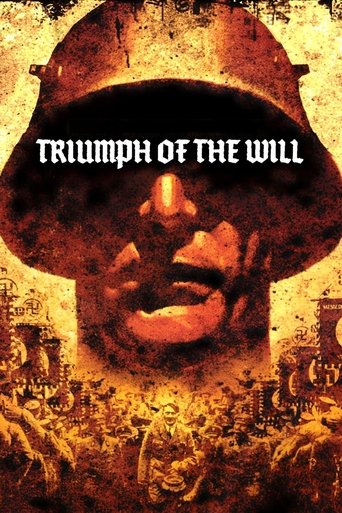
A showcase of German chancellor and Nazi Party leader Adolf Hitler at the 1934 Nuremberg Rally.
A keen chronicle of the unlikely rise to power of Adolf Hitler (1889-1945) and a dissection of the Third Reich (1933-1945), but also an analysis of mass psychology and how the desperate crowd can be deceived and shepherded to the slaughterhouse.
A glittery nightclub in 1920s Berlin becomes a haven for the queer community in this documentary exploring the freedoms lost amid Hitler’s rise to power.
Documents the major trial of the Nazi war criminals and the violent acts that they were accused of.
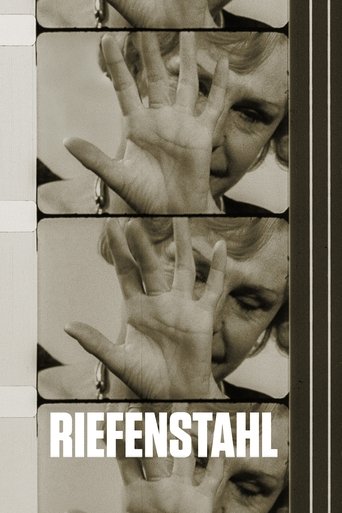
Explores Leni Riefenstahl's artistic legacy and her complex ties to the Nazi regime, juxtaposing her self-portrayal with evidence suggesting awareness of the regime's atrocities.
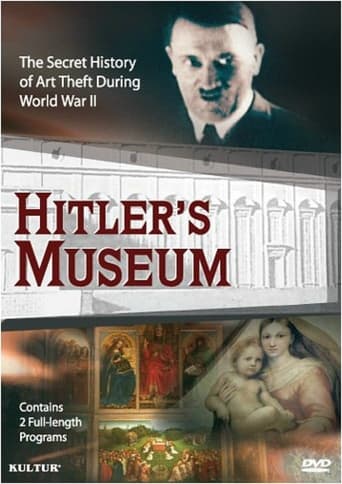
One and a half years before the begin of the Second World War during the annexation of Austria in March of 1938, Hitler conceived the megalomaniac idea of creating the largest European art center in his home town of Linz. At the beginning of the war on the 1st of September 1939, not only did his armies advance but also his art thieves began to fan out in their great foray of art plundering; an expedition on a previously unheard of scale began. Not only did the task forces of diverse National Socialist organizations pillage the occupied countries; Nazi bigwigs like Goering also took whatever they felt was valuable. This documentary includes the long and eventful journey of an exceptional masterpiece of European art: the Ghent Altar, created by van Eyck.
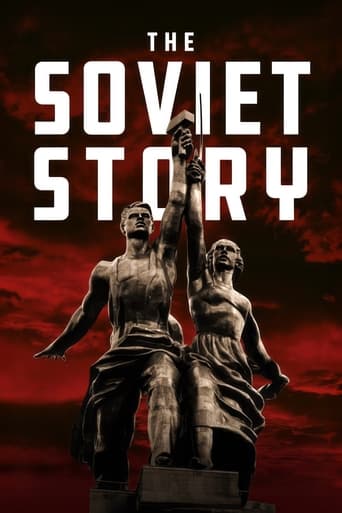
“The Soviet Story” is a story of an Allied power, which helped the Nazis to fight Jews and which slaughtered its own people on an industrial scale. Assisted by the West, this power triumphed on May 9th, 1945. Its crimes were made taboo, and the complete story of Europe’s most murderous regime has never been told. Until now...
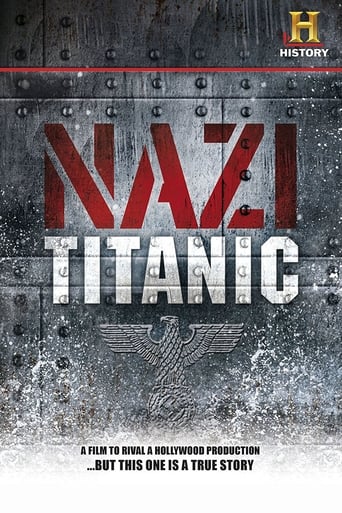
During a bizarre chapter of WWII, Nazi propaganda minister Joseph Goebbels decided to make a movie based on the sinking of the Titanic. This epic film was so large in scale that the Nazis were forced to divert men, material and ships from the war effort in order to complete it. Titanic was filmed aboard cruise ship SS Cap Arcona in the Baltic Sea. The movie’s director Herbert Selpin was arrested by the Gestapo over comments he made about the ship’s crew and he was questioned by Goebbels. Selpin was found dead the next day in his cell. The Gestapo’s verdict was suicide. Titanic never received the impressive premiere that Goebbels intended, being first shown in Nazi-occupied Paris in 1943. We reveal this little known but fascinating story by looking at the making of the film, as well as the fate of the German ship Cap Arcona.
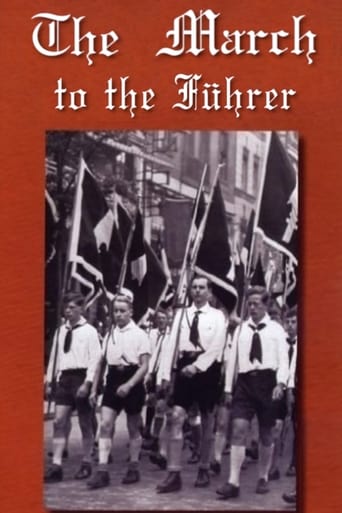
During the colorful ceremonies of the Nuremberg rallies, Hitler Youth parade before their Fuehrer and are addressed by Nazi youth leader Baldur von Schirach, Rudolf Hess, and Hitler himself.
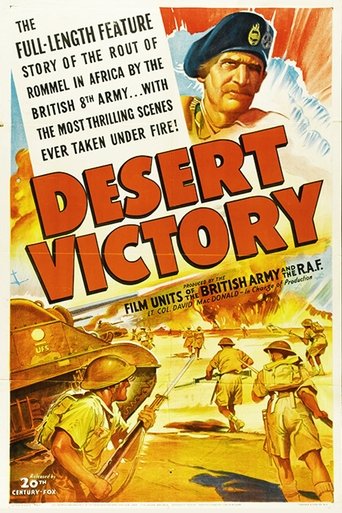
A featureless land fit only for war, as the narrator, J. L. Hodson stated in the early scenes: "If war was to be fought then let it begin here". In endless miles of rock-strewn scrub desert, where civilians hardly existed. Desert Victory tells the story of the Allied campaign to drive Germany and Italy from North Africa is analysed, with the major portion of the film examining the battles at El Alamein, including some re-enactment. Won "Best Documentary Feature" at the 16th Academy Awards in 1944.
Explore the mysterious legend of the Thule society and the mystical "Vril" energy that the Nazi's claimed aided them in their pursuit for world power.
In 1945, two young American soldiers, brothers Budd and Stuart Schulberg, are commissioned to collect filmed and recorded evidence of the horrors committed by the infamous Third Reich in order to prove Nazi war crimes during the Nuremberg trials (1945-46). The story of the making of Nuremberg: Its Lesson for Today, a paramount historic documentary, released in 1948.
Starting with a long and lyrical overture, evoking the origins of the Olympic Games in ancient Greece, Riefenstahl covers twenty-one athletic events in the first half of this two-part love letter to the human body and spirit, culminating with the marathon, where Jesse Owens became the first track and field athlete to win four gold medals in a single Olympics.
How Germany was when its people entered the nightmare of World War II? Despair and fear lead a hungry population to follow the chilling call of just one man to world domination. A real-life horror story, an ominous tale of violence and deception, which takes place from 1919 to 1934. (Entirely made up of restored, colorized archival footage.)
Romm pulls out all the stops in its selection of documentary material to draw the viewer not only into absolute horror about fascism and nazism in the 1920s–1940s Europe, but also to a firm conviction that nothing of the sort should be allowed to happen again anywhere in the world.
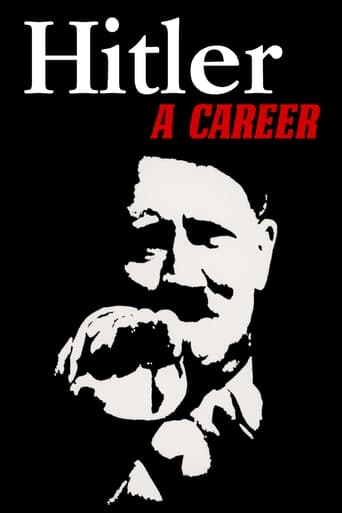
Hitler's biography told like never before. Besides brief historical localizations by a narrator, only contemporaries and Hitler himself speak: no interviews, no reenactment, no illustrative graphics and no technical gadgets. The testimonies from diaries, letters, speeches and autobiographies are assembled with new, often unpublished archive material. Hitler's life and work are thus reflected in a unique way in interaction with the image of the society in the years 1889 to 1945.
In September 2001, respected German historian Lothar Machtan dropped a bombshell on the world of Hitler studies: Hitler was secretly homosexual. His highly acclaimed and explosive book "The Hidden Hitler" ignited a storm of controversy. With information from the bestselling book, award-winning filmmakers Fenton Bailey, Randy Barbato and Gabriel Rotello explore areas of the Führer's private life.
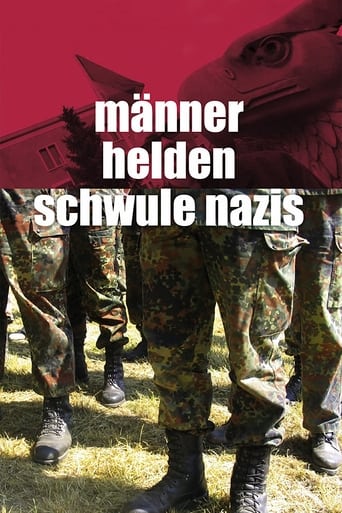
The film focuses on gay men who align themselves with hard-core right wing views, skinheads and Nazis. Rosa von Praunheim stated of the subjects featured in the documentary, “Some may be shocked that I do not take a stand in my film and do not portray gay neo-Nazis as monsters, but as people living their lives in dramatic contradiction.”
Through previously undiscovered private letters, photos and diaries that were found in the Himmler family house in 1945, the "The Decent One" exposes a unique and at times uncomfortable access to the life and mind of the merciless "Architect of the Final Solution" Heinrich Himmler.
A showcase of German chancellor and Nazi Party leader Adolf Hitler at the 1934 Nuremberg Rally.
Shares 4 cast members · Same director
Starting with a long and lyrical overture, evoking the origins of the Olympic Games in ancient Greece, Riefenstahl covers twenty-one athletic events in the first half of this two-part love letter to the human body and spirit, culminating with the marathon, where Jesse Owens became the first track and field athlete to win four gold medals in a single Olympics.
Shares 4 cast members · Same director
Explores Leni Riefenstahl's artistic legacy and her complex ties to the Nazi regime, juxtaposing her self-portrayal with evidence suggesting awareness of the regime's atrocities.
Shares 3 cast members · Same director
Part two of Leni Riefenstahl's monumental examination of the 1938 Olympic Games, the cameras leave the main stadium and venture into the many halls and fields deployed for such sports as fencing, polo, cycling, and the modern pentathlon, which was won by American Glenn Morris.
Shares a lead actor · Same director
A glittery nightclub in 1920s Berlin becomes a haven for the queer community in this documentary exploring the freedoms lost amid Hitler’s rise to power.
Shares 2 cast members · Viewers also picked
A keen chronicle of the unlikely rise to power of Adolf Hitler (1889-1945) and a dissection of the Third Reich (1933-1945), but also an analysis of mass psychology and how the desperate crowd can be deceived and shepherded to the slaughterhouse.
Shares 5 cast members · Viewers also picked
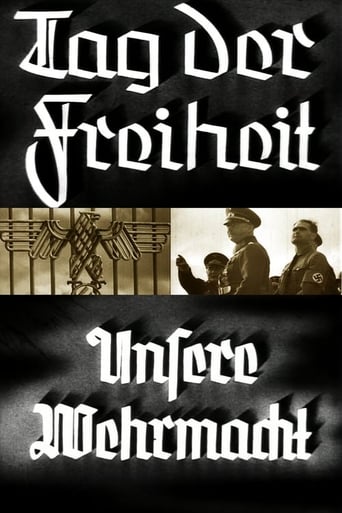
The armed forces of the Third Reich, particularly the German army, are presented as an efficient system of bodies and machines at the seventh Nazi Party Rally that occurred in Nuremberg in 1935.
Shares 3 cast members · Same director
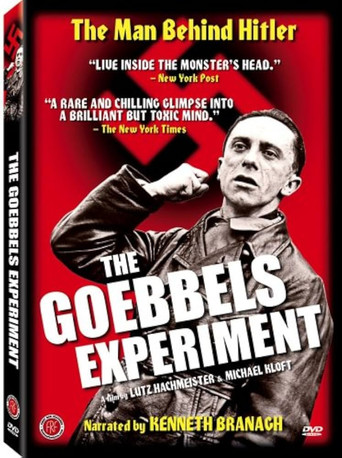
The Nazi propaganda mastermind behind Hitler speaks in first person as actor Kenneth Branagh reads pages of the diary kept by the chief of propaganda, Joseph Goebbels, revealing the man's most inner thoughts.
Shares 3 cast members · Same director
The film focuses on gay men who align themselves with hard-core right wing views, skinheads and Nazis. Rosa von Praunheim stated of the subjects featured in the documentary, “Some may be shocked that I do not take a stand in my film and do not portray gay neo-Nazis as monsters, but as people living their lives in dramatic contradiction.”
Shares 3 cast members
When Allied forces liberated the Nazi concentration camps in 1944-45, their terrible discoveries were recorded by army and newsreel cameramen, revealing for the first time the full horror of what had happened. Making use of British, Soviet and American footage, the Ministry of Information’s Sidney Bernstein (later founder of Granada Television) aimed to create a documentary that would provide lasting, undeniable evidence of the Nazis’ unspeakable crimes. He commissioned a wealth of British talent, including editor Stewart McAllister, writer and future cabinet minister Richard Crossman – and, as treatment advisor, his friend Alfred Hitchcock. Yet, despite initial support from the British and US Governments, the film was shelved, and only now, 70 years on, has it been restored and completed by Imperial War Museums under its original title "German Concentration Camps Factual Survey".
Viewers also picked