At an isolated frontier outpost, a colonial magistrate suffers a crisis of conscience when an army colonel arrives looking to interrogate the locals about an impending uprising, using cruel tactics that horrify the magistrate.
It shows the characteristics of the work and life of mining workers, which is a major industry of socialist society, and how the consciousness of the working class develops over generations.
At an isolated frontier outpost, a colonial magistrate suffers a crisis of conscience when an army colonel arrives looking to interrogate the locals about an impending uprising, using cruel tactics that horrify the magistrate.
In France, the single translator Diane Siprien adopts an Asian baby named Liu-San in a foundation directed by Sybille Weber. Years later, a weird mark appears on the boy's chest and Diane and Liu share their dreadful nightmares. Diane is assigned for a three-day job in Germany and she leaves Liu with her friend Sybille. However, while going to the airport, Diane finds Liu hidden in the backseat and startles with an eagle flying toward the windshield, crashing her car. Liu falls into a coma and his digital recorder records the boy speaking in an unknown dialect. When Diane searches the translation and the origins of Liu, she is surrounded by mysterious murders. She discovers that the dialect is from the mystic Mongolian Tseven tribe and that Liu is a powerful Observer; further, he is in danger, threatened by sorcerers that need the boy for their Council of the Stone..
It shows how the October Revolution affected the hearts of the Mongolian people, and how they defeated the white bandit Baron Ungern at the beginning of the revolution and put an end to his evil activities.
At the beginning of the People's Revolution of 1921, it shows how the people of the countryside fought together to exterminate the remnants of the evil army that was hiding in Mongolia.
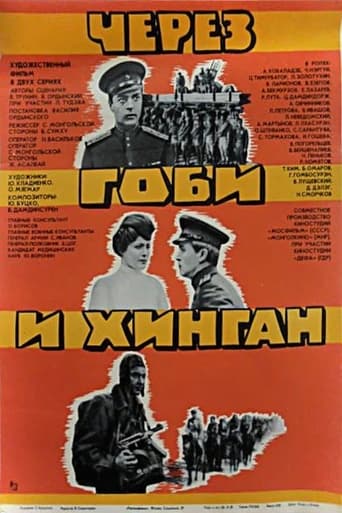
About the events of the final stage of the Second World War — the defeat by Soviet and Mongolian troops of the selected Kwantung army. Bacteriological weapons were created in the laboratory of Japanese General Ishii Shiro. Experiments were conducted on prisoners of war and political prisoners. Epidemiologist Dmitry Sokolov was assigned to solve the mystery of this laboratory. At the cost of his own life, he completed the task. The march of Soviet and Mongolian formations through the Gobi sands and the Khingan spurs was not only a brilliant military operation, but also a warning of the use of bacteriological weapons by Japan.
It is a Mongolian feature film released in 2002.
We humans have been living among the many unexplained mysteries of this universe for generations. This film aims to show the public that some people can experience this feeling, interact with it, and even talk to it, and that it can be experienced and understood by those who do not feel it. This film depicts the transformation of Alagaa, an ordinary young herder with no profession or education, based on real-life sources.
It's a movie from 2001.
The vast Mongolian grassland stretches across the screen, with blue skies and beautiful clouds filling half the frame. Underneath, an oil tanker truck drives for some time along a scenic road, before coming to a stop in front of a small town. When the town is suddenly sealed off due to the COVID pandemic, Sumber, the oil tanker driver, is quarantined at the gas station. Khanda, a single mother who manages the station while being exploited for sex and labor by a corrupt government official and the greedy owner, is now also tasked with looking after Sumber.
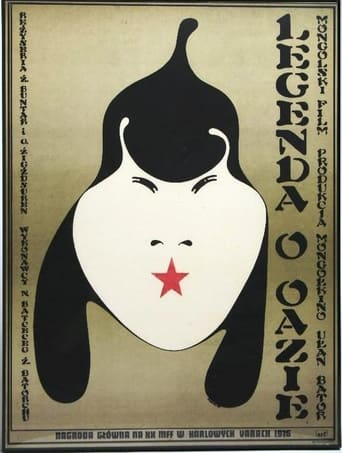
This film, made in the form of a legend, shows love for the motherland and land, unity between nature and man, compassion, and manifestation of cruel malice in a tragic drama narrative. The meaning of the film will be revealed by the tragic fate of the girl Narangarvuu, who dies at the hands of the oppressors for the sake of the common people, and the brutal actions of the bandit named Dogshin Black.
In a rural village, the leaders and representatives coming from the city prepare for a grand feast to report on how they have fulfilled their promises and duties in the socialist race. deepen the plot. However, when all this ends, it is said that humanism, the idea of loving and protecting mother nature, and how fragile and precious the connection between man and nature will be.
Danzan, a young man from Malin, will work in the brigade headed by Banzragch who came to lay a communication line in one of Khanga's villages.
In this film, based on the historical facts of the 3rd Congress of the Mongolian People's Revolutionary Party, which was held in 1924, Choibalsan and Renchin Elbegdorj, who were supporters of the revolutionary Bolsheviks (representative of the Kamintor), the party leader and the minister of the military ministry, Danzang, expressed the view that Mongolia should be developed on the path of bourgeois development, not socialism. strongly criticized, and right before the bloodshed, Danzang was arrested in the middle of the meeting under the pressure of Elbegdorj and executed on a rock, showing that the party's general line was winning.
The story of a thirty-year struggle filled with hope and a heartbroken Mongolian father who waited for his son, whom he had delivered while fending off death.
Seven men sit around a campfire at the mouth of the Nukhti River in 1920. These seven men are young men who have united in their desire to free their homeland from foreign invaders and swear an oath. A bloody battle, a cunning strategy that has sold out their minds. This film tells the story of the unwavering courage of Mongolian youth. 1951. Marshal Choibalsan tells the commissar who is seeing him off at the airport about his comrades who fought with him and flies to Moscow.
Taking advantage of the current political and social instability in Mongolia, a system has emerged where privileges can be used to do whatever they want, and a small number of powerful people are regulating everything according to their own desires. The land and water that every Mongolian has grown up with are sacred idols that they cherish and love throughout their lives. This film tells the story of the fate of the country and the lives of its people behind the terrible migration that is facing danger every day.
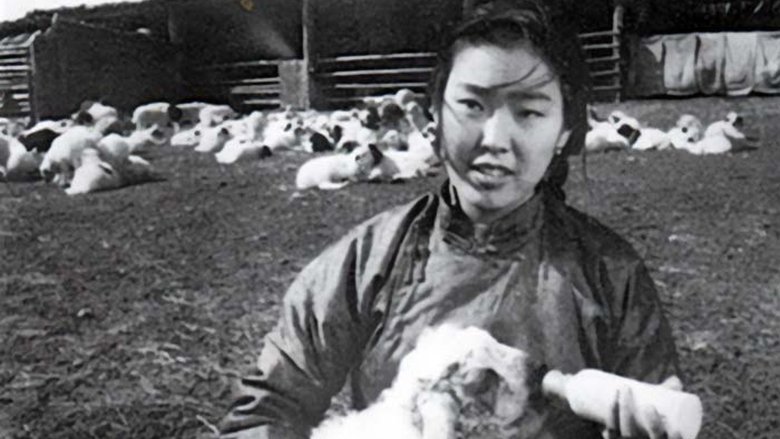
The great changes in social life and people's minds in Mongolia before and after the revolution are lived in the form of Dolingor, the humble servant of rich Bold, hard worker, and Bat, who fought against slavery and gained freedom. Dolingor only talks about the joys and sorrows of meeting Myada and the happiness of his soon-to-be-born child only in the dark days of the night. Rich Bold argues with his wife about adopting a son to watch over the hearth. Rich Bold, who was told by Monk Lovon that he would not be happy to leave Dolingor, is moved to leave Myadag, who is about to give birth, on his black manure. When Dolingor rushed to evict Boldyn's house, a "lost girl" was born. Dolingor, for the sake of the rich Bold, cheated the Naudiragator with a stone bribe, and was forced to serve in the military for many years. Going like this, when he enters the house of the station, he meets his daughter, and the story of the movie begins.
Planet Earth is hit by meteors. In a far-away place, made out of rocks and rubble, a father and his two daughters seem to be the only survivors. They wander through the hostile landscape, imploring gods to help them meet other humans. In vain. After some time, they all three start wondering how to perpetuate humankind. The father will take a dramatic decision.
The young journalist Solongo, who received his first assignment and went to report at the border post, showed the daily events of the modern border soldier's life in a lyrical form.
Set in the frozen steppes of Mongolia, a young nomad is confronted with his destiny after animals fall victim to a plague which threatens to eradicate nomadism.
In the years after the People's Revolution, hundreds of temples were scattered in rural areas, and folk schools were established to teach literacy to the gangs who were studying in the monasteries.
Set in the 15th century after the collapse of Genghis Khan's empire, and follows Mandoukhai from her youth when she's forced to marry the new ruler to her violent death after unifying the vast Mongolian empire.
A 2-part epic film novel based on the historical life of Khatanbaatar Magsarjav, the legendary Mongolian military general who stood out in the struggle for the independence of his country and the freedom of his people.
Set in the 15th century after the collapse of Genghis Khan's empire, and follows Mandoukhai from her youth when she's forced to marry the new ruler to her violent death after unifying the vast Mongolian empire.
In the years after the People's Revolution, hundreds of temples were scattered in rural areas, and folk schools were established to teach literacy to the gangs who were studying in the monasteries.
Shares 4 cast members · Same director
A 2-part epic film novel based on the historical life of Khatanbaatar Magsarjav, the legendary Mongolian military general who stood out in the struggle for the independence of his country and the freedom of his people.
Shares 4 cast members · Same director
This film, made in the form of a legend, shows love for the motherland and land, unity between nature and man, compassion, and manifestation of cruel malice in a tragic drama narrative. The meaning of the film will be revealed by the tragic fate of the girl Narangarvuu, who dies at the hands of the oppressors for the sake of the common people, and the brutal actions of the bandit named Dogshin Black.
Shares a lead actor · Same director
The young journalist Solongo, who received his first assignment and went to report at the border post, showed the daily events of the modern border soldier's life in a lyrical form.
Shares 3 cast members · Same director
Danzan, a young man from Malin, will work in the brigade headed by Banzragch who came to lay a communication line in one of Khanga's villages.
Shares a lead actor · Same director
Planet Earth is hit by meteors. In a far-away place, made out of rocks and rubble, a father and his two daughters seem to be the only survivors. They wander through the hostile landscape, imploring gods to help them meet other humans. In vain. After some time, they all three start wondering how to perpetuate humankind. The father will take a dramatic decision.
Shares a lead actor · Same director
Taking advantage of the current political and social instability in Mongolia, a system has emerged where privileges can be used to do whatever they want, and a small number of powerful people are regulating everything according to their own desires. The land and water that every Mongolian has grown up with are sacred idols that they cherish and love throughout their lives. This film tells the story of the fate of the country and the lives of its people behind the terrible migration that is facing danger every day.
Shares 4 cast members · Same director
Johnny Kovak joins the Teamsters trade-union in a local chapter in the 1930s and works his way up in the organization. As he climbs higher and higher his methods become more ruthless and finally senator Madison starts a campaign to find the truth about the alleged connections with the Mob.
Viewers also picked
In a suburban landscape, the lives of several families interlace with loss, despair and personal crisis. Esther Gold has lost focus on all but caring for her comatose son, Paul, and neglects her daughter and husband. Lawyer Jim Train is devoted to his career, not his family. Helen Christianson wants to find a new spark in life, while Annette Jennings tries to rebuild hers.
Viewers also picked
While serving life in prison, a young man looks back at the people, the circumstances and the system that set him on the path toward his crime.
Viewers also picked