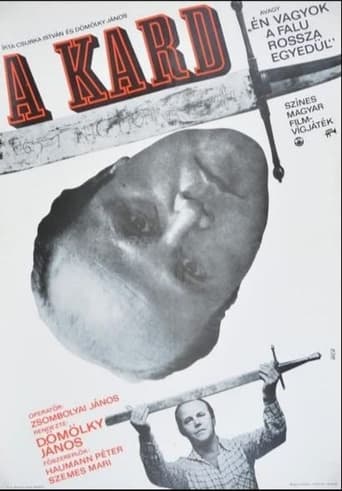
A naive young man witnesses an escalation of violence in his small hometown following the arrival of a mysterious circus attraction.
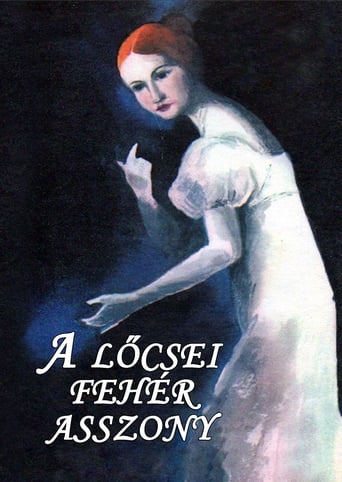
Eighteen years after the failure of the revolution and freedom fighting 1848-49, the politicians of Hungary preparing for a compromise with Austria try to make use of the symbol of the revolution, the figure of the poet Petőfi Sándor, to their own advantage. They visit all the memorial sites, find the witnesses and recall the famous events. Memories and political intentions conflict with each other, and the circumstances of the poet's death cannot be reconstructed entirely.
A naive young man witnesses an escalation of violence in his small hometown following the arrival of a mysterious circus attraction.

The engineer Ambrus has been suspended in his job because he publicly called the attention of the customers to a construction mistake of some goods designed to be exported. His immediate boss learns the news on a business trip to Paris. He meets his old friend Lendvay, an emigrant from Hungary, and his French wife in a cellar bar. After their talk Benkő starts seeing things in a different perspective. When he returns home, he decides to take a stand for Ambrus against Ferenczi, the general director, despite his wife's and the old director's advice.
Set during the fading glory of the Austro-Hungarian empire, the film tells of the rise and fall of Alfred Redl, an ambitious young officer who proceeds up the ladder to become head of the Secret Police only to become ensnared in political deception.
Set in the 1890s on the Hungarian plains, a group of farm workers go on strike in which they face harsh reprisals and the reality of revolt, oppression, morality and violence.
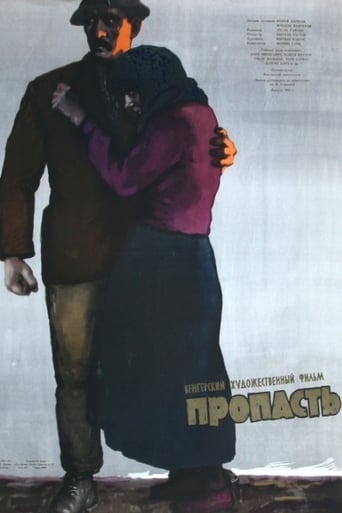
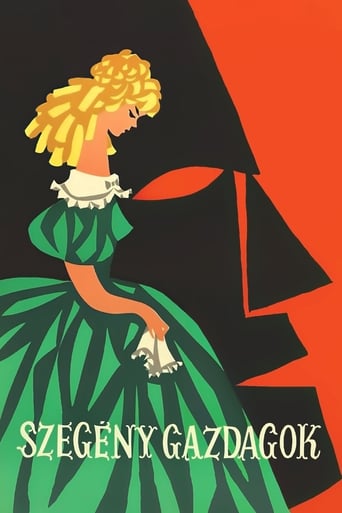
Nagy István, the formerly poor peasant boy returns to his native village as a teacher. His conviction is that the abyss between rich and poor can be diminished by good will. The rich Böröcz Horváth Klári returns his love, and also Böröcz Horváth is willing to help the poorest family, the Bakos. Bakos Jóska, who was sent to serve the tough Böröcz Horváth as a payment, dies of an infected wound and the people in the village hold the teacher liable as well. Nagy István realises, that the abyss cannot be ceased, what is more, it is impassable. He breaks up with his fiancée and stands by the side of the poor.
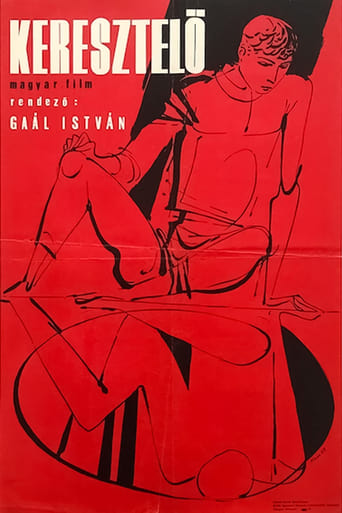
A 40-year-old sculptor returns home to witness the baptism of his young nephew. His return prompts a series of flashbacks to his youth and the political upheaval experienced by his family and friends.
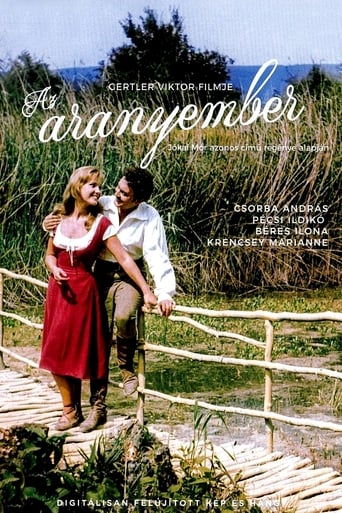
Adaptation of Mór Jókai's classic 19th century novel on Mihály Tímár, the captain of a commercial Danube ship in the 1830s, who finds unexpected fortune by meeting a Turkish aristocrat fleeing from his home country with his daughter Tímea. On their journey, they find an unknown island on the Danube, called the Senki szigete (the Island of No-one), a sort of earthly paradise, with only an old woman and her young daughter Noémi living on it.
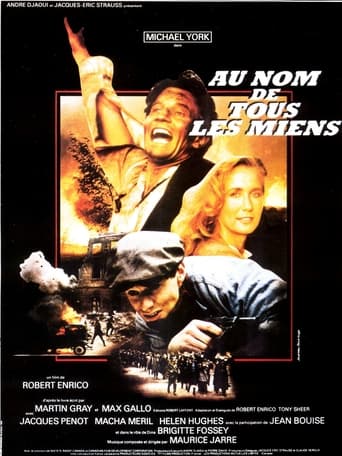
Polish Martin Gray recalls the Holocaust, New York prosperity, and losing his wife and family.
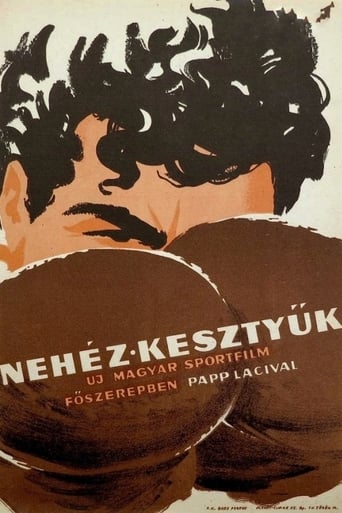
Laci Ács the two-time Olympic champion boxer suffers his first defeat on an international tour that his coach was heavily against. After a tough period he starts working hard to get back into the ring, win back the coach's trust and win his third gold at the Olympics. Starring real three-time Olympic gold medalist boxing legend László Papp.
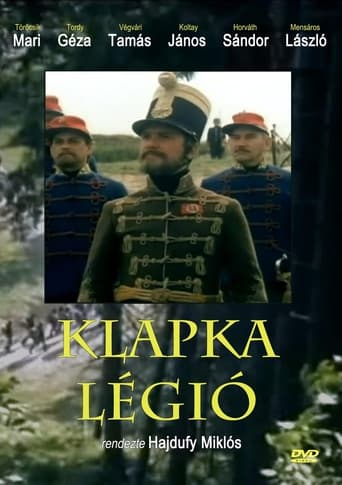
1866. The Habsburg monarchy fight a war against the Italians and the Prussians. General Klapka, who emigrated to England after the fall of the 1848-49 freedom fight of Hungary, exploits the situation and organises a Hungarian legion with the help of the Prussians, then attacking the Austrians in their back sets out to return to Hungary.
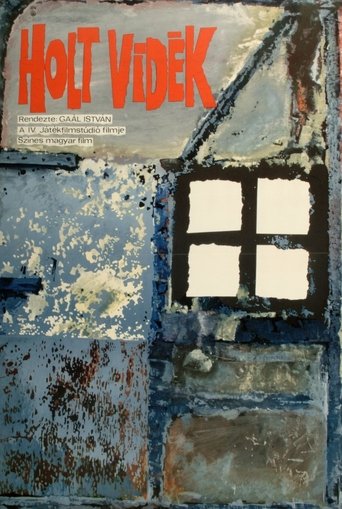
This Hungarian film chronicles the slow deterioration in the life of Juli, a farmer's wife. As the countryside grows ever more deserted because people are moving to towns or large collective farms, she spends more and more time alone. Despite her best efforts to appreciate her situation, her despair grows. The loneliness is briefly interrupted when she and her husband take in an old woman and care for her, but the woman dies. Shortly after her son visits, she is killed in an accident which may have been a suicide. ~ Clarke Fountain, Rovi
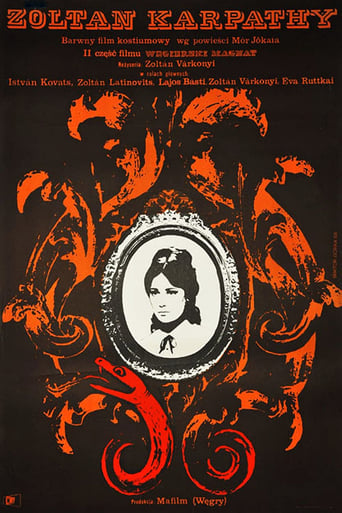
On the novel by Mór Jókai. The first half of the XVIII century. Several decades of life of a noble family Karpati.
Dressed as a gypsy woman, Krisztinka Oltay spies, organizes, and takes measures to help Prince Rákóczi and free his lover, Péter Szakmáry. Péter was taken in by his brother, who was loyal to the emperor, and he wants to execute him in Kassa together with the other Kurucs. Krisztinka inspires the tired kuruc troops with a song and Rákóczi's music to capture Kassa and free the prisoners...
The changing and turbulent history of Hungary is seen through the eyes of three men over a 30-year period in this somber drama. The three recall the highlights of their lives in flashbacks as they reminisce in the mid 1960s. The venerable trio begin their story in the 1930s, through World War II, and the decade beyond the communist invasion of 1956.
The film is a historic parable about the topicality of revolution. 1514. The peasants' uprising is over, Dózsa has been arrested. Werbőczy tries to get the imprisoned peasant leader deny the revolution and offers him the lives of his people in exchange.
Two girls run away from a small village. Gyöngyi comes from an aristocratic family and her father throws her out of the house when he discovers she has gotten pregnant out of wedlock. She finds herself wandering the streets of Budapest and earns money playing the violin in a restaurant. Vica is an orphaned peasant; she is afraid of her stepfather and moves to the city where she gets a job on a construction site. Gyöngyi and Vica meet on the streets of Budapest, move in together and turn their lives around.
A young doctor named Zoltán flees Budapest for his father’s rural estate after performing an illegal abortion on his lover that results in her death. While hiding in the countryside, he attempts to grapple with his guilt and the moral weight of his actions while reconnecting with his estranged family. His isolation is interrupted by a burgeoning relationship with a local woman, Mira, which forces him to choose between permanent escape or facing legal and ethical accountability.
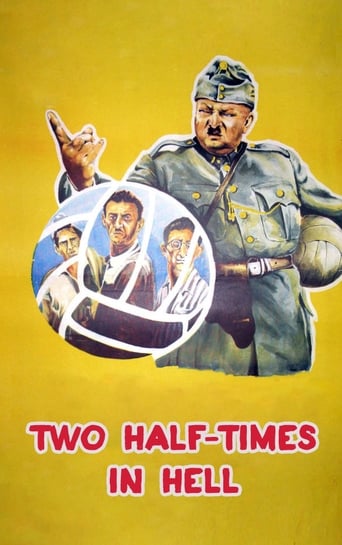
To celebrate Hitler's birthday, a soccer match is organised between the Germans and a group of Hungarian political prisoners, one of whom is a famous pre-war football star.
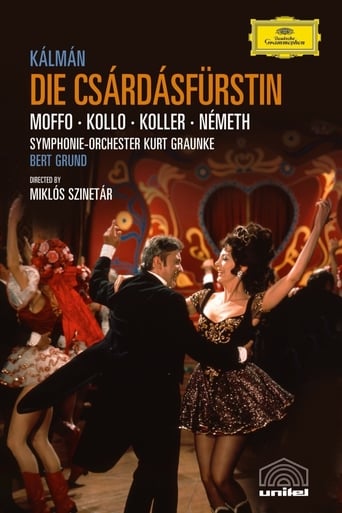
Kálmán Imre's beloved operetta comes to the screen in this comedy of music, marriage and class set in Budapest and Vienna before the outbreak of the First World War, recorded at the Budapest Opera in 1963.
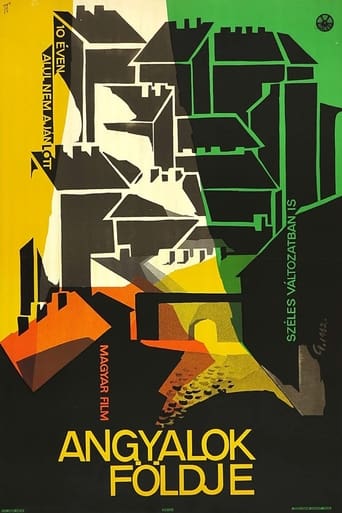
The film is a ballad about the dwellers of a block-of-flats in Angyalföld.
Anyegin arrives home in an abandoned castle for his uncle's funeral. He is a misanthropic, tired, cynical man who has seen it all, tried it all and is tired of what others - including his young neighbour, Lensky - consider the meaning of his life. At Lensky's invitation, he visits the Larin's estate, where he meets Tatiana, a young girl under the spell of books and a fan. Tatiana falls in love with Anegin and confesses her feelings in a letter...
In 1956, a crusading newspaper reporter covers the Soviet invasion of Hungary. Initially critical of the communists, the feature later espouses the virtues of social changes implemented since the invasion.
The "sleepless years" in this propaganda piece by director Felix Marlassy occur on Csepel Island, an island south of Budapest that is home to an armaments factory. The factory workers are shown being exploited by imperialists, capitalists gone berserk, and fascists, more or less in that exact chronological sequence. The heavy-handed approach does much to undercut the belief that when socialism finally takes over, the lives of the workers are brought up to a human level. In this instance, audiences might prefer a more nuanced and subtle statement, no matter what the message.
One day, two unsuccessful rock musicians, Ede and Zaki, come across a competition. To commemorate the anniversary of the Institute for the Blind, they have to write a musical piece for the blind. Since there are no other candidates, they get the job. In two nights they put the piece together. However to their great disappointment, they find that they also have to teach the blind kids to perform it, if they want to get the money. Unwillingly they are submerged into the world of the blind; just like the spectator. While Zaki works on the musical in a studio, Ede starts rehearsing with the blind youths. A strange competition starts among the blind girls. They all fall in love with Ede, and the blonde Edith makes up her mind to approach him. But he fails as a director. He has no idea how to handle these people, so he soon gives up. However...
October, 1956. Colonel lieutenant Szabó sends a platoon with the mission of calming the people demonstrating in the town. The platoon is lined up under the command of Lieutenant Csendes and the soldiers aim at the demonstrators. Szusza Kis changes sides, and Csendes is unable to shoot at his childhood mate. They withdraw.
In 1930s Hungary, budding aristocrat Lőrinc Parcen Nagy undergoes a moral awakening. He abandons his privileged life to join the socialist underground, facing the harsh realities of class struggle and the approach of WWII.
Miniseries on the life and work of the outstanding composer Hector Berlioz.
Based on the novel of the same name by Lajos Meszterházy about the escape from prison of two communists sentenced to death. The movie is set in 1921, two years after the defeat of the Hungarian Soviet Republic.
Márta, a 40-year-old neurosurgeon, falls in love. She leaves her shining American career behind and returns to Budapest to start a new life with the man she loves. But she waits for him at the Liberty Bridge in vain – he does not appear at their rendezvous. Márta starts to search for him desperately, but when she finally finds him, the love of her life claims that they have never met before.
Viewers also picked
Middle-aged widow Beatrice Hunsdorfer and her daughters Ruth and Matilda are struggling to survive in a society they barely understand. Beatrice dreams of opening an elegant tea room but does not have the wherewithal to achieve her lofty goal. Epileptic Ruth is a rebellious adolescent, while shy but highly intelligent and idealistic Matilda seeks solace in her pets and school projects, including one designed to show how small amounts of radium affect marigolds.
Viewers also picked
While serving life in prison, a young man looks back at the people, the circumstances and the system that set him on the path toward his crime.
Viewers also picked
A young girl lives in the Outer Hebrides in a small village in the years just before WWI. Isolated and hard by the shore, her life takes a dramatic change when a terrible tragedy befalls her.
Viewers also picked
Based on the true story of a black girl who was born to two white Afrikaner parents in South Africa during the apartheid era.
Viewers also picked
Set in the 1890s on the Hungarian plains, a group of farm workers go on strike in which they face harsh reprisals and the reality of revolt, oppression, morality and violence.
Shares 2 cast members
Dr. Alan Stone breaks new ground for treatment of the mentally ill through an experiment on three paranoid schizophrenic patients who believe they are Jesus Christ.
Viewers also picked
In 1956, a crusading newspaper reporter covers the Soviet invasion of Hungary. Initially critical of the communists, the feature later espouses the virtues of social changes implemented since the invasion.
Shares 2 cast members
In 1930s Hungary, budding aristocrat Lőrinc Parcen Nagy undergoes a moral awakening. He abandons his privileged life to join the socialist underground, facing the harsh realities of class struggle and the approach of WWII.
Shares 3 cast members
A naive young man witnesses an escalation of violence in his small hometown following the arrival of a mysterious circus attraction.
Shares a lead actor