Skip to content
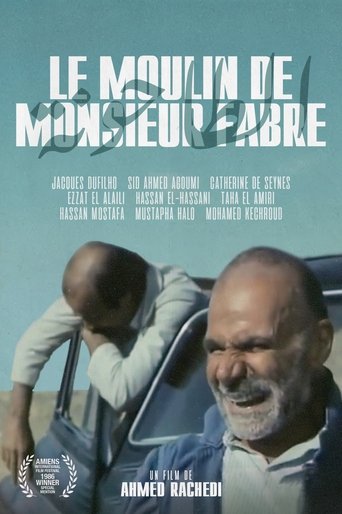
The Mill of M. Fabre poster
Recommendations based on

The Mill of M. Fabre

1983 Movie Drama Comedy

The story of the post-independence nationalization of the mill of Monsieur Fabre, an old man attached to the land of Algeria where he was born. In this small town in eastern Algeria, there was nothing else to nationalize and they were actively preparing for the arrival of high dignitaries who would elevate the mill to the rank of an industrial flour mill even though it was threatened with ruin. The comedy gets worse when the football player from the local team withdraws for love, the officials' visit is canceled and Mr. Fabre returns.

Same cast & genre

38 Shares actors and at least one genre with this title
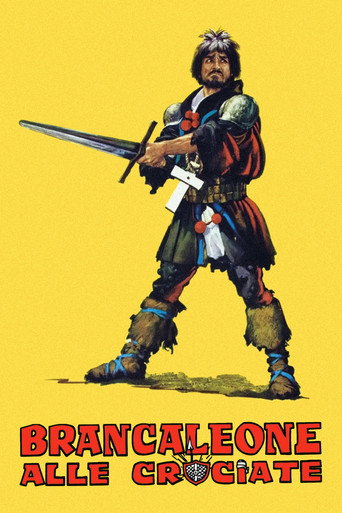
Soldier of Fortune poster
6.3 FILM

Medieval soldier of fortune Ettore is traveling through Europe with his partners looking for a fight where they can earn some money. When they come across a Spanish castle under siege by the French army, Ettore bides his time to determine which side is the winning one. This is at first the French, but the treatment he receives from them is unpleasant enough to make him change his mind and turn to the Spanish side. Somehow, Ettore must rally the weakened Spanish troops to battle their enemy long enough for reinforcements to arrive.

Soldier of Fortune

1976 Action
Slightly Ahead poster
FILM

A brilliant swindler, Olivier Parker, hires a small-time pipe salesman, Amédée, to swindle a naive provincial, Ferdinand Galiveau, a chicken merchant. Renamed Teddy Morton and now a jockey, Amédée must ride a mare on which Ferdinand, advised by Parker, must bet. Absolutely convinced of his mystification, Parker bets on an oddball who, of course, loses, while at the last minute Galiveau, having bet on an outsider, wins a fortune. All Parker has to do is find another sucker.

Slightly Ahead

1956 Comedy
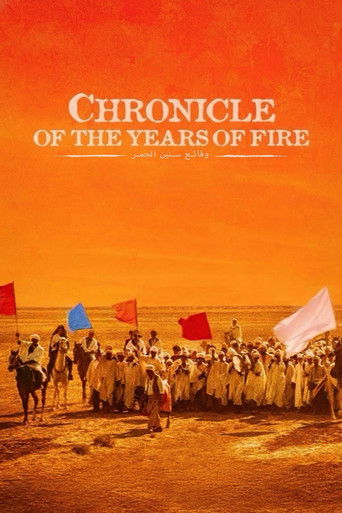
Chronicle of the Years of Fire poster
6.6 FILM

A meticulous chronicle of the evolution of the Algerian national movement from 1939 until the outbreak of the revolution on November 1, 1954, the film unequivocally demonstrates that the "Algerian War" is not an accident of history, but a slow process of suffering and warlike revolts, uninterrupted, from the start of colonization in 1830, until this "Red All Saints' Day" of November 1, 1954. At its center, Ahmed gradually awakens to political awareness against colonization, under the gaze of his son, a symbol of the new Algeria, and that of Miloud, half-mad haranguer, half-prophet, incarnation of Popular memory of the revolt, the liberation of Algeria and its people.

Chronicle of the Years of Fire

1975 Drama
Take Your Ten Thousand Francs and Get Out poster
FILM

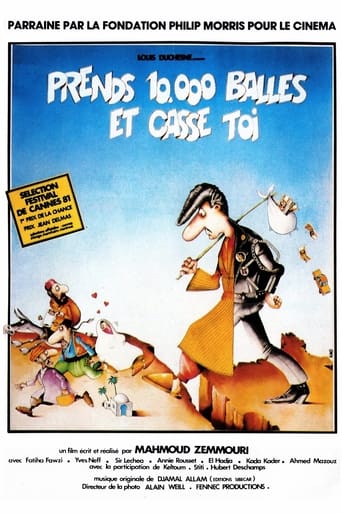
In 1980, Lionel Stoléru—France’s Secretary of State for Migrant Workers—introduced a "repatriation grant" of 10,000 francs (known as the "Stoléru million"), paid to immigrants who agreed to return permanently to their countries of origin. One Algerian family decided to leave France. Upon arriving in the small rural town of Boufarik, Algeria, in a brand-new Peugeot 404, they caused a scandal. Their liberated ways drew the villagers' ire, and the two children knew nothing about Algeria or local customs. The film was selected for the Cannes Film Festival in 1981, and in 1982, it won the Critics' Prize at the Chamrousse International Comedy Film Festival.

Take Your Ten Thousand Francs and Get Out

1981 Comedy
The Olive Tree of Boul'hivet poster
FILM

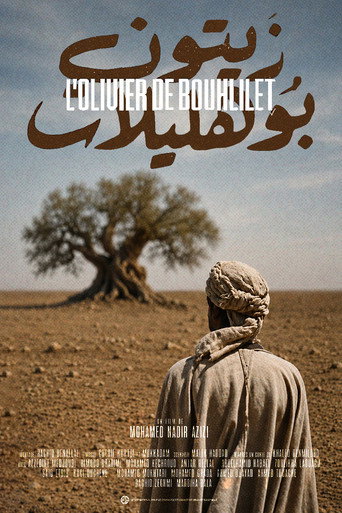
Belkacem, a young unemployed man living in the Saharan village of Boulhilet, is entrusted by Bouacha, an old dervish who came from nowhere, with the secret of the olive tree, the only lush tree and true mystery in this stone desert. After water supply works, modern life bursts into the village. Belkacem, ill-prepared for this situation, confuses dream and reality. Believing he has killed his rival who loves his beloved, he flees the village after donning the clothes of the dervish, whose gait he now imitates.

The Olive Tree of Boul'hivet

1978 Drama
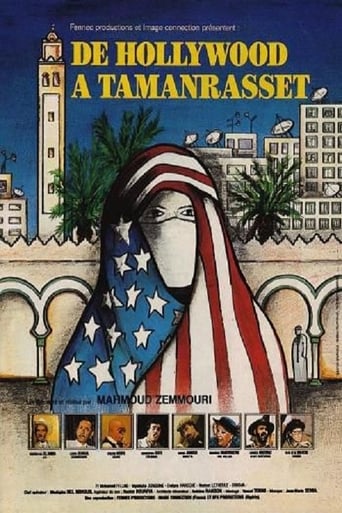
From Hollywood to Tamanrasset poster
FILM

On the outskirts of Algiers, Algeria. the arrival of the satellite dishes governs the lives of the inhabitants. Dissatisfied with their lives, they think of themselves as the heroes of American soap opera and movies, so JR, Sue Ellen, Rambo, Kojak, Spock and others take possession of bodies and minds, with many typical American culture elements. These heroes mix in a beautiful funny mess, with tradition and modernism, Islam and television, reality and fiction.

From Hollywood to Tamanrasset

1990 Comedy
Echebka (الشبكة) poster
FILM

Maamar (Sid Ali Kouiret), a young fisherman working in a small port in western Algeria, is forced to sell his goods at a discount every day to Si Khelifa (Abdelhalim Rais), owner of many trucks and a cannery where the wives work fishermen. He has a strange encounter. As he returns from fishing, bassinet in hand, he witnesses a car accident. Indeed, a car hits a tree with a beautiful girl “Hayat” on board who has lost consciousness. Maamar pulls her out of the car and saves her. It is at this precise moment that he realizes the existence of another world. As if awakened from a long sleep, he realizes that this exploitation can no longer continue. He leaves his village and his wife Laâlia (Fatima Belhadj) on a whim for three years. He finds himself in the capital which he leaves to return to his village and carry out a saving action...

Echebka (الشبكة)

1976 Drama
The Honour of the Tribe poster
FILM

Like every year in Zitouna, a bear handler passes by. With his creature, he comes to challenge the small community. And like every year, it is Slimane El Mabrouk who defends the honor of the tribe. But this time, he dies, leaving two orphans, Omar and Ourida. Robbed of their inheritance, the children will grow up alone. The years pass, the French army settles in, and with it, the war. Mysteriously, one day, after the murder of a French legionnaire, Omar disappears into the bush, while his sister dies in childbirth. Omar will return to the village, much later, once independence has been acquired, as a representative of power and with this enigmatic formula: "You must know that the Revolution has not forgotten you". Personal revenge? Sincere desire to bring progress and modernity? ... The inhabitants of Zitouna, upset in their ancestral way of life, will not be long in having an answer to their questions.

The Honour of the Tribe

1993 Drama
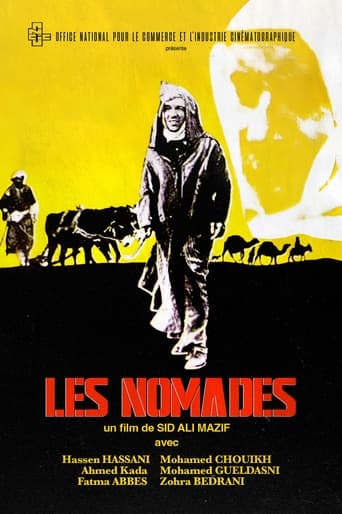
The Nomads poster
FILM

When their father dies, three nomadic sons choose different voices. The first part for the city, the second tries to live as its ancestors develop and the third integrates one of the new agricultural cooperations. "A pastoral society (1,500,000 inhabitants) on the threshold of decisive choices, destructured by the evolution of economic relations which lead to the concentration of herds in the hands of a few, to the support of rangelands and to the movement of impoverishment and proletarianization of the greatest number. The attitudes of the protagonists occur in relation to the economic and political involved in the process of agrarian revolution. The alternative lies only in the free adherence of small breeders to the forms of economic and social reorganization of the Agrarian Revolution and their insertion in the profound movements of social and political change that affect Algerian society." Sid Ali Mazif

The Nomads

1976 Drama
The Winds of the Aures poster
FILM

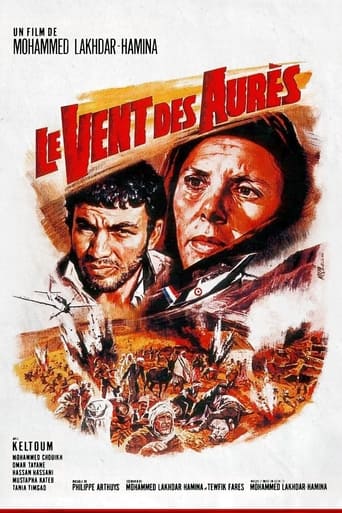
The transformations of the daily life of the Algerian people during the destructive French occupation, then during the war of liberation. While military repression is in full swing, a peasant woman finds herself alone in her mountain home when her only son is kidnapped by French soldiers shortly after her husband's death during a raid. One day, seeing a dead chicken, which she considers a bad omen, she decides to leave home and embarks on a painful journey through the mountains. Accompanied by a couple of chickens, she moves from one detention camp to another in a desperate search for her missing son. The film is inspired by the events experienced by the director's family.

The Winds of the Aures

1967 Drama
Ali in Wonderland poster
FILM

In the 1980s, barely 18 years after Algeria's independence, Algerian immigration to France massively fueled the construction industry, responding to a demand for hard, undervalued labor. Behind the idea of ​​"selective immigration," these men were recruited primarily for their bras and their knock-kneed hands, shaped by construction sites. Invisible yet essential, they built roads, buildings, and infrastructure, often at the cost of precarious conditions. Ali, an Algerian crane operator in France, philosophically accepts the harassment faced by immigrants like himself on construction sites and in daily life. He hopes to escape his situation with the money he wins in the lottery, and from the top of his crane, he allows himself to dream, observing the world through binoculars. One day, the jackpot falls...

Ali in Wonderland

1980 Drama
Hiziya poster
FILM

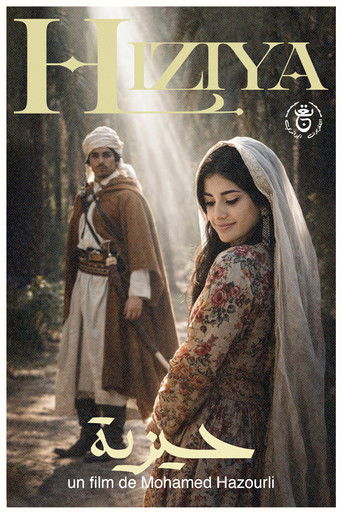
It was from the popular song-poem by Mohamed Ben Guittoun that director Mohamed Hazourli (of the Constantine regional station of RTA) wrote the screenplay. Hiziya Bent Ahmeb Bey, 23 years old, lived in southeastern Algeria, in a village called Sidi Khaled. The daughter of a powerful notable of the Dhouaouda tribe, who regularly migrated through the desert, Hiziya was exceptionally beautiful, to the point that other girls were jealous and envious of her, and men succumbed to her charm. But the young woman's heart belonged to Saïd, an orphan taken in as a child by his uncle. They met in secret and married despite family hostility. A month after their wedding, Hiziya died during the transhumance in the desert. The death of his beloved plunged Saïd into deep grief, to the point that he abandoned his possessions and family to wander the desert.

Hiziya

1977 Drama

Closely Ranked

10 Ranked across franchise, crew, cast, themes, genre, era and audience scores
Hiziya poster
78% match FILM

It was from the popular song-poem by Mohamed Ben Guittoun that director Mohamed Hazourli (of the Constantine regional station of RTA) wrote the screenplay. Hiziya Bent Ahmeb Bey, 23 years old, lived in southeastern Algeria, in a village called Sidi Khaled. The daughter of a powerful notable of the Dhouaouda tribe, who regularly migrated through the desert, Hiziya was exceptionally beautiful, to the point that other girls were jealous and envious of her, and men succumbed to her charm. But the young woman's heart belonged to Saïd, an orphan taken in as a child by his uncle. They met in secret and married despite family hostility. A month after their wedding, Hiziya died during the transhumance in the desert. The death of his beloved plunged Saïd into deep grief, to the point that he abandoned his possessions and family to wander the desert.

Hiziya

1977 Drama

Shares a lead actor · TMDB similar