A group of young adults will spend their adolescence at the Elite Way School, where they will learn about love, life and live their passion for music.
The story of four teenagers who have always lived in the city of Tlacotalpan, Veracruz, Mexico. The story's message emphasizes the distinction between the importance of pursuing one's dreams and the importance of pursuing material things. (a remake of a Argentine telenovela, Verano del 98, adapted for the Mexican audience)
A group of young adults will spend their adolescence at the Elite Way School, where they will learn about love, life and live their passion for music.
Elite Way is one of the most renowned educational institutions in the country, where students have access to high quality education and play sports. Despite the rigid schedule, the richest families in Rio de Janeiro want that their children study in the Elite Way. This is the case of Alice, Diego, Roberta, Carla and Tomás, some rebel teenagers and full of fancies that will discover in music a common goal.
Mundo de Juguete is a telenovela produced in Mexico by Televisa in 1974. It is a remake of telenovela Papá Corazón. This telenovela holds the record for having the second longest run ever for a Latin American telenovela, with a total of 605 episodes. Most telenovelas run for an average of six to eight months; the shortest ones run about four months, and the longest up to a year. Many "Mundo de Juguete" fans believe that either all or some of the tapes and film from the telenovela were lost when Televisa collapsed during the 1985 earthquake. Televisa has been secretive regarding which tapes were lost during that earthquake, so there is no way of confirming this. However, such claims can be disputed, considering that the Telenovela has been repeated on television several times after 1985. During the nineties, it was repeated on Mexico City Canal 9. For a period of time, it was also shown on Unicable or on Telenovelas Televisa remade the telenovela in 2000, and called it "Carita de Angel".
The realistic chronicles of a working class group of Hispanic youth, with heavy subject matter like sex, drug dealing, teen pregnancy, abuse, drinking, rape, deception, and heartbreak.
Para Volver a Amar is a Televisa telenovela that aired on the Canal de las Estrellas channel in Mexico from July 12, 2010 to January 30, 2011. It stars Rebecca Jones, Rene Strickler, Alejandro Camacho, Alejandra Barros, and Africa Zavala. The Mexican version however is taken from the original Colombian soap opera series "El Último Matrimonio Feliz". The story is about six women who befriend each other and help each other deal with the pains of life, particularly in regards to marriage and relationships. They'll realize that even amidst their problems, happiness is not impossible to attain. It won seven Premios TVyNovelas awards for Best Telenovela of the Year, Best Male Villain, Best First Actress, Best First Actor, Best Co-Star Actress, Best Co-Star Actor, and Best Young Lead Actor. Para Volver a Amar aired in the United States on Univision from March 8, 2011 to October 28, 2011 at 12am/11pm central.
Victoria's life is perfect. She is a famous designer, mother of two and the wife of an actor. But she suffers the absence of her daughter Maria, who was separated from her when she was a little girl.
Rosendo Arango, the owner of Grupo La Anita, is married to Alfonsina. They have one son, Damian. Estefanía Bouvier is married to Augusto Castanon and they have one daughter, Elisa. Rosendo cheats on his wife with Carmina Bouvier, Estefanía's sister. Damian and Elisa become friends because Augusto and Rosendo were best friends. But one day, Rosendo and Carmina try to go away from La Ermita, the pueblo in which they live in. But, Estefanía, who had found out about their plans, wants to prevent this, shuts Carmina in her room and then goes with Rosendo in his car, trying to convince him not to run away with Carmina. They have an accident and die and everyone thinks they were lovers.
The Poor, Rich Family is a story of love, romance, twists of fate, and countless amusing situations involving two families with nothing in common—yet who are now forced to live under the same roof. On one side are the millionaire Ruizpalacios family; on the other, the Mendonças, a classic working-class family.
Las Vías del Amor is a Mexican telenovela that aired on the Televisa channel in Mexico and Univision in the United States from 2002-2003.
Muchacha italiana viene a casarse is a 1971 Mexican telenovela by Televisa produced by Ernesto Alonso and directed by Alfredo Saldaña, starring Angélica María and Ricardo Blume. Writing credits belong to Delia González Marquez, Fernanda Villeli, Marissa Garrido, Miguel Sabido and Carlos Lozano Dana The series featured two theme songs: "A dónde va nuestro amor" and "Lo que sabemos del amor". Both songs were written by Eduardo Magallanes and performed by Angélica María.
The story of fifteen-year-old Jovana Luna and the obstacles she will have to overcome in her fight to find happiness with the handsome León Baldomero, the love of her life.
Mar de Amor is a Spanish-language telenovela produced by Nathalie Lartilleux with protagonists Zuria Vega, Mario Cimarro and Mariana Seoane and antagonists Ninel Conde, Marcelo Córdoba and Manuel Landeta. This is a remake of the 1978 Venezuelan telenovela María del Mar.
Pueblo chico, infierno grande is a Mexican historical telenovela produced by José Alberto Castro for Televisa and originally broadcast on Canal de las Estrellas from January 6 to August 1, 1997. Created by Javier Ruán and adapted by Javier Ruán, Mario Hernández, and Sergio Schmucler, the telenovela is based on a true story about Leonarda Ruán. It stars Verónica Castro, Juan Soler, and Guillermo Capetillo. The story is set in the late 19th century and follows Leonarda Ruán, a wealthy widow from the town of Nahuatzen who falls in love with Genaro Onchi, a young man from a humble background. Their relationship faces strong opposition from society, family conflicts, jealousy, and the return of people from Leonarda's past who try to separate them. As secrets and rivalries emerge, Leonarda and Genaro fight to protect their love against the judgment and traditions of their small town.
Fernanda Linares (Livia Brito) is a woman thirsty for revenge after the murder of her husband on their wedding night, where in addition, Fernanda was a victim of rape after the event occurred. However, Fernanda's life will change when she meets Rafael Toscano (José Ron), a handsome young man who recently just received his university degree with whom she will empathize and return to Fernanda the opportunity to love again.
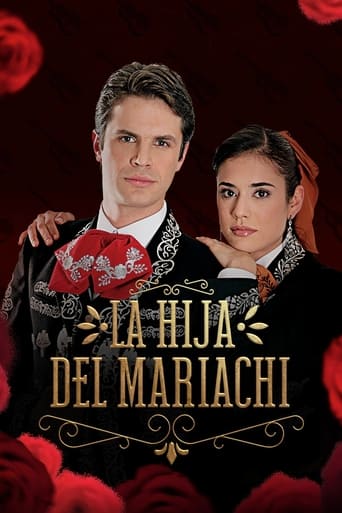
Qué bonito amor is a 2012 Mexican telenovela produced by Salvador Mejía Alexandre for Televisa. It is based on La Hija del Mariachi, produced by Colombian's RCN Television and written by Mónica Agudelo in 2006-2007. Jorge Salinas and Danna García star as the protagonists, while Malillany Marin, Roberto Palazuelos, Marcelo Buquet, Salvador Pineda and Pablo Montero star as the antagonists.
A poor but beautiful woman comes to the city looking for her husband ... who is married to another woman, the evil Gloria. While she falls in love to a handsome and good hearted doctor, she decides to work at nights to earn money at a "Model School" which is, in reality, a high profile brothel...
When the patriarch of a prominent family dies, his heirs battle to determine who will gain control of his beloved soccer team: The Cuervos of Nuevo Toledo.
Pasión is the telenovela that began transmissions on September 17, 2007, in Mexico; Canal de las Estrellas. The novela is a production of Carla Estrada and the stars are Susana González, Fernando Colunga, Sebastián Rulli, and Daniela Castro.
In the early 20th century, the Montes de Oca family—comprising two sisters and a cousin—finds itself entangled in an intense love triangle. Matilde is in love with her cousin Rodrigo, who loves the other sister, Branca Flor; she, in turn, loves a humble fisherman. Upon discovering this, Rodrigo accuses the fisherman of theft, leading to his arrest. The lovestruck cousin’s malice knows no bounds; learning that Branca Flor is carrying the fisherman's child, he waits for the baby to be born so he can make it disappear.
The story of Renata Flores del Angel, a young woman from a wealthy family who falls for Pablo Ramos, the foreman of her father's estate.
Juan de la Cruz, a young seminarian, visits the home of his mother, Ana Joaquina—a religious zealot who has always imposed her will on her son and instilled in him a calling to serve God. Working in Ana Joaquina’s household is Luciana, an innocent, dreamy young woman who falls in love with Juan de la Cruz. One night, swept up in the passion of youth, they give in to their feelings with tenderness and innocence. Upon discovering this, Ana Joaquina throws Luciana out; by then, Luciana is already pregnant with Juan de la Cruz’s child. When the time comes to give birth, she leaves her daughter at a stranger's doorstep, hoping the child will be raised there, but the baby is instead taken to an orphanage. To survive, Luciana becomes involved with a series of unsavory men—including Pedro Trujillo, a brutal man who beats and abuses her.
Emiliano, a wealthy Mexican businessman, is ripped off by his friends and partners. Hidden in Bogotá, he receives help from Rosario, a mariachi singer. She does not know Emiliano’s background and that he is wanted by the police of two countries and by a criminal organization. With a new name and personality, he adapts well to his new life as a mariachi band member and finds in Rosario the love of his life. But he is afraid his secret will tear them apart. He needs to clear his name and resolve his case to avoid that fate. Meanwhile, he often finds his love tested and vulnerable to several rivals, but Rosario always trusts that he has been honest with her.
Nunca te olvidaré is a Mexican telenovela produced by Juan Osorio for Televisa in 1999. It is based on a novel by Caridad Bravo Adams and starring Edith González, Fernando Colunga and antagonistic interests of Alma Muriel, Eugenia Cauduro and Humberto Elizondo.
La Fuerza del Destino is a Mexican telenovela produced by Rosy Ocampo for Televisa. Sandra Echeverria and David Zepeda star as the main protagonists, while Laisha Wilkins, Gabriel Soto, Rosa Maria Bianchi, and Juan Ferrara star as the main antagonists. La Fuerza del Destino won 5 awards in Premios TVyNovelas: Best first actress, best original story or adaptation, best male antagonist, best lead actress, and best telenovela of the year. The theme song is sung by Marc Anthony and Sandra Echeverria. Portions of their performance in the recording studio are periodically shown in the closing credits. Canal de las Estrellas aired La Fuerza del Destino from March 14 to July 31, 2011 Univision had announced that La Fuerza del Destino would air on the network as part of the 2011-2012 programming schedule, and was broadcast from August 2 to December 26, 2011, with La que no podía amar replacing it in both countries. It was awarded"The Best Telenovela of 2012" by Premios TVyNovelas.
Mujeres Asesinas is a series that shows the dark side of women who have been mistreated or abused and become cruel murderers. The series shows how violence and death can overcome the feminine mind.
Set on horse ranches around Houston, Texas, this Spanish-language telenovela covers the three Gallardo brothers' search for vengeance against the wealthy del Junco family, following the mysterious death of their rodeo-riding sister. The brothers soon become aware of the three beautiful del Junco daughters, and entanglements ensue...
Relaciones Peligrosas, originally known as Fisico o Quimica, is a Spanish-language telenovela produced by United States-based television network Telemundo Studios, Miami. It is an adaptation of the Spanish television series Física o Química. It has Sandra Echeverría, Gabriel Coronel, Maritza Bustamante, Gonzalo García Vivanco, Jonathan Freudman, Mercedes Molto, Carlos Ferro, Daniela Navarro, Renato Rossini, Kevin Aponte and Ana Layevska in the leading roles of the plot.
"Golpe de Suerte" tells the lives of three families from different social classes. First there are the Pérez Flores, who live in Neza and are made up of Ignacio, Julia and their children Ronaldo and Wendy. The second family is made up of Miranda Ortiz and her little son Diego; They live in the Roma neighborhood in the house of César Traven, a generous elderly antiques dealer. And finally there are Brenda Uriarte, her brother Tony, her stepmother Constanza and her stepsister Sabrina, an upper middle class family. Each of these families will experience a radical change in their lives the day they win two hundred million pesos.
Desencuentro is a Mexican telenovela produced by Ernesto Alonso for Televisa and originally broadcast on Canal de las Estrellas from November 17, 1997, to April 3, 1998. It is based on the story El enemigo by Caridad Bravo Adams and Luis Moreno, with adaptation by Liliana Abud, Carmen Daniels, and Jorge Lozano Soriano. The telenovela stars Daniela Castro, Juan Ferrara, Ernesto Laguardia, and Alma Muriel. The story follows Victoria San Román, a young woman whose privileged life is shattered after the sudden death of her father leaves her family bankrupt. Believing that powerful businessman Andrés Rivera is connected to her father's downfall, Victoria travels to Mexico City determined to uncover the truth. There she meets Luis Torres, a widowed firefighter and devoted father, and finds herself torn between two very different men as love, revenge, family secrets, and deception shape her destiny.
Martín (Iván Sánchez) hurries to Mina Escondida after getting an urgent letter from his brother begging to be rescued from the hell in which he's living. On arrival, Martin despairs upon finding out that Demetrio (Pablo Montero), his brother, has committed suicide. His sorrow is transformed into hatred and a thirst for vengeance against the woman who caused his brother suffering and brought him to death.
Subete a mi Moto is a Mexican telenovela produced by TV Azteca in 2002. Created by Veronica Suarez and Eric Vonn. The protagonists include Sandra Echeverria, Vanessa Acosta, Mark Tacher, Alejandra Urdaín,and the antagonistic interpretation by Bárbara Mori, Jorge Luis Pila and Vanessa Villela.
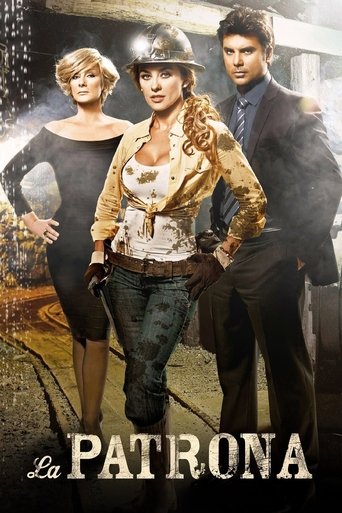
La Patrona is a Spanish-language telenovela produced by United States-based television network Telemundo Studios, Miami and Mexican Argos Comunicación. The telenovela is a remake of the Venezuelan telenovela La Dueña, written by José Ignacio Cabrujas. The name reflects a local term or slang in Mexico to address a person recognized as the main boss. However, the title is also a reflection of both the protagonist and the antagonist struggle to conquer power, authority and respect in a labor field traditionally deemed to be a man's job.
Corazón Guerrero is a Mexican telenovela produced by Salvador Mejía Alejandre for TelevisaUnivision and originally broadcast on Las Estrellas from March 28 to November 11, 2022. It is based on the Argentine telenovela Valientes (2009), created by Marcos Carnevale and Lily Ann Martin. Adapted by Katia Rodríguez Estrada, the telenovela was directed by Víctor Rodríguez and Carlos Santos. It stars Alejandra Espinoza, Gonzalo García Vivanco, Rodrigo Guirao, Christian de la Campa, Ana Martín, Sabine Moussier, Diego Olivera, and Altaír Jarabo. The story follows the Sánchez brothers—Jesús, Damián, and Samuel—who reunite to seek justice against Augusto Ruíz Montalvo, the powerful man responsible for destroying their family years earlier. While carrying out their plan for revenge, each brother falls in love, forcing them to choose between hatred and forgiveness. As hidden truths come to light, they must confront betrayal, family secrets, and the consequences of the past.
The realistic chronicles of a working class group of Hispanic youth, with heavy subject matter like sex, drug dealing, teen pregnancy, abuse, drinking, rape, deception, and heartbreak.
Shares a lead actor · Same director
Emiliano, a wealthy Mexican businessman, is ripped off by his friends and partners. Hidden in Bogotá, he receives help from Rosario, a mariachi singer. She does not know Emiliano’s background and that he is wanted by the police of two countries and by a criminal organization. With a new name and personality, he adapts well to his new life as a mariachi band member and finds in Rosario the love of his life. But he is afraid his secret will tear them apart. He needs to clear his name and resolve his case to avoid that fate. Meanwhile, he often finds his love tested and vulnerable to several rivals, but Rosario always trusts that he has been honest with her.
Shares a lead actor · Viewers also picked
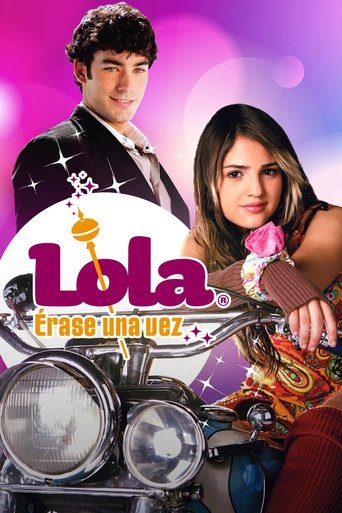
Lola... Érase Una Vez is a teen targeted Mexican melodrama telenovela produced by Televisa that is an adaptation of the Argentine global phenomenon and teenage telenovela Floricienta. The show tells the story of a modern Cinderella, Lola, a 20 year old girl, who works as a nanny and sings in a rock band and meets her so call Prince Charming. It debuted in Mexico on February 26, 2007, starring Aarón Díaz and Eiza González. The show had gained popularity among teens and children not only in Mexico but also internationally including Venezuela, Spain and the in United States. With concert performances filling major auditoriums and songs by the protagonist become radio hits. It debuted in the United States on Univision in March 2008 and ended on January 26, 2009. The series consisted of 224 episodes which aried Monday through Friday at 3 P.M, intentionally for teenagers to watch after school, as is typical for most teenage & children telenovelas in Spanish networks.
Same director · Viewers also picked
A group of young adults will spend their adolescence at the Elite Way School, where they will learn about love, life and live their passion for music.
Shares 4 cast members · Same director
Juan de la Cruz, a young seminarian, visits the home of his mother, Ana Joaquina—a religious zealot who has always imposed her will on her son and instilled in him a calling to serve God. Working in Ana Joaquina’s household is Luciana, an innocent, dreamy young woman who falls in love with Juan de la Cruz. One night, swept up in the passion of youth, they give in to their feelings with tenderness and innocence. Upon discovering this, Ana Joaquina throws Luciana out; by then, Luciana is already pregnant with Juan de la Cruz’s child. When the time comes to give birth, she leaves her daughter at a stranger's doorstep, hoping the child will be raised there, but the baby is instead taken to an orphanage. To survive, Luciana becomes involved with a series of unsavory men—including Pedro Trujillo, a brutal man who beats and abuses her.
Shares a lead actor · Viewers also picked
Teresa Chavez is a young woman with an obsession for money and ambition. Despite her beauty and the fact that she was raised in the bosom of a loving family, she is resentful; her one desire is to leave her humble but poor neighbourhood.
Viewers also picked
Mi Pequeña Traviesa is a Mexican youth and family telenovela produced and directed by Pedro Damián for Televisa and originally broadcast on Canal de las Estrellas from December 8, 1997, to April 24, 1998. It is an adaptation of the Argentine telenovela Me llaman Gorrión, created by Abel Santa Cruz. The telenovela stars Michelle Vieth and Héctor Soberón. The story follows Julia González, a young woman whose dreams of pursuing a professional career are interrupted after her father is left paralyzed in an accident. To support her family, she disguises herself as a boy in order to find work. Along the way, she falls in love with Alberto Miranda, and together they must overcome social differences, family conflicts, and the many obstacles that stand in the way of their happiness.
Shares a lead actor · Viewers also picked
Four teenagers at an elite school in Buenos Aires are drawn together by their love of music, despite their differing social and economic backgrounds.
Viewers also picked
Miss XV follows the story of two teenage best friends, Valentina and Natalia, (who were born on the same day at the same hour), who dream of the perfect quinceañera birthday party, and long to become the girlfriends of their respective crushes, Niko and Eddy.
Shares a lead actor · Same director
When Marichuy was born, her mother—believing she was on the verge of death—handed her over to a priest, who took her to an orphanage. At the age of fourteen, Marichuy ran away from the institution and began wandering from place to place, scraping together a living however she could. Years later, she was attacked by a drunkard; the incident left her harboring resentment toward men and plagued by harrowing nightmares.
Viewers also picked