
The love story of young Countess Natasha Rostova and Count Pierre Bezukhov is interwoven with the Great Patriotic War of 1812 against Napoleon's invading army.

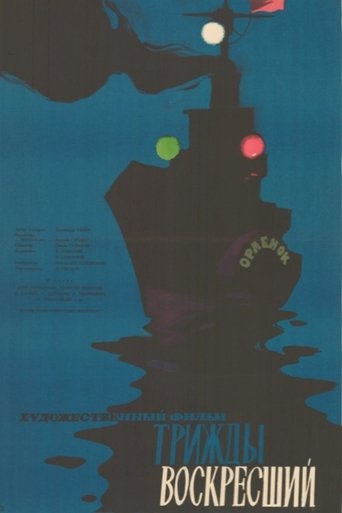
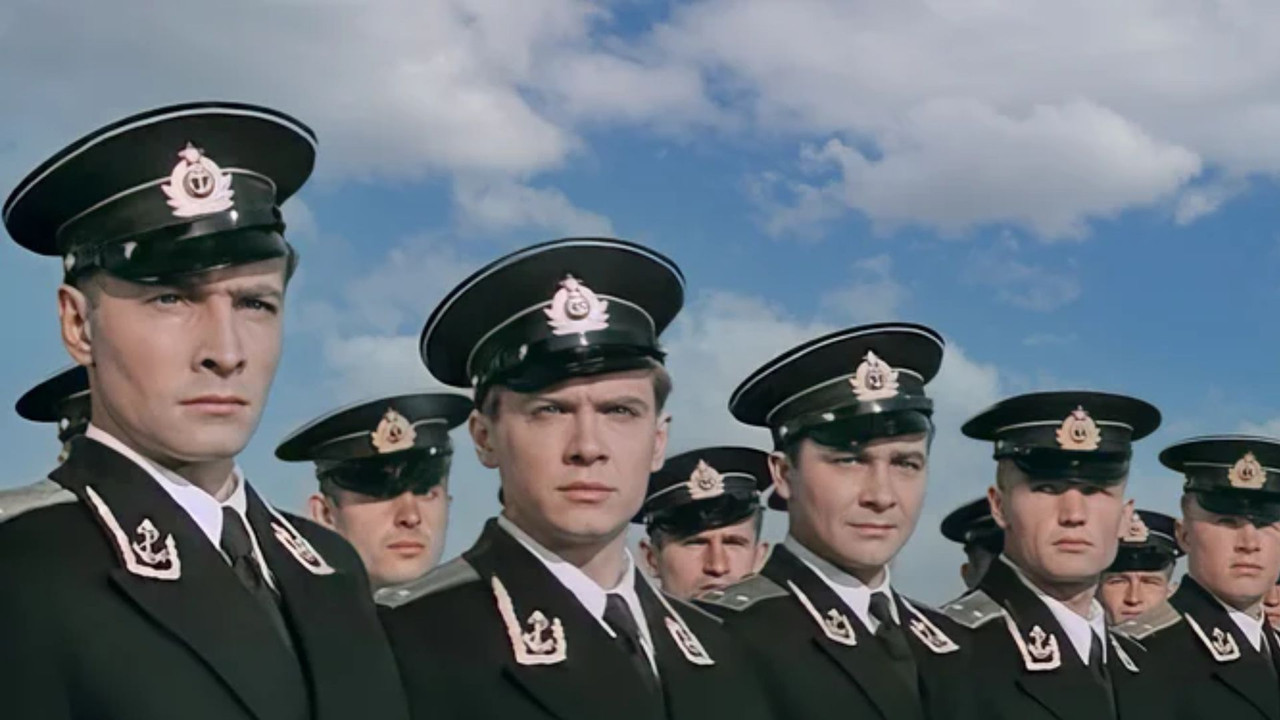
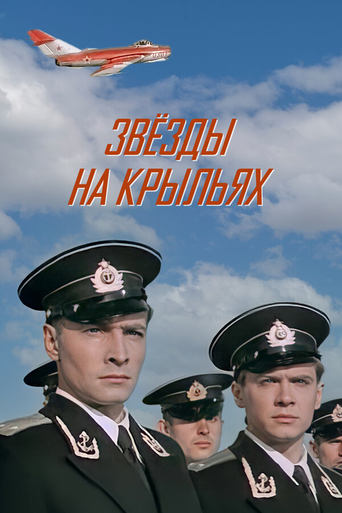
Aviation school. Future officers of the jet squadron are engaged in practical studies. When performing a training assignment, cadet Korenyuk violates flight discipline. The instructor pilot, considering Korenyuk to be a talented cadet, forgives him for this offense. When, during another training flight, Korenyuk dives onto a fishing vessel, cadet Bukreev, who is in the cockpit, takes the blame. Bukreyev is arrested for ten days...
The love story of young Countess Natasha Rostova and Count Pierre Bezukhov is interwoven with the Great Patriotic War of 1812 against Napoleon's invading army.

Just before the 1905 Bolshevik Revolution, factory workers strike against their oppressive factory bosses. When a worker is accused of stealing a piece of machinery, he commits suicide, and his colleagues revolt against the overarching Czarist regime. As the strike drags on and government officials grow increasingly desperate to end it, their methods of dealing with the rebellious workers become more and more aggressive.
As 1809 nears its end, Natasha attends her first ball, where Andrei falls in love with her with the intent of marriage. However, as her father demands they wait, the prince travels abroad, leaving Natasha in desperate longing. But she meets Anatol Kuragin and forgets Andrei. Part two of the four-part adaptation of Leo Tolstoy's 1869 novel.
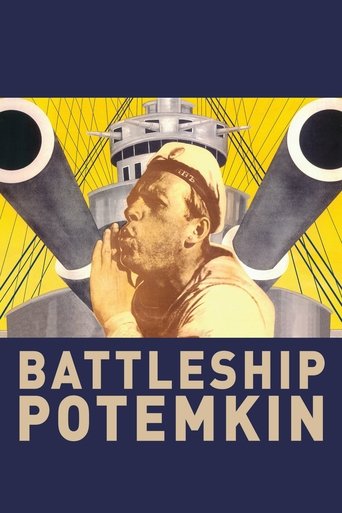
In the midst of the Russian Revolution of 1905, the crew of the battleship Potemkin revolt against the brutal, tyrannical regime of the vessel's officers. The resulting street demonstration in Odessa brings on a police massacre.
Russia, 1936: revolutionary hero Colonel Kotov is spending an idyllic summer in his dacha with his young wife and six-year-old daughter Nadia and other assorted family and friends. Things change dramatically with the unheralded arrival of Cousin Dmitri from Moscow, who charms the women and little Nadia with his games and pianistic bravura. But Kotov isn't fooled: this is the time of Stalin's repression, with telephone calls in the middle of the night spelling doom - and he knows that Dmitri isn't paying a social call...
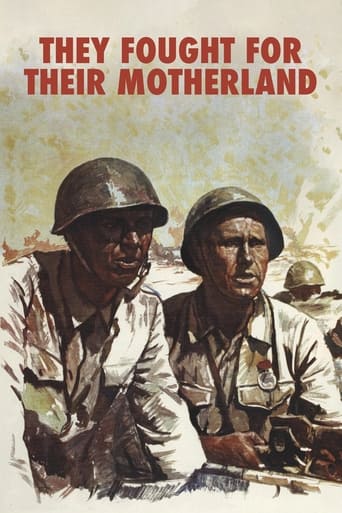
In July 1942, in the Second World War, the rearguard of the Russian army protects the bridgehead of the Don River against the German army while the retreating Russian troops cross the bridge. While they move back to the Russian territory through the countryside, the soldiers show their companionship, sentiments, fears and heroism to defend their motherland.
As Moscow is set ablaze by the retreating Russians, the Rostovs flee their estate, taking wounded soldiers with them, and unbeknownst to them, also Andrei. Pierre, dressed as a peasant, tries to assassinate Napoleon but is taken prisoner. As the French are forced to retreat, he's marched for months with the Grande Armée, until being freed by a raiding party. Part four of the four-part adaptation of Leo Tolstoy's 1869 novel.


In 1805 St. Petersburg, Pierre Bezukhov, illegitimate son of a rich nobleman, is introduced to high society. His friend, Prince Andrei Bolkonsky, joins the Imperial Russian Army as aide-de-camp of General Mikhail Kutuzov in the War of the Third Coalition against General Napoleon Bonaparte. Part one of the four-part adaptation of Leo Tolstoy's 1869 novel.
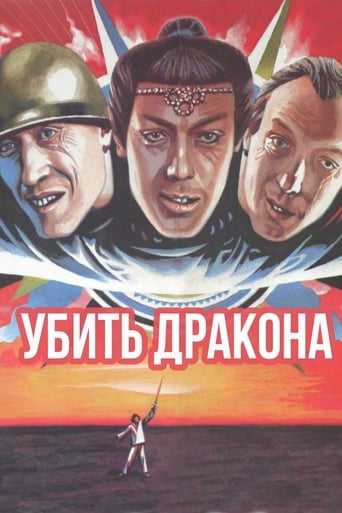
Dragon is a bloody dictator, who kills every opponent. People live hopelessly, until Lancelot comes to save the beautiful Elsa. Lancelot can only win, if all people become free from fear, that is feeding the Dragon's power. Dragon's multiple personalities, ranging from a "dragon" to a "samurai" to a "Nazi", scare the hell out of all people, except Lancelot. Finally Dragon drops all his masks, to become the most dangerous of his incarnations - "himself". And the battle begins
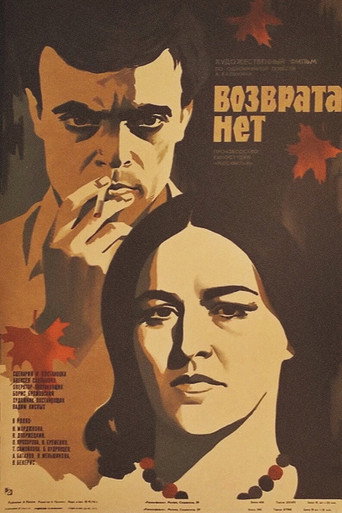
A Marine's presumed death leads his fiancée to marry another, only for him to return, leading to a tragic, symbolic end for him despite his physical survival.
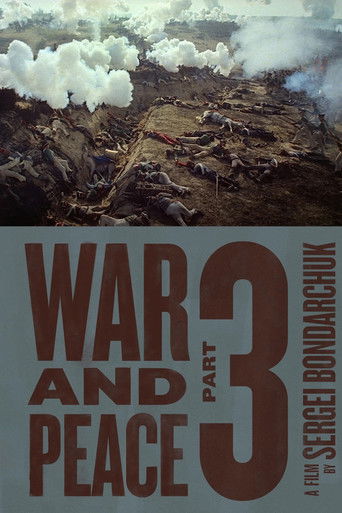
In 1812, as Napoleon's army invades Russia, Kutuzov asks Bolkonsky to join him as a staff officer, yet the prince requests a command in the field. Pierre sets out to watch the armies' impending confrontation. As the Battle of Borodino rages, he volunteers to assist in an artillery battery. Part three of the four-part adaptation of Leo Tolstoy's 1869 novel.
Russian Empire, 19th century. Poor Nykanor leaves his village and becomes a miner in the Donbas. His son Ostap also becomes a miner and works in the mine for thirty years, but after his father's sudden dismissal, he realizes that the state system needs radical changes.
The victorious path of the Taman army through areas occupied by the white army in the last days of the civil war.
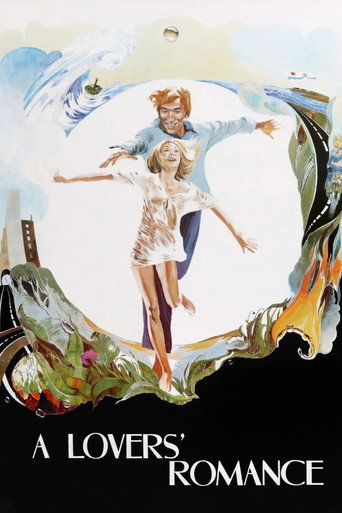
She is smart, surrounded by parental attention and therefore not completely independent, and he is one of those who cannot imagine himself without creation, since he is a builder. They are very different people, but the young are united by a keen sense of responsibility for everything that happens around. And so, having parted, they will definitely meet again...
A first episode in the trilogy about the Russian partisan's resistance against the Nazi occupation of Russia during WWII. The film is set in August of 1941, when the Nazi forces invaded and occupied the European part of Russia. Major Mlynsky is in charge of the special group of partisans. His group is absorbing other small groups of Russian soldiers, who managed to survive from the attacks of the overwhelming Nazi forces. The Nazi Armies are advancing to Moscow. Major Mlynsky is organizing the Russian partisan's resistance against the Nazis, behind the enemy lines.
Fascist Italy's prime-minister Mussolini is arrested following the Allies landing in Sicily. Meanwhile, Soviet troops plan their offense towards Kyiv. Lt. Col. Lukin's regiment crosses the Dnieper river as the division's vanguard. Unbeknownst to them, they're merely a ploy to mislead the Germans so the rest of the army can catch them off guard.
About the famous fortification scientist, Lieutenant General of Engineering Troops Dmitry Mikhailovich Karbyshev. Before the war, he led the work on strengthening the Brest Fortress and the approaches to Leningrad. In 1940 he was 60 years old. The beginning of the war found him in Belorussia. After one of the battles, seriously wounded, he was taken prisoner to the Mauthausen camp, where he fought against fascism for 1320 days.
Young scientist is going to taiga for his experiments but meets poachers on the way.
Sailor Alexei takes a job as a loader at the port in order not to leave his two young sons growing up without a mother for a long time. In the port he meets a girl Tanya. The resulting feeling is not an easy test.
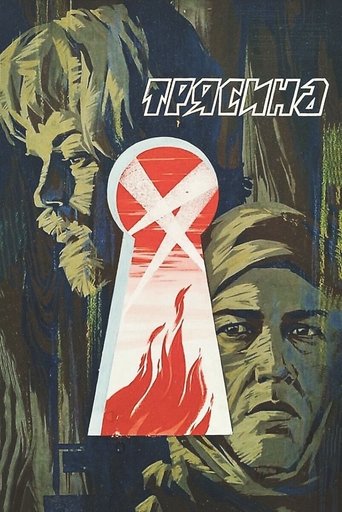
The action takes place during the Great Patriotic War. Peasant Matryona Bystrova loses her husband at the front, then her eldest son goes missing. Matryona decides to save the youngest son at all costs and shelters him from being drafted into the army in the attic of the house until the end of the war. But it turns out that saving her son, she condemns him to spiritual death, and herself to torment of conscience. A private story about the mother of a deserter grows to epic proportions...
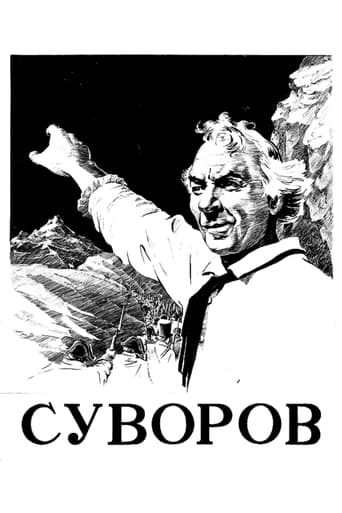
Primarily a biographical documentary about the military career of Alexander Vasilvich Suvorov, who was Field Marshal of the armies of Catherine the Great and Czar Paul I. After many military successes during the reign of Catherine, General Suvorov broke with her successor, Paul I, the Mad Emperor, over questions regarding army policy. He went into retirement and wrote "The Science of Victory," containing maxims such as "Swiftness of movement accompanies victory," and "the real general is he who defeats the enemy before reaching him." The czar recalled Suvorov to become the leader of the joint armies of Russia and Austria against Napoleon.
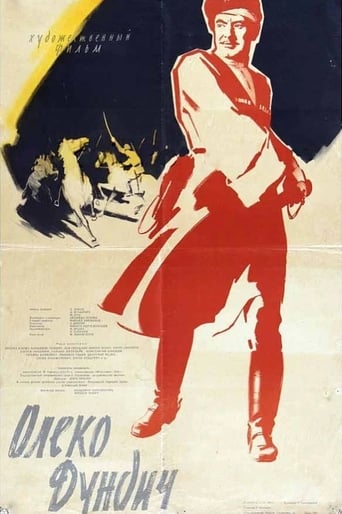
Life and times of Aleksa Dundic, a volunteer in the Serb army during WW1, who later became a legend by fighting for the Red Army in the Russian Civil War.
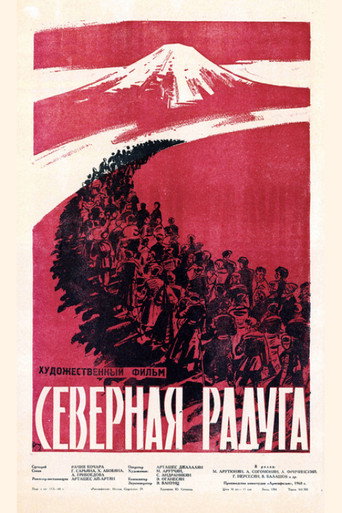
The movie is dedicated to the liberation of Eastern Armenia in 1827.
In 1919, on the tow boat Komsomol went to beat the whites. During the Second World War, during the heroic battle on the Volga on this boat were transporting wounded soldiers and children
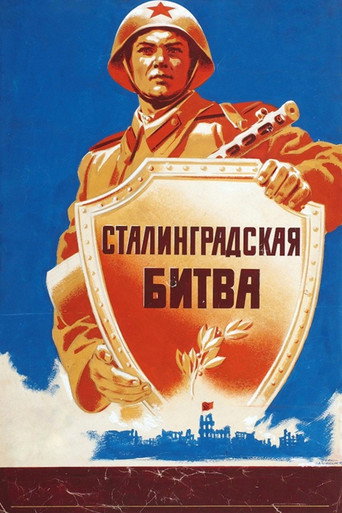
A 1949 two-part Soviet epic war film about the Battle of Stalingrad.
The film portrays the life of the legendary Azerbaijani guerrilla of the Second World War Mehdi Huseynzadeh, who fought the Nazi forces in the present-day Italy and Slovenia, hence the film's name On distant shores referring to the Adriatic Sea.
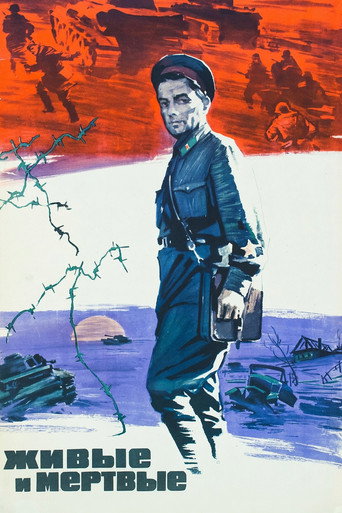
A Russian war correspondent is drafted into the war and finds himself in the middle of battle. When he loses his party card, however, he is treated as a deserter until he finds help from a kind man.
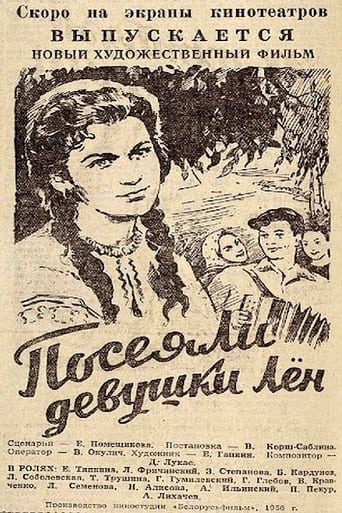
The manager of the Belarusian collective farm Naideika Krasovich, inspired by the award at the All-Union Agricultural Exhibition for the high flax harvest, gives her word to double the harvest. Many fellow villagers doubt her success, and only Grigory Pavlovich, the new director of MTS, who left his family in the city and came to the village at the call of the party, provides Nadeika with all kinds of support and excessive attention, because he loves and, it seems, is loved. In parallel to this story, a plot develops about the love of the tractor driver Zosya for the forester Yanka, who unrequitedly suffers for Nadeyka.
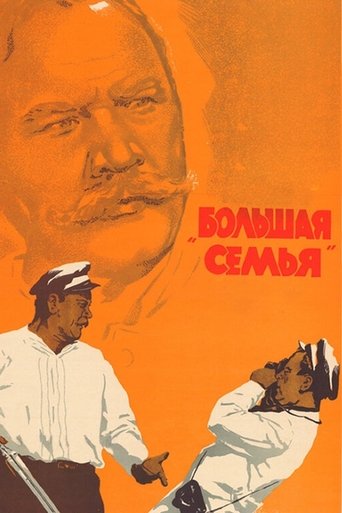
The characters of the picture are a large family of hereditary shipbuilders. Three generations of the Zhurbin live under one roof: grandfather Matvei, his son Ilya, three sons of Ilya — Aleksei, Anton and Viktor. In a short time, representatives of the fourth generation are born. The share of the youngest son of Aleksei fall the most severe life tests. The background for family conflicts is the reorganization of production. All Zhurbin's have to change their profession to move on.
According to the story of the same name by Anatoli Kalinin. The love story of Antonina and the battalion commander Nikitin, whom she sheltered after a severe wound. Antonina Kashirina is wanted to be excluded from the party, accusing the Don Cossack woman living in the territory occupied by the Germans during the war. They don't believe that she hid and treated a wounded Soviet officer. Unable to withstand insulting suspicions, she leaves the party committee bureau. On the way home, Tonya recalls how she picked up a bleeding artillery — the battalion commander Nikitin, she hid him and treated him as she fell in love...
A jazz musician seeks refuge from a lynch mob on a remote island, where he meets a hostile game warden and the young object of his attentions.
Viewers also picked
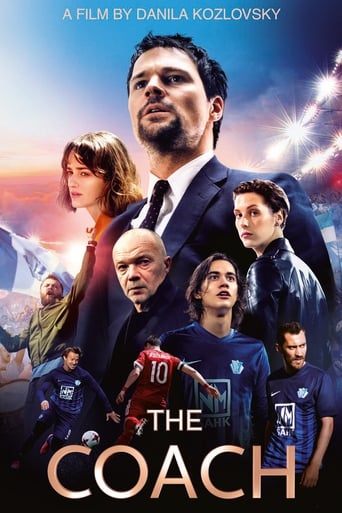
Contemporary Russia. After he flubs a penalty kick, a humiliated national soccer player quits the game. He flees to a small town, where he decides to coach their local team.
Viewers also picked
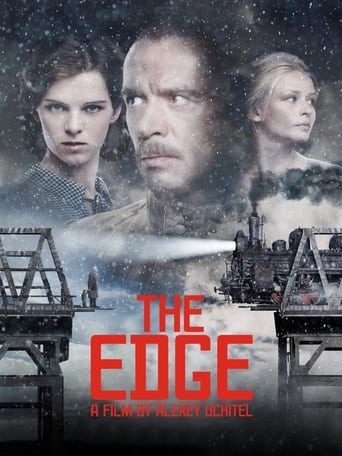
The action takes place shortly after the end of the Second World War in the Siberian hinterland, among Russians and Germans with damaged personal stories and a strange transformation: the victors seem to be crawling into the skins of the defeated, and vice versa. Ignat, is the embodiment of the larger-than-life image of the Soviet victorious warrior who, in fact, proves to be shell-shocked, sick and broken, although not completely destroyed. Trains become fetish for the heroes of the film, and speed becomes a mania; they virtually become one with their steam engines, while the machines take on human names. The heroes set up an almost fatal race in the Siberian forest, risking their own lives and those of others.
Viewers also picked
Director Mario Van Peebles chronicles the complicated production of his father Melvin's classic 1971 film, "Sweet Sweetback's Baadasssss Song." Playing his father in the film, Van Peebles offers an unapologetic account of Melvin's brash and sometimes deceptive conduct on the set of the film, including questionable antics like writing bad checks, tricking a local fire department and allowing his son, Mario, to shoot racy sex scenes at the age of 11.
Viewers also picked
A teenager pretends to be dying from cancer as a way to cope with the realities of his daily existence and his father's terminal illness.
Viewers also picked
On the French island of Mont Saint-Michel, Jack, a failed presidential candidate, Tom, a poet and Sonia, a physicist, engage in an intellectual conversation about politics, philosophy and life over the course of a single day.
Viewers also picked
After the lewd and frenetic Dance of the Seven Veils, and with the solemn pledge from the very lips of Herod himself that she could have whatever her heart desires up to half his kingdom, wanton and proud young Salomé comes before her king with an unreasonable demand. Beguiled by John the Baptist, and then scorned for the sake of his god, lascivious Salomé—encouraged by her mother, the vindictive, Herodias—commands that John be executed and his head delivered on a silver platter.
Viewers also picked
An aimless young man who is scalping tickets, gambling and drinking, agrees to coach a Little League team from the Cabrini Green housing project in Chicago as a condition of getting a loan from a friend.
Viewers also picked
Based on the writer/director's childhood, FARMING tells the story of a young Nigerian boy, 'farmed out' by his parents to a white British family in the hope of a better future. Instead, he becomes the feared leader of a white skinhead gang.
Viewers also picked
Russia, 1936: revolutionary hero Colonel Kotov is spending an idyllic summer in his dacha with his young wife and six-year-old daughter Nadia and other assorted family and friends. Things change dramatically with the unheralded arrival of Cousin Dmitri from Moscow, who charms the women and little Nadia with his games and pianistic bravura. But Kotov isn't fooled: this is the time of Stalin's repression, with telephone calls in the middle of the night spelling doom - and he knows that Dmitri isn't paying a social call...
Shares a lead actor