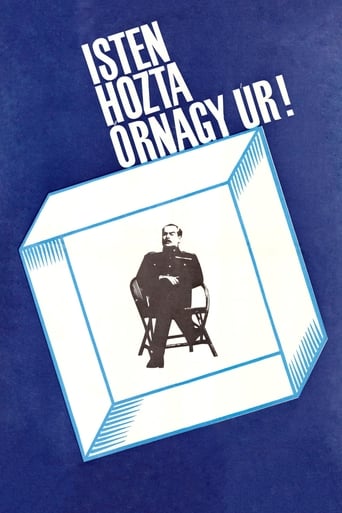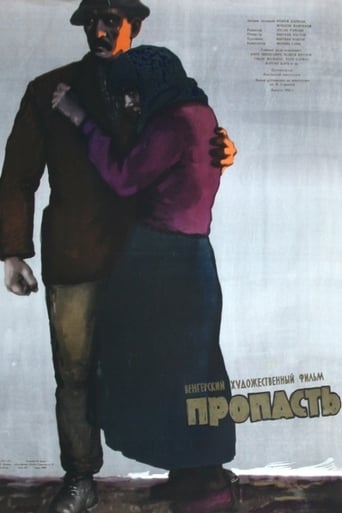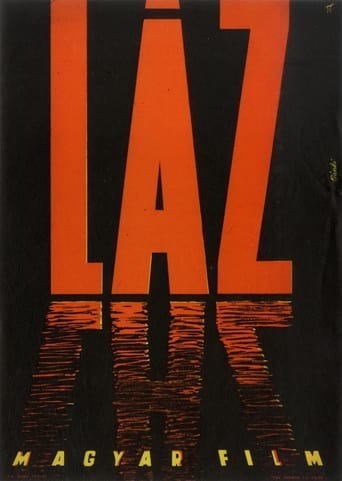
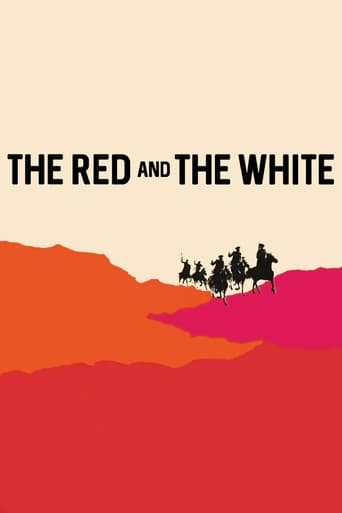
In 1919, Hungarian Communists aid the Bolsheviks' defeat of Czarists, the Whites. Near the Volga, a monastery and a field hospital are held by one side and then the other.
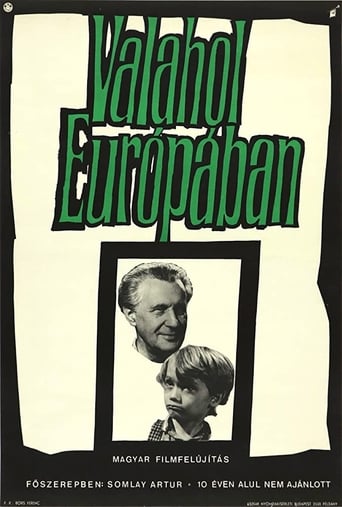
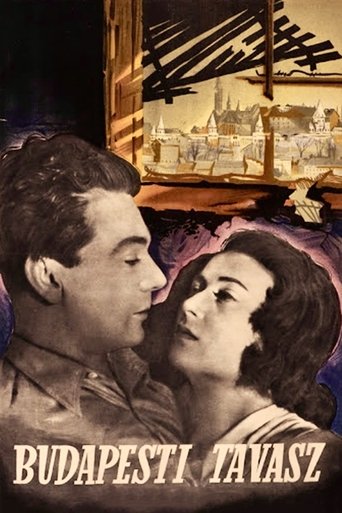
At Christmas Eve in 1944 the runaway Pintér and Gozsó get through the Soviet blockade around Budapest. Pintér intends to hide in a flat abandoned by his own relatives, but he finds his relatives called the Turnovszkys, who are hiding the Jewish Jutka as well. Love unfolds between Zoltán and Jutka.
In 1919, Hungarian Communists aid the Bolsheviks' defeat of Czarists, the Whites. Near the Volga, a monastery and a field hospital are held by one side and then the other.
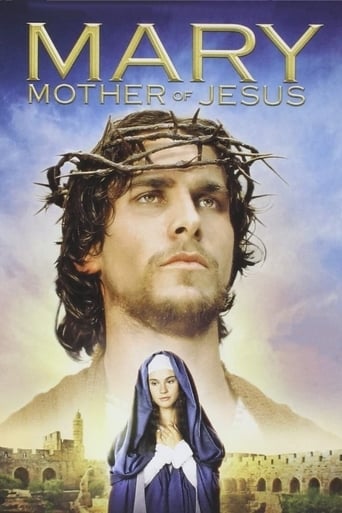
Mary, Mother of Jesus is a 1999 made-for-television Biblical film that retells the story of Jesus through the eyes of Mary, his mother.
Set in the 1890s on the Hungarian plains, a group of farm workers go on strike in which they face harsh reprisals and the reality of revolt, oppression, morality and violence.
A Hungarian soldier is taken prisoner by the Russians and sent to a Siberian prison camp. Meanwhile the years of loneliness are too much for his wife to bear.
The Tóth family resides in Northern Hungary. The couple has a daughter and a son, the latter a member of the armed forces. When his weary major is ordered to take a vacation, the son talks him into a visit to his family home. Hilarity ensues when the Tóths go overboard trying to make things pleasant for the visiting major in hopes of an easier life for their son, the soldier.
A Hungarian doctor, Dr. Hajnal, who always considered himself out of politics, falls in love with the Soviet intelligence agent, the radio operator Alba, operating in the occupied Wehrmacht of Hungary. By accident, the radio operator is hiding in the doctor’s house. Hainal is drawn into a life-threatening confrontation with the Germans. A difficult question arises before him: to remain neutral when people die around and Alba is threatened with death, or to remain an honest person — to make his personal choice and take part in this struggle.
1944. A band of runaways and orphans of the war scour the countryside in search of food and shelter. They invade and then taken in by a musician and former concert pianist who’s hiding out in a ruined castle. After the initial altercation between them the gang accepts his guidance and he wins their respect by protecting them from the elements.
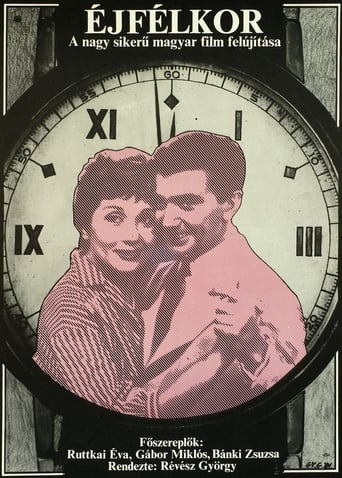
On New Year's Eve in 1956 the artist couple, the actor János and the dancer Viki are hastily packing. While they are waiting for the car, which is to take them across the border, their entire life is replayed in front of their eyes.
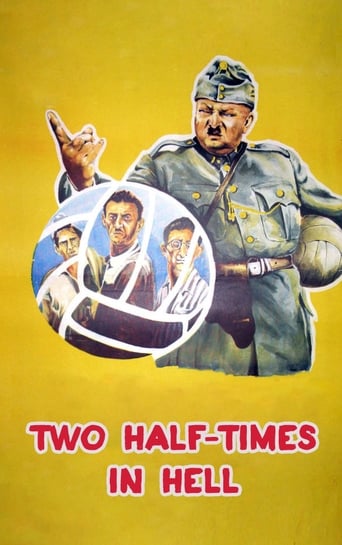
To celebrate Hitler's birthday, a soccer match is organised between the Germans and a group of Hungarian political prisoners, one of whom is a famous pre-war football star.
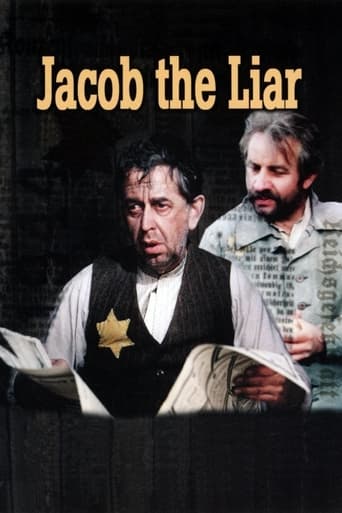
A Jewish ghetto in the east of Europe, 1944. By coincidence, Jakob Heym eavesdrops on a German radio broadcast announcing the Soviet Army is making slow by steady progress towards central Europe. In order to keep his companion in misfortune, Mischa, from risking his life for a few potatoes, he tells him what he heard and announces that he is in possession of a radio - in the ghetto a crime punishable by death. It doesn't take long for word of Jakob's secret to spread - suddenly, there is new hope and something to live for - and so Jakob finds himself in the uncomforting position of having to come up with more and more stories.
Iván is living in exile from Hungary when he receives word that an old flame is ill. His return to Budapest rekindles old memories and reopens old wounds.
During a mining accident, the police arrest the sole survivor on suspicion of murder, whose pickaxe is stained with the blood of one of the victims. The investigation reveals that the identity card found on the victim belongs to another person, that the collapse was deliberate and that the miner believed to be the victim has escaped.
After the failure of the Kossuth's revolution of 1848, people suspected of supporting the revolution are sent to prison camps. Years later, partisans led by outlaw Sándor Rózsa still run rampant. Although the authorities do not know the identities of the partisans, they round up suspects and try to root them out by any means necessary.
During World War I, an ancient feud divides the industrial area in the county of Nógrád. The workers of the steal factory start a strike, but the miners do not support their cause. Sanyi from the steal factory and Ilonka from the mining community fall in love with each other, but can only meet secretly. When the boy dances with the girl in the pub of the miners, he is recognised and knocked down.
On the novel by Mór Jókai. The first half of the XVIII century. Several decades of life of a noble family Karpati.
Based on a true story, a love affair develops between a half brother and half-sister. When pregnancy results and word gets out the public is outraged.
Four young primary school teachers live together in a country cottage of a remote village and in a constant monotony somewhat varied with quarrelling with one another. They spend their lives around the school and the yard. One night, a cheerful company of hunters pops in their home.
Count János Buttler rushes home to his parents and his beloved for the school holidays. On the way, they stop at Baron Dőry's house, where János is deviously trapped. In the presence of false witnesses, he is forcibly married to Baron Dőry's pregnant daughter. The swearing priest is the father of the unborn child. Although Buttler, his family and friends do their utmost to have the marriage annulled, the Church and the court, fearing for his authority, will not allow it. John Buttler and his lover therefore choose another way to divorce.
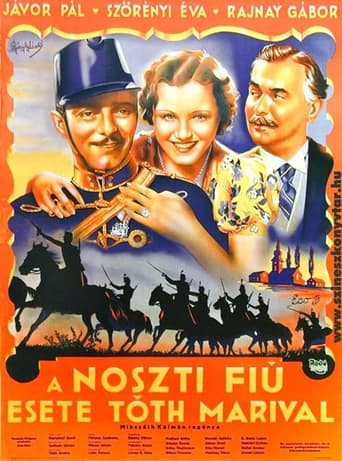
Another winner from Hungarian director Ivan Szekely (aka S.K. Seeley and Steve Sekely), A Nosty fiu Esete Toth Marival was released in English-speaking regions as I Married for Love. Feri Noszty (Paul Javor) is a handsome but irresponsible Hussar officer who prefers a life of wine, women and song to his military responsibilities. Unwilling to bow to family pressure, Feri refuses to marry heiress Mary Toth (Eva Szorenyi) for her dowry alone. But Mary falls in love with the prideful Feri, and to win his affections she poses as her own poverty-stricken maid. Based on a novel by Kalman Mikszath, A Noszty Fiu Esete Toth Marival was filmed simultaneously in Hungarian- and German-language versions.
Nagy István, the formerly poor peasant boy returns to his native village as a teacher. His conviction is that the abyss between rich and poor can be diminished by good will. The rich Böröcz Horváth Klári returns his love, and also Böröcz Horváth is willing to help the poorest family, the Bakos. Bakos Jóska, who was sent to serve the tough Böröcz Horváth as a payment, dies of an infected wound and the people in the village hold the teacher liable as well. Nagy István realises, that the abyss cannot be ceased, what is more, it is impassable. He breaks up with his fiancée and stands by the side of the poor.
The film evokes count Pongrácz, who, as late as the 19th century, managed to live a life, which reminds one of his medieval ancestor's values. He acts in defiance of the town by fighting his own battle against it, having been offended by the town.
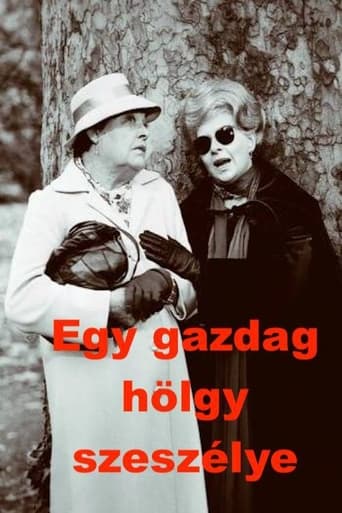
Emese, a wealthy old lady returning from Switzerland, invites her seven surviving classmates, all graduates of the 1930s, to a belated 50th reunion at her own expense. All but one of them live abroad, and they gather at the hotel on Margaret Island from all over Europe, where the hour of honesty arrives for all. During their days together, they confront themselves and their sins of the past decades. This is Hédi Váradi's last work for television, and her classmates Hilda Gobbi, Zsuzsa Gordon, Teri Náray, Juci Komlós, Erzsi Pártos and Zsuzsa Bánki all give excellent and long-lasting character performances.
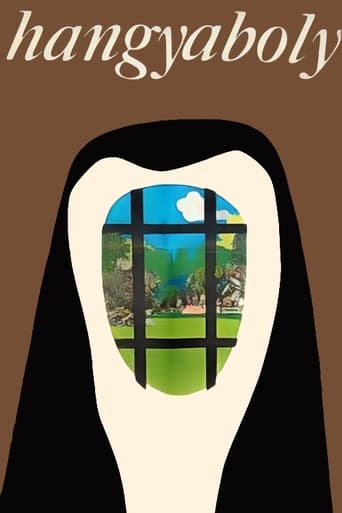
The head of the nunnery is dying, and the members are divided in two groups as the election of the new head approaches. Led by Virginia, the younger nuns stand up for changing the strict religious dogmas and would like a modern school with genuine science, a bathroom to be built, and a freer spirit. Their candidate is sister Magdolna, who went to secular universities, too. The seminarists, led by Király Erzsi, also rebel against the older nuns' strict discipline and the depressed atmosphere of the institution. However, Magdolna does not want to stay involved in the fight because she is deterred by Virginia's sinful attraction towards her and the tools Virginia is using to gain victory at any price.
Set between the First and Second World Wars, a “tale of an industrialist's rise to power and his destruction through his own greed” - BFI.
Kis Katalin and Varga Jóska are getting married. During their honeymoon they are preparing plans for the future. Katalin, however, seems to lag behind both in her studies and the work competition, becoming a couch potato version of a wife. Jóska, instead of trying to help, does nothing else than his work.
Shares a lead actor · Same director
1944. A band of runaways and orphans of the war scour the countryside in search of food and shelter. They invade and then taken in by a musician and former concert pianist who’s hiding out in a ruined castle. After the initial altercation between them the gang accepts his guidance and he wins their respect by protecting them from the elements.
Shares a lead actor · Same director
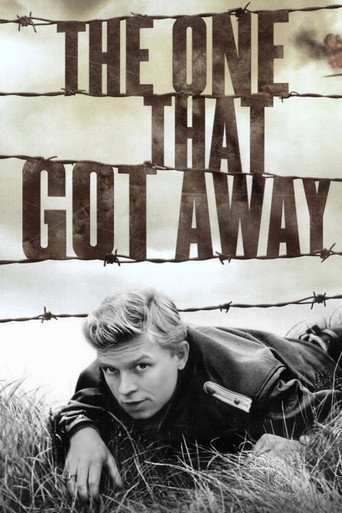
Based on the true story of Oberleutnant Franz von Werra, the only German prisoner of war captured in Britain to escape back to Germany during the Second World War.
Viewers also picked
In Korea, on 6 September 1950, Lieutenant Benson's platoon finds itself isolated in enemy-held territory after a retreat. Soon they are joined by Sergeant Montana, whose overriding concern is caring for his catatonic colonel. Benson and Montana can't stand each other, but together they must get the survivors to Hill 465, where they hope the division is waiting. It's a long, harrowing march, fraught with all the dangers the elusive enemy can summon.
Viewers also picked
The Germans believed that no man could escape from Colditz Castle, set as it was in the heart of the Reich, 400 miles from any neutral frontier. This film, based on Pat Reid's epic novel, tells the story of how the British, French, Dutch and Polish prisoners of war who were incarcerated in Colditz set out to prove their captors wrong.
Viewers also picked
A conflict develops between a troubled Vietnam veteran and the sister he lives with when she becomes involved romantically with the army buddy who reminds him of the tragic battle they both survived.
Viewers also picked
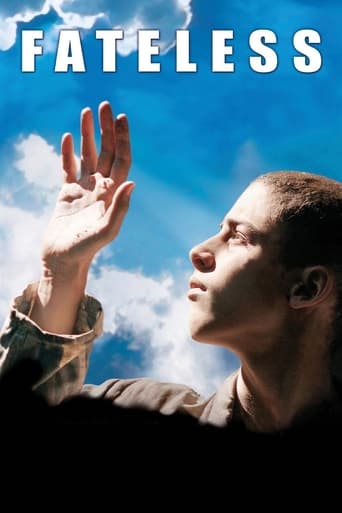
A Hungarian youth comes of age at Buchenwald during World War II. György Köves is 14, the son of a merchant who's sent to a forced labor camp. After his father's departure, György gets a job at a brickyard; his bus is stopped and its Jewish occupants sent to camps. There, György find camaraderie, suffering, cruelty, illness, and death. He hears advice on preserving one's dignity and self-esteem. He discovers hatred. If he does survive and returns to Budapest, what will he find? What is natural; what is it to be a Jew? Sepia, black and white, and color alternate to shade the mood.
Viewers also picked
In 1919, Hungarian Communists aid the Bolsheviks' defeat of Czarists, the Whites. Near the Volga, a monastery and a field hospital are held by one side and then the other.
Shares a lead actor
On New Year's Eve in 1956 the artist couple, the actor János and the dancer Viki are hastily packing. While they are waiting for the car, which is to take them across the border, their entire life is replayed in front of their eyes.
Shares 3 cast members
A dramatization of the American general and his court martial for publically complaining about High Command's dismissal and neglect of the aerial fighting forces.
Viewers also picked