
7.9
FILM
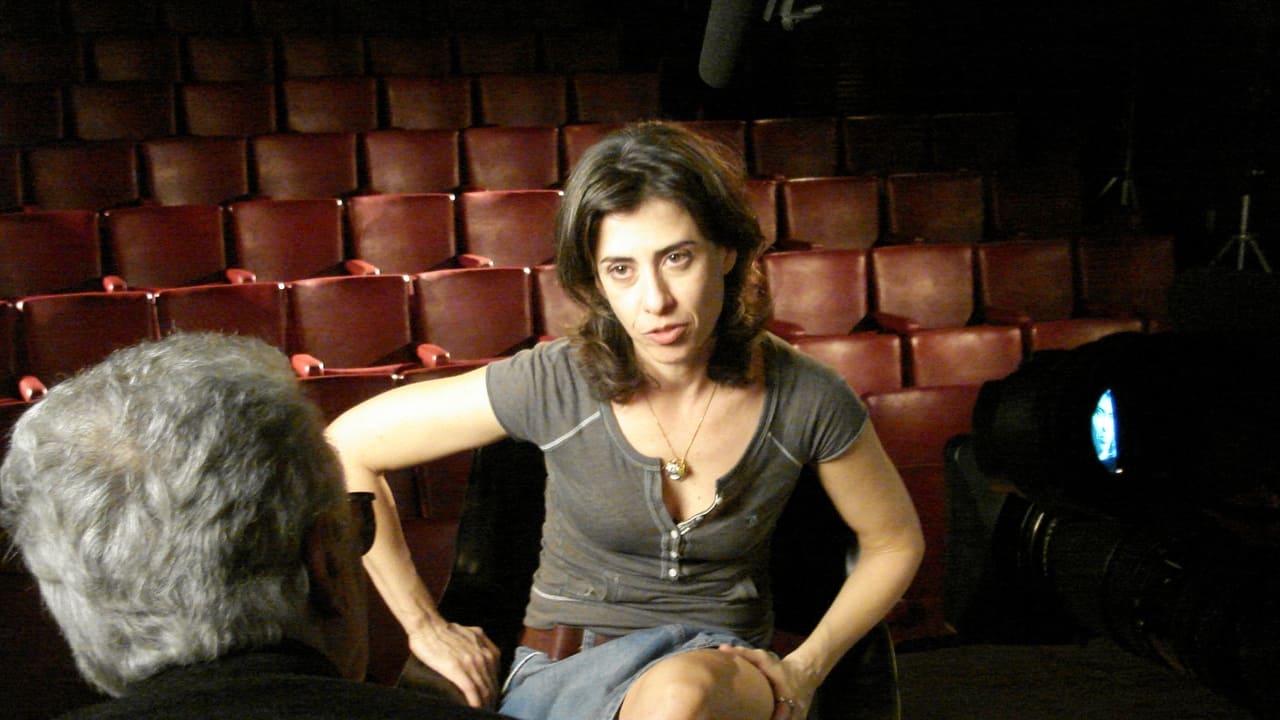
Documentary on poor people living in a slum in Rio de Janeiro, on the occasion of New Year's Eve of 1999.

Following a newspaper ad, ordinary women tell part of their life stories to director Eduardo Coutinho, which are then re-enacted by actresses, blurring the barriers between truth, fiction and interpretation.
Documentary on poor people living in a slum in Rio de Janeiro, on the occasion of New Year's Eve of 1999.
A Brazilian theatre group that through talent, irony and humour confronted the Brazilian violent dictatorship in the 1970s revolutionising the gay movement worldwide and changing theatre and dance language to an entire generation.
Besieged by cancer and nearing the end, the genius Argentine-Brazilian filmmaker Héctor Babenco (1946-2016) asks Bárbara Paz, his wife, for one last wish: to be the protagonist of his own death.

The historical, political, and social context of Brazil in the 1960s, 1970s, and 1980s, and the impact of each decade on the life and work of the acclaimed actress Marília Pêra.
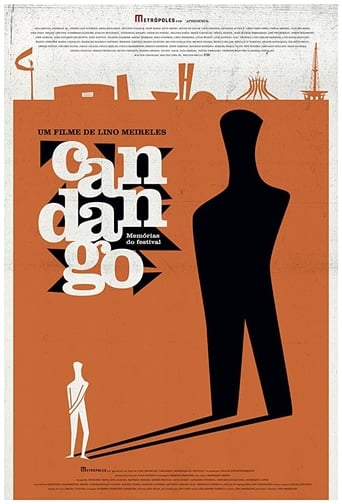
In 1965, a year after the military coup in Brazil, an oasis of freedom opened in the country's capital. The Brasília Film Festival: a landmark of cultural and political resistance. Its story is that of Brazilian cinema itself.
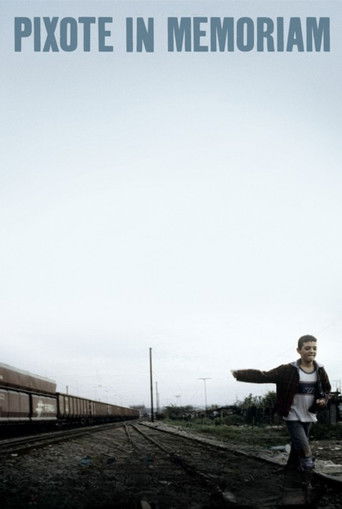
A tribute documentary on Fernando Ramos da Silva, the famous child star of the acclaimed film by Hector Babenco, "Pixote, a Lei do Mais Fraco" (1981). 20 years after his assassination by the police, his co-stars and Babenco talk about Fernando's contributions to the film, his troubled life when his acting works didn't took off as expected (since he was typecast) and which made him turn back to his past life of poverty and crimes. The project also presents that film's influence to many directors and artists around the world.
Continuing the exploration of the thin line between truth and performance, Eduardo Coutinho turns his attention to the drama generated during rehearsals for the Galpão Theater Company’s performance of Chekov’s The Three Sisters. As he shoots scenes from the play, Coutinho attempts to capture the very moment in which reality becomes fiction and vice versa—whether through the actors’ bodies and words or in backstage scenes of a performance that will exist only on film.
Seventy critics and filmmakers discuss cinema around the conflict between the artist and the observer, the creator and the critic. Between 1998 and 2007, Kléber Mendonça Filho recorded testimonies about this relationship in Brazil, the United States and Europe, based on his experience as a critic.
Documentary on poor people living in a slum in Rio de Janeiro, on the occasion of New Year's Eve of 1999.
Shares 2 cast members · Same director
Continuing the exploration of the thin line between truth and performance, Eduardo Coutinho turns his attention to the drama generated during rehearsals for the Galpão Theater Company’s performance of Chekov’s The Three Sisters. As he shoots scenes from the play, Coutinho attempts to capture the very moment in which reality becomes fiction and vice versa—whether through the actors’ bodies and words or in backstage scenes of a performance that will exist only on film.
Shares 2 cast members · Same director
Seventy critics and filmmakers discuss cinema around the conflict between the artist and the observer, the creator and the critic. Between 1998 and 2007, Kléber Mendonça Filho recorded testimonies about this relationship in Brazil, the United States and Europe, based on his experience as a critic.
Shares 2 cast members · Same director
In 1965, a year after the military coup in Brazil, an oasis of freedom opened in the country's capital. The Brasília Film Festival: a landmark of cultural and political resistance. Its story is that of Brazilian cinema itself.
Shares a lead actor · Same director

Using the book 'Fragments', which collects Marilyn Monroe's poems, notes and letters, and with participation from the Arthur Miller and Truman Capote estates who have contributed more material, each of the actresses will embody the legend at various stages in her life.
Viewers also picked
A visual montage portrait of our contemporary world dominated by globalized technology and violence.
Viewers also picked

Eduardo Coutinho was filming a movie with the same name in the Northeast of Brazil, in 1964, when there came the military coup. He had to interrupt the project, and came back to it in 1981, looking for the same places and people, showing what had ocurred since then, and trying to gather a family whose patriarch, a political leader fighting for rights of country people, had been murdered.
Shares 4 cast members · Same director
Film adaptation of French economist Thomas Piketty's ground-breaking global bestseller of the same name: an eye-opening journey through wealth and power.
Viewers also picked

Musician and performance artist Laurie Anderson reflects on the deaths of her husband Lou Reed, her mother and her beloved dog.
Viewers also picked
Daniel Craig candidly reflects on his 15 year adventure as James Bond. Including never-before-seen archival footage from Casino Royale to the upcoming 25th film No Time To Die, Craig shares his personal memories in conversation with 007 producers, Michael G Wilson and Barbara Broccoli.
Viewers also picked
A woman married to a former politician during the 1971 military dictatorship in Brazil is forced to reinvent herself and chart a new course for her family after a violent and arbitrary act.
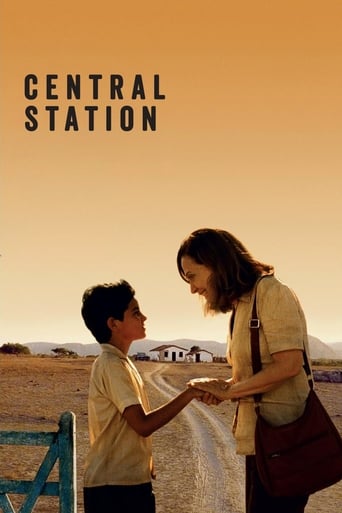
An emotional journey of a former school teacher, who writes letters for illiterate people, and a young boy, whose mother has just died, as they search for the father he never knew.
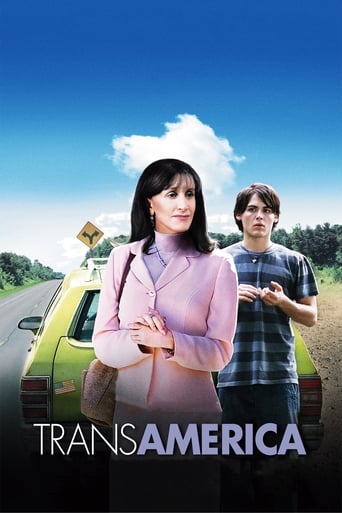
A transgender woman takes an unexpected journey when she learns that she had a son, now a teenage runaway hustling on the streets of New York.

On the mean streets of New York City, a dog-eat-dog mentality reigns among the destitute citizens. In one of the many abandoned buildings in the neighborhood of Alphabet City lives the Brazilian Rita La Punta, along with her delinquent son, Thiago, and a gang of Hispanic teens charged with selling heroin and cocaine. When Rita and her young gang members get involved in a minor turf war, the violence escalates out of control, touching everyone and sparing no one.

After the death of her handsome but good-for-nothing husband Vadinho, Flor, a widow, marries Dr. Teodoro, a respectable gentleman. Hilarity ensues when Vadinho's spirit returns into her life.
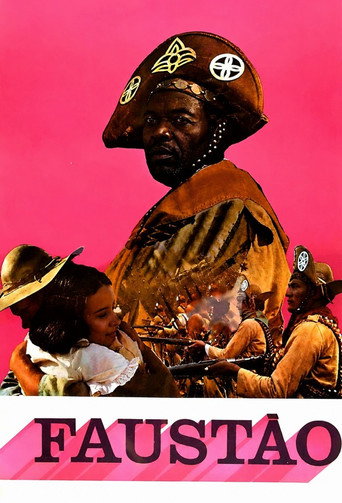
A gang of bandits led by Faustão intervene in a fight between two members of rival families, the Pereiras and the Araújos. Henrique Pereira, son of Colonel Pereira, is wounded in an ambush. Faustão rescues him and demands the father to pay a ransom in exchange for the life of his son. The bandit makes it clear to Henrique that he is not a prisoner and that he is only obeying the law of the backlands. Lucena, a henchman working for the Araújos, finds Faustão and offers twice the amount being asked to the colonel in order to take Henrique as a prisoner, but the bandit refuses the offer. Colonel Henrique pays the ransom, but the son refuses to return home, even being aware of the feud between his family and the Araújos. The young man chooses to join the gang.
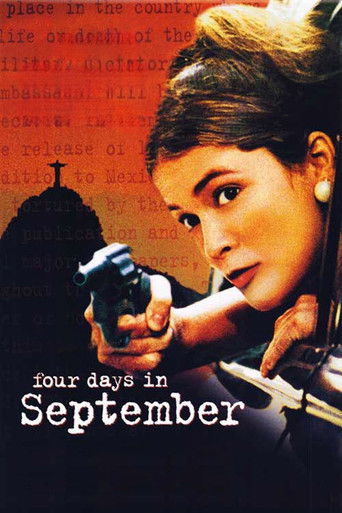
Fernando, a journalist, and his friend César join terrorist group MR8 in order to fight Brazilian dictatorial regime during the late sixties. César, however, is wounded and captured during a bank hold up. Fernando then decides to kidnap the American ambassador in Brazil and ask for the release of fifteen political prisoners in exchange for his life.
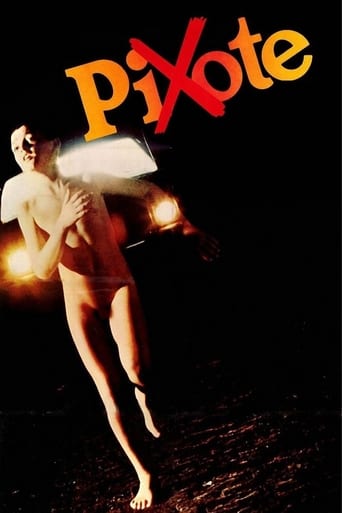
10-year-old Pixote endures torture, degradation, and corruption at a local youth detention center where two of its members are murdered by policemen who frame Lilica, a 17-year-old trans hustler. Pixote helps Lilica and three other boys escape and they start to make their living by a life of crime which only escalates to more violence and death.

When they discover their town lacks funding for a sewage system, but does have a federal grant to make a movie, a group of villagers decide to make a sci-fi joint about a monster who lives in the building site of a septic tank.

A brutal crime shocks an isolated Brazilian research station in Antarctica, transforming the enviroment filled with scientists and military personnel into a veritable pressure cooker. The men at the station become suspects, and a female deputy commander takes on the mission of investigating what happened and, with the support of the women at the base, faces silence and violence in her search for justice.
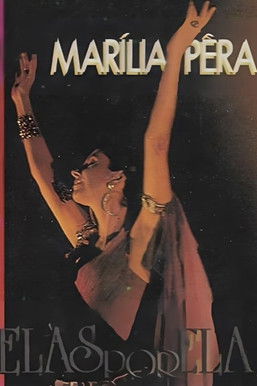
Elas por Ela reconstituted the history of MPB between 1920 and 1970, from the female perspective, also showing the transformation of the role of women in society over these years. Marília Pêra chose 35 singers to honor and, from 50 songs, put together the script for the show.

Lovemar is a dreamy seamstress longing for her first true love, captivated by the voice of radio star Rogério Roberts.

During a time of political upheaval in Brazil, two strangers meet by coincidence in a foreign land and end up caught in the middle of a gem smuggling ring.

Classical music student arrives from Buenos Aires to live with his rocker cousin in Rio De Janeiro. Between parties full of rock and roll, he has to decide between his childhood girlfriend, now a respectful businesswoman, and the volleyball player Vera.
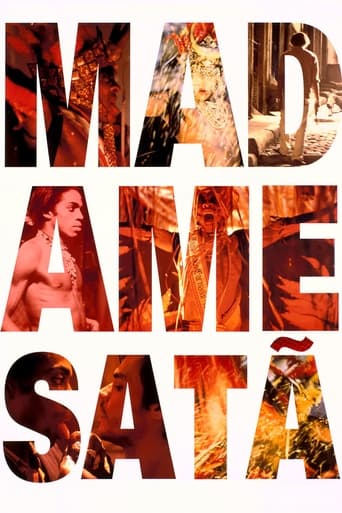
In the favelas of Rio de Janeiro of the 1930s, João Francisco dos Santos is several things — son of slaves, ex-convict, thug, homosexual and adopted father for a number of pariahs. João expresses himself on the stage of a cabaret as Madame Satã.

Two professional mourners try to trick Death in the northeast of Brazil.
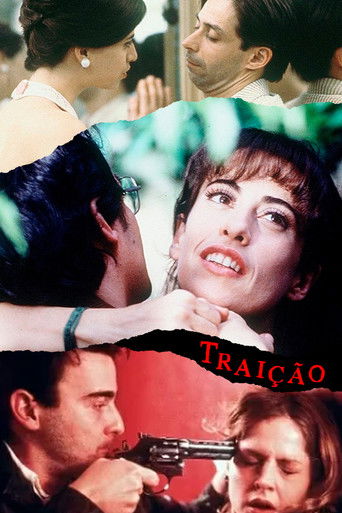
Three stories of infidelity unfold: a man falls for a married woman, a young girl draws the gaze of her sister’s fiancé, and a husband takes his unfaithful wife hostage after discovering her affair with his best friend.

The true story of Assis Chateaubriand, the first magnate of communications in Brazil. Due to his influence during the late 1930s up to the early 1960s, he has come to be called 'the Brazilian Citizen Kane'.

Hebe Camargo is one of the most emblematic entertainments in Brazil. At her 60s, she went on to control her own career and, despite the criticism, the dreadful husband and the powerful and sexist bosses, she revealed herself to the public as an extraordinary woman, capable of overcoming any personal or professional crisis.
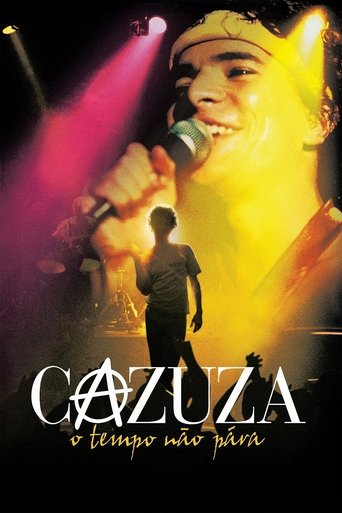
Inspired by the moving book “Só as Mães São Felizes”, by Lucinha Araújo, Cazuza's mother, the film covers a little more than 10 years of the singer’s crazy and brief life – from the beginning of his career in the Circo Voador venue, in 1981, to the huge success and the apotheosis of his shows with the Barão Vermelho band, his solo career, his relations with his parents, friends, lovers and passions, and the courage he had to face his final years, with HIV, until his death, in 1990.
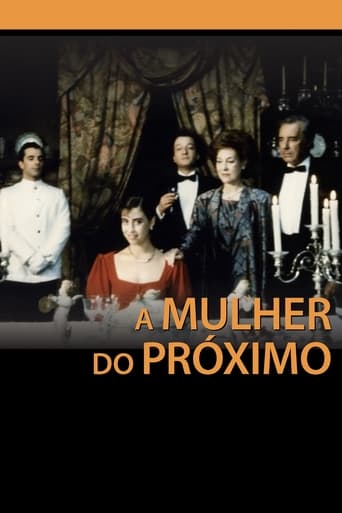
Two lovers meet again in strange circumstances, when she is a recent widow not particularly grieving, and he is a divorcée mourning his daughter. They reunite, only to break again - this time for good.

Reunited for their mother’s funeral, four sisters – Selma, Regina, Laura and Lúcia – find themselves forced to divide much more than an apartment in Copacabana. While dividing the articles, the sisters compare options, destinies, lifestyles, and expectations. The turbulent sale of the apartment represents a turning point in their lives: they know they have never been so deeply involved as accomplices, or as sisters.

Young and recently separated couple meet in a modern house and start discussing their past relationship.

Three actresses come together to attend the funeral of their longtime friend
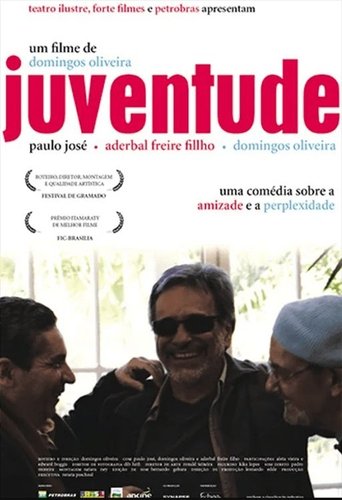
David, a man in his twillight years, lives all by himself and decides to invite two childhood friends for a day at his house in Petrópolis, where they spend hours talking about the past.