Disciplined Italian composer Antonio Salieri becomes consumed by jealousy and resentment towards the hedonistic and remarkably talented young Salzburger composer Wolfgang Amadeus Mozart.
Tragic story of Golaud, his marriage to the long-haired Mélisande, her subsequent love for Pélleas, and their deaths.
Disciplined Italian composer Antonio Salieri becomes consumed by jealousy and resentment towards the hedonistic and remarkably talented young Salzburger composer Wolfgang Amadeus Mozart.
Don José is a guard who begins an affair with the tempestuous Carmen. He is imprisoned and loses his job, then flees with her to the mountains. When the relationship starts to break down José refuses to acknowledge it and will not leave, even when he gets news that his mother is dying. Carmen, meanwhile, has taken up with the bullfighter Escamillo. Bizet's most famous opera is brought to the Glyndebourne Festival Opera by Sir Peter Hall, with Maria Ewing and Barry McCauley heading an international cast.
This is an excellent production of Mozart's 1791 opera about Titus Vespasian, who prefers to be remembered for his clemency, even toward his best friend who instigated a revolt to overthrow him. It was recorded at Glyndebourne on August 3, 2017, in front of an audience, and the orchestra and singers perform the work beautifully
The tale of a quick-witted fox and her escape from confinement for a life in the forest.
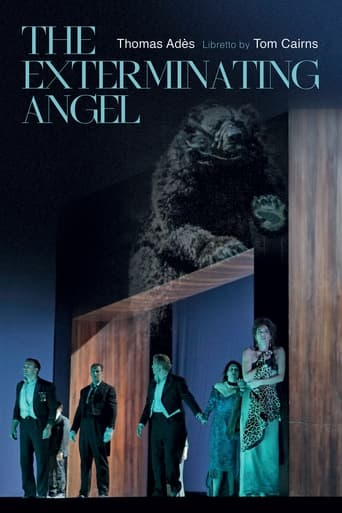
After the acclaimed Met premiere of Thomas Adès's "The Tempest" in 2012, the composer returned with another masterpiece, this time inspired by filmmaker Luis Buñuel's seminal surrealist classic "El Ángel Exterminador", during the 2017–18 season. As the opera opens, a group of elegant socialites gather for a lavish dinner party, but when it is time to leave for the night, no one is able to escape. Soon, their behavior becomes increasingly erratic and savage. The large ensemble cast tackles both the vocal and dramatic demands of Adès's opera with one riveting performance after another. Tom Cairns, who also penned the work's libretto, directs an engrossing and inventive production, using a towering wooden archway to trap the characters onstage. And Adès himself takes the podium to conduct the frenzied score, which features a host of unconventional instruments, including the eerie electronic ondes Martenot.
1982 revival of 1974 John Copley production.
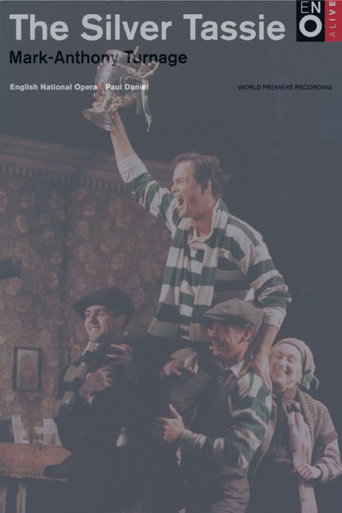
The Silver Tassie is an opera in four acts by the English composer Mark-Anthony Turnage. The English libretto was written by Amanda Holden based on the 1927/28 play of the same name by Seán O'Casey. The opera was composed between 1997 and 1999.
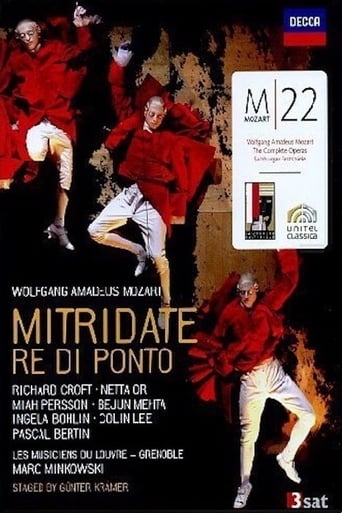
The definitive version of this rare opera by Wolfgang Amadeus Mozart. The costume and set design is truly visionary and other worldly and gives a convincing insight into what staged operas must have looked like during the Baroque and Rococo period. Singers are all excellent and well cast in their respective roles. One of the most thrilling things I have seen, just wish I could see this live.
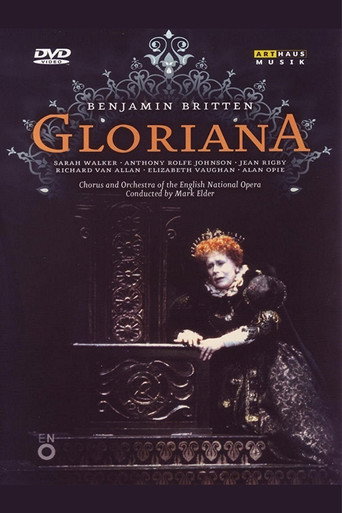
Gloriana, Op. 53, is an opera in three acts by Benjamin Britten to an English libretto by William Plomer, based on Lytton Strachey's 1928 Elizabeth and Essex: A Tragic History It was written to mark the 1953 coronation of Queen Elizabeth II.
To mark the 250th anniversary of Handel's death, Vienna's Theater an der Wien realized a truly extraordinary project: the staging of Messiah, the composer's most popular oratorio. Collaborating with an exquisite cast of singers, Claus Guth, one of today's highly renowned stage directors, delivered 'an emotionally and psychologically charged sequence of images. . . The audience was thrilled' (Suddeutsche Zeitung).
Benoit Jacquot's acclaimed 2002 film of Puccini's opera stars Angela Gheorghiu in the title role, with Roberto Alagna, Ruggero Raimondi and the Chorus and Orchestra of the Royal Opera House, Covent Garden, under Antonio Pappano.
With ancient Rome as a backdrop, composer Benjamin Britten's chamber opera chronicles the undoing of the virginal Lucretia at the hands of Tarquinius. Stars Kathryn Harries, Anthony Rolfe Johnson, Russell Smythe and Jean Rigby imbue the lead roles with fervor and suspense while the English National Opera Orchestra provides spectacular musical accompaniment to this powerful synthesis of Greek tragedy and opera.
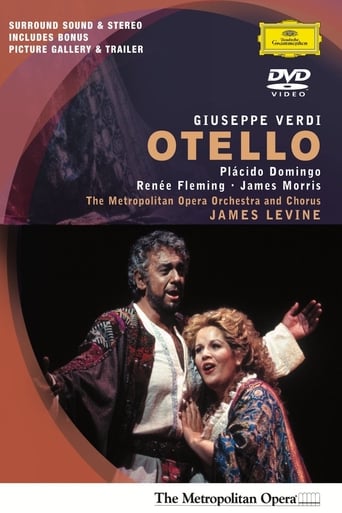
Verdi’s monumental score is fully the equal of Shakespeare’s famous tragedy—and both demand great actors. This is one performance where both playwright and composer are well served. Plácido Domingo’s Otello is one of the glories of the operatic world, beautifully sung and so commandingly acted that audiences are devastated by the end. Renée Fleming’s ravishingly beautiful Desdemona is deeply moving, and as Iago, James Morris is as beguiling as he is menacing. Under James Levine’s conducting the Met orchestra and chorus are vital characters in the drama.
The Leipzig Gewandhaus Orchestra and their Music Director Riccardo Chailly have already acquired legendary status – glorious reviews and many awards for their recordings testifying to their continuing success. At Leipzig’s International Mahler Festival, to mark the centenary of Mahler’s death, they performed his monumental Second Symphony in the Gewandhaus – together with two marvellous soloists and choral forces quite beyond compare. About the final movement the composer said: “The increasing tension, working up to the final climax, is so tremendous that I don’t know myself, now that it is over, how I ever came to write it.” The painting “Morgenrot” was chosen by internationally acclaimed artist Neo Rauch to feature on the cover of this release on DVD and Blu-ray.
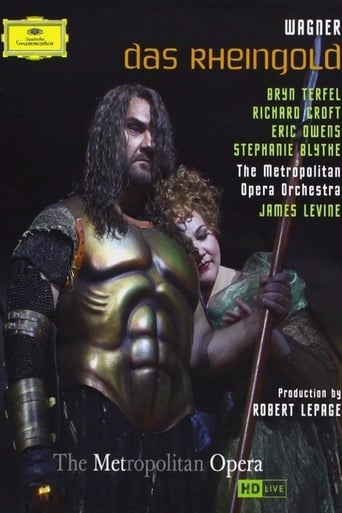
In the depths of the Rhine, the three Rhinemaidens guard the Rhinegold, a treasure of immeasurable value. The Nibelung dwarf Alberich is dazzled by the sight of it. The girls explain that whoever wins the gold and forges it into a ring will gain power over the world, but must first renounce love. Frustrated by his unsuccessful attempts to catch one of the girls, Alberich curses love and steals the gold. Wotan, lord of the gods, is reproached by his wife Fricka: he has promised to give Freia, goddess of youth, to the giants Fasolt and Fafner in return for their building a fortress for the gods. When the giants demand their reward, Loge, the god of fire, suggests an alternative payment: the ring Alberich has forged from the Rhinegold, and his other treasures. The giants agree, and Wotan and Loge leave for the Nibelungs’ underground home.
PRELIMINARY EVENINING OF THE RING CYCLE. Upon the banks of the ageless river Rhine, the Rhinemaidens play. Alberich, a Nibelung dwarf, tries vainly to seduce one of them. To taunt him, they reveal their secret: out of the gold they guard one can forge a Ring to rule the world, but at the cost of giving up Love forever. Alberich steals the gold, makes the ring and plans his world take-over. Meanwhile, Wotan, King of the Gods, must figure out how to finance the construction of Valhalla. He has promised his sister-in-law as payment to the giant construction workers led by Fafner, but his wife Fricka disapproves. Loge (God of Fire) tricks Alberich and brings him to Wotan, who takes the Ring. In revenge Alberich curses it: lack of the Ring will fuel desire for it and possession will only lead to misery. Wotan gives the Ring to Fafner as ransom for Fricka's sister. Filmed at the Bayreuth Festspielhaus in June & July 1991.
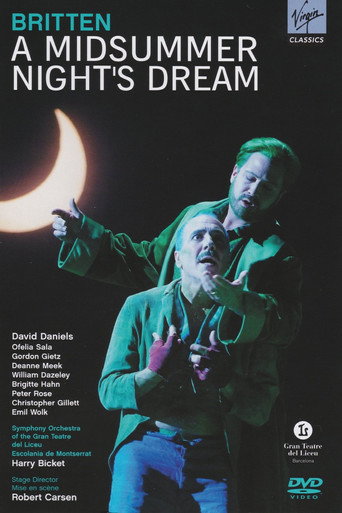
Robert Carsen's production of Benjamin Britten's opera for Gran Teatre del Liceu, Barcelona.
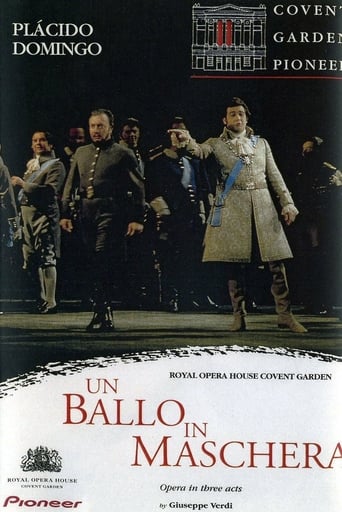
This production from Covent Garden is set in Stockholm, and not Boston. With Reri Grist (Oscar), Placido Domingo (Gustavus), Katia Ricciarelli (Amelia), Piero Cappucili (Renato), Patricia Payne (? - the booklet or DVD fails to credit the singer) (Ulrica) and Claudio Abbado in the pit: all at their peak, you just simply cannot go wrong when purchasing this DVD. This performance made me realise why I had fallen in love with opera: beautiful (today one should be thankful) and convincing sets and costumes, and fiery conducting and singing from all the above soloists which leaves you breathless. Domingo as the King (not the Governor of Boston) is simply ravishing! He is so convincing and dashing as Gustavus - I think very few tenors nowadays can even attempt such a convincing vocal and dramatic performance.
For his first opera production, Dario Fo, the theatre director known for his brilliant wit, chose to stage Rossini's Il Barbiere di Siviglia sung in Italian for the Netherlands Opera. First mounted in 1987, it was a huge success and a live recording of its revival in May 1992, the 200th anniversary of Rossini's birth, has been made. Fo has said that Rossini is the musician of eating and love. He composes music rich in herbs and aromas, in which you find olives, tomatoes, fish, grapes, roses and rosemary, sheets and tablecloths, dry wine and the laughter of girls. His Barber is a joyful carnival. During the overture he fills the stage with carnival revelers and immediately the commedia dell' arte origins of opera buffa are restored. Visual theatrics abound, never at the expense of the music, but highlighting it, engaging the eye as well as the ear. Fo addresses the heart more than the intellect and Rossini's comedy comes up dazzling and vital.
Following the success of his first foray into opera, Einstein on the Beach, revolutionary American composer and musician Philip Glass soon turned to another great figure of the 20th century for inspiration. Set to lines from the Hindu Bhagavad Gita, Satyagraha depicts scenes from the life of Gandhi as he developed his philosophy of non-violent resistance in South Africa between 1896 and 1913. The opera became the second installment of Glass’s Portrait Trilogy, focused on innovators from across history. Satyagraha arrived at the Met during the 2007–08 season, when director Phelim McDermott made his debut with a production that employed everyday materials like newspaper and corrugated tin to create towering puppets and striking tableaus. In 2011, his staging returned, this time recorded live in HD. In this performance, tenor Richard Croft gives a moving performance as Gandhi, leading a remarkable ensemble cast conducted by Dante Anzolini.
This is a 4-DVD set, featuring the Estonian conductor Paavo Järvi and the chamber orchestra (around 40 members) Die Deutsche Kammerphilharmonie Bremen. The first 3 DVDs feature live performances of all 9 of Beethoven's symphonies, and the 4th DVD is a documentary produced for DW (Deutsche Welle) on this Beethoven project.
Bizet's masterwork, Carmen, directed for stage by the Spanish actress Núria Espert. Royal Opera House in Covent Garden in 1989.
Seeking to exorcise the failure of his current love affair, the poet Hoffmann tells the tales of his three past loves - the doll-like Olympia, the high-class courtesan Giulietta, and the ambitious but delicate Antonia - and recalls how each was thwarted by the evil influence of his rival. In this production by the distinguished film director, John Schlesinger, with spectacular designs by Maria Bjornson and William Dudley, Offenbach's nightmare world is brought to life. The all-star cast is headed by Placido Domingo as Hoffmann: his three loves are Ileana Cotrubas, Anges Baltsa and Luciana Serra and the manifestations of his rival are sung by Geraint Evans, Robert Lloyd, Siegmund Nimsgern and Nicola Ghiuselev. The score, which includes such favourites as the "Barcarolle" and the "Doll's Song", is conducted by Georges Pretre.
Accompanied by the London Philharmonic Orchestra, composer Benjamin Britten's satirical look at life in an English market town delivers plenty of laughs. When Lady Billows (Patricia Johnson) realizes no girls in town are worthy of the May Queen title, she crowns virtuous Albert Herring (John Graham-Hall), the greengrocer's son, as the village's May King. The comic opera features a strong ensemble cast including Alan Opie and Felicity Palmer.
FIRST DAY OF THE RING CYCLE. Fleeing for his life, Siegmund seeks shelter at Sieglinde's house. Her husband Hunding happens to be one of Siegmund's pursuers, and the two of them must cross swords the next day. As Siegmund laments his lack of a weapon, Sieglinde directs him to the sword Nothung stuck in an ash tree. Despite discovering they are twin siblings, the two fall in love. The King of Gods Wotan, their father, sends his Valkyrie daughter Brünnhilde to aid Siegmund. Fricka protests, and Wotan uses his spear to break Siegmund's sword during the battle. Siegmund is slain, but Brünnhilde rescues both the sword fragments and Sieglinde who is pregnant with Siegmund's child Siegfried. Wotan is angry that she intervened, but since Brünnhilde is his favorite child, he merely strips her of immortality and sends her into an enchanted sleep, surrounded by fire. Filmed at the Bayreuth Festspielhaus in June & July 1992.
This staging of Harrison Birtwistle's opera The Minotaur features John Tomlinson, Johann Reuter, Christine Rice, and Andrew Watts in the main roles. Stephen Langridge directed the production for the stage, and Antonio Pappano conducted the orchestra.
Live performance of Mozart's immortal Requiem in D minor from the Herkulessaal in Munich, 1984. Soprano Edith Mathis, alto Trudeliese Schmidt, tenor Peter Schreier, and bass Gwynne Howell, with the The Bavarian Radio Symphony and Orchestra, are conducted by Sir Colin Davis.
SECOND DAY OF THE RING CYCLE. Alberich's brother Mime raises the orphan Siegfried, hoping that Siegfried will kill Fafner and enable Mime to gain the ring. Mime attempts unsuccessfully to reforge the Nothung. Fulfilling prophecy, Siegfried reforges the sword himself and kills Fafner, who has the form of a dragon. When he accidentally tastes the dragon's blood spilt on his hands, Siegfried understands the song of a woodbird, who instructs him to take the Ring from Fafner. Reading Mime's thoughts of betrayal, Siegfried kills the dwarf as well. The woodbird also informs Siegfried of a mysterious woman asleep in the midst of fire, and Siegfried sets off to find her. After defeating a disguised Wotan and breaking his spear, Siegfried successfully awakes Brünnhilde, and the two fall in love. Filmed at the Bayreuth Festspielhaus in June & July 1992.
Brett Dean's multi-award-winning opera received its world premiere at Glyndebourne Festival 2017. The world premiere recording of Brett Deans new opera based on Shakespeares best-known tragedy: To be, or not to be. This is Hamlets dilemma, and the essence of Shakespeares most famous and arguably greatest work, given new life in operatic form in this original Glyndebourne commission. Thoughts of murder and revenge drive Hamlet when he learns that it was his uncle Claudius who killed his father, the King of Denmark, then seized his fathers crown and wife. But Hamlets vengeance vies with the question: is suicide a morally valid deed in an unbearably painful world?
Known as a creator of astonishing images, stage director and visual artist Robert Wilson delivers a magnificent production of Mozart’s adaption of Handel’s Messias. Mozart was commissioned by Gottfried van Swieten to modernise the score fifty years after Handel’s popular composition (1742), mainly by arranging the wind parts and partially re-composing them. With Marc Minkowski a conductor has been engaged who understands perfectly how to combine baroque style with the tonal possibilities of an orchestra of the classical period like the Musiciens du Louvre. The excellent soloist quartet with Elena Tsallagova, Wiebke Lehmkuhl, Richard Croft and José Coca Loza merges perfectly into Wilson’s enormous flood of images.
Disciplined Italian composer Antonio Salieri becomes consumed by jealousy and resentment towards the hedonistic and remarkably talented young Salzburger composer Wolfgang Amadeus Mozart.
Shares 2 cast members
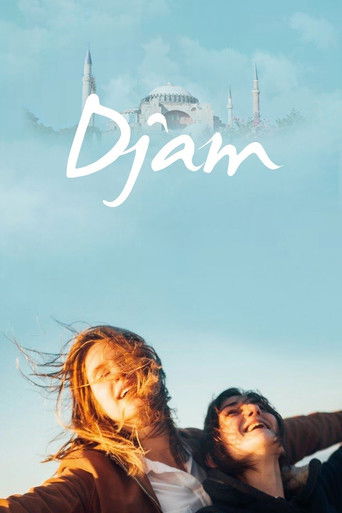
Djam, a young Greek woman, is sent to Istanbul by her uncle Kakourgos, a former sailor with a passion for Rebetiko, to find a rare part that will repair their boat. In Istanbul, she encounters Avril, a nineteen-year-old French girl, alone and without any money, who came to Turkey as a voluntary worker with refugees. Djam, generous, cheeky, unpredictable, and free-spirited, takes Avril under her wing on the way to Mytilene. A journey filled with encounters, music, sharing, and hope.
Viewers also picked
A famous pianist at the twilight of his career meets a free-spirited music critic who soon becomes his rock as his mental state deteriorates.
Viewers also picked
Street dancer Skyler comes out of the shadow of her trained dancer sister, Tosha, & joins a dance competition with the Honey dance studio; the prize is a college scholarship.
Viewers also picked
The film follows four families, with different nationalities (French, German, Russian and American) but with the same passion for music, from the 1930s to the 1960s. The various story lines cross each other time and again in different places and times, with their own theme scores that evolve as time passes. The main event in the film is the Second World War, which throws the stories of the four musical families together and mixes their fates. Although all characters are fictional, many of them are loosely based on historical musical icons (Édith Piaf, Josephine Baker, Herbert von Karajan, Glenn Miller, Rudolf Nureyev, etc.) The Boléro dance sequence at the end brings all the threads together.
Viewers also picked
A down-on-his-luck coach is hired to prepare a team of the best American dancers for an international tournament that attracts all the best crews from around the world, but the Americans haven't won in fifteen years.
Viewers also picked
Based on the true story of acclaimed music icon "Dalida" born in Cairo, who gained celebrity in the 50s, singing in French, Spanish, Arabic, Hebrew, German, Italian, playing in awarded Youssef Chahine's picture "Le Sixième Jour", and who later committed suicide in 1987 in Paris, after selling more than 130 million records worldwide.
Viewers also picked
A talented young singer and aspiring songwriter’s Christian faith and family ties are tested when she defies her worship-pastor father and pursues pop-music stardom in GRACE UNPLUGGED, a moving and inspiring new film that explores the true meaning of success.
Viewers also picked
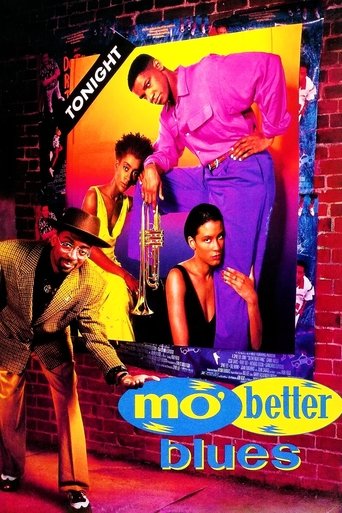
Talented but self-centered trumpeter Bleek Gilliam is obsessed with his music and indecisiveness about his girlfriends Indigo and Clarke. But when he is forced to come to the aid of his manager and childhood friend, Bleek finds his world more fragile than he ever imagined.
Viewers also picked
A collection of vignettes highlighting different aspects of the life, work, and character of the acclaimed Canadian classical pianist.
Viewers also picked