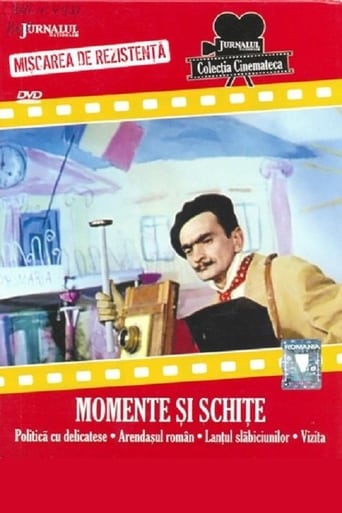
FILM
The tranquility of a Romanian village is shattered by the arrival of a beautiful unknown coinciding with the discovery of a new star by a modest professor of astronomy ...

even if you say you don't remember that summer light, it has been in your brain for a long time and you would recognize it immediately....in this communist-collectivist propaganda film of an artificially grotesque beauty to the point of absurdity....full-on lies and shots arranged idyllically, this is how people's perception of reality can be manipulated
The tranquility of a Romanian village is shattered by the arrival of a beautiful unknown coinciding with the discovery of a new star by a modest professor of astronomy ...
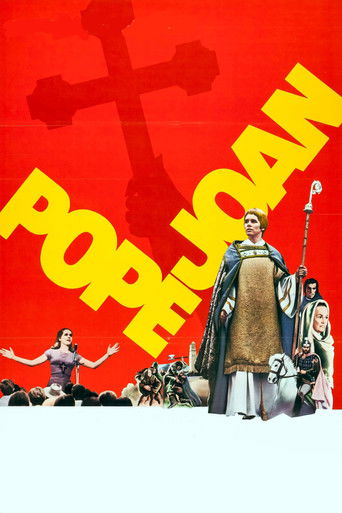
Based on the medieval legend of Pope Joan, who was made Pope for a brief period around 855 A.D. The movie presents her existence as fact, though it is questionable that Pope Joan really did exist, and portrays her relationships with other notables of the time.
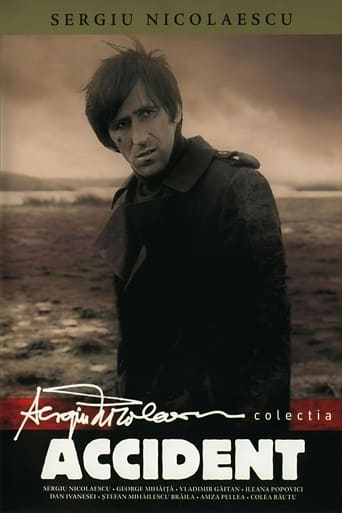
Three young man run in the rain with a borrowed car. The first accident, whose victim is a girl, gives the signal for a race through the city to escape the police crews. Race ends tragically, with another serious incident, even one victim is involved. The only way out is escape. The film shows the psychological transformation of fugitives, in their desperate attempt to evade the consequences and pressures of their conscience.

The adventures of the Irish terrier Michael began the moment he ran to the shore during a walk. Here he was picked up by the steward of the schooner McCambo, Dag Daughtry. Dag decided to sell the purebred dog at the nearest port, secretly brought Michael onto the schooner and hid him in his cabin. Michael was given another name. He became very attached to his new owner, with whom he would have to go through many happy and sad days, break up after a series of dramatic events and meet again.

A story about a group of friends and their choices, how to pursue their careers and personal life.

In 1916, shortly before Romania's entry in World War One Romanian Army Lieutenant Tudor Gheorghiu is posted to a border patrol unit on Romania's border with Austria-Hungary. Not receiving any news from his wife he persuades the commanding officer, Captain Dimiu, to allow him a short leave to visit his wife. Tudor married Lena two years before but was very jealous and suspected her of infidelity. When his grandfather dies Tudor inherits most of the fortune. Gigolo lawyer Andrei Nicolau is the executor of the will. He also is the man who lustfully desires Tudor's beautiful wife. A contest for Lena's love begins. Romania is plunged into WW1 and ironically Tudor receives his junior Lieutenant commission in the same regiment where gigolo lawyer Nicolau serves as a Major. Their destinies seem intertwined.

Matei recollects events of the year 1944 in order to prove the innocence of a friend. Based on "Șoseaua Nordului" (Northern Highway) novel by Eugen Barbu.
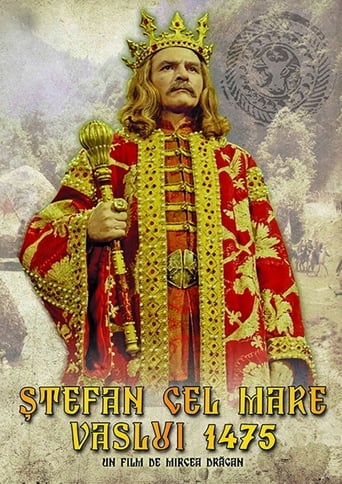
In 1475 when Stephen the Great, ruler of Moldavia is facing an invading Ottoman army of 120 000 men, the fate of Christian Europe largely depends on the battle's outcome.
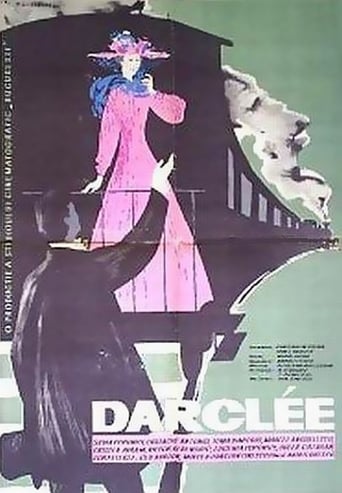
Darclee is a lead singer for an opera company in Romania with a heavy load of responsibility. It seems the company is in dire need of a decent physical structure for their performances and a brace -- or more -- of good singers to improve their image and sales. In other words, they need just about everything except an excellent lead singer; Darclee fills that bill. And so the company rather unfairly leans on her to get the people and the funds they so desperately want.
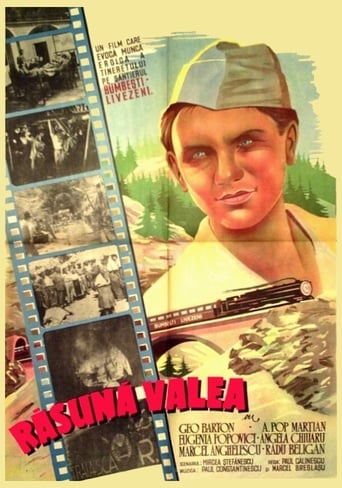
Famous Romania communist propaganda movie, one of the templates to what followed. It is about the volunteers that built the Bumbești-Livezeni railroad.

Young engineer Doru is called to the Prosecutor's Office and questioned on his wife's unlawful ways of making money. Soon he'll learn about her true character and he'll regret having broken up with Livia, a woman who truly loved him.
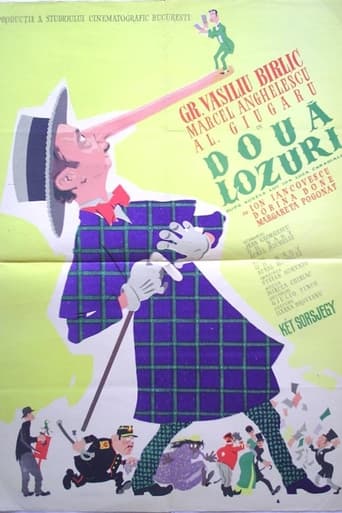
1957 film adaptation of Romanian playwright Ion Luca Caragiale's novella “Două loturi” (Two Lottery Tickets, 1901). The scenario was written by director Jean Georgescu, one of the most skilled Romanian filmmakers of the 1940s and 1950s, while the directing belongs to Aurel Miheleş and Gheorghe Naghi, at that time both recently graduated from the All-Union State Institute of Cinematography in Moscow. This is the second feature film in colour from Romania. Despite the great public success, the film was often criticized by reviewers, mostly for its unhandy directing from the two debutants. Miheleş and Naghi would however continue their collaboration and release another two Caragiale adaptations, of which “Telegrame” (Telegrams, 1959) was nominated for the Palme d'Or (Golden Palm) at the 1960 edition of the Cannes festival.

Adam, a young and poor fisherman, falls in love with Uliana, but the girl's parents want her to marry Simion. To get rid of him, Simion blames Adam of the drowning of his fellow fishermen he was with out in a storm.

Used to move along with the construction projects they were working for, a group of people decide that is time to settle.
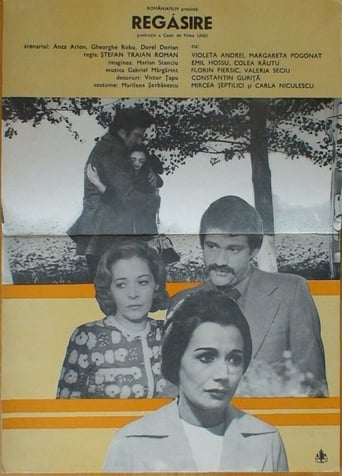
A happily married teacher finds out that a child of hers she believed dead for 10 tears is alive. On the trail of her first lover, she reconnects with her lost daughter.

Based on Ion Creanga's book, the story of a child from his childhood to his manhood.
1957 film adaptation of Romanian playwright Ion Luca Caragiale's novella “Două loturi” (Two Lottery Tickets, 1901). The scenario was written by director Jean Georgescu, one of the most skilled Romanian filmmakers of the 1940s and 1950s, while the directing belongs to Aurel Miheleş and Gheorghe Naghi, at that time both recently graduated from the All-Union State Institute of Cinematography in Moscow. This is the second feature film in colour from Romania. Despite the great public success, the film was often criticized by reviewers, mostly for its unhandy directing from the two debutants. Miheleş and Naghi would however continue their collaboration and release another two Caragiale adaptations, of which “Telegrame” (Telegrams, 1959) was nominated for the Palme d'Or (Golden Palm) at the 1960 edition of the Cannes festival.
Shares 3 cast members · Same director

Johnny Kovak joins the Teamsters trade-union in a local chapter in the 1930s and works his way up in the organization. As he climbs higher and higher his methods become more ruthless and finally senator Madison starts a campaign to find the truth about the alleged connections with the Mob.
Viewers also picked

Back from a professional trip to Paris, a neurologist at the pinnacle of his career has to pick up his wife so that they can attend a family meal to commemorate his father, who died a year before. At his mother's flat, the guests are waiting for the priest to arrive while arguing about all kinds of things connected and unconnected with the world’s events and wars.
Viewers also picked
While serving life in prison, a young man looks back at the people, the circumstances and the system that set him on the path toward his crime.
Viewers also picked
An aimless young man who is scalping tickets, gambling and drinking, agrees to coach a Little League team from the Cabrini Green housing project in Chicago as a condition of getting a loan from a friend.
Viewers also picked
Adam, a young and poor fisherman, falls in love with Uliana, but the girl's parents want her to marry Simion. To get rid of him, Simion blames Adam of the drowning of his fellow fishermen he was with out in a storm.
Shares 2 cast members
Pavel has to confron his father in law, who is decided to compromise him in front of the village.
Shares a lead actor · Same director
Geared more for the home crowd with a good knowledge of their own history, this Romanian political comedy takes place at the turn of the 20th century, when two opposing factions are going at each other tooth and nail to win an election. One candidate is a staunch if not deluded conservative and the other is a radical liberal. Anticipating modern election campaigns by a good half a century, the two candidates decide that the best way to win is to sling as much mud as possible. Lacking the Internet and fifteen-second TV spots, they do the best they can -- they send each other virulent telegrams denouncing each other's personal failings.
Shares 2 cast members · Same director
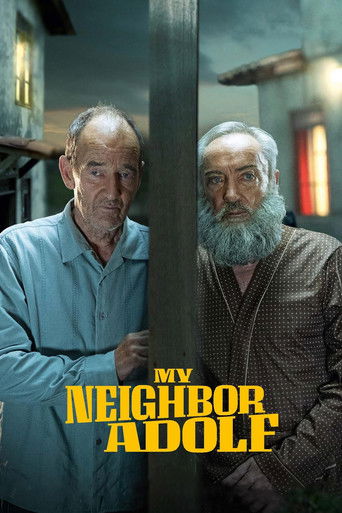
South America, 1960. A lonely and grumpy Holocaust survivor convinces himself that his new neighbor is none other than Adolf Hitler. Not being taken seriously, he starts an independent investigation to prove his claim, but when the evidence still appears to be inconclusive, Polsky is forced to engage in a relationship with the enemy in order to obtain irrefutable proof.
Viewers also picked

Based on the true story of a black girl who was born to two white Afrikaner parents in South Africa during the apartheid era.
Viewers also picked

The film tells about the period when Romania joined the Allies against the Axis in WW2.
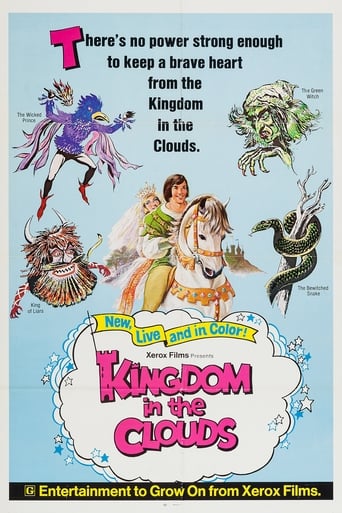
A young man's quest for a kingdom promising eternal youth and immortality. To reach his goal he must fulfill the three wishes of the Emperor's daughter, retrieve three golden objects, answer three riddles set by the Lord of Time, and overcome an evil witch and escape the Kingdom of Lies ruled by an evil Emperor and the young man's nemesis, the Prince of Lies. In return for good deeds along the way, he is given a magical horn and feather to aid him in his quest and is served by a flying horse, All this before he can finally enter the Kingdom of Youth without Old Age and Life without Death and marry the Emperor's daughter.

"Revansa" (Revenge) appeared not so long after the preview movie of the series, "Un comisar acuza" (The Police Inspector Calls). In this sequel we meet up with police inspector Tudor Moldovan, once again, who wasn't actually killed and who has returned to put an end to Paraipan's actions once and for all. When Paraipan kidnaps Moldovan's kid, the police inspector makes up his mind to punish Paraipan and his bosses and to finish off the fascist movement, lead by Zavoianu and his allies. Together with the communist that fight to gain power, Moldovan takes out his enemies one by one.

The story of Ulzana, an Apache chief who has reached a rapprochement with the local Mexican population and generously extends it to whites who travel through the territory. His people have become inured to the treacherous ways of the white man, however, and are now reliant on them for booze, 'relief flour' and beef steak.
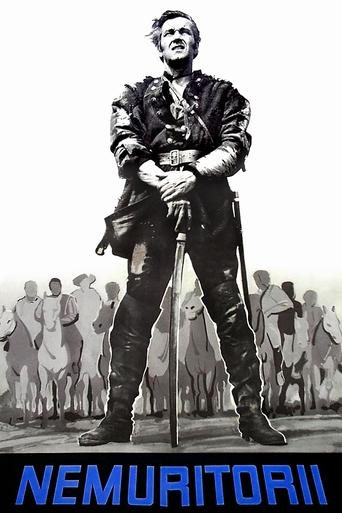
It's the story of a few men that wonder across Europe trying to come home and rebuild what Mihai Viteazul called "Romanian dream".
A continuation of a story started in the drama "With Clean Hands" (1972). Commissioner Miclovan's last cartridge is still hot in the pocket of Roman. Left without Miclovan's support, dead in action, Commissioner Roman wants to see his murderer, a very powerful local mafia and smuggler, Mr. Semaca, acquitted by the court for lack of evidence, punished. But before dealing with Semaca, Roman receives a new mission, this time undercover: the capture of a German spy still active in the country, suspected to be hiding in a monastery. In this mission, Commissioner Roman also has a helper, Oarca, a former underwriter who proves good at everything and especially at car chases on serpentine...

A star of a small town soccer team gets involved with the pretty sister of his main rival in the team.
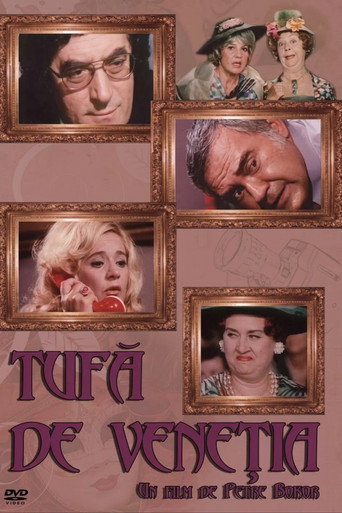
A lunatic conductor-director brings to light a kaleidoscope of characters from a kind of insect. Comedy in "zig-zag" from smile to laugh, inspired by a book by humorist Valentin Silvestru.

This movie follows the story of a young man - Mihai Brad, who works for a industrial plant. He reaches a turning point in his life when his bosses discuss his admittance in the Young Worker Union, a communist organization, which can help propel his career forward. Mihai calls to remembrance his early days of his job after leaving his village with dreams of having his own house and a decent life. He first starts low as a unqualified worker and each month he saves all his money. The UTM organization tries to convince him to improve his skills become a qualified worker but he refuses saying that he soon wants to go back to his village and be a shepherd.
Geared more for the home crowd with a good knowledge of their own history, this Romanian political comedy takes place at the turn of the 20th century, when two opposing factions are going at each other tooth and nail to win an election. One candidate is a staunch if not deluded conservative and the other is a radical liberal. Anticipating modern election campaigns by a good half a century, the two candidates decide that the best way to win is to sling as much mud as possible. Lacking the Internet and fifteen-second TV spots, they do the best they can -- they send each other virulent telegrams denouncing each other's personal failings.

The Nazi troops are retreating from Romania. On a wester town, they have to be held back until some strategic trains can leave the train station.
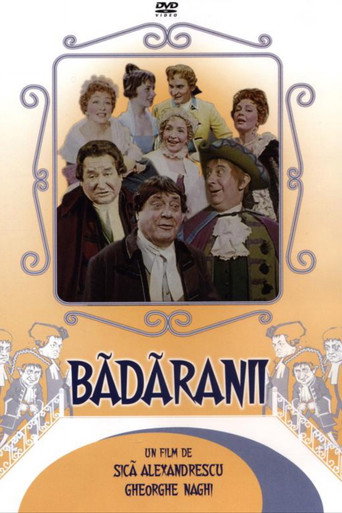
Movie adaptation after Carlo Goldoni`s "I rusteghi" comedy, written in 1760.
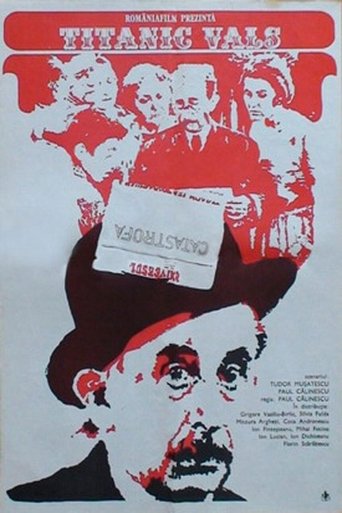
Based on a comedy play by Romanian playwright Tudor Mușatescu and first performed in 1932, Titanic Waltz satirises political ambition, familial coercion, and the absurdities of electoral politics through the travails of an incorruptible bureaucrat hounded by his relatives to run for office

A young engineer which settled in Bucharest after his studies, returns to his village to spend his sick leave. He takes on a project to moderniza an old mill.
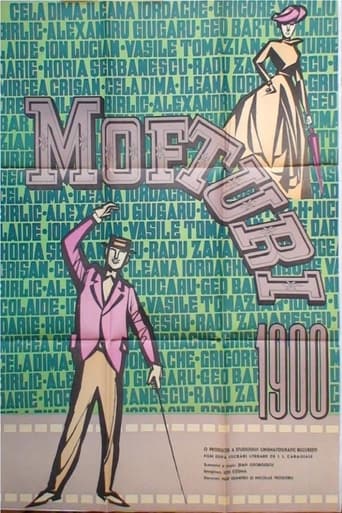
Mofturi 1900 is a 1964 Romanian comedic film directed by Jean Georgescu and based on Ion Luca Caragiale's many Moments and Sketches. The sketches used are "Diplomatie" ("Diplomacy"), "Amicii" ("Pals"), "O lacuna" ("A gap"), "Bubico", "C.F.R." (abbreviation of "Romanian Railways") and "Din statiune" ("From resort"). The film stars Grigore Vasiliu Birlic, Iurie Darie and Ion Dichiseanu; and features Ioana Bulcă, Alexandru Giugaru, Mircea Crisan, Geo Barton and others. Set at the beginning of the 20th century, the story revolves around two Mitică characters sitting at a cafe telling stories to each other.
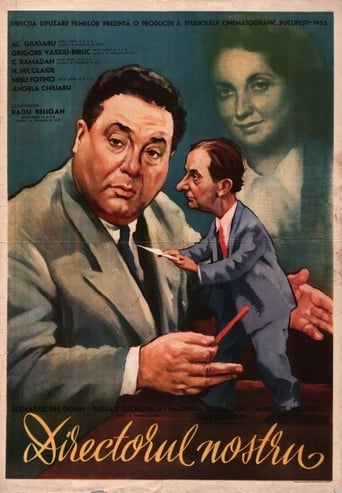
Over at the fictional DRGBP institution, events take a settling turn after a mutinied prize festivity.
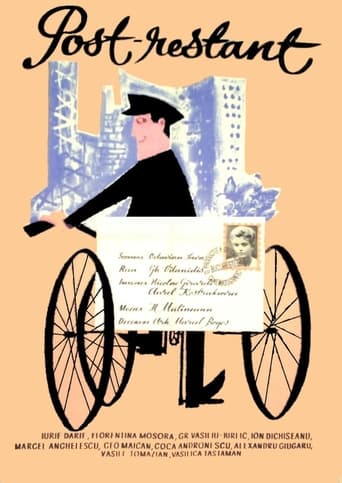
"Post Restant" is about two engineers: Puiu (Iurie Darie), a quite shy character, and Dan (Ion Dichiseanu) an alpha male type. They receive a letter from Liliana, a letter which is actually meant for the former apartment owner. Puiu replies to the letter, although he does not know the sender. The mail exchange goes on and the two fall eventually in love. Being less self-confident, when the time comes to see Liliana in the flesh Puiu asks Dan to meet her and pretend to be the one who wrote the letters.