

TV
After a family tragedy, the sweet Dulce Maria is cared for by kind nuns at a boarding school. But things change when Dad comes back into her life.
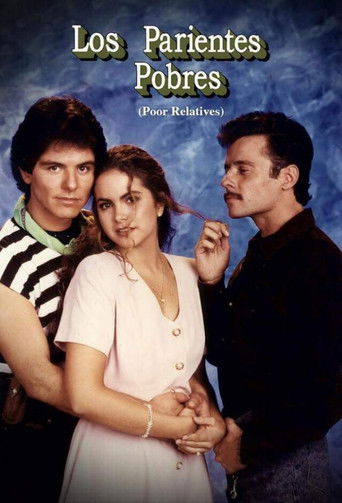
Los Parientes Pobres is a telenovela made by Mexican TV network Televisa. It is a telenovela set in Mexico. This telenovela was broadcast in 1993.
After a family tragedy, the sweet Dulce Maria is cared for by kind nuns at a boarding school. But things change when Dad comes back into her life.

Agujetas de color de rosa is a Mexican youth telenovela produced by Luis de Llano Macedo for Televisa and originally broadcast on Canal de las Estrellas from April 4, 1994, to May 26, 1995. Created by Susan Crowley, adapted by Sergio Schmucler, and with literary supervision by Gabriela Ortigoza, the telenovela stars Angélica María, Alberto Vázquez, Carlos Bracho, Natalia Esperón, Flavio César, and Alexis Ayala. The story follows Elisa Morán, a widow who is left in financial ruin after the death of her wealthy husband. As she struggles to rebuild her life and raise her three children, her daughter Paola falls in love with Martín, a talented young singer. Together, they face family conflicts, jealousy, betrayal, and the challenges of pursuing their dreams while discovering the true meaning of love, friendship, and perseverance.

Fernanda is the youngest daughter of the landowner Gonzalo Elizalde, owner of a large dairy company, and Eduardo is the son of Soledad, the Elizalde family's housekeeper. The two children have grown up together, united by an innocent and pure love, despite the difference in social class.
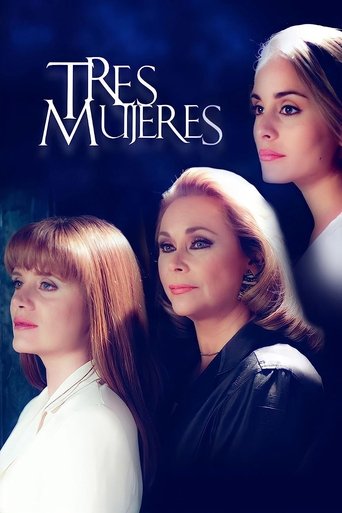
Tres Mujeres is a Mexican telenovela produced by Roberto Hernández Vázquez for Televisa and originally broadcast on Canal de las Estrellas from March 22, 1999, to April 14, 2000. Created by Martha Carrillo and Cristina García, with adaptation by Ximena Suárez, the telenovela stars Erika Buenfil, Karyme Lozano, Norma Herrera, Alexis Ayala, Jorge Salinas, and Pedro Armendáriz Jr. Due to its enormous popularity, the series was extended to 280 episodes. The story follows three women from different generations whose lives become intertwined through love, family conflicts, and personal struggles. As Bárbara, Fátima, and Greta face betrayal, ambition, heartbreak, and unexpected challenges, they must find the strength to overcome adversity while searching for happiness, forgiveness, and true love.

When Refugio and her three sons—Patricio, Edmundo, and Ignacio—are forced out of their home, a twist of fate brings them to Mexico City, where they begin a new life. Eighteen years later, they are settled in a small apartment in a working-class neighborhood. Refugio holds a modest job; although she suffers from serious vision problems, she neglects her own health to attend to her sons' needs. Patricio is studying law and dreams of a comfortable, prosperous future; his mother admires him for his charitable nature. Meanwhile, Edmundo begins courting Lucero—unintentionally hurting Ignacio, who secretly loved her—while Refugio tries in vain to make Patricio understand that he will never be happy with Olga.

A romance blossoms between a young country woman and the grandson of the late owner of a tequila company. The young man promises to return and marry his girlfriend once he finishes his studies abroad, unaware that she has become pregnant.
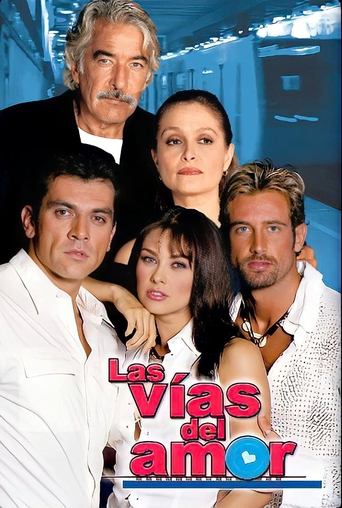
Las Vías del Amor is a Mexican telenovela that aired on the Televisa channel in Mexico and Univision in the United States from 2002-2003.

Rosendo Arango, the owner of Grupo La Anita, is married to Alfonsina. They have one son, Damian. Estefanía Bouvier is married to Augusto Castanon and they have one daughter, Elisa. Rosendo cheats on his wife with Carmina Bouvier, Estefanía's sister. Damian and Elisa become friends because Augusto and Rosendo were best friends. But one day, Rosendo and Carmina try to go away from La Ermita, the pueblo in which they live in. But, Estefanía, who had found out about their plans, wants to prevent this, shuts Carmina in her room and then goes with Rosendo in his car, trying to convince him not to run away with Carmina. They have an accident and die and everyone thinks they were lovers.

Valentina Vilaça is a wealthy woman who inherited a vast fortune from her parents after they died in a car accident. She lives in a mansion in Mexico City with her aunt, Isabel Rangel de Dorantes, and her cousin, Ivana Dorantes Rangel—who treats Valentina with great indifference and harbors envy toward her. Everything changes for Valentina when her fiancé, Alonso Penalva, conspires with Ivana and leaves her waiting at the altar on their wedding day. From that point on, Valentina becomes a bitter woman, eventually discovering love alongside José Miguel Montesinos.

Story of love between Marimar and Sergio. Sergio is from a wealthy family, and Marimar lives with her poor grandparents in a hut in front of the ocean.

A handsome man, unjustly accused, transforms into a woman named Eva to win over Helena—the love of his life—and unmask the true culprits behind a financial fraud and the theft of Helena's project.

Two very different families live in the village of Santa Lucía who are involved in a whirlwind of passion, pain, and revenge. The rivaling families are the Mendozas and the Alcocers. Severiano Mendoza and Candela Santana are a rich and powerful marriage who live at the ranch, "Las Ánimas", along with their young son, Cristóbal. Roberta and Raymundo Alcocer also have a daughter named Alonza; however, they do not live with the same luxuries as the Mendoza family, which causes frustration and resentment in Roberta as nothing is enough to fill the inferiority complex that follows her like a shadow.

Marcelo envy and hate David and gradually plan to snatch the gun around his brother, Marcelo called Zihuatanejo Lorena, a seller of fish courting until it falls in love with him. Marcelo says his name is David Montalvo and is a renowned entrepreneur.

Mi destino eres tú is a 2000 Mexican telenovela. It is a production of Carla Estrada and the protagonists were Lucero and Jorge Salinas.

Soccer is the central theme of this fun story, in which Lorena, Paulina, Daniela, and Fernanda learn to face life by tackling the challenges the game presents—both on the field and in love.

The show's premise revolves around a pair of twin sisters who were separated when they were young, and as adults the younger sister is forced to act as a "replacement" for her wealthy twin who wants to temporarily leave her husband and his family to enjoy a life of luxury with multiple lovers.

Rebeca murders her sister Adriana to end up with the man she loved, and becomes the step mother of her niece Lucía. Nora, Lucía's half sister and daughter of Rebeca, resents Lucía for the same reasons Rebeca hated Adriana, as history repeats itself.


La Mujer Del Vendaval is a 2012 Mexican telenovela produced by Mapat L. de Zatarain for Televisa. It is a remake of the Venezuelan telenovela Un Esposo para Estela. Ariadne Díaz and José Ron star as the main protagonists, while Chantal Andere, Marco Muñoz, Manuel Flaco Ibañez and Florencia del Saracho as the main antagonists.

Contra viento y marea is a Mexican telenovela aired from April 25 until November 4, 2005. This was also the last acting role of Beatriz Sheridan, who died in 2006 of a heart attack.

The story follows Isabel—known as "Chispita"—who was separated from her mother after the latter lost her memory in an accident. After growing up in an orphanage, Isabel is adopted by a widowed businessman, Don Alejandro; he hopes she will bring joy to the life of his daughter, Lili, who has become sad and ill-tempered since her mother's death—largely due to the influence of her teacher, the wicked Miss Irene. However, contrary to Alejandro's expectations, Isabel is not welcomed by his daughter; instead, she must contend with the malicious traps set for her by Lili and Miss Irene. Yet, Isabel also finds friends in the household, such as Juan Carlos (Lili’s older brother) and Gloria (the family’s maid). From her new home, Chispita begins the search for her mother.

A young woman from a small town falls in love with a man, but when she goes to the city to find him, things don't go as she expected.

The story is set at a prestigious, but rigid and repressive school called Instituto Vidal. Its strict owner, Julia Vidal, was once kind but has now turned into a bitter woman following the death of her husband and her daughter, Lauriel. Her granddaughter, Ana, a very sweet and intelligent 10 year old, also has been affected by the death: She has been rendered virtually speechless by the trauma, though she expresses herself through music and possesses an extraordinary ability to move objects with her mind. Ana's unscrupulous father, Francisco Capistrán, however, has taken advantage of the situation to try to steal Julia's school. The timely arrival of Ana's uncle, Salvador, Amanda and her adopted son changes everything. Ana’s sad and lonely life takes an unexpected turn for the better and she regains her joy in a series of adventures bursting with humor, excitement, music and thrilling surprises.
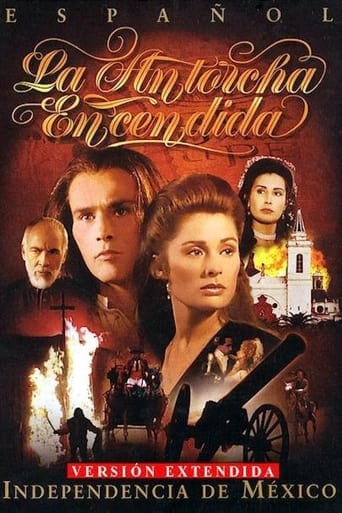
A Mexican telenovela produced in 1996. It was the last historical telenovela produced by Televisa. The plot tells the Independence of Mexico, with an emphasis on historical accuracy.

Talented designer Ana Velázquez arrives at Velvet and falls in love with Alberto Márquez, heir to the company, but their love must overcome many intrigues, including a marriage of convenience.

Alondra is a Mexican telenovela shown in 1995, written by Yolanda Vargas Dulché and produced by Carla Estrada, starring with Ana Colchero and the late Beatriz Sheridan. This telenovela contains 78 episodes.

Inspired by classical songs, This Story Sounds to Me Vol. 2 is an broadcast in which music tells life stories, because everyone has a memorable song that "sounds like it." This Story Sounds to Me Vol. 2 consists of 23 episodes and, as in its first season, it takes place with the lead singer María José.

Tino is a single father, full of debt, and faces tough challenges in raising his two children. Aidé is a great businesswoman and mother of two teenagers, she seems to have it all, at least on the surface. One day, Tino discovers that he is the father of Aidé's children, and together, they decide to build a new family, even if, at first, it is for their interests. However, they will realize that things are not as easy as they thought. Since their house has become a battlefield, they must overcome several obstacles to find love and achieve happiness.

Lichita (Maite Perroni) has been working at Iconika Ad Agency for 10 years but feels undervalued and invisible. She decides to make a change and transforms herself from the office “whipping girl” into the empowered Alicia. However, no climb to the top is ever easy and, along the way, she faces situations that test her character and values.

Rodrigo Junquera finds out he is close to death, he decides to ask the nanny of his young child, Virginia Martínez, a beautiful and honest woman, to marry him with the intention of preparing the road so she can look after his children when he's gone. Virginia has to deal with the contempt of Rodrigo's children who acuse her of being an ambitious woman who married their father for his money. Virginia is in love with Rodrigo's eldest son, Carlos Alberto, who has come to mistreat her after finding out she married his dad.
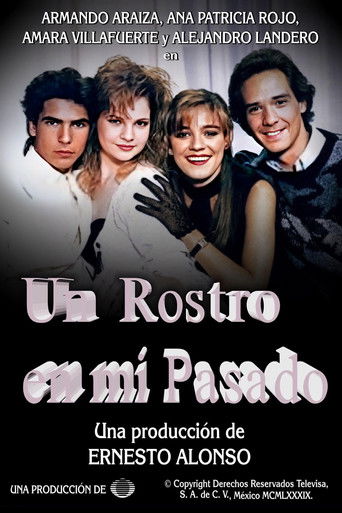

Natalie, a poor but beautiful girl from a humble neighborhood, falls in love with and wins the heart of Victor Afonso—her childhood friend and the son of the city's wealthiest family. Natalie lives with a cruel old woman who forces her to beg to support her, yet also foresees through fortune-telling cards that "The Beast"—as Natalie is known—will one day find happiness and wealth. Believing this fortune is linked to "The Greek," a wealthy man in love with Natalie, the old woman sells her to him—unaware that Natalie and Victor Afonso had secretly married before he left the country for his studies. When the young man's parents discover the truth, they annul the marriage, indifferent to the fact that "The Beast" is pregnant with his child. Supported by her friend—a cabaret performer known as "La Costeña"—and by The Greek himself, Natalie turns her life around and gives birth to twins; however, she has no idea that The Greek intends to exact a price for all his generosity.

Juro que te amo is a Mexican telenovela produced by Martha Patricia López de Zatarain for Televisa in 2008, starring young actress Ana Brenda Contreras. The show is a domestic drama about a wealthy family who loses everything and finds that they were only liked for their money. It premiered on 28 July 2008 and concluded on 6 February 2009. Re-make to the novela Los Parientes Pobres


A tycoon's daughter falls in love with the man who came to take revenge on her father for his own father's death.

Mujeres Asesinas is a series that shows the dark side of women who have been mistreated or abused and become cruel murderers. The series shows how violence and death can overcome the feminine mind.
The show's premise revolves around a pair of twin sisters who were separated when they were young, and as adults the younger sister is forced to act as a "replacement" for her wealthy twin who wants to temporarily leave her husband and his family to enjoy a life of luxury with multiple lovers.
Shares 2 cast members · Same director

True love threatens to tear a family apart in this epic Mexican serial set in the 1800s. Rich and beautiful Matilde falls in love with Adolfo, but her mother, Augusta, disapproves of the relationship when she learns Adolfo is poor. Augusta forces her daughter to marry rich and handsome Manuel Fuentes Guerra, but Matilde plays with fire by continuing to be with Adolfo. Adela Noriega, Fernando Colunga, Helena Rojo and Chantal Andere star.
Shares 2 cast members · Viewers also picked
Two very different families live in the village of Santa Lucía who are involved in a whirlwind of passion, pain, and revenge. The rivaling families are the Mendozas and the Alcocers. Severiano Mendoza and Candela Santana are a rich and powerful marriage who live at the ranch, "Las Ánimas", along with their young son, Cristóbal. Roberta and Raymundo Alcocer also have a daughter named Alonza; however, they do not live with the same luxuries as the Mendoza family, which causes frustration and resentment in Roberta as nothing is enough to fill the inferiority complex that follows her like a shadow.
Shares a lead actor · Viewers also picked

A telenovela that dramatizes the romances and rivalries between two brothers and two sisters in Mexico between the years 1885 and 1900.
Viewers also picked
A romance blossoms between a young country woman and the grandson of the late owner of a tequila company. The young man promises to return and marry his girlfriend once he finishes his studies abroad, unaware that she has become pregnant.
Shares a lead actor · Same director
La Mujer Del Vendaval is a 2012 Mexican telenovela produced by Mapat L. de Zatarain for Televisa. It is a remake of the Venezuelan telenovela Un Esposo para Estela. Ariadne Díaz and José Ron star as the main protagonists, while Chantal Andere, Marco Muñoz, Manuel Flaco Ibañez and Florencia del Saracho as the main antagonists.
Shares a lead actor · Viewers also picked
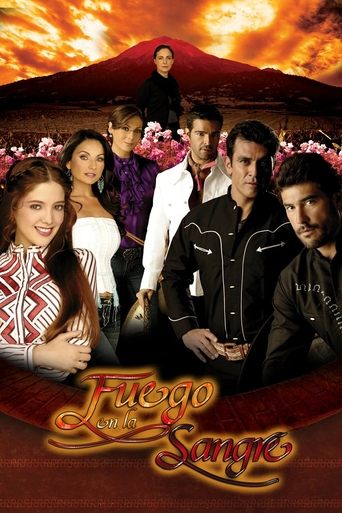
Fuego en la sangre is a telenovela that began transmissions on January 21, 2008, through Mexico's Canal de las Estrellas network. Starring Adela Noriega, Eduardo Yáñez, Diana Bracho, and Guillermo García Cantú. It is the Mexican remake of the Colombian soap operas Las Aguas Mansas and Pasion de Gavilanes. The theme song called "Para Siempre" is sung by Vicente Fernández. The telenovela received TVyNovelas Award for Best Telenovela, in 2009.
Same director · Viewers also picked
Mi destino eres tú is a 2000 Mexican telenovela. It is a production of Carla Estrada and the protagonists were Lucero and Jorge Salinas.
Shares 2 cast members · Same director
Story of love between Marimar and Sergio. Sergio is from a wealthy family, and Marimar lives with her poor grandparents in a hut in front of the ocean.
Shares a lead actor

Mi Pequeña Traviesa is a Mexican youth and family telenovela produced and directed by Pedro Damián for Televisa and originally broadcast on Canal de las Estrellas from December 8, 1997, to April 24, 1998. It is an adaptation of the Argentine telenovela Me llaman Gorrión, created by Abel Santa Cruz. The telenovela stars Michelle Vieth and Héctor Soberón. The story follows Julia González, a young woman whose dreams of pursuing a professional career are interrupted after her father is left paralyzed in an accident. To support her family, she disguises herself as a boy in order to find work. Along the way, she falls in love with Alberto Miranda, and together they must overcome social differences, family conflicts, and the many obstacles that stand in the way of their happiness.
Viewers also picked


A yearly musical contest organized by the municipality of Viña del Mar, Chile which takes place during the last week of February at the Quinta Vergara Amphitheater since February 21, 1960.

Yo Amo a Juan Querendón is a Mexican telenovela that aired on Univision at 7pm/6c for one year beginning in February 2007. The plot surrounded the story of Juan Dominguez and his interactions with the Cachon Family. The program was a remake of Pedro El Escamoso, a Colombian telenovela.

Different celebrities live in the same house watched by cameras 24 hours a day. They will have to overcome tests, strategize and eliminate each other so that only one can be the winner of the most famous house in Mexico.