Skip to content
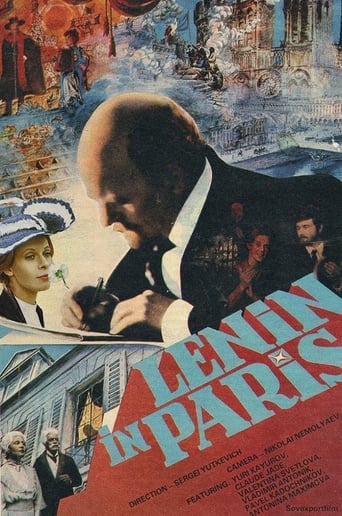
Lenin in Paris poster
Recommendations based on

Lenin in Paris

4.4 1981 Movie History Drama

1911. Lenin organizes the first Bolshevik party school near Paris, in the small town of Longjumeau. Through a chain of historical parallels and associations, this time is intertwined with the events of the Paris Commune, the October Revolution and the political struggles of the post-revolutionary years.

Same cast & genre

34 Shares actors and at least one genre with this title
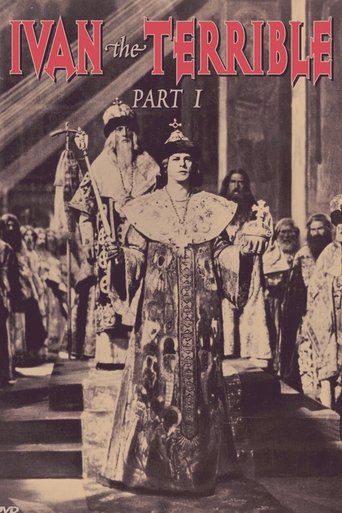
Ivan the Terrible, Part I poster
7.3 FILM

Set during the early part of his reign, Ivan faces betrayal from the aristocracy and even his closest friends as he seeks to unite the Russian people. Sergei Eisenstein's final film, this is the first part of a three-part biopic of Tsar Ivan IV of Russia, which was never completed due to the producer's dissatisfaction with Eisenstein's attempts to use forbidden experimental filming techniques and excessive cost overruns. The second part was completed but not released for a decade after Eisenstein's death and a change of heart in the USSR government toward his work; the third part was only in its earliest stage of filming when shooting was stopped altogether.

Ivan the Terrible, Part I

1944 Drama
Oblomov poster
6.3 FILM

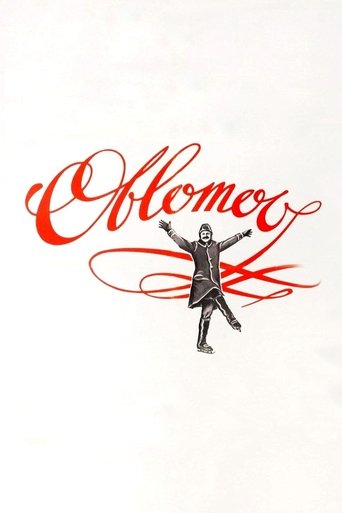
St. Petersburg, mid 19th century: the indolent, middle-aged Oblomov lives in a flat with his older servant, Zakhar. He sleeps much of the day, dreaming of his childhood on his parents' estate. His boyhood companion, Stoltz, now an energetic and successful businessman, adds Oblomov to his circle whenever he's in the city, and Oblomov's life changes when Stoltz introduces him to Olga, lovely and cultured. When Stoltz leaves for several months, Oblomov takes a country house near Olga's, and she determines to change him: to turn him into a man of society, action, and culture. Soon, Olga and Oblomov are in love; but where, in the triangle, does that leave Stoltz?

Oblomov

1980 Comedy
Prince Vladimir poster
6.7 FILM

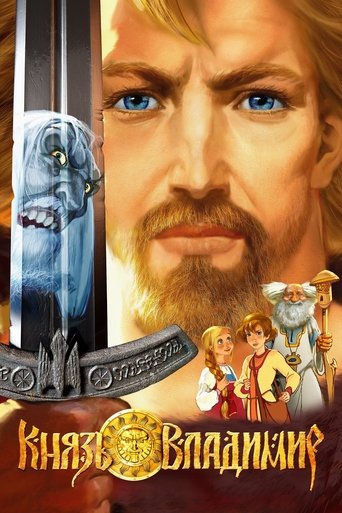
The plot follows the events surrounding Vladimir from childhood and into adulthood. In the beginning of the film, being under the influence of the high priest Krivzha, the Prince is a young, impulsive and cruel pagan. Fighting for supreme power, Vladimir wins a battle that kills his brother. Regretting what he has done, Vladimir does not suspect a conspiracy between the priest and the Pechenegs. Vladimir is concerned about gathering the Slavic tribes into one united state. Solving this major task, he faces obstacles, which Vladimir overcomes in the end, defeating Krivzha and winning the battle against Kurya, a Pecheneg chief.

Prince Vladimir

2006 Animation
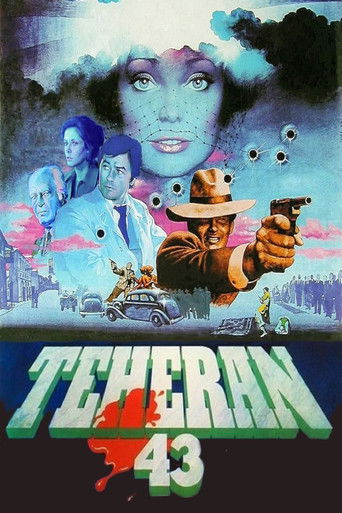
Teheran '43 poster
6.4 FILM

This story starts in 1980 in Paris as the memories of Andrei Borodin, a Soviet agent, take the action back to 1943 during the Teheran meetings of Stalin, Roosevelt and Churchill. A high-ranking Nazi officer developed a plan to assassinate the three world leaders in order to undermine the Allied forces. He commissioned the German agent Max Richard to carry out his plan, but it failed miserably due to the quick action and thinking of Andrei. While in Teheran, Andrei met a French woman, Marie Louni, living in the city and they had a brief but intense affair. Nearly four decades later, the Nazi officer has been captured - but not for long. Freed by terrorists, the officer is hunting down the German agent who failed to carry out the planned assassinations. Max lives at Françoise, a young French woman, who hides him.

Teheran '43

1981 Action
Ivan the Terrible, Part II: The Boyars' Plot poster
7.3 FILM

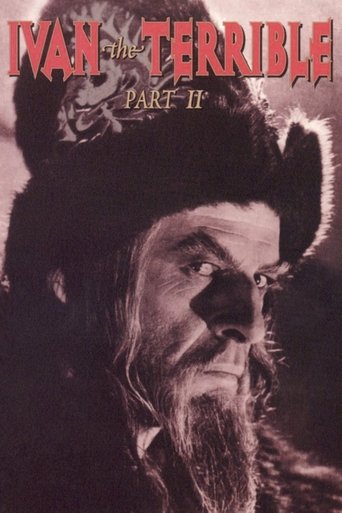
This is the second part of a projected three-part epic biopic of Russian Czar Ivan Grozny, undertaken by Soviet film-maker Sergei Eisenstein at the behest of Josef Stalin. Production of the epic was stopped before the third part could be filmed, due to producer dissatisfaction with Eisenstein's introducing forbidden experimental filming techniques into the material, more evident in this part than the first part. As it was, this second part was banned from showings until after the deaths of both Eisenstein and Stalin, and a change of attitude by the subsequent heads of the Soviet government. In this part, as Ivan the Terrible attempts to consolidate his power by establishing a personal army, his political rivals, the Russian boyars, plot to assassinate him.

Ivan the Terrible, Part II: The Boyars' Plot

1958 History
Le radeau de la Méduse poster
FILM

Iranian Iradj Azimi directed this French historical drama re-creating events depicted in the famous 1819 painting The Raft of the Medusa by Jean Louis Andre Theodore Gericault (1791-1824). The ill-fated voyage of the frigate Medusa begins when it departs Rochefort for Senegal in 1816. After striking a sandbar off the African coast, 150 civilians row safely to shore, but Captain Chaumareys (Jean Yanne) orders 140 soldiers and sailors onto a raft (minus supplies) and has it cut loose. Only 14 survive from the 140, creating a scandal back in France. Gericault (Laurent Terzieff) later talks to three of the survivors while researching his painting. Work on this film began in 1987, but sets destroyed by Hurricane Hugo caused delays, so the film was not completed until 1990. However, it then remained undistributed until an incident in which writer-director Azimi slashed his wrists in front of French Ministry of Culture officials.
Le radeau de la Méduse

1998 Drama
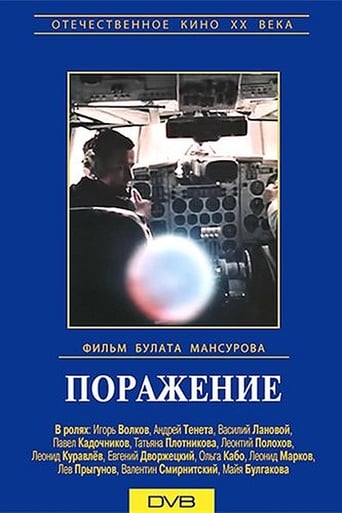
Defeat poster
FILM

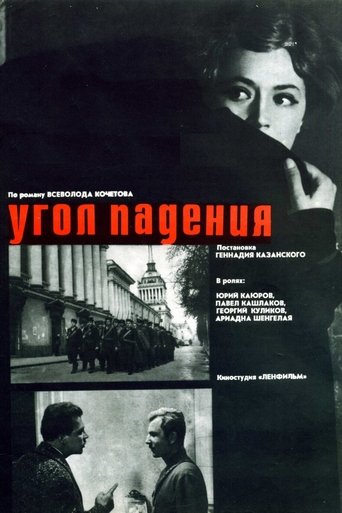
A 4-part made-for-television feature film. Two young physicists, engaged in the problems of atmospheric electricity and the study of thunderstorm phenomena, both disciples of Professor Dankevich, a talented, straightforward, incorruptible man, unwavering in his principles. Dankevich endeavoured to instil this uncompromising fight for honesty in science to the young scientists. And one of them, Sergey Krylov, lives up to the professor's expectations by continuing his work...

Defeat

1987 Drama
Black Rusks poster
FILM

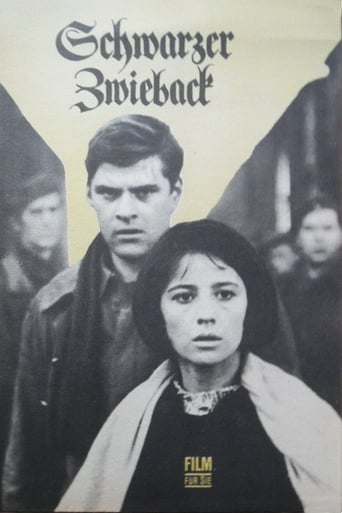
The November Revolution of 1918 in Germany, famine and social upheaval evoke a response from the young Soviet government in Russia. To provide food assistance, trains with bread are being formed. One of them, on the personal instructions of V.I. Lenin is accompanied by the young revolutionary Tatyana . On the way, she meets a former German prisoner of war, Kurt . A romantic relationship arises between them. The train with bread, despite all the difficulties, was delivered. In a clash with a detachment of counter-revolutionary German troops, Tatyana was wounded. She returns to Moscow, and Kurt goes to Berlin to continue the revolutionary struggle.

Black Rusks

1972 Drama

Closely Ranked

10 Ranked across franchise, crew, cast, themes, genre, era and audience scores
Ivan the Terrible, Part I poster
66% match FILM

Set during the early part of his reign, Ivan faces betrayal from the aristocracy and even his closest friends as he seeks to unite the Russian people. Sergei Eisenstein's final film, this is the first part of a three-part biopic of Tsar Ivan IV of Russia, which was never completed due to the producer's dissatisfaction with Eisenstein's attempts to use forbidden experimental filming techniques and excessive cost overruns. The second part was completed but not released for a decade after Eisenstein's death and a change of heart in the USSR government toward his work; the third part was only in its earliest stage of filming when shooting was stopped altogether.

Ivan the Terrible, Part I

★ 7.3 1944 Drama

Shares a lead actor