

Skip to content
La última esperanza poster
Recommendations based on

La última esperanza

1993 TV Show Drama

La última esperanza is a Mexican telenovela produced by Eugenio Cobo for Televisa and originally broadcast on Canal de las Estrellas from February 1 to May 14, 1993. It is a remake of the 1973 Mexican telenovela Muñeca, which was itself based on the 1971 Argentine telenovela Así en la villa como en el cielo, created by Abel Santa Cruz. The story follows Estelita Suárez, a kind-hearted young woman who lives in the impoverished neighborhood of La Última Esperanza while caring for her alcoholic father. Her life changes when she meets Daniel Burana, a wealthy young man who disguises himself as a poor resident to win her love. As their romance blossoms, they must confront family greed, corruption, and betrayal while fighting to protect their community from those determined to destroy it.

Same cast & genre

28 Shares actors and at least one genre with this title
Remington Steele poster
7.1 TV

Laura Holt, a licensed private detective, opens a detective agency but finds that potential clients refuse to hire a woman, however qualified. To solve the problem, Laura invents a fictitious male superior whom she names Remington Steele. Through a series of events that unfold in the first episode, "License to Steele," a former thief and con man, whose real name is never revealed, assumes the identity of Remington Steele. Behind the scenes, Laura remains firmly in charge.

Remington Steele

1982 Drama
Agujetas de color de rosa poster
TV

Agujetas de color de rosa is a Mexican youth telenovela produced by Luis de Llano Macedo for Televisa and originally broadcast on Canal de las Estrellas from April 4, 1994, to May 26, 1995. Created by Susan Crowley, adapted by Sergio Schmucler, and with literary supervision by Gabriela Ortigoza, the telenovela stars Angélica María, Alberto Vázquez, Carlos Bracho, Natalia Esperón, Flavio César, and Alexis Ayala. The story follows Elisa Morán, a widow who is left in financial ruin after the death of her wealthy husband. As she struggles to rebuild her life and raise her three children, her daughter Paola falls in love with Martín, a talented young singer. Together, they face family conflicts, jealousy, betrayal, and the challenges of pursuing their dreams while discovering the true meaning of love, friendship, and perseverance.

Agujetas de color de rosa

1994 Soap
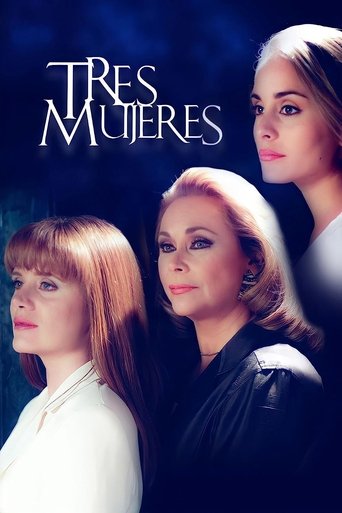
Tres Mujeres poster
TV

Tres Mujeres is a Mexican telenovela produced by Roberto Hernández Vázquez for Televisa and originally broadcast on Canal de las Estrellas from March 22, 1999, to April 14, 2000. Created by Martha Carrillo and Cristina García, with adaptation by Ximena Suárez, the telenovela stars Erika Buenfil, Karyme Lozano, Norma Herrera, Alexis Ayala, Jorge Salinas, and Pedro Armendáriz Jr. Due to its enormous popularity, the series was extended to 280 episodes. The story follows three women from different generations whose lives become intertwined through love, family conflicts, and personal struggles. As Bárbara, Fátima, and Greta face betrayal, ambition, heartbreak, and unexpected challenges, they must find the strength to overcome adversity while searching for happiness, forgiveness, and true love.

Tres Mujeres

1999 Drama
El pecado de Oyuki poster
7.8 TV

El Pecado de Oyuki is a Mexican telenovela produced by Televisa in 1988. It was based on an original story by Yolanda Vargas Dulché, who also adapted the screenplay for television. The original comic book series was in the style of the foto-novela. For the role of Oyuki, the photographer selected the Mexican Japanese Sachiko Tsuchiya. Born in Tepic, Nayarit, she became the most recognizable Asian Mexican of her time. The telenovela was shown in the United States in 1988 through Univision. Dulché's story was also adapted for Brazilian television in 1967 and as a comic published starting April 11, 1975 by Grupo Editorial Vid. The Brazilian version was called "Yoshiko, um poema de amor" and starred actors Luis Gustavo and Rosa Miake.

El pecado de Oyuki

1988 Drama
Pueblo chico, infierno grande poster
TV

Pueblo chico, infierno grande is a Mexican historical telenovela produced by José Alberto Castro for Televisa and originally broadcast on Canal de las Estrellas from January 6 to August 1, 1997. Created by Javier Ruán and adapted by Javier Ruán, Mario Hernández, and Sergio Schmucler, the telenovela is based on a true story about Leonarda Ruán. It stars Verónica Castro, Juan Soler, and Guillermo Capetillo. The story is set in the late 19th century and follows Leonarda Ruán, a wealthy widow from the town of Nahuatzen who falls in love with Genaro Onchi, a young man from a humble background. Their relationship faces strong opposition from society, family conflicts, jealousy, and the return of people from Leonarda's past who try to separate them. As secrets and rivalries emerge, Leonarda and Genaro fight to protect their love against the judgment and traditions of their small town.

Pueblo chico, infierno grande

1997 Drama
Yo compro esa mujer poster
TV

In the early 20th century, the Montes de Oca family—comprising two sisters and a cousin—finds itself entangled in an intense love triangle. Matilde is in love with her cousin Rodrigo, who loves the other sister, Branca Flor; she, in turn, loves a humble fisherman. Upon discovering this, Rodrigo accuses the fisherman of theft, leading to his arrest. The lovestruck cousin’s malice knows no bounds; learning that Branca Flor is carrying the fisherman's child, he waits for the baby to be born so he can make it disappear.

Yo compro esa mujer

1990 Drama
Bendita Mentira poster
TV

Bendita Mentira is a Mexican telenovela produced by Jorge Lozano Soriano for Televisa and originally broadcast on Canal de las Estrellas from August 5 to December 6, 1996. It is based on the radio serial La madrastra, created by Inés Rodena, and was adapted for television by Celia Alonso and Andrea Ordóñez. The story follows Esperanza, a humble housekeeper who works for the wealthy de la Mora family. Unknown to everyone, Diego—the young man who despises her—is actually her biological son, having been raised to believe the de la Mora family are his true parents. As long-hidden secrets begin to surface, Esperanza must confront prejudice, betrayal, and painful truths while fighting to reunite her family and find happiness.

Bendita Mentira

1996 Soap
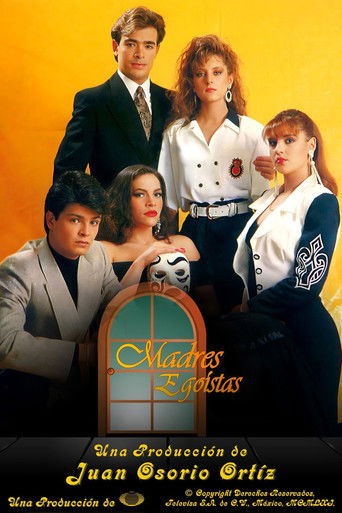
Madres egoístas poster
TV

Madres egoístas is a Mexican telenovela produced by Juan Osorio for Televisa and originally broadcast on Canal de las Estrellas from February 4 to June 7, 1991. It is a remake of the 1963 telenovela of the same name produced by Valentín Pimstein. Created by Mimí Bechelani and adapted by Josefina Palos y Romo, the telenovela stars Julieta Rosen, Enrique Novi, Orlando Carrió, and Chantal Andere. The story follows Raquel Rivas Cantú, a young orphan and heiress who is raised by her housekeeper Mariana, a woman who secretly carries resentment against the Rivas Cantú family. After marrying Pablo, a widower with a daughter, Raquel's life becomes marked by tragedy, family conflicts, and betrayal. As secrets from the past emerge, Raquel and her loved ones must face revenge, ambition, and the search for justice and happiness.

Madres egoístas

1991 Family
Caminos cruzados poster
TV

Mexican telenovela remake of the Brazilian soap opera "Todo o nada". Patricia is a sensitive and intelligent woman who begins to work in the firm of Ambrosio and César Augusto (father and son). They both fall in love with her, but César Augusto breaks off his relationship with his girlfriend, Valeria and marries her. Patricia and César Augusto will separate, however, they will meet again later having totally different lives: she is a working woman and he is married to another woman.

Caminos cruzados

1995 Drama

Closely Ranked

10 Ranked across franchise, crew, cast, themes, genre, era and audience scores
El Manantial poster
87% match TV

In the village of San Andres, the rivalry between two families the Valdes and the Ramirez is centered on "El Manantial", a beautiful fountain of water that happens to bathe the small property of the Valdes and not the neighboring ranch, the rich and prosperous hacienda "Piedras Grandes", where the best cattle are raised and is property of the Ramirez. But the spring is not the real reason for the hatred between the families. Justo Ramirez, married to Margarita Insunza, had a relationship with Francisca Rivero, wife of his enemy and neighbor Rigoberto Valdes. This relationship, founded in the betrayal, will cause the utmost bitterness and the destruction between the two families. The Valdes have a beautiful daughter named Alfonsina, who was born in the same year as Alejandro, the son and heir of the Ramirez. Although they have grown separately with their souls full of prejudices against their respective families, the two cannot avoid feeling attracted to each other. Margarita will not permit this and so she tells her husband to make sure her son will never be together with Alfonsina so he could marry Barbara, her cousin's daughter. Justo rapes Alfonsina and she leaves along with her mom and her aunt. Five years later... Alfonsina is graduating from school and has a good life until her mother commits suicide because she found out she was deathly ill and could no longer live with the guilt of her lifestyle. Before dying, her mother confesses to Alfonsina that Justo Ramirez destroyed her life and after that Alfonsina vows revenge on the man who destroyed her family. She returns to San Andres and there she once again sees Alejandro who is now engaged to Barbara. Their love is still present in their hearts. They will have to fight for their love and see if they can be happy by the shores of El Manantial... El Manantial is a Mexican telenovela that first aired in 2001, starring Adela Noriega and Mauricio Islas. The telenovela received TVyNovelas Award for Best Telenovela, in 2002.

El Manantial

★ 7.3 2001 Drama

Viewers also picked

Para Volver a Amar poster
81% match TV

Para Volver a Amar is a Televisa telenovela that aired on the Canal de las Estrellas channel in Mexico from July 12, 2010 to January 30, 2011. It stars Rebecca Jones, Rene Strickler, Alejandro Camacho, Alejandra Barros, and Africa Zavala. The Mexican version however is taken from the original Colombian soap opera series "El Último Matrimonio Feliz". The story is about six women who befriend each other and help each other deal with the pains of life, particularly in regards to marriage and relationships. They'll realize that even amidst their problems, happiness is not impossible to attain. It won seven Premios TVyNovelas awards for Best Telenovela of the Year, Best Male Villain, Best First Actress, Best First Actor, Best Co-Star Actress, Best Co-Star Actor, and Best Young Lead Actor. Para Volver a Amar aired in the United States on Univision from March 8, 2011 to October 28, 2011 at 12am/11pm central.

Para Volver a Amar

★ 7.8 2010 Drama

Viewers also picked

Te Sigo Amando poster
80% match TV

Yulissa Torres-Quintero is a beautiful young woman from an upper social class who has been orphaned at a very young age; For this reason, she and her brother Alberto were raised by their cruel grandmother, Doña Paula Garza vda. de Torres-Quintero, who pretends to be sick to manipulate her grandchildren. After several years, Paula is ruined and penniless, so she decides to mortgage all her assets to the landowner Ignacio Aguirre, owner of the Arroyo Negro hacienda, as a last resort to survive and avoid poverty.

Te Sigo Amando

★ 7.1 1996 Drama

Viewers also picked

En nombre del amor poster
80% match TV

En Nombre Del Amor is a Mexican telenovela produced by Televisa. It is a remake of Cadenas de Amargura. En Nombre Del Amor was produced by Carlos Moreno, and filming began on August 4, 2008. It premiered in the United States July 7, 2009 on Univision and ended its run on March 7, 2010 in a two-hour grand finale on a Sunday. Starring for Allison Lozz and Sebastián Zurita, as adult stars Victoria Ruffo, Arturo Peniche with Leticia Calderón as the villain protagonist and main villain, co-starring for Laura Flores, Alfredo Adame, Víctor Cámara, and the participation of Altair Jarabo as youth antagonist.

En nombre del amor

★ 7.6 2008 Drama

Viewers also picked

Atrévete a Soñar poster
78% match TV

Danna Paola stars as Patito, Eleazar Gómez as Mateo, Violeta Isfel and Cynthia Klitbo, play antagonist roles as Antonella and Bianca. The telenovela features adult protagonists also, René Strickler and Vanessa Guzmán. It first aired on Sunday, 8 March 2009, as the first telenovela to debut on a Sunday in Mexico. After a year of success, becoming a major hit in Mexico, especially among children, its final episode was also on a Sunday, 7 March 2010.

Atrévete a Soñar

★ 8.1 2009 Drama

Viewers also picked