Skip to content
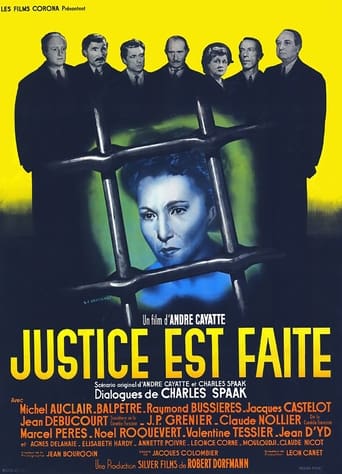
Justice Is Done poster
Recommendations based on

Justice Is Done

6.4 1950 Movie Drama Mystery

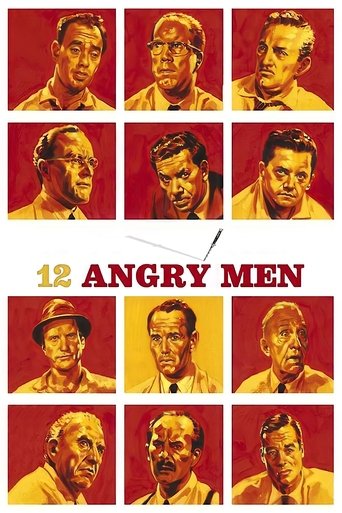
Elsa Lundenstein is accused of having murdered her lover. The jury discusses the case vividly. All members are somehow prejudiced because of personal life experience and subsequently each member reads something different into the presented facts.
Same cast & genre

31 Shares actors and at least one genre with this title
Beauty and the Beast poster
7.5 FILM

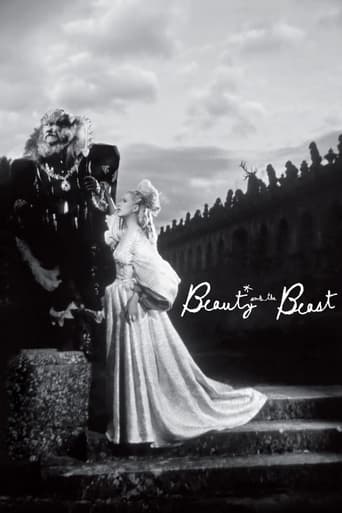
The story of a gentle-hearted beast in love with a simple and beautiful girl. She is drawn to the repellent but strangely fascinating Beast, who tests her fidelity by giving her a key, telling her that if she doesn't return it to him by a specific time, he will die of grief. She is unable to return the key on time, but it is revealed that the Beast is the genuinely handsome one. A simple tale of tragic love that turns into a surreal vision of death, desire, and beauty.

Beauty and the Beast

1946 Drama
Diary of a Country Priest poster
7.5 FILM

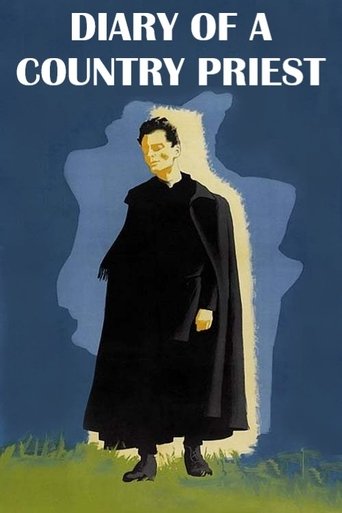
An inexperienced, sickly priest shows up in the rural French community of Ambricourt, where he joins the community's clergy. But the locals don't take kindly to the priest, and his ascetic ways and unsociable demeanor make him an outcast. During Bible studies at the nearby girls school, he is continually mocked by his students. Then his attempt to intervene in a family feud backfires into a scandal. His failures, compounded with his declining health, begin to erode his faith.

Diary of a Country Priest

1951 Drama
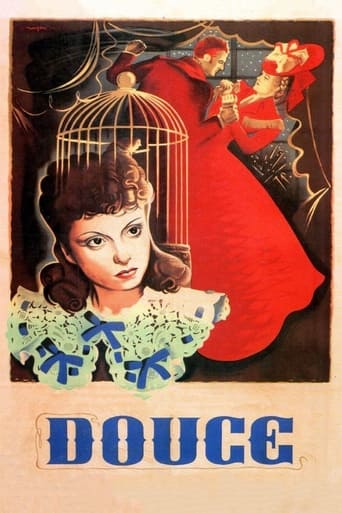
Douce poster
7.2 FILM

In Paris in 1887, Irène works as a governess to Douce, the grand-daughter of the dowager Countess de Bonafé. Douce believes she is in love with Fabien, the handsome manager of the estate. However she cannot hope to marry him because of their class difference. Douce's widowed father, the Count de Bonafé, has a wooden leg, and is infatuated with Irène. Douce discovers that Fabien is planning to flee to Quebec with Irène, and also finds out that the Count has asked Irène to marry him. So Douce tells Fabien this and convinces him to run away with her, causing consternation in the family.

Douce

1943 Drama
Judge Fayard Called the Sheriff poster
6.9 FILM

Jean-Marie Fayard is a young examining magistrate in a large provincial french city. He belongs to that generation of judges who are endeavoring to re-adapt the notion of justice to our changing times. His methods are not agreeable to every one. Criticism and pressure are brought to bear upon him but he is aware of his value, professionally, and refuses to make any concessions. He follows an unwavering course. He uses dynamic methods and takes uncustomary initiatives. He behaves like a crusader, a battler, whence the nickname given him by the reporters : the sheriff.

Judge Fayard Called the Sheriff

1977 Drama
Love Me Strangely poster
4.6 FILM

Alain Revent, a seductive and refined man, derives a peculiar satisfaction from debasing his wives. The first, driven to the brink of despair, throws herself out of a window. Enlisting the help of an equally perverse casual acquaintance, Dino, the "handsome brute" proceeds to emotionally torture his second wife, Nathalie. The sadistic plan is picked up on by Officer Leroy who suspects the truth. Will he be able to snatch the unfortunate woman from the evil Alain's clutches?

Love Me Strangely

1971 Thriller
We Are All Murderers poster
6.7 FILM

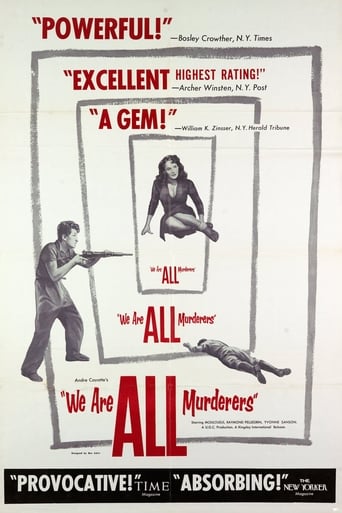
Originally titled Nous Sommes Tout des Assassins, We Are All Murderers was directed by Andre Cayette, a former lawyer who detested France's execution system. Charles Spaak's screenplay makes no attempt to launder the four principal characters (Marcel Mouloudji, Raymond Pellegrin, Antoinine Balpetre, Julien Verdeir): never mind the motivations, these are all hardened murderers. Still, the film condemns the sadistic ritual through which these four men are brought to the guillotine. In France, the policy is to never tell the condemned man when the execution will occur--and then to show up without warning and drag the victim kicking and screaming to his doom, without any opportunity to make peace with himself or his Maker. By the end of this harrowing film, the audience feels as dehumanized as the four "protagonists." We Are All Murderers was roundly roasted by the French law enforcement establishment, but it won a special jury prize at the 1952 Cannes Film Festival.
We Are All Murderers

1952 Crime
La salamandre d'or poster
FILM

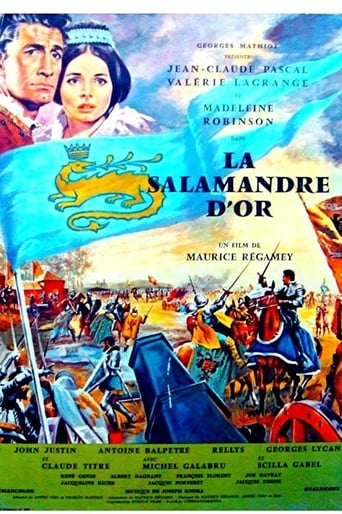
In 1525, on the evening of the Battle of Pavia, François 1er was taken prisoner by the armies of Charles-Quint, with the Constable de Bourbon on their side. His mother, regent of the kingdom, commissioned the king's loyal equerry, Antoine de Montpezat, to raise a ransom of two million ecus and send it to Madrid. Despite the treachery of Vandoeuvre, governor of Languedoc and supporter of the connétable de Bourbon, who has his eye on the French throne, Montpezat accomplishes his mission and is reunited with his fiancée, who had almost married the traitor Vandoeuvre.

La salamandre d'or

1962 Drama
The Case of Dr. Laurent poster
7.1 FILM

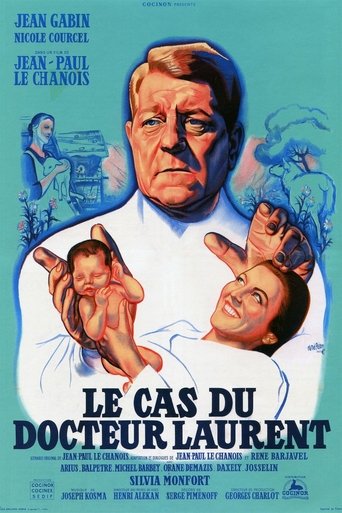
A Paris-based doctor tries to spread the gospel of Natural Childbirth. Working in a cloistered rural community, Gabin runs up against the stone walls of fear and prejudice. His theories are proven sound when unwed mother Nicole Courcel gives birth within Gabin's methodology. The childbirth sequence is filmed straight-on with a delicate combination of taste and frankness. Nonetheless, the lurid ad campaign of Cas Du Dr. Laurent sensationalized this sequence all out of proportion.

The Case of Dr. Laurent

1957 Drama
Time of the Wolves poster
FILM

Patterning himself after the American gangster John Dillinger, the criminal (Robert Hossein) is tracked by the inspector (Charles Aznavour), a former childhood friend. Plenty of gunplay and psychology is used to trap the killer. His only tender moments are spent with his girlfriend Stella (Virna Lisi). Dillinger is cornered by the police and kills several innocent victims in a crowd during the shootout. The mob decides to take things into their own hands as they approach the doomed man with a noose when he runs out of bullets.

Time of the Wolves

1970 Action

Closely Ranked

10 Ranked across franchise, crew, cast, themes, genre, era and audience scores
We Are All Murderers poster
83% match FILM

Originally titled Nous Sommes Tout des Assassins, We Are All Murderers was directed by Andre Cayette, a former lawyer who detested France's execution system. Charles Spaak's screenplay makes no attempt to launder the four principal characters (Marcel Mouloudji, Raymond Pellegrin, Antoinine Balpetre, Julien Verdeir): never mind the motivations, these are all hardened murderers. Still, the film condemns the sadistic ritual through which these four men are brought to the guillotine. In France, the policy is to never tell the condemned man when the execution will occur--and then to show up without warning and drag the victim kicking and screaming to his doom, without any opportunity to make peace with himself or his Maker. By the end of this harrowing film, the audience feels as dehumanized as the four "protagonists." We Are All Murderers was roundly roasted by the French law enforcement establishment, but it won a special jury prize at the 1952 Cannes Film Festival.
We Are All Murderers

★ 6.7 1952 Crime

Shares a lead actor · Same director

Diary of a Country Priest poster
59% match FILM

An inexperienced, sickly priest shows up in the rural French community of Ambricourt, where he joins the community's clergy. But the locals don't take kindly to the priest, and his ascetic ways and unsociable demeanor make him an outcast. During Bible studies at the nearby girls school, he is continually mocked by his students. Then his attempt to intervene in a family feud backfires into a scandal. His failures, compounded with his declining health, begin to erode his faith.

Diary of a Country Priest

★ 7.5 1951 Drama

Shares a lead actor

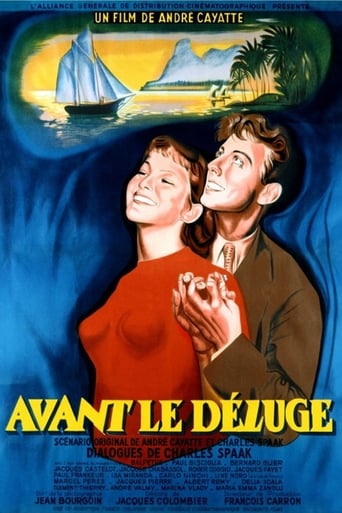
Before the Deluge poster
59% match FILM

The title of this French "reality" drama, which translates to Before the Deluge, is a play on Louis XVI's famous prognostication, "Apres moi, le deluge." Set in 1950, the film concentrates on five Parisian adolescents. Certain that the next war will herald the apocalypse, the youngster make plans to run off to a desert island and set up a new society. This, however, will require money, which is why the boys decide to pull off a "necessary" robbery. Idealism collapses in the face of cold reality, as the five youths suffer from the consequences of their actions. Avant le Deluge was one of a group of films cowritten by director Andre Cayatte and Charles Spaak which endeavored to explore the touchy social issues of the day: others in the Cayatte-Spaak canon include the euthanasia-themed Justice est Faite and the capital-punishment tract Nous sommes tous des assassins.

Before the Deluge

★ 6.6 1954 Drama

Shares 2 cast members · Same director