7.0
FILM
Filmmaker Barbet Schroeder shows the Ugandan dictator meeting his Cabinet, reviewing his troops, explaining his ideology.
Michael Cockerell talks to all of the surviving people to hold the post of Secretary of State for Foreign and Commonwealth Affairs including the current incumbent, and invites the viewer to imagine their life in the position.
Filmmaker Barbet Schroeder shows the Ugandan dictator meeting his Cabinet, reviewing his troops, explaining his ideology.
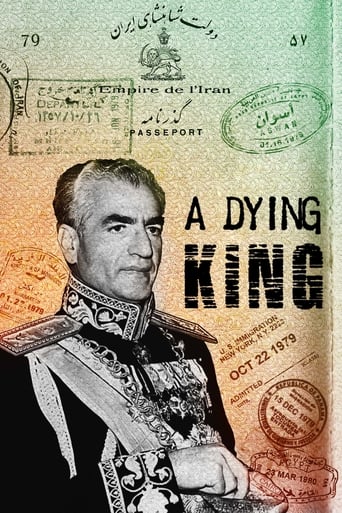
On January 16, 1979, the then Shah of Iran, left Iran commencing what became a 19-month odyssey to exile in Egypt, Morocco, Bahamas, Mexico, US, Panama, and back to Egypt again where he passed away. His death had profound consequences for the future of the middle east and the world, yet the untold medical story of the late Shah of Iran has to date remained a puzzling mystery. This documentary leads viewers to the main causes of the Iranian revolution, pursuant hostage crisis, and the state of relations between the U.S. and Iran.

60 years ago, almost nothing was known of elephants in the wild. But then one young Scottish biologist changed that forever. In 1965 Iain Douglas-Hamilton arrived in Tanzania to live alongside African elephants. Later joined by his wife Oria and daughters Saba and Dudu, elephants became central to their lives with matriarch Boadicea and gentle young mother Virgo cherished like human relatives. But this garden Eden was short-lived as an ivory poaching epidemic swept across Africa forcing Iain to switch from pioneering scientist to maverick conservationist. He became a lone crusader against the international Ivory trade which was finally banned in 1989. Now back in the field and revealing even more about the fascinating world of elephants, Iain’s work continues alongside a new generation of Kenyan conservationists. This inspiring documentary combines stunning wildlife imagery with the story of a remarkable life showing how sometimes you have to stand alone to protect what you love.
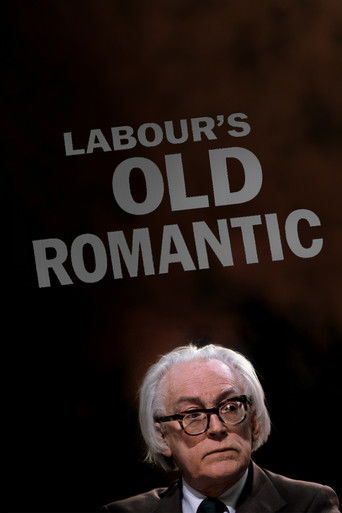
A profile of Michael Foot, the former leader of the Labour Party, which included footage of him on the night of Tony Blair’s historic 1997 victory, and interviews with his wife, the filmmaker Jill Cragie, and some of his old colleagues and friends, including Barbara Castle, Spike Milligan and Salman Rushdie.
Gérard Courant applies the Lettrist editing techniques of Isidore Isou to footage of late 70's pop culture. Courant posits that his cinema offers an aggressive détournement to the French mainstream, reifying a Duchampian view of film: "I believe in impossible movies and works without meaning... I believe in the anti-movie. I believe in the non-movie. I believe in Urgent... My first full length movie that is so anti-everything that I sometimes wonder if it really does exist!"
Michael Cockerell presents this documentary on the health problems of Britain's Prime Ministers.

Deng Xiaoping's economic and political opening in China. Margaret Thatcher's extreme economic measures in the United Kingdom. Ayatollah Khomeini's Islamic Revolution in Iran. Pope John Paul II's visit to Poland. Saddam Hussein's rise to power in Iraq. The Soviet invasion of Afghanistan. The nuclear accident at the Harrisburg power plant and the birth of ecological activism. The year 1979, the beginning of the future.
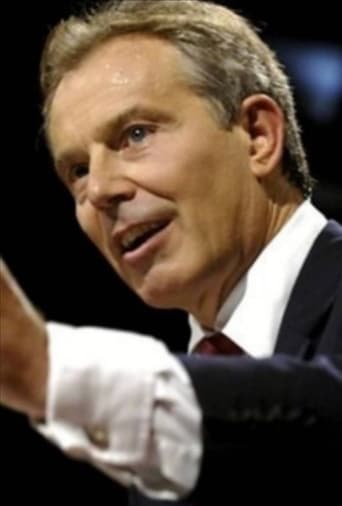
Michael Cockerell tells the story of how prime ministers have coped with life after Number Ten, after Tony Blair became the youngest member of the ex-PMs' club for a hundred years. The film reveals who left office bankrupt, who did TV commercials for Cheshire cheese, who had his own chat show and who has never had a single happy day since leaving Number Ten. Cockerell, who met the eight PMs prior to Blair, looks at what Tony planned do next and just how many millions he could make from being an ex-PM.

A revealing one-off documentary that provides an inside view of how Tony Blair and former prime ministers - including Harold Wilson, Margaret Thatcher and John Major - have run their cabinet, the highest decision-making body in the land. Through candid interviews, rare archive footage and filming inside No 10, presenter Michael Cockerell opens the door to the Government's own chamber of secrets as he seeks the answer to the question: is the notion of cabinet government an obsolete concept?

BBC Documentary 'News From Number 10' (2000) Presented by Michael Cockerell A look behind the scenes of Number 10 Downing Street, the official residence and office of British Prime Minister Tony Blair. In 2000 the BBC followed Prime Minister's Press Secretary Alastair Campbell during his daily routines and dealings with the British press.

With Britain's first-ever political leaders' television debate imminent, award-winning reporter Michael Cockerell uncovers what it's like to take part in these contests and how leaders try to win them. He tells the inside story of why it has taken so long for such debates to arrive in the UK. The programme features candid interviews with US Presidents and their advisers on the tricks of the debate trade. Blending new film and behind-the-scenes footage, some never seen before, it's a tragicomic tale of high politics and low cunning. From John F Kennedy and Richard Nixon through to Barack Obama, candidates are seen being prepared for their debates, then in the sometimes funny, sometimes disastrous results on live television. Cockerell shows why for our would-be next Prime Ministers - Gordon Brown, David Cameron and Nick Clegg - the three debate stages across Britain will be what one former US President calls 'Tension City'.

A guide to human history through its most audacious power grabs. From Julius Caesar to Napoleon; from Mussolini to the strongmen of the present day - we see how the world we know has been shaped by those who dream big.

For 24 years East Timor's freedom fighter and Nobel Peace Prize winner José Ramos Horta campaigned to secure independence for his country, a Portuguese colony invaded by Indonesia in 1975. The Diplomat takes up Ramos Horta's story in the final dramatic stages of his long journey - the fall of Indonesia's President Suharto, the referendum to determine East Timor's future, the overwhelming vote for independence, the devastating carnage that ensued, the intervention of United Nations peacekeepers, and Ramos Horta's final triumphant return to his homeland.
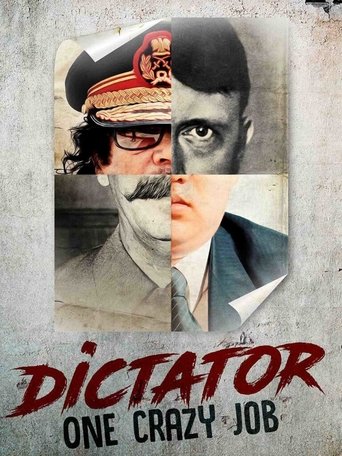
They’ve become the human face of inhuman barbarity. Leaders like Hitler, Idi Amin Dada, Stalin, Kim Jong Il, Saddam Hussein, Nicolae Ceausescu, Bokassa, Muammar Kadhafi, Khomeini, Mussolini and Franco governed their countries completely cut off from reality. These paranoid leaders were driven to abuse their power by the pathology of power itself. Dictators are driven by a relentless, thought-out determination to impose themselves as infallible, all-knowing and all-powerful beings. But they are also men ruled by their caprices, uncontrollable impulses, and reckless fits of frenzy, which paradoxically render them as human as anyone else. The abuses they committed were clearly atrocious, yet some of them were as outlandish as the characters portrayed in the film The Dictator. They sunk to depths worthy of Kafka: so incredibly absurd, they are outrageously funny.
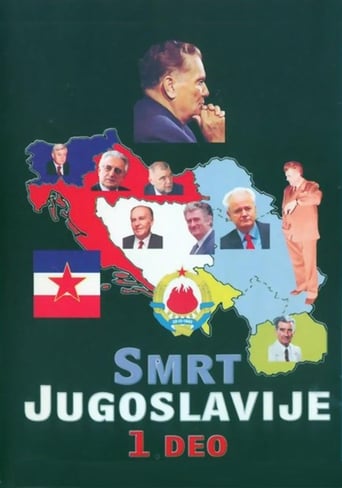
History of the political events and the wars which broke the former state of Yugoslavia into several nations and caused an international political and humanitarian crisis. Using interviews with all the major participants and archive footage of the events, the series impressively performed the double feat of making understandable something which had appeared intractable and of producing 'immediate' history.
It begins with cheers but almost always ends in tears. Yet, as the election looms, competition for the top job grows ever more intense. Why? The hours are terrible, money so-so, job security non-existent. On the plus side, there's free accommodation in central London and probably more power over your country than any other leader in the western world. With the help of the present and previous incumbents, Michael Cockerell offers the first "how to" guide to the job of prime minister.
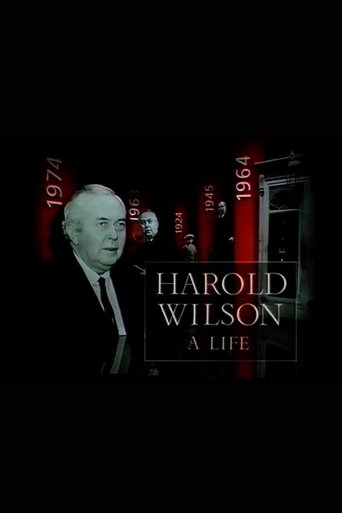
BBC obituary documentary written and presented by Anthony Howard. Broadcast on the day of the death of Harold Wilson, May 24th 1995.
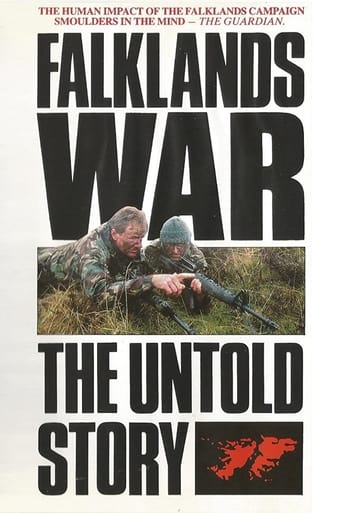
Five years after the war in the Falklands between Britain and Argentina, many facts were still wrapped in red tape. Many of the key figures had remained silent. No-one had been to Argentina to tell the other side of the story. For the majority of the British people, the war was another glorious chapter in their history. With flags waving and bands playing, British troops had sailed away to repel the invaders. Patriotic emotions were stirred as they returned victorious. Government MPs tried to get the film banned, but Yorkshire TV's telephones were jammed with messages of support from wives and mothers of those who died in the conflict. Called 'the documentary to end all documentaries about the Falklands War' in the British press, it was also described as 'more poem than polemic - a hymn against war'.
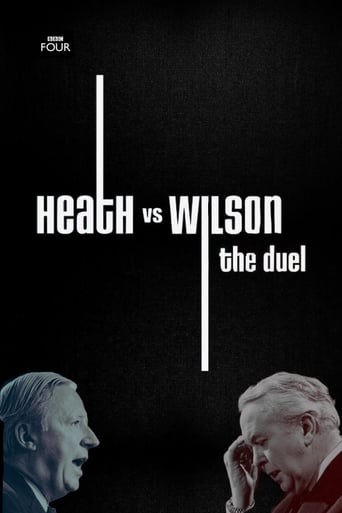
Harold Wilson and Edward Heath are two very different men equally overlooked by history, but they were the political titans of the era in which Britain changed for ever. For ten years they faced each other in the House of Commons, and swapped in and out of Number Ten. They fought four general elections, three of which were amongst the most exciting of the century.
The program Aikamme uskomuksia - ei ainoastaan leivästä (1973) looked into spirit beings, horoscopes, predictions and everything else from the rest of the world of the future appeal of the paranormal. Natural explanation for all of the world and the everyday reality is not enough. Astrologer Lyyli Mikkonen says the preparation of a horoscope, lecturer Liisa Tuovinen and Pastor Juho Tenhiälä show the relationship between the Christian faith and the miracle of UFOs. Chairman of the Helsinki UFO Society Timo Pyhälä familiar with the detection of light phenomena. (http://yle.fi/aihe/artikkeli/2014/06/21/1612-teeman-elava-arkisto-hamaran-rajamailla)

This documentary explores the history of Canada’s first major migration of non-European and non-white refugees who arrived in 1972 when Ugandan President Idi Amin expelled all South Asians from the country. Their story of struggle and hope became part of Canada’s conversations about refugees and cultural pluralism, and informed the Canadian response to future refugee movements.
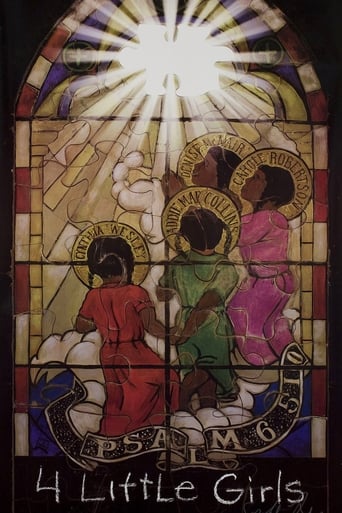
On September 15, 1963, a bomb destroyed a black church in Birmingham, Alabama, killing four young girls who were there for Sunday school. It was a crime that shocked the nation--and a defining moment in the history of the civil-rights movement. Spike Lee re-examines the full story of the bombing, including a revealing interview with former Alabama Governor George Wallace.
Viewers also picked
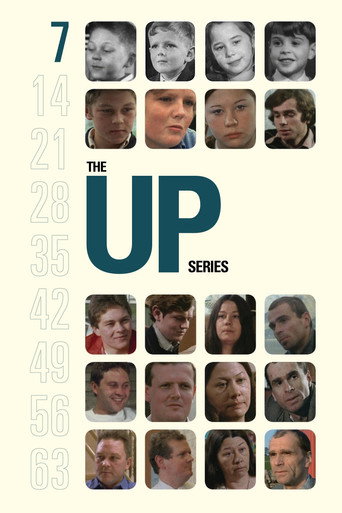
A group of British children aged 7 from widely ranging backgrounds are interviewed about a range of subjects. The filmmakers plan to re-interview them at 7 year intervals to track how their lives and attitudes change as they age.
Viewers also picked
Journey into the extraordinary world of "The Witcher" — from casting the roles to Jaskier's catchy song — in this behind-the-scenes look at the series.
Viewers also picked
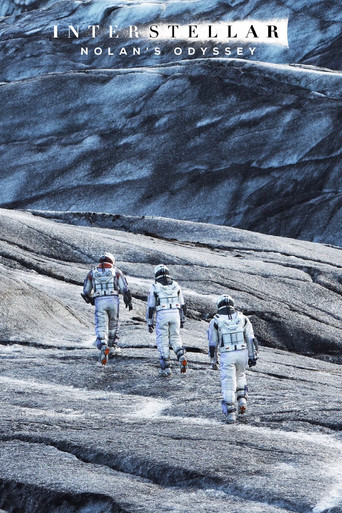
A look behind the lens of Christopher Nolan's space epic.
Viewers also picked
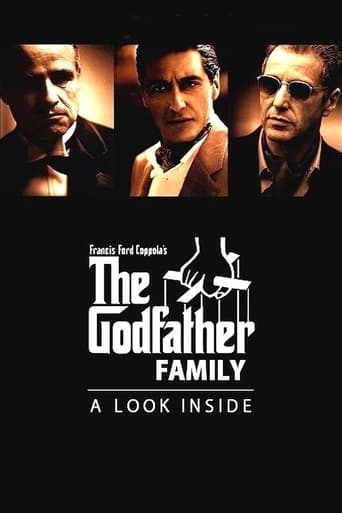
A documentary on the making of the three Godfather films, with interviews and recollections from the film makers and cast. This feature also includes the original screen tests of some of the actors for "The Godfather" film, and some candid moments on the set of "The Godfather: Part III."
Viewers also picked
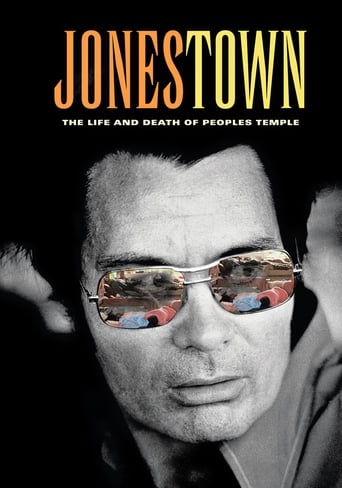
Featuring never-before-seen footage, this documentary delivers a startling new look at the Peoples Temple, headed by preacher Jim Jones who, in 1978, led more than 900 members to Guyana, where he orchestrated a mass suicide via tainted punch.
Viewers also picked
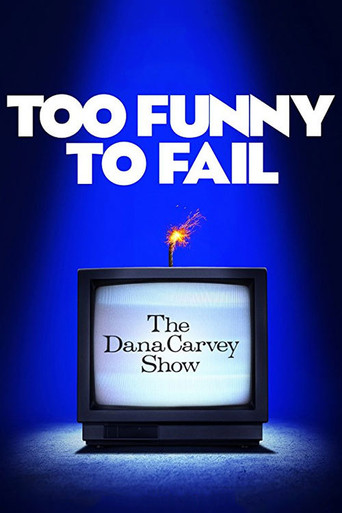
It had all the makings of a huge television success: a white-hot comic at the helm, a coveted primetime slot, and a pantheon of future comedy legends in the cast and crew. So why did The Dana Carvey Show—with a writers room and cast including then unknowns Steve Carell, Stephen Colbert, Louis C.K., Robert Smigel, Charlie Kaufman, and more— crash and burn so spectacularly? TOO FUNNY TO FAIL tells the hilarious true story of a crew of genius misfits who set out to make comedy history… and succeeded in a way they never intended.
Viewers also picked
A revealing one-off documentary that provides an inside view of how Tony Blair and former prime ministers - including Harold Wilson, Margaret Thatcher and John Major - have run their cabinet, the highest decision-making body in the land. Through candid interviews, rare archive footage and filming inside No 10, presenter Michael Cockerell opens the door to the Government's own chamber of secrets as he seeks the answer to the question: is the notion of cabinet government an obsolete concept?
Shares 2 cast members
It begins with cheers but almost always ends in tears. Yet, as the election looms, competition for the top job grows ever more intense. Why? The hours are terrible, money so-so, job security non-existent. On the plus side, there's free accommodation in central London and probably more power over your country than any other leader in the western world. With the help of the present and previous incumbents, Michael Cockerell offers the first "how to" guide to the job of prime minister.
Shares 2 cast members
Michael Cockerell tells the story of how prime ministers have coped with life after Number Ten, after Tony Blair became the youngest member of the ex-PMs' club for a hundred years. The film reveals who left office bankrupt, who did TV commercials for Cheshire cheese, who had his own chat show and who has never had a single happy day since leaving Number Ten. Cockerell, who met the eight PMs prior to Blair, looks at what Tony planned do next and just how many millions he could make from being an ex-PM.
Shares 2 cast members