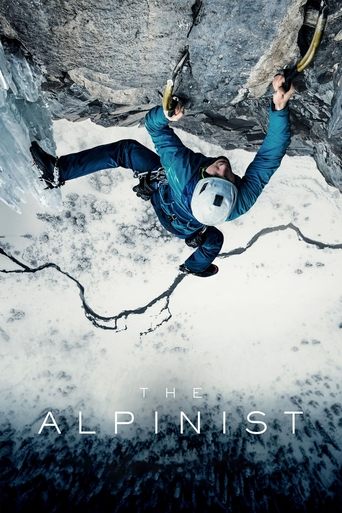
The life of Canadian mountain climber Marc-André Leclerc as he pushes the boundaries of climbing while on an expedition to Patagonia.
The Alpinist
Also tagged mountain climbing, escalade
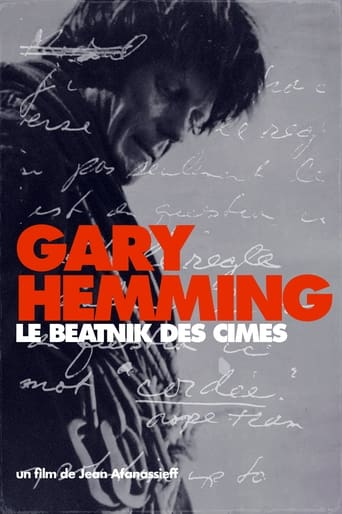
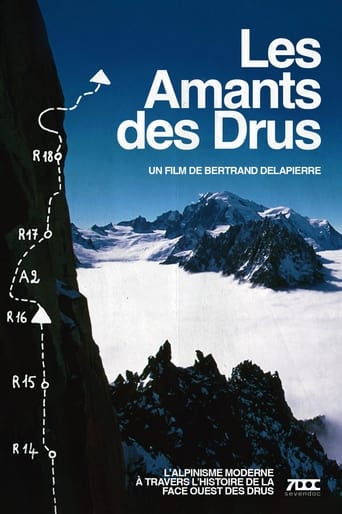
The American mountaineer Gary Hemming marked the era of the 1960s. The story of this "exceptional" character is intimately linked to that of the rescue of the two German mountaineers on the west face of the Drus, in 1966, a rescue which he had took the initiative. While the official emergency services of the EHM try to reach them from above, a pirate rope made up of Gary Hemming, René Desmaison, Lothar Mauch, Gil Bodin, Mike Brurke, François Guillot, the filmmaker Gérard Bauer organizes to join them from below and succeeded after a fierce struggle the rescue. The press seizes the event and elevates Gary Hemming to the rank of national hero. All the newspapers feature this big guy with a cool attitude, mismatched clothes, jovial smile and long blond hair on the front page. From then on, he was nicknamed: "the beatnik of the peaks".
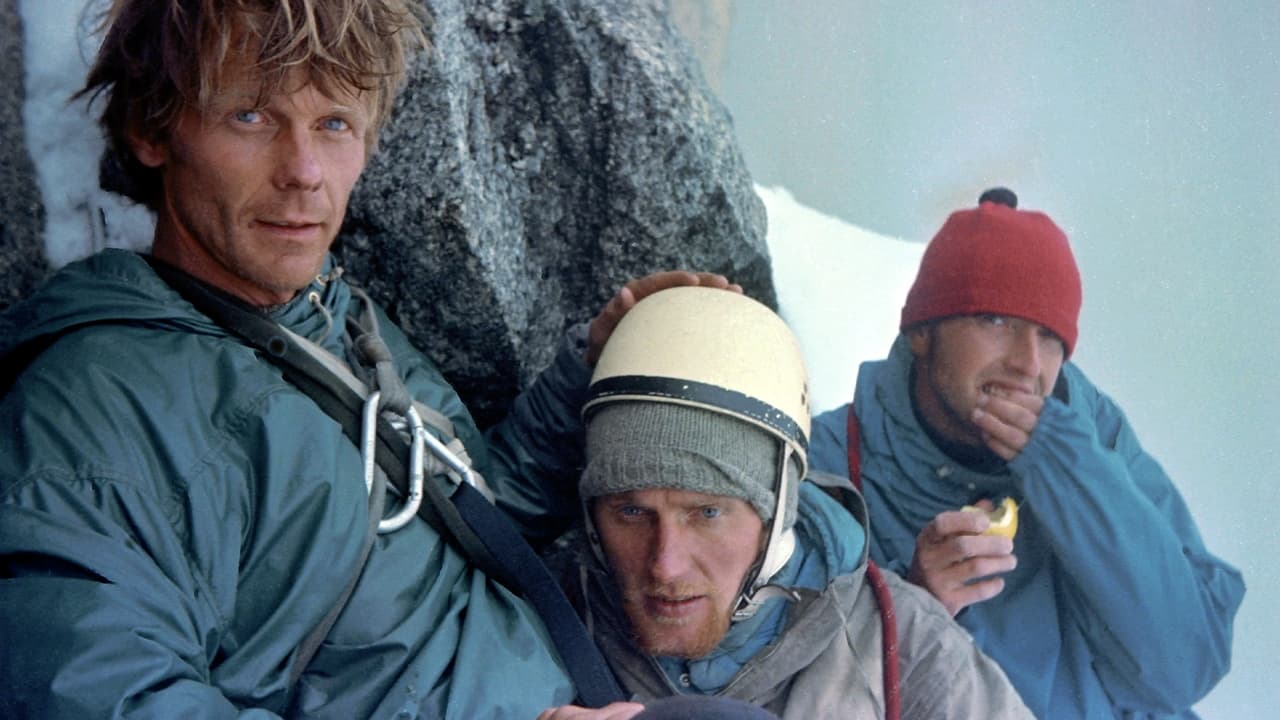
The life of Canadian mountain climber Marc-André Leclerc as he pushes the boundaries of climbing while on an expedition to Patagonia.
Also tagged mountain climbing, escalade
A journalist and a photographer set out to memorialize the bedrooms left behind by children killed in school shootings.
Also tagged documentary short
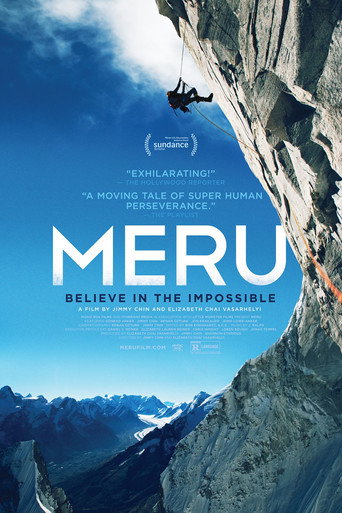
Meru is the electrifying story of three elite American climbers—Conrad Anker, Jimmy Chin, and Renan Ozturk—bent on achieving the impossible.
Also tagged alpinism
Martin Scorsese, Robert De Niro, Joe Pesci, and Al Pacino in conversation about The Irishman.
Also tagged documentary short
Follow the legend's epic journey through five World Cups, culminating in 2022's triumph. As the championship run unfolds, Messi shares some of his most personal reflections—on his national team career and the challenges he's faced.
Also tagged biography
Stanley Kubrick’s first color film, commissioned by the Seafarers International Union to promote the benefits of union membership. Shot inside the union’s Atlantic and Gulf Coast District facilities, it features scenes of ships, machinery, cafeteria life, and meetings, highlighting the daily routines and camaraderie of seafarers. Thought lost for decades, the film was rediscovered in 1973 and preserved by the Library of Congress.
Also tagged documentary short
What does being a woman really mean? How do women live the status society reserves for them? A group of women, beautiful or not, young or not, gifted with motherly instinct or not, answer before Agnès Varda's camera.
Also tagged documentary short
TV's most-watched history series brings to life the compelling stories from our past that inform our understanding of the world today.
Also tagged biography
American Masters is a PBS television series which produces biographies on enduring writers, musicians, visual and performing artists, dramatists, filmmakers, and others who have left an indelible impression on the cultural landscape of the United States.
Also tagged biography
People of different age, profession and social status answer two simple questions: who they are and what they want from life.
Also tagged documentary short
The official record of Mallory and Irvine's 1924 expedition. When George Mallory and Sandy Irvine attempted to reach the summit of Everest in 1924 they came closer than any previous attempt. Inspired by the work of Herbert Ponting (The Great White Silence) Captain Noel filmed in the harshest of conditions, with specially adapted equipment, to capture the drama of the fateful expedition.
Also tagged alpinism
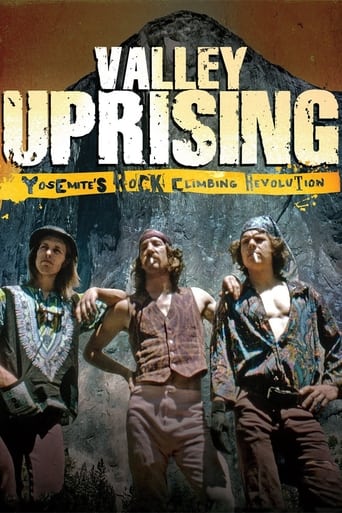
In the shady campgrounds of Yosemite valley, climbers carved out a counterculture lifestyle of dumpster-diving and wild parties that clashed with the conservative values of the National Park Service. And up on the walls, generation after generation has pushed the limits of climbing, vying amongst each other for supremacy on Yosemite's cliffs. "Valley Uprising" is the riveting, unforgettable tale of this bold rock climbing tradition in Yosemite National Park: half a century of struggle against the laws of gravity -- and the laws of the land.
Also tagged alpinism
Explore the secrets and lore of "The Witcher" Season 2 — from new monsters and locales to Geralt's redesigned armor — in this behind-the-scenes look.
Also tagged documentary short
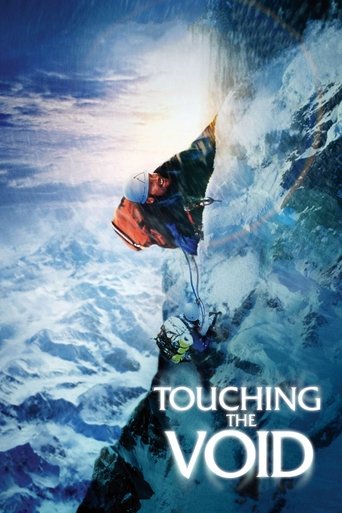
The true story of Joe Simpson and Simon Yates' disastrous and nearly-fatal mountain climb of 6,344m Siula Grande in the Cordillera Huayhuash in the Peruvian Andes in 1985.
Also tagged alpinism
Amber Heard and Nicole Kidman discuss their characters Mera and Atlanna.
Also tagged documentary short
Biography is a documentary television series. It was originally a half-hour filmed series produced for CBS by David Wolper from 1961 to 1964 and hosted by Mike Wallace. The A&E Network later re-ran it and has produced new episodes since 1987. The older version featured historical figures such as Helen Keller and Mark Twain, or long-dead entertainment figures such as Will Rogers or John Barrymore. The A&E series has placed the emphasis on such people as Marilyn Monroe, Elvis Presley, Plácido Domingo, Freddie Mercury, Jacqueline Kennedy Onassis, Eric Clapton, Pope John Paul II, Gene Tierney, Selena, Diego Rivera, Mao Zedong and Queen Elizabeth II, and fictional characters like The Phantom, Superman, Hamlet, Betty Boop, and Santa Claus. The program ended up profiling enough figures that in 1999, A&E spun it off into an entire network, The Biography Channel.
Also tagged biography
A group of Miskito Indians use Nicaraguan child soldiers in their resistance against the Sandinistas.
Also tagged documentary short
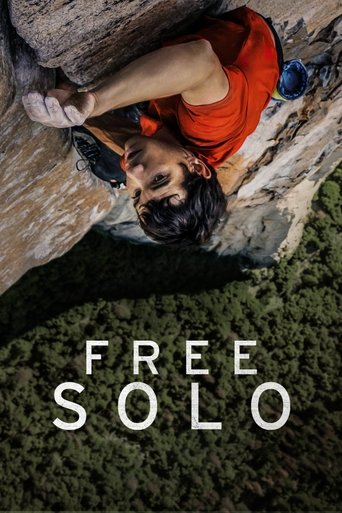
Follow Alex Honnold as he attempts to become the first person to ever free solo climb Yosemite's 3,000 foot high El Capitan wall. With no ropes or safety gear, this would arguably be the greatest feat in rock climbing history.
Also tagged mountain climbing
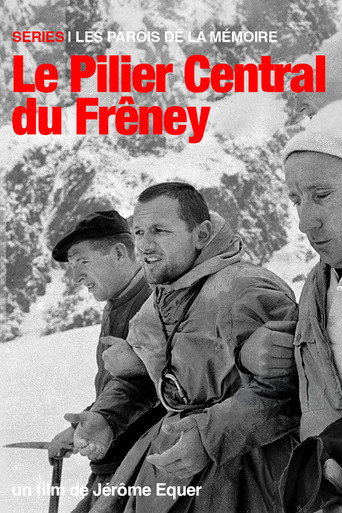
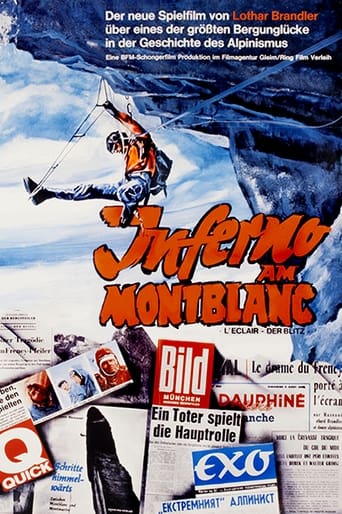
Les Parois de la Mémoire – Le Pilier Central du Frêney is a 25-minute documentary film directed by Jérôme Equer in 1994 and broadcast on the FR3 weekly program Montagne. The film highlights the tragic story of the July 1961 attempt to climb the Frêney Central Pillar (on the Italian side of Mont Blanc), during which a Franco-Italian team—led notably by Pierre Mazeaud and Walter Bonatti—was trapped by a violent, multi-day storm of exceptional intensity, resulting in a tragic retreat and the deaths of four of the seven climbers. It draws on archival footage, excerpts from Lothar Brandler’s film Inferno am Montblanc, and firsthand accounts from the participants, including mountaineer and politician Pierre Mazeaud.
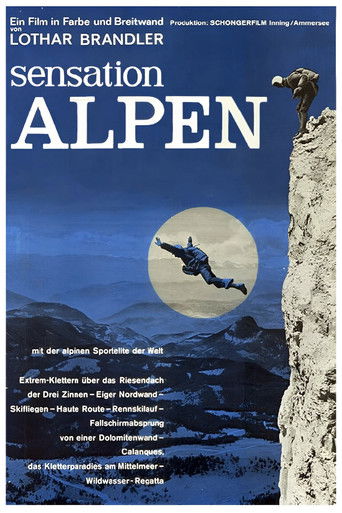
From Trento to Chamonix, via Zermatt; from the Morgiou cove to the Eiger's north face; from Planica to the Lavaredo peaks, the Alps are depicted, illustrated, and magnified in all their unique and sublime beauty, through the sports practiced there and the most typical customs and traditions of their inhabitants. A helicopter rescue and a parachute jump from the Red Wall by Wolfgang Weizenbocks are experiences not to be missed.
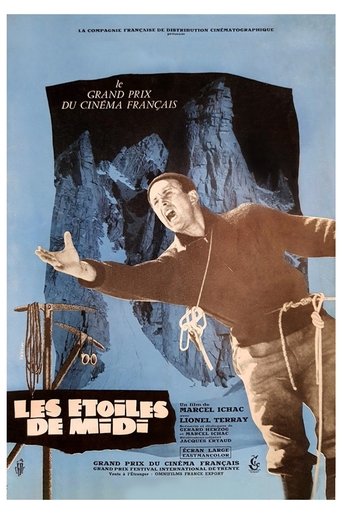
Les Etoiles de Midi is an engaging docudrama about some of the more spectacular exploits of French mountain climbers over the last several decades. In one re-enacted story, there is a wartime escape through the mountains, and in another, a daring rescue of a pair of climbers who had been missing. The actors themselves are adept at the sport of climbing, and they give the scenes an immediacy and real daring that brings the stories alive. A combination of their acrobatics and skill and the outstanding episodes in the history of French climbing creates a winning 78 minutes.
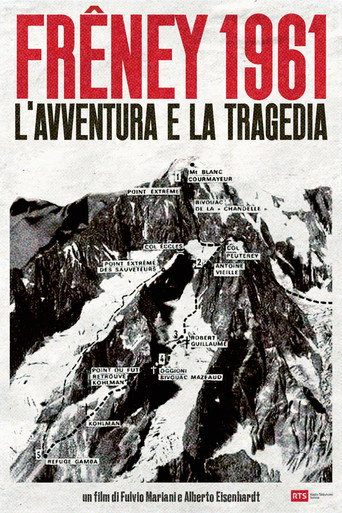
On July 11, 1961, a rope team of seven men—led by the Italian Walter Bonatti and the Frenchman Pierre Mazeaud—set out to scale the Frêney Pillar on the south face of Mont Blanc. After days of grueling effort—and just as they were nearing their goal—they were trapped by a violent storm. Stranded at an altitude of over 4,500 meters in temperatures of minus 20 degrees, the seven climbers were forced to bivouac in hellish conditions. Exhausted, spent, and with one of their number injured, they displayed extraordinary solidarity, exemplary courage, and a determination that commands respect right to the very end. Yet the mountain proved cruel. Lost in fog, blinded by the darkness, and gripped by the cold, four of the seven climbers perished from exhaustion after a perilous five-day, five-night ordeal in hell. Only three made it down alive, including the Italian Walter Bonatti and the Frenchman Pierre Mazeaud.
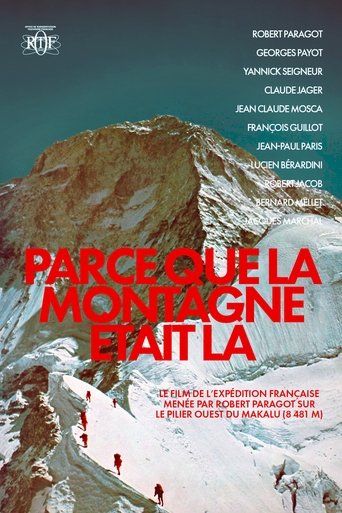
On May 23, 1971, a French expedition led by Robert Paragot successfully climbed Makalu via its west pillar. Makalu is one of the five highest peaks in the world, located in the Himalayas on the Nepalese-Tibetan border. Jean-Pierre Janssen and Lucien Bérardini filmed this expedition, where Robert Paragot spoke about the expedition conditions, life at altitude, and his state of mind as expedition leader. On the return to base camp, Jean-Pierre Janssen interviewed Lucien Berardini, Georges Payot, Jean-Claude Mosca, François Guillot, and Jean-Paul Paris, all of whom played a key role in bringing Bernard Mellet and Yannick Seigneur to the summit. Expedition members: Robert Paragot (expedition leader), Georges Payot, Yannick Seigneur, Claude Jager, Jean-Claude Mosca, François Guillot, Bernard Mellet, Lucien Bérardini, Jean-Paul Paris, Robert Jacob, Jacques Marchal (surgeon).
In 1961 the southern face of the Central Pillar of Mont Blanc was still unclimbed. Two roped parties of climbers decided to come together to attempt to open a new route. Four days of violent storms caught the climbers just 80 metres from the summit. Of the seven climbers, only three returned home. One of the most intense and dramatic events in the history of climbing relives on the big screen, thanks to accounts and images of the feat.
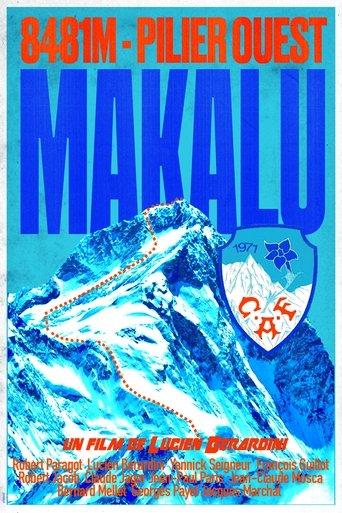
The French Alpine Club's film about the French expedition to conquer Makalu (8481m) via the west pillar in Nepal, which began on February 24, 1971. Composed of 11 mountaineers, Robert Paragot (expedition leader), Georges Payot, Lucien Berardini, Yannick Seigneur, Claude Jager, Jean-Paul Paris, Jean-Claude Mosca, François Guillot, Bernard Mellet, Robert Jacob and Jacques Marchal (surgeon), it took twenty-five days of walking on the Himalayan trails with 460 porters and 18 Sherpas to transport 14 tons of equipment to reach the base camp. Finally, it was Mellet and Seigneur who managed to reach the summit on May 23, 1971: 8481 m, temperature - 30°, oxygen 30%, no wind.
In February 1966, Pierre Mazeaud and Lucien Berardini traveled to the Atakor massif, in the Hoggar mountain range of the Sahara in southern Algeria. There, they attempted a challenging first ascent: the Takouba spur, one of the peaks adjacent to Garet El Djenoun, a legendary mountain in the Hoggar massif, first climbed by Roger Frison-Roche and Raymond Coche in 1935. The documentary, superbly filmed by Jacques Ertaud, won the Grand Prize at the Trento International Mountain Film Festival in 1966.
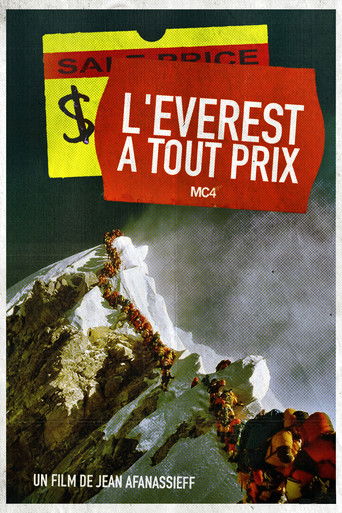
In 1983, three climbers became the first French people to reach the summit of Everest. Among them were expedition leader Pierre Mazeaud and a promising 25-year-old climber, Jean Afanassieff. Twenty years later, the two legends, accompanied by mountain guide Michel Pellé, retrace the steps of their exploit and make the trek from Kathmandu to the foot of the roof of the world. This is an opportunity to retrace the history of the successive assaults on Everest and to assess the current situation of a mountain that has become a victim of its own success: while Sherpas have been able to take advantage of Western enthusiasm and thus enrich themselves and equip the summit to make it more accessible, the site's attendance poses numerous problems, both human and ecological.
Retrospective of four major peaks climbed by French expeditions: Annapurna (8078m) in 1950; Makalu (8481m) in 1955; Mustagh Tower (7273m) in 1956 and Le Jannu (7710m) in 1962. A film by Lucien Berardini and Jean-Marie Perthus with the support of the French Alpine Club and the FFME (French Mountain and Climbing Federation).
Re-enactment of the attempt made in July 1961 by a french-italian group in order to climb Freney Pillar, in Mont Blanc massif. The expedition was composed by the frenchmen Pierre Mazaud, Robert Guillaume, Pierre Kohlmann and Antoine Vieille and by the italians Walter Bonatti, Andrea Oggioni e Roberto Gallieni. The groups arrived separatly to the camp of Col de la Fourche, but with the same aim. They united by chance to conquest the famous peak. The attempt is crushed by bad wheather and, during the descent, three French and an Italian will die.
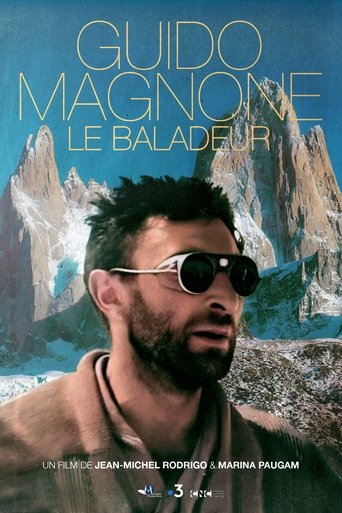
Guido Magnone's incredible adventure begins strangely on the banks of the Ourcq canal among a group of kids who dream of swimming. Guido, the solitary son of "rital", dives to get noticed, succeeds, takes a liking to it, breaks his first record, collects medals. At the same time, he draws, attends the Beaux-Arts, is accepted with open arms and befriends the sculptors César and Féraud. At the end of the war, during a health stay in Chamonix, it is love at first sight for the mountains, climbing. Guido's ascent is now dizzying. He stormed the west face of the Drus, then the Fitzroy and the Tour de Mustagh, summits reputed to be impossible. He rubs shoulders with the greatest, Lionel Terray, Maurice Herzog, and participates in the Makalu expedition, camera in hand, or those of Jannu and Chacraraju. Later, in his fifties, Guido hangs up the carabiners and participates in the foundation of the UCPA
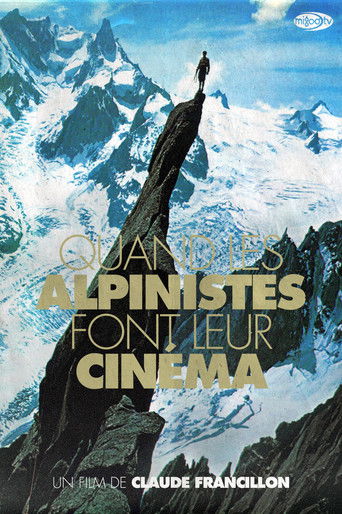
Many mountaineers as part of their activity have used cameras and films to allow us to participate through images in their adventures and their emotions. Many of them have become true film professionals: Joseph Vallot, Lionel Terray, Marcel Ichac, Renè Vernadet, Jean Afanasieff, Pierre Royer, Denis Ducroz, Kurt Diemberg and many others are among the conquerors of the image of the mountain. The film depicts the passion of these men on the highest mountains in the world... behind the lens.
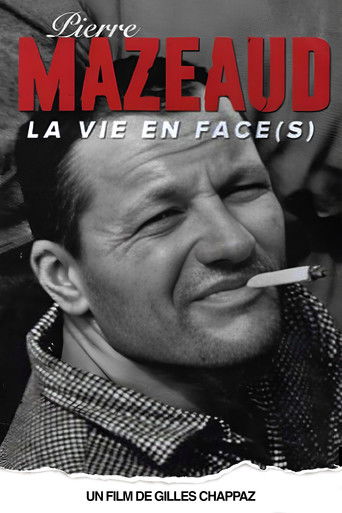
Pierre Mazeau has managed to unite three of his passions which seem to have nothing in common, at a very high level: mountaineering, jurisprudence and policy. The Everest mountaineer, rescued from the Freney Pillar, the passionate jurist, the former sports minister, privy counsellor, and president of the French Constitutional Court is a charismatic personality. This sensitive film portrait follows a line, which Pierre Mazeaud himself has quoted: “Alpinism belongs to those who provide themselves with means to reach their goals, to those who are fully committed to a goal, to those, who know the value of solidarity of men, and to those who are aware that true human existence can only be fulfilled by proceeding with a team of roped-partners.”
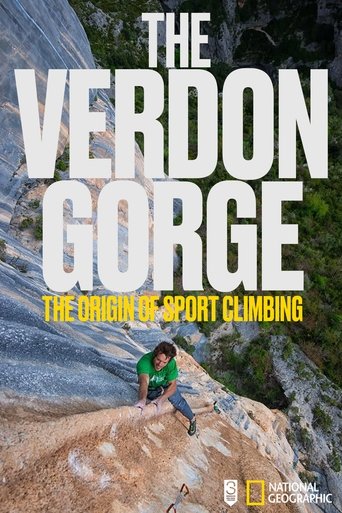
Released in 2016, the short film by Keith Ladzinski, Josh Povec and Andy Mann traces the origins of sport climbing in the legendary Verdon Gorges, which Americans inevitably compare to the US Grand Canyon. The Verdon is where climbing flourished in the 1970s. Through the eyes and experiences of Bruno Clément, Alan Carne, Emily Harrington, François Guillot, Matt Segal and Jonathan Siegrist, we take a look back in (very beautiful) images at the different routes of the Verdon Gorges.
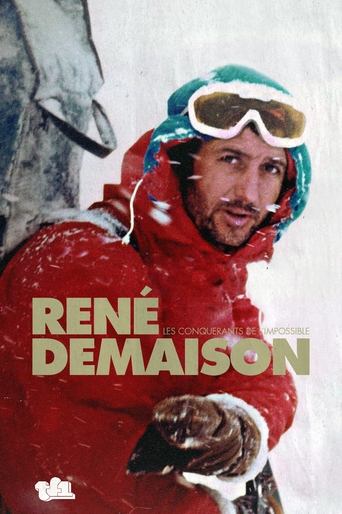
This episode is part of the series "The Conquerors of the Impossible (2/3)". From the 1950s to the 1980s, René Desmaison achieved a large number of "firsts". A specialist in normal routes (west face of Les Drus, Pilier du Freyney, Shroud...), he experienced a tragedy at the Grandes Jorasses, where his exceptional resistance allowed him to survive against all logic. He is the first to claim the practice of the mountain as a high level sport. A man of contrasts, his apparent strength hides great shyness and an unalterable enthusiasm despite the years. Beyond mountaineering, it is the spirit of adventure that has always inhabited him. A whole life devoted to mountaineering.
Three years after the 1959 expedition, abandoned 350m from the summit, Lionel Terray leads a new assault on Jannu, one of the most demanding peaks in the Himalayas. At the base camp, equipment and food rations are prepared. The conditions are optimal and the ascent can begin. The camera follows the progress of the mountaineers and Sherpas as closely as possible, from one high-altitude camp to another: installing fixed ropes, progressing over crevasses, in the middle of frozen towers, vertically down immense ice falls or along the edge of sharp ridges. From 7000m, oxygen bottles become essential, as the difficulty of the climb prevents acclimatization. The expedition is a total success: the majority of its members reach the 7710m summit.
Follows the story of "Grizzly Man" Timothy Treadwell and what the thirteen summers in a National Park in Alaska were like in his attempt to protect the grizzly bears. The film is full of unique images and a look into the spirit of a man who sacrificed himself for nature.
Viewers also picked
In 1983, three climbers became the first French people to reach the summit of Everest. Among them were expedition leader Pierre Mazeaud and a promising 25-year-old climber, Jean Afanassieff. Twenty years later, the two legends, accompanied by mountain guide Michel Pellé, retrace the steps of their exploit and make the trek from Kathmandu to the foot of the roof of the world. This is an opportunity to retrace the history of the successive assaults on Everest and to assess the current situation of a mountain that has become a victim of its own success: while Sherpas have been able to take advantage of Western enthusiasm and thus enrich themselves and equip the summit to make it more accessible, the site's attendance poses numerous problems, both human and ecological.
Shares a lead actor · Same director
Many mountaineers as part of their activity have used cameras and films to allow us to participate through images in their adventures and their emotions. Many of them have become true film professionals: Joseph Vallot, Lionel Terray, Marcel Ichac, Renè Vernadet, Jean Afanasieff, Pierre Royer, Denis Ducroz, Kurt Diemberg and many others are among the conquerors of the image of the mountain. The film depicts the passion of these men on the highest mountains in the world... behind the lens.
Shares a lead actor · Same director
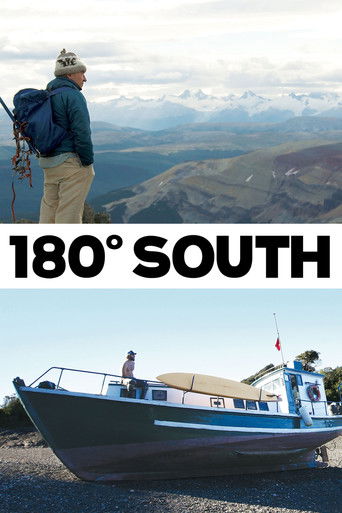
The film follows adventurer Jeff Johnson as he retraces the epic 1968 journey of his heroes Yvon Chouinard and Doug Tompkins to Patagonia.
Viewers also picked
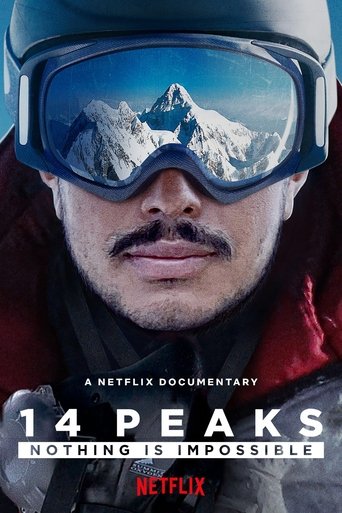
In 2019, Nepalese mountain climber Nirmal “Nims” Purja set out to do the unthinkable by climbing the world’s fourteen highest summits in less than seven months. (The previous record was eight years). He called the effort “Project Possible 14/7” and saw it as a way to inspire others to strive for greater heights in any pursuit. The film follows his team as they seek to defy naysayers and push the limits of human endurance.
Viewers also picked
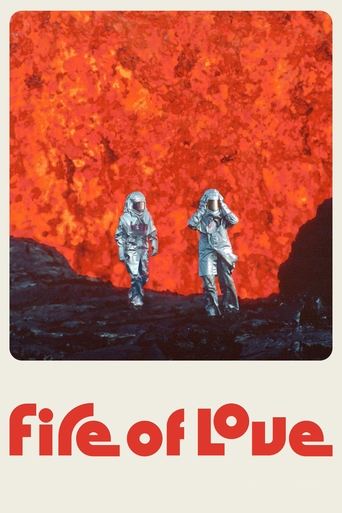
A doomed love triangle between intrepid French scientists Katia and Maurice Krafft, and their beloved volcanoes.
Viewers also picked
This episode is part of the series "The Conquerors of the Impossible (2/3)". From the 1950s to the 1980s, René Desmaison achieved a large number of "firsts". A specialist in normal routes (west face of Les Drus, Pilier du Freyney, Shroud...), he experienced a tragedy at the Grandes Jorasses, where his exceptional resistance allowed him to survive against all logic. He is the first to claim the practice of the mountain as a high level sport. A man of contrasts, his apparent strength hides great shyness and an unalterable enthusiasm despite the years. Beyond mountaineering, it is the spirit of adventure that has always inhabited him. A whole life devoted to mountaineering.
Shares 2 cast members
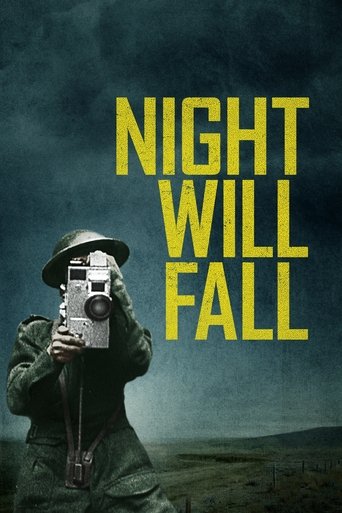
When Allied forces liberated the Nazi concentration camps in 1944-45, their terrible discoveries were recorded by army and newsreel cameramen, revealing for the first time the full horror of what had happened. Making use of British, Soviet and American footage, the Ministry of Information’s Sidney Bernstein (later founder of Granada Television) aimed to create a documentary that would provide lasting, undeniable evidence of the Nazis’ unspeakable crimes. He commissioned a wealth of British talent, including editor Stewart McAllister, writer and future cabinet minister Richard Crossman – and, as treatment advisor, his friend Alfred Hitchcock. Yet, despite initial support from the British and US Governments, the film was shelved, and only now, 70 years on, has it been restored and completed by Imperial War Museums under its original title "German Concentration Camps Factual Survey".
Viewers also picked
An epic cinematic and musical collaboration between SHERPA filmmaker Jennifer Peedom and the Australian Chamber Orchestra, that explores humankind's fascination with high places.
Viewers also picked