Skip to content
Français, si vous saviez poster
Recommendations based on

Français, si vous saviez

1973 Movie Documentary

This almost 8 hour humongous 1973 documentary by two of the filmmakers who made The Sorrow and the Pity recounts fifty years of the history of France from the 1920s to 1972. It is particularly thorough in documenting the significance and rise to power of Charles De Gaulle. The film's most valuable contributions are its interviews with all sorts of people who lived through this period of history, from Marshall Petain's lawyer (Petain headed the Vichy government of occupied France) to resistance figures, and Frenchmen who fought on the side of the Nazis in Russia.

Same cast & genre

19 Shares actors and at least one genre with this title
1958: Those Who Said No poster
FILM

On October 4, 2018, France celebrated the 60th anniversary of the Fifth Republic. It is a republic born in the throes of the Algerian War and one which—from the day it was founded by General de Gaulle until the presidency of a very Jupiterian Emmanuel Macron—has been assailed as a “Republican monarchy” by partisans of a more assertive parliamentarian state. By revisiting the struggle of those who dared oppose the new regime — only to suffer a crushing defeat on September 28, 1958, when they were barely able to garner 20% of the vote against the constitutional text — this film shines a powerful new light on the origins of the Fifth Republic and its consequences for the next 60 years. It is a constitutional debate that planted the seeds for a complete upheaval of the French political landscape, on the left in particular, and set the country in motion toward what would be called the Union of the Left.

1958: Those Who Said No

2018 Documentary
Destins: Général De Bollardière poster
FILM

The exceptional portrait of a pacifist general, the only senior officer to have spoken out against torture. This precious testimony still remains censored in France, since no national channel has to date decided to program this documentary. Son and brother of a soldier, General Pâris de Bollardière was destined for a career in arms. He was, for many years, one of the most brilliant representatives of this adventurer career in France, from Narvik to the Algerian War. After fighting in the French maquis, he reached Indochina, where he suddenly found himself in the aggressor's camps. His beliefs are strongly shaken. But it is in Algeria, where the French army practices torture and summary executions, that he takes the big turn. He expresses his contempt to Massu, and is relieved of his command. Until his death in 1986, Jacques de Bollardière fought for world peace, from the Larzac plateaus to the Mururoa atolls.

Destins: Général De Bollardière

1975 Documentary
The First World Festival of Negro Arts poster
FILM

"This documentary film covers a 24-day arts festival in Dakar, Senegal that highlighted Black contributions to the cultural heritage of mankind and was attended by an extraordinary cast of over 2,000 luminaries - including Duke Ellington, Langston Hughes, Alvin Ailey, Aime Cesaire, and Leopold Senghor - from dozens of countries. The film depicts performances by African and American entertainers and shows various works of art while also providing unparalleled insight from the perspective of the African American delegation. The film was written and directed by William Greaves" (US National Archives).

The First World Festival of Negro Arts

1966 Documentary
Munich, or Peace in Our Time poster
FILM

A television documentary directed by Marcel Ophüls examining the Munich Conference of September 28, 1938, when European leaders met to avert the outbreak of war. Through archival documents and interviews, the film reconstructs the political atmosphere surrounding negotiations between Britain and France on one side and Nazi Germany and Fascist Italy on the other, situating the agreement within the broader context of European appeasement in the face of fascism.

Munich, or Peace in Our Time

1967 Documentary
Papa Césaire poster
FILM

Shortly after his death in 2008, Maldoror made this film about her longtime friend and collaborator, the Négritude poet Aimé Césaire. In this film, she retraces the steps of Césaire’s travels across the globe — particularly back to his hometown in Martinique, where Maldoror interviews his relatives about his life — and her working relationship with Césaire, including fragments of her previous films about him, Un homme, une terre (1976) and Le masque des mots (1987).

Papa Césaire

2009 Documentary
À Propos De... L'autre Détail poster
FILM

Documentary edited from testimonies on the torture of people who experienced the war. Some witnesses were tortured by Jean-Marie Le Pen. These testimonies will help defend the newspaper Le Canard Enchaîné in court against Jean-Marie Le Pen for defamation. The film was shown in 1985 during the trial and some witnesses also came to support the newspaper. But the 1963 amnesty law protects the politician, prohibiting the use of images that could harm people who served during the Algerian war.

À Propos De... L'autre Détail

1985 Documentary
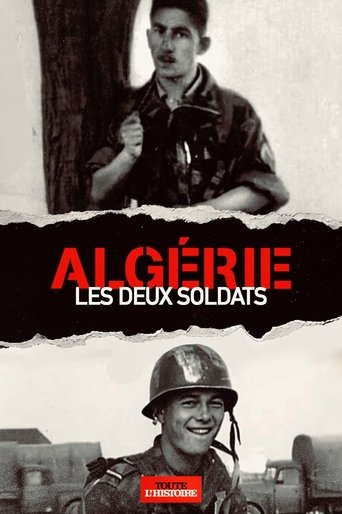
Algeria, The Two Soldiers poster
FILM

"Algeria, The Two Soldiers" tells the true story of two young French soldiers during the Algerian War, who were driven in two completely opposite directions by the same keen sense of honor: Noël Favrelière deserted to free a young Algerian Muslim prisoner who was going to be executed, and René Técourt, to continue the fight for French Algeria alongside the OAS ultras. Two emblematic examples, which describe in a direct, carnal way, what happened there.

Algeria, The Two Soldiers

2017 Documentary
Le Sénégal et le Festival Mondial des Arts Nègres poster
FILM

Promotional newsreel of Dakar, selected to host the first edition of the World Festival of Black Arts. The report features the history of the city, its architectural and commercial evolution, its air and maritime connections, its natural beauty, hotels and tourist attractions. Organised by Léopold Sédar Senghor on the initiative of the magazine “Présence Africaine” and the African Cultural Society, it was an unprecedented event in the cultural history of the African continent. The first festival was held in Dakar on 1-24 April 1966. Participants included André Malraux, Aimé Césaire, Jean Price-Mars, Duke Ellington, Joséphine Baker, Langston Hughes, Aminata Fall, Robert Hayden and many others. All the arts were represented: literature, music, dance, film and visual arts.
Le Sénégal et le Festival Mondial des Arts Nègres

1966 Documentary
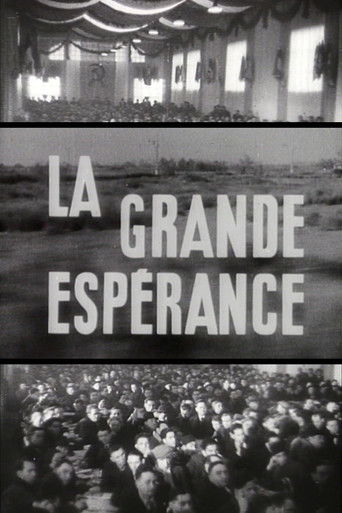
The Great Hope poster
FILM

Scenes and images from the French Communist Party's (PCF) 1937 Congress in Arles. La Grande Espérance highlights some of the PCF's new concerns under the Popular Front: a warning against international fascism, a desire for organic unity, and the defense of national heritage and regional cultures. It also reveals the first signs of a cult of personality surrounding Maurice Thorez. La Grande Espérance was screened (and possibly re-edited) after the Liberation. A commentary was then added to the credits emphasizing the continuity of the Communist Party’s political line and the sacrifice of its activists during the war. Today, only this post-1945 version exists.

The Great Hope

1937 Documentary
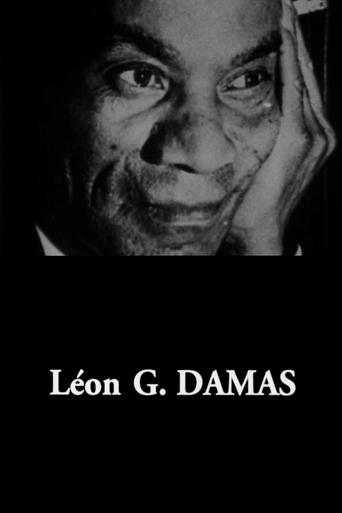
Léon G. Damas poster
FILM

Léon G. Damas (1912–1978) was the first poet to “live Négritude”, according to the Senegalese poet, politician and cultural theorist Léopold Sédar Senghor. Cosmopolitan and always in transit, his writing is a chorus of melodies and imagery imbued with angst and melancholy and strongly influenced by jazz and blues. Punctuated by images of the landscapes of French Guiana and the voice of the artist, the film exemplifies the poetic documentary form to which Maldoror frequently returned.

Léon G. Damas

1995 Documentary
Death Squadrons: The French School poster
FILM

After the Battle of Algiers, France and its army exported, as true experts, anti-subversive methods to Latin America and the United States in the 1960s. After more than a year of investigation in Argentina , in Chile, Brazil, the United States and France, the director collected, sometimes under the cover of a hidden camera, recorded conversations, the exclusive testimonies of the main protagonists. From General Aussaresses to former Minister of the Armed Forces Pierre Messmer, including General Reynaldo Bignone (head of the military junta in Argentina from 1982 to 1984), General Albano Harguindéguy, General Manuel Contreras, and Generals John Johns and Carl Bernard, this investigation gives us a hidden reality of the country of Human Rights.

Death Squadrons: The French School

2003 Documentary

Closely Ranked

10 Ranked across franchise, crew, cast, themes, genre, era and audience scores
Munich, or Peace in Our Time poster
100% match FILM

A television documentary directed by Marcel Ophüls examining the Munich Conference of September 28, 1938, when European leaders met to avert the outbreak of war. Through archival documents and interviews, the film reconstructs the political atmosphere surrounding negotiations between Britain and France on one side and Nazi Germany and Fascist Italy on the other, situating the agreement within the broader context of European appeasement in the face of fascism.

Munich, or Peace in Our Time

1967 Documentary

Shares a lead actor · Same director

Human poster
81% match FILM

A collection of stories about and images of our world, offering an immersion to the core of what it means to be human. Through these stories full of love and happiness, as well as hatred and violence, it brings us face to face with the Other, making us reflect on our lives. From stories of everyday experiences to accounts of the most unbelievable lives, these poignant encounters share a rare sincerity and underline who we are – our darker side, but also what is most noble in us, and what is universal. Our Earth is shown at its most sublime through never-before-seen aerial images accompanied by soaring music, resulting in an ode to the beauty of the world, providing a moment to draw breath and for introspection. This film is a politically engaged work which allows us to embrace the human condition and to reflect on the meaning of our existence.

Human

★ 8.4 2015 Documentary

Viewers also picked

Shoah poster
75% match FILM

Director Claude Lanzmann spent 11 years on this sprawling documentary about the Holocaust, conducting his own interviews and refusing to use a single frame of archival footage. Dividing Holocaust witnesses into three categories – survivors, bystanders, and perpetrators – Lanzmann presents testimonies from survivors of the Chelmno concentration camp, an Auschwitz escapee, and witnesses of the Warsaw Ghetto Uprising, as well as a chilling report of gas chambers from an SS officer at Treblinka.

Shoah

★ 8.2 1985 Documentary

Viewers also picked