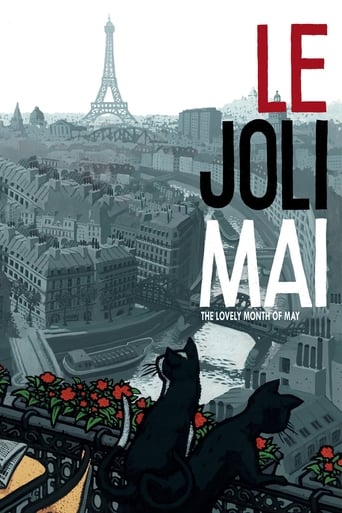
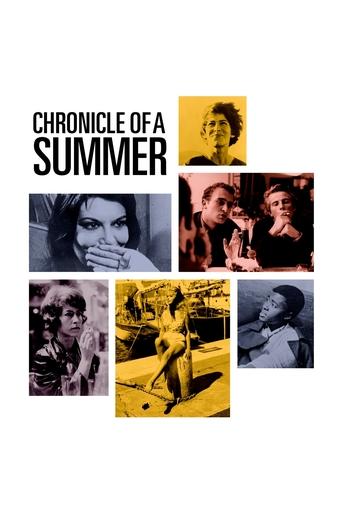
Paris, summer 1960. Anthropologist and filmmaker Jean Rouch and sociologist and film critic Edgar Morin wander through the crowded streets asking passersby how they cope with life's misfortunes.
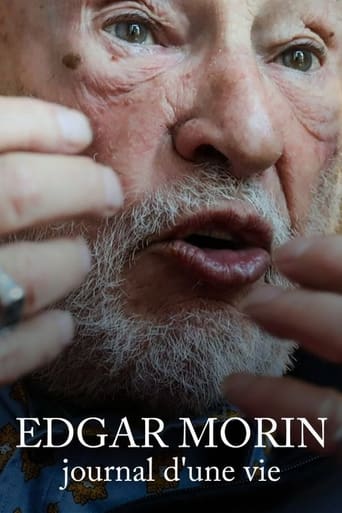
A philosopher of complexity, Edgar Morin has renewed the figure of the intellectual. Born Edgar Nahoum in Paris in 1921, he joined the Communist Resistance in 1942, where he adopted the pseudonym Morin, which he never abandoned. Author of about a hundred books, doctor "honoris causa" of about forty universities in the world, he never stopped promoting human brotherhood.
Paris, summer 1960. Anthropologist and filmmaker Jean Rouch and sociologist and film critic Edgar Morin wander through the crowded streets asking passersby how they cope with life's misfortunes.
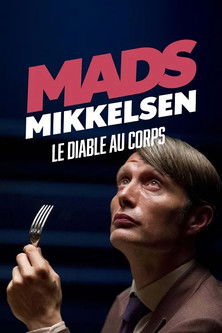
Impassivity and silence are Mads Mikkelsen's trademarks, and roles without reply his specialty. His sculptural allure is such that his mere presence takes on a dramatic dimension. For him, everything starts with the body. It's his main working tool, which he shapes and engages for each film. For the majority of world audiences, the Danish actor remains associated with his "villain" characters in Hollywood blockbusters - Casino Royale, Doctor Strange, Hannibal, Fantastic Beasts... Yet he finds with uncommon ease a balance between major American film franchises and more modest, confidential independent films. If the actor manages to move from one universe to another without being stereotyped, it's because he has a very physical - thanks to his former career as a gymnast - and pragmatic approach to his art.
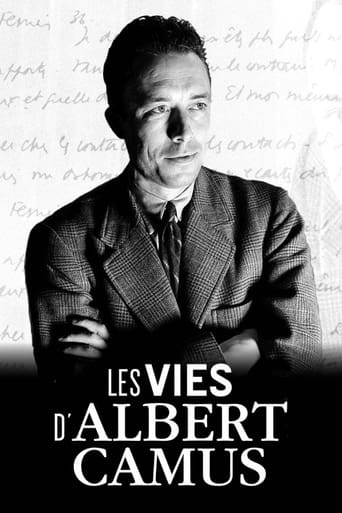
Albert Camus died at 46 years old on January 4, 1960, two years after his Nobel Prize in literature. Author of “L'Etranger”, one of the most widely read novels in the world, philosopher of the absurd and of revolt, resistant, journalist, playwright, Albert Camus had an extraordinary destiny. Child of the poor districts of Algiers, tuberculosis patient, orphan of father, son of an illiterate and deaf mother, he tore himself away from his condition thanks to his teacher. French from Algeria, he never ceased to fight for equality with the Arabs and the Kabyle, while fearing the Independence of the FLN. Founded on restored and colorized archives, and first-hand accounts, this documentary attempts to paint the portrait of Camus as he was.
Behind the iconic Eiffel Tower lies the story of an incredible challenge to erect a thousand-foot tower that went far beyond a design competition, and marked a major turning point in engineering history. It was the beginning of radical transformation where iron was pitted against stone, engineering against architecture, and modern design against ancients. Press campaigns, lobbying, public conferences, denigration of opposing projects, bragging about big names - all participants engaged in a fierce battle without concession. Using 3D recreations, official sources (reports, letters, drawings...) and intimate archives obtained from their descendants, this film will bring to life this vertical race through a fresh and visual way to mark the centenary of Eiffel death.
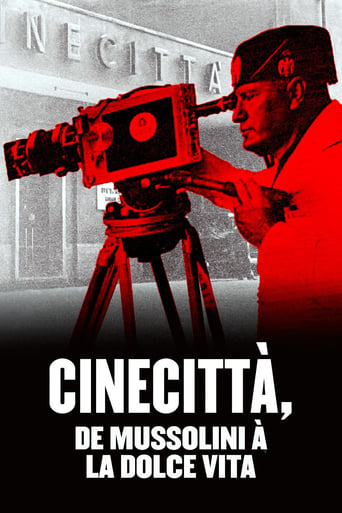
Cinecitta is today known as the center of the Italian film industry. But there is a dark past. The film city was solemnly inaugurated in 1937 by Mussolini. Here, propaganda films would be produced to strengthen the dictator's position.
Candid interviews of ordinary people on the meaning of happiness, an often amorphous and inarticulable notion that evokes more basic and fundamentally egalitarian ideals of self-betterment, prosperity, tolerance, economic opportunity, and freedom.
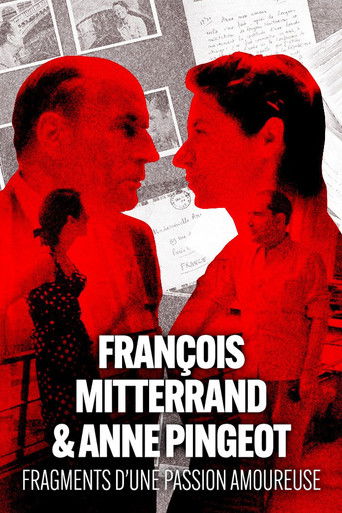
In the summer of 1963, François Mitterrand was going through a deep existential crisis. His political career was at a standstill and, after 19 years of marriage, the couple had grown apart. It was at this point that François Mitterrand met the woman who was to give new meaning to his life. Anne Pingeot, aged 19, was to become the companion of a lifetime, a woman who would be with him throughout his rise to power and who would remain by his side until his last breath. For the first time, Anne Pingeot has agreed to allow the fragments of this passionate love story — hundreds of letters and a diary — to be shown on television, before being donated to the National Library.
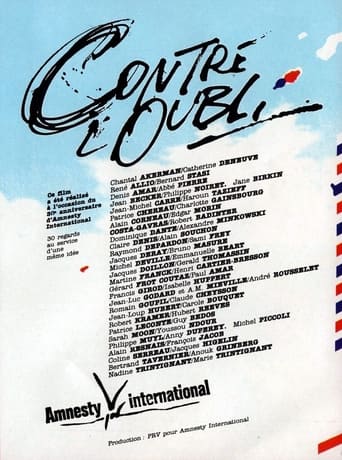
A compilation of 30 French filmmakers, Alain Resnais and Jean Luc Godard among them, who use film to make a plea on behalf of a political prisoner. Jean Luc Godard and Anne Marie Mieville's film concerns the plight of Thomas Wanggai, West Papuan activist who has since died in prison. The short films were commissioned by Amnesty International.
Football is both the place, the crystallization of sporting passion and the witness of identity imaginations. It is also an interesting and relevant area for discussing the migration issue. From the 1930s to the present day, football, notably with the composition of the French team, has reflected the plurality of the French population. Raymond Kopa, Michel Platini, Zinedine Zidane, Basile Boli... these four footballers alone illustrate the four major waves of immigration that France has experienced.
A portrait of the mythical Italian actor Marcello Mastroianni (1924-96), a unique performer who was one of the kings of European cinema.
Half-timbered houses, storks, wine, sauerkraut, traditional headdresses, the Alsatian accent: these images and clichés of Alsace occupy the imagination of almost all French people. Few other regions can boast such a charming and popular heritage. But behind this apparent prosperity and love of a job well done lies a more painful history. Ravaged by three wars in less than a century, Alsace saw its inhabitants forced to change nationality four times during a single lifetime. A tormented, extraordinary destiny, little known to the rest of the country.
Presents archival material as well as interviews with those who were close to Jacques Brel, who died way too young, at age 49. Jacques Brel sings "Madeleine" over the opening credits of this film and immediately the audience is drawn into the intense theatricality of his performance. Left without a choice, they follow his lead, join the chanson and are left sweaty and breathless, just like Brel. Philippe Kohly, a documentary filmmaker who is renowned for profiling artists, created a fascinating portrait of the legendary singer of Flemish descent who became a master of French chanson.
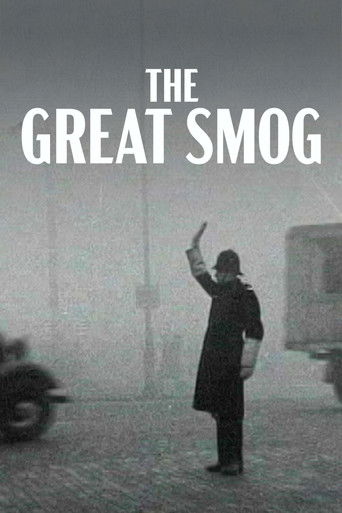
For five days in December 1952, a thick smog suffocated the British capital causing the death of thousands of Londoners. The health catastrophe lead to a realisation, in Britain and around the world, that air pollution was a serious threat to human health. This documentary reveals what happened, hour by hour, in one of the worst peacetime disasters of the 20th century.
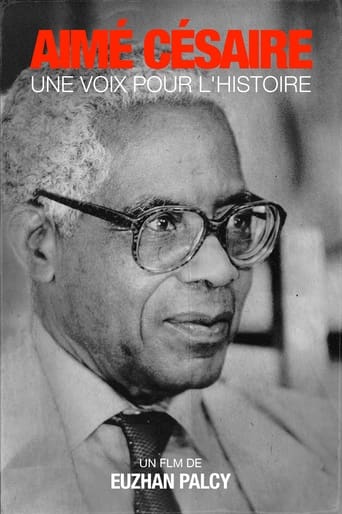
A three-part study that introduces audiences to the celebrated Martinican author Aimé Césaire, who coined the term "négritude" and launched the movement called the "Great Black Cry".
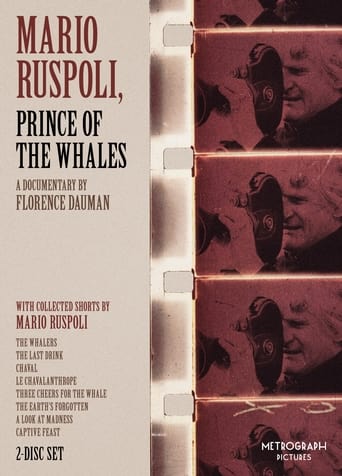
Colleagues, friends and specialists pay tribute to the filmmaker Mario Ruspoli in a portrait that mixes encounters, archive images and film excerpts. With testimonies from Richard Leacock, Albert Maysles, Edgar Morin, D.A. Pennebaker and others.
A documentary about how a dominant cultural and demographic institution both sustains their traditional activities and adapts to the digital revolution.
Viewers also picked
Paris, summer 1960. Anthropologist and filmmaker Jean Rouch and sociologist and film critic Edgar Morin wander through the crowded streets asking passersby how they cope with life's misfortunes.
Shares 2 cast members
When Allied forces liberated the Nazi concentration camps in 1944-45, their terrible discoveries were recorded by army and newsreel cameramen, revealing for the first time the full horror of what had happened. Making use of British, Soviet and American footage, the Ministry of Information’s Sidney Bernstein (later founder of Granada Television) aimed to create a documentary that would provide lasting, undeniable evidence of the Nazis’ unspeakable crimes. He commissioned a wealth of British talent, including editor Stewart McAllister, writer and future cabinet minister Richard Crossman – and, as treatment advisor, his friend Alfred Hitchcock. Yet, despite initial support from the British and US Governments, the film was shelved, and only now, 70 years on, has it been restored and completed by Imperial War Museums under its original title "German Concentration Camps Factual Survey".
Viewers also picked
The life and career of one of comedy's most inimitable modern voices, Mr. Gilbert Gottfried.
Viewers also picked
Musician and performance artist Laurie Anderson reflects on the deaths of her husband Lou Reed, her mother and her beloved dog.
Viewers also picked
A documentary about the making of David Fincher's 2008 film THE CURIOUS CASE OF BENJAMIN BUTTON. Virtually every element in the evolution of the Fincher's film is documented here, from the project's attachment to numerous other directors during the 1990s, to its shoot in 2006 and 2007 in New Orleans, to its complex, CGI-intensive postproduction process.
Viewers also picked
From the heights of her modeling fame to her tragic death, this documentary reveals Anna Nicole Smith through the eyes of the people closest to her.
Viewers also picked
In an intimate and joyful story of love in the face of loss, celebrated poets Andrea Gibson and Megan Falley find strength—and unexpected hilarity—in what might be their final year together.
Viewers also picked
An intimate portrait of the small shops and shopkeepers of the Rue Daguerre in Paris, a picturesque street that has been the filmmaker’s home for more than 50 years.
Viewers also picked
Al Pacino's deeply-felt rumination on Shakespeare's significance and relevance to the modern world through interviews and an in-depth analysis of "Richard III."
Viewers also picked