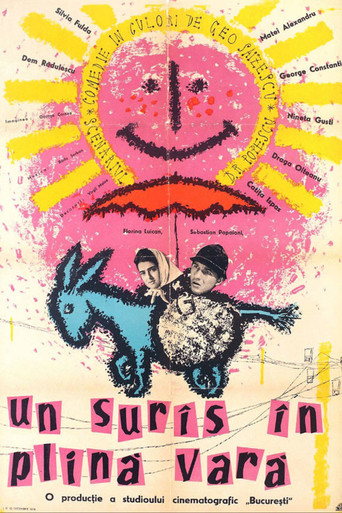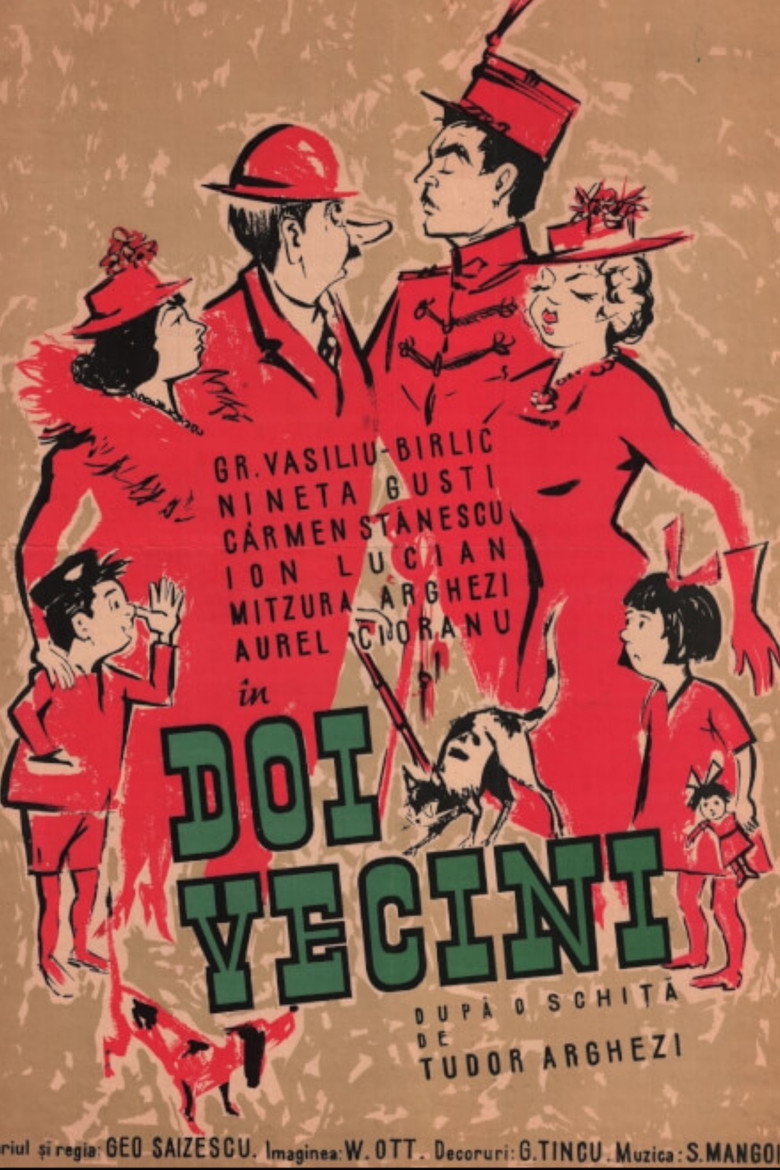
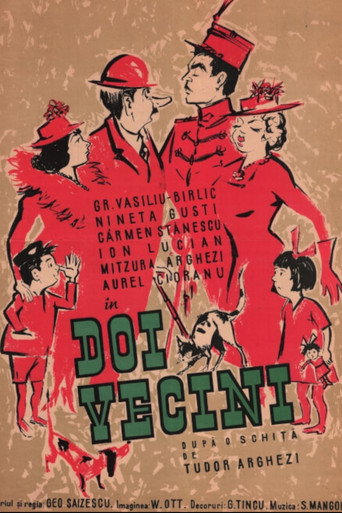
A group of five work colleagues leave for an expedition in the Danube Delta, without letting their wives know anything about it. Going fishing and hunting, the characters end up in the funniest and ridiculous situations.
Adaptation based on the sketch "Doi vecini" by Tudor Arghezi.
A group of five work colleagues leave for an expedition in the Danube Delta, without letting their wives know anything about it. Going fishing and hunting, the characters end up in the funniest and ridiculous situations.
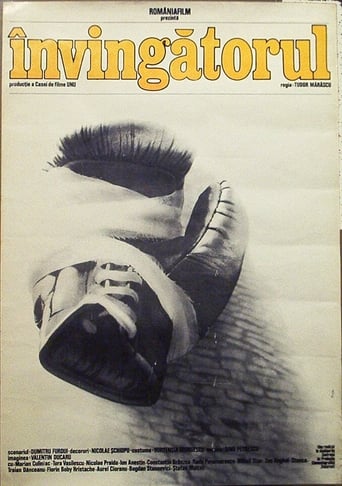
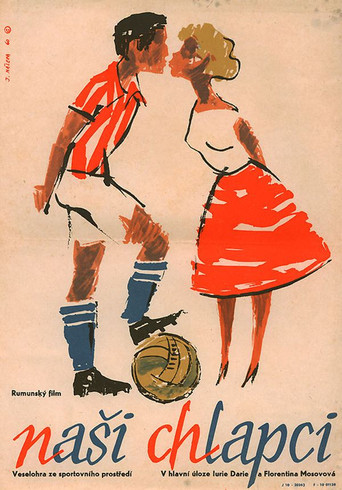
A star of a small town soccer team gets involved with the pretty sister of his main rival in the team.
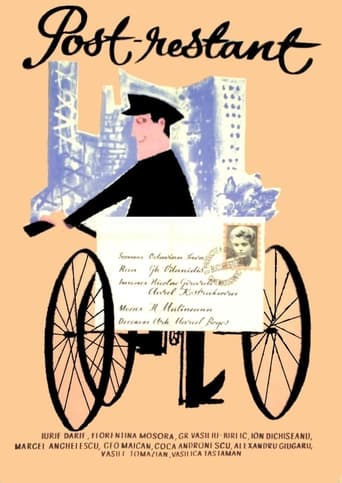
"Post Restant" is about two engineers: Puiu (Iurie Darie), a quite shy character, and Dan (Ion Dichiseanu) an alpha male type. They receive a letter from Liliana, a letter which is actually meant for the former apartment owner. Puiu replies to the letter, although he does not know the sender. The mail exchange goes on and the two fall eventually in love. Being less self-confident, when the time comes to see Liliana in the flesh Puiu asks Dan to meet her and pretend to be the one who wrote the letters.
In the Free Theater (Teatrul Liber) of Bucharest, the actors and crew prepare a new show, with the play "Disguise" ("Travesti"). After the opening night, which is only partly successful, they reach the conclusion that, along the years, they came to the mistake of also disguising this true feelings, becoming hypocrites, and this has a negative effect to their stage performances too.
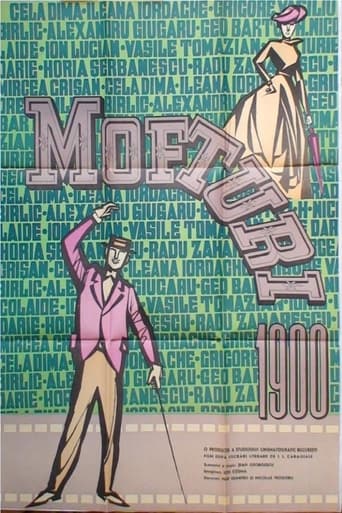
Mofturi 1900 is a 1964 Romanian comedic film directed by Jean Georgescu and based on Ion Luca Caragiale's many Moments and Sketches. The sketches used are "Diplomatie" ("Diplomacy"), "Amicii" ("Pals"), "O lacuna" ("A gap"), "Bubico", "C.F.R." (abbreviation of "Romanian Railways") and "Din statiune" ("From resort"). The film stars Grigore Vasiliu Birlic, Iurie Darie and Ion Dichiseanu; and features Ioana Bulcă, Alexandru Giugaru, Mircea Crisan, Geo Barton and others. Set at the beginning of the 20th century, the story revolves around two Mitică characters sitting at a cafe telling stories to each other.
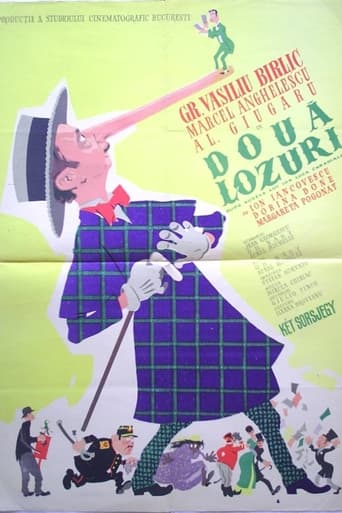
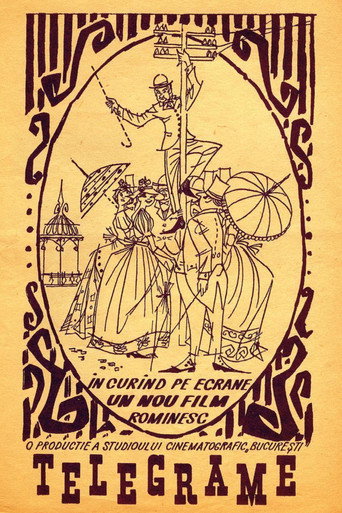
1957 film adaptation of Romanian playwright Ion Luca Caragiale's novella “Două loturi” (Two Lottery Tickets, 1901). The scenario was written by director Jean Georgescu, one of the most skilled Romanian filmmakers of the 1940s and 1950s, while the directing belongs to Aurel Miheleş and Gheorghe Naghi, at that time both recently graduated from the All-Union State Institute of Cinematography in Moscow. This is the second feature film in colour from Romania. Despite the great public success, the film was often criticized by reviewers, mostly for its unhandy directing from the two debutants. Miheleş and Naghi would however continue their collaboration and release another two Caragiale adaptations, of which “Telegrame” (Telegrams, 1959) was nominated for the Palme d'Or (Golden Palm) at the 1960 edition of the Cannes festival.
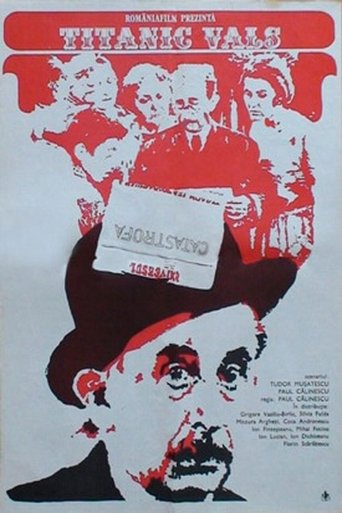
Based on a comedy play by Romanian playwright Tudor Mușatescu and first performed in 1932, Titanic Waltz satirises political ambition, familial coercion, and the absurdities of electoral politics through the travails of an incorruptible bureaucrat hounded by his relatives to run for office
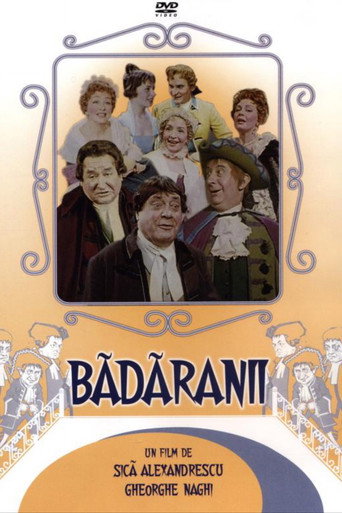
Movie adaptation after Carlo Goldoni`s "I rusteghi" comedy, written in 1760.
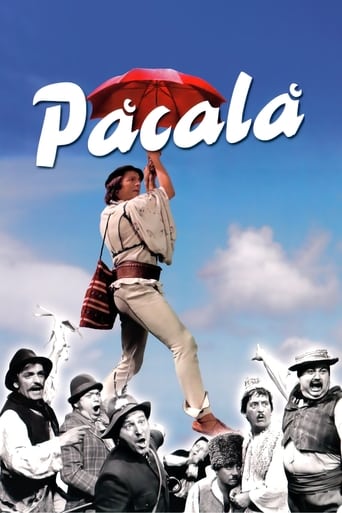
Pacala is an important hero in Romanian popular tradition. He is always making fun of everything wrong with the human behaviour such as stupidity, greed or vanity. His attitude and actions always bring damages to the mean, evil and materialistic people. So beside the jokes, the movie has this philosophical layer, undoubtedly because Pacala's independent way of being, free spirit and his love for the nature creates a way of seeing life, bringing joy. Filmed in a very beautiful part of Romania in 1974, the movie had an important success at that time and it is considered one of the most loved movies in Romania ever. Like the hero, found in many stories and jokes, the movie forwards the spirit of true freedom and pure link with the nature, forgetting about times and governments.
Over at the fictional DRGBP institution, events take a settling turn after a mutinied prize festivity.
Geared more for the home crowd with a good knowledge of their own history, this Romanian political comedy takes place at the turn of the 20th century, when two opposing factions are going at each other tooth and nail to win an election. One candidate is a staunch if not deluded conservative and the other is a radical liberal. Anticipating modern election campaigns by a good half a century, the two candidates decide that the best way to win is to sling as much mud as possible. Lacking the Internet and fifteen-second TV spots, they do the best they can -- they send each other virulent telegrams denouncing each other's personal failings.
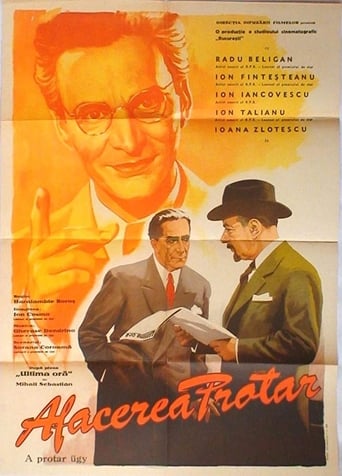
A university lectop finds himself embroiled in a nasty blackmail case. Powerful businessman Busoni is preparing a stab at the grain market. This Protar scam should enrich him, but an article by a university professor changes his plans.
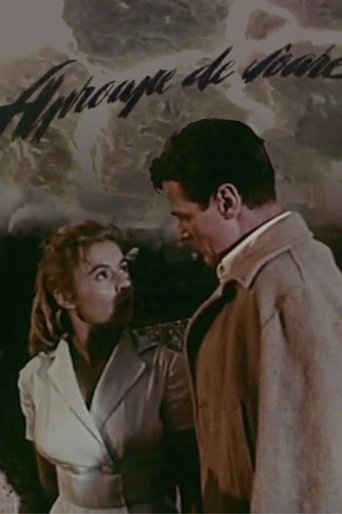
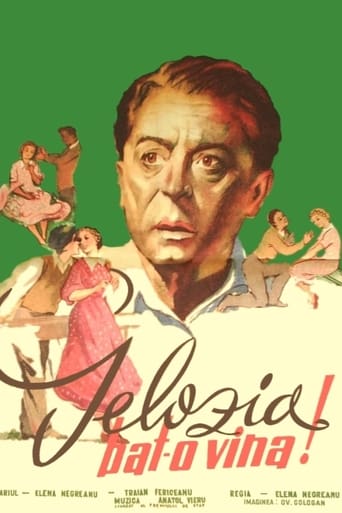
Based on a story by A. Lungu. Returning from a business trip, Andrei hurries to meet his beloved wife. But everyone he asks about his wife's whereabouts replies, "She left with the new agronomist." Andrei is tormented by jealousy, but it soon becomes clear that the new agronomist is a woman.
Fanita, a young man desirous to earn money as a result of personals initiatives, will fail in all these businesses , is ultimately convinced to enter in the Agricultural Production Comradeship or Community from his village.
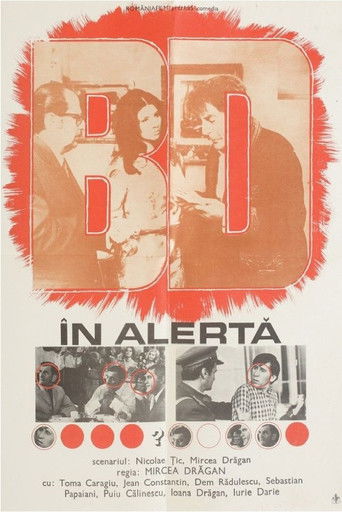
The adventures of three Romanian inept petty criminals during the 1970s.
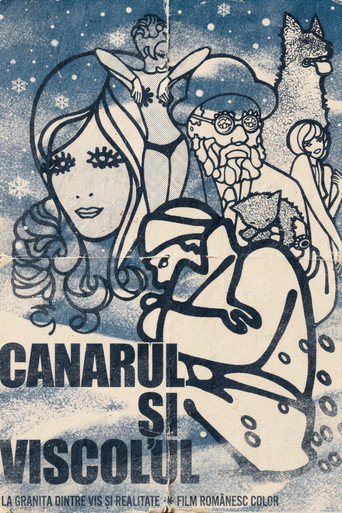
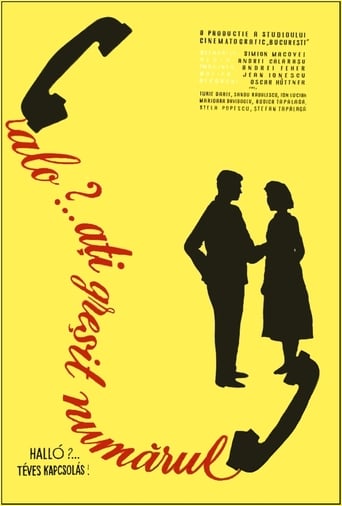
A music school student immersed in the music that he loves. One time he happens to dial a wrong number, thus starting an adventure in which he will find love.
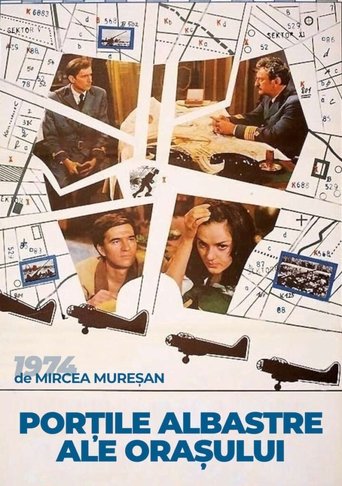
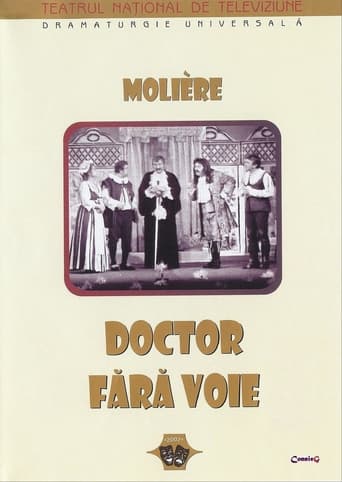
Sganarelle, mistakenly considered a famous doctor because of a prank, is brought in M. Geronte's house to cure his daughter, who went mute overnight.
Pacala is an important hero in Romanian popular tradition. He is always making fun of everything wrong with the human behaviour such as stupidity, greed or vanity. His attitude and actions always bring damages to the mean, evil and materialistic people. So beside the jokes, the movie has this philosophical layer, undoubtedly because Pacala's independent way of being, free spirit and his love for the nature creates a way of seeing life, bringing joy. Filmed in a very beautiful part of Romania in 1974, the movie had an important success at that time and it is considered one of the most loved movies in Romania ever. Like the hero, found in many stories and jokes, the movie forwards the spirit of true freedom and pure link with the nature, forgetting about times and governments.
Shares a lead actor · Same director
Movie adaptation after Carlo Goldoni`s "I rusteghi" comedy, written in 1760.
Shares 3 cast members
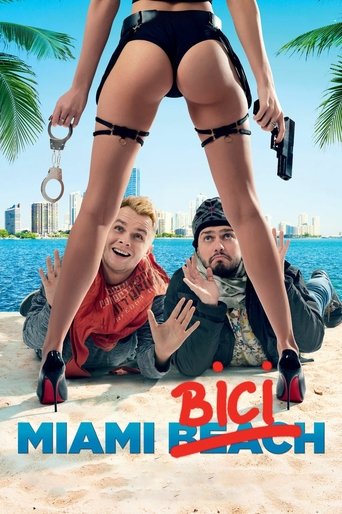
Miami Bici is the story of Ion and Ilie, two young people from a small dark city in Romania who go to Miami in the middle of winter, to live both the "American Dream" and the Romanian dream of "getting rich quick". Once there, they find themselves in the middle of the Machiavellian plan of Mișu, a Romanian of the lowest species, established in Florida.
Viewers also picked
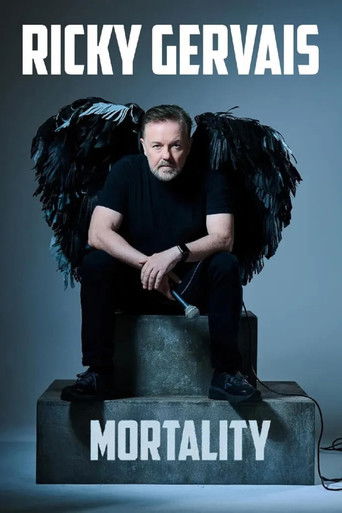
Ricky Gervais tackles life, death and the state of the world in a brutally honest special that spares no topic, even his own mortality.
Viewers also picked
Based on a comedy play by Romanian playwright Tudor Mușatescu and first performed in 1932, Titanic Waltz satirises political ambition, familial coercion, and the absurdities of electoral politics through the travails of an incorruptible bureaucrat hounded by his relatives to run for office
Shares 2 cast members
Mofturi 1900 is a 1964 Romanian comedic film directed by Jean Georgescu and based on Ion Luca Caragiale's many Moments and Sketches. The sketches used are "Diplomatie" ("Diplomacy"), "Amicii" ("Pals"), "O lacuna" ("A gap"), "Bubico", "C.F.R." (abbreviation of "Romanian Railways") and "Din statiune" ("From resort"). The film stars Grigore Vasiliu Birlic, Iurie Darie and Ion Dichiseanu; and features Ioana Bulcă, Alexandru Giugaru, Mircea Crisan, Geo Barton and others. Set at the beginning of the 20th century, the story revolves around two Mitică characters sitting at a cafe telling stories to each other.
Shares 2 cast members
A modern retelling of Shakespeare's classic comedy about two pairs of lovers with different takes on romance and a way with words.
Viewers also picked
Ricky Gervais dishes out controversial takes on political correctness and oversensitivity in a taboo-busting comedy special about the end of humanity.
Viewers also picked
Geared more for the home crowd with a good knowledge of their own history, this Romanian political comedy takes place at the turn of the 20th century, when two opposing factions are going at each other tooth and nail to win an election. One candidate is a staunch if not deluded conservative and the other is a radical liberal. Anticipating modern election campaigns by a good half a century, the two candidates decide that the best way to win is to sling as much mud as possible. Lacking the Internet and fifteen-second TV spots, they do the best they can -- they send each other virulent telegrams denouncing each other's personal failings.
Shares 2 cast members
With his family away, a devoted stay-at-home dad enjoys his first me time in years by joining his hard-partying old friend on a wild birthday adventure.
Viewers also picked