


6.7
FILM
The lives of three young men, a German and two Americans, during WWII.
The lives of three young men, a German and two Americans, during WWII.

The film pivots around the local Norwegian doctor and his family. The doctor's wife (Ruth Gordon) wants to hold on to the pretence of gracious living and ignore their German occupiers. The doctor, Martin Stensgard (Walter Huston), would also prefer to stay neutral, but is torn. His brother-in-law, the wealthy owner of the local fish cannery, collaborates with the Nazis. The doctor's daughter, Karen (Ann Sheridan), is involved with the resistance and with its leader Gunnar Brogge (Errol Flynn). The doctor's son has just returned to town, having been sent down from the university, and is soon influenced by his Nazi-sympathizer uncle. Captain Koenig (Helmut Dantine), the young German commandant of the occupying garrison, whose fanatic determination to do everything by the book and spoutings about the invincibility of the Reich hides a growing fear of a local uprising.

American spy James Bond must outsmart card wiz and crime boss LeChiffre while monitoring his actions.
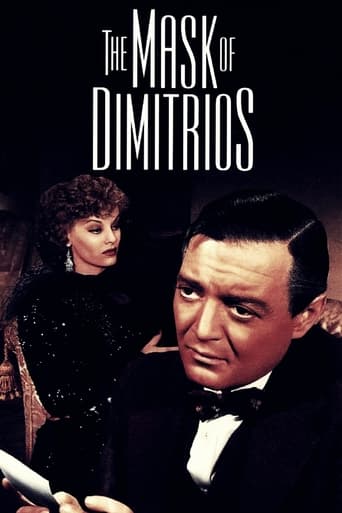
A mystery writer is intrigued by the tale of notorious criminal Dimitrios Makropolous, whose dead body was found washed up on the shore in Istanbul. He decides to follow the career of Dimitrios around Europe, in order to learn more about the man. Along the way he is joined by the mysterious Mr. Peters, who has his own motivation.

On the eve of World War II, the German Kurt Müller, his American-born wife Sara, and their three children, having lived in Europe for years, visit Sara's wealthy mother near Washington, DC. Kurt secretly works for the anti-Nazi resistance. A visiting Romanian count, becoming aware of this, seeks to blackmail him.

Caravan of Death (German: Die Todeskarawane) is a 1920 silent German film, it was an adaptation of the latter half of the Karl May novel From Baghdad to Stamboul, and is now considered to be lost. The film featured Bela Lugosi playing an Arab Sheik pitted against European travellers in an adventure story set in the Sahara. It was the second of three films released by Ustad based on desert adventure novels by Karl May. Although Karl May’s widow praised the film, critics were unimpressed and it was a commercial failure.
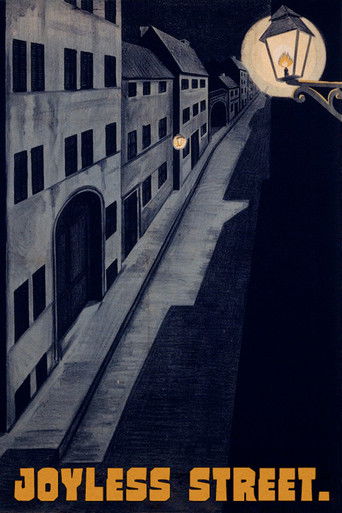
In 1921, we follow two women - Marie and Grete - from the same poor Viennese neighborhood, as they try to better the lives of themselves and their families during the period of Austrian postwar hyperinflation.
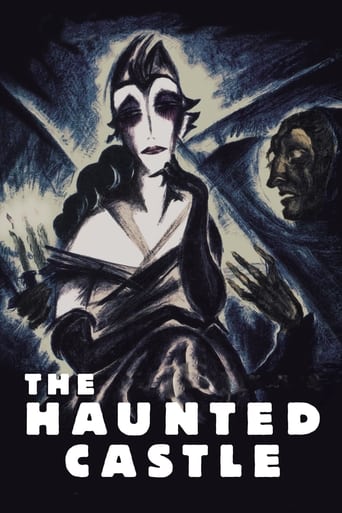
The sinister Count Oetsch scandalizes the aristocratic social gathering at Castle Vogelod as he announces his intention to "crash" the festivities. Baroness Safferstätt is expected shortly, and the guests are well-aware of the rumors that Count Oetsch murdered the baroness' late husband. Oetsch refuses to leave, vowing that he will reveal the identity of the real killer. Before the weekend is through, the Count and Baroness will reveal secrets too shocking to be believed!

The mountain guide Jakob is a controversial figure. His supposed father dies and leaves behind a great heritage to the people. In the town they consider Jakob a bastard, because his parents were not married, which means that without a testament, the lands in which he lives do not belong to him. But the testament indicates that the inheritance corresponds him under a single condition, he must be the first person to climb the east face of Monte Verità. French version of Die weisse majestat, shot the year before in German with the same script in the Eiger/Jungfrau region but with different actors and by a different director.
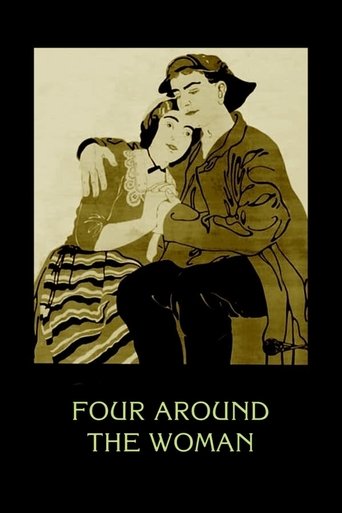
Harry Yquem buys his beloved wife some jewelry in a place where underworld middlemen trade in fake and stolen goods. By chance, he spots a man with whom his wife had an affair in the past.
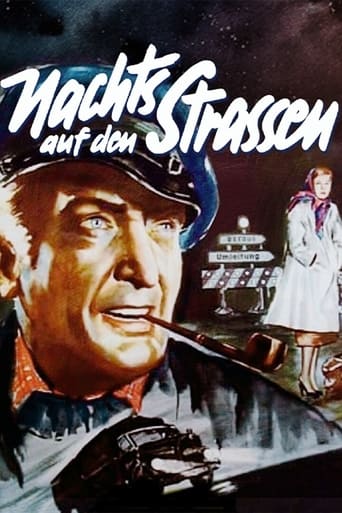
An aging truck driver finds smuggled money and becomes involved with a hijacking crowd.

A man is accused of murdering his wife. The state prosecutor assumes he did the deed to spend more time with his lover. But the woman in question says that his wife committed suicide in her presence and that the accused is innocent. Despite the objections of the prosecutor, the accused is set free and is found dead shortly thereafter. The prosecutor decides to pursue the case and comes upon a band of criminals, who sell German state secrets. Shortly before the investigation comes to a close, a woman is murdered. When a witness asserts to have seen him near the woman's dead body, the prosecutor himself ends up in court and must now prove his innocence.
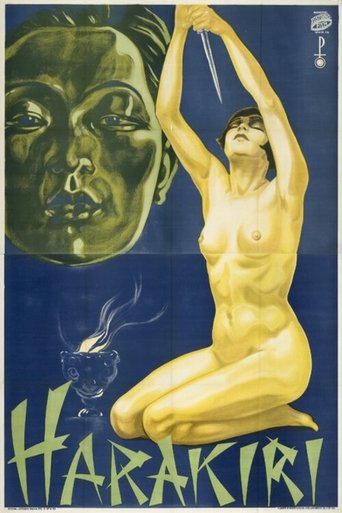
The daughter of a daimyo, one forced to commit harakiri to secure her a future to choose her own destiny, falls in love with and marries a European officer. The officer returns to Europe but promises to come back for her and his new child, but when he comes back to Japan, he brings his European wife.

Willy, Kurt and Hans are broke, so they sell their car and open a filling station. Then, they all fall in love with the same girl.
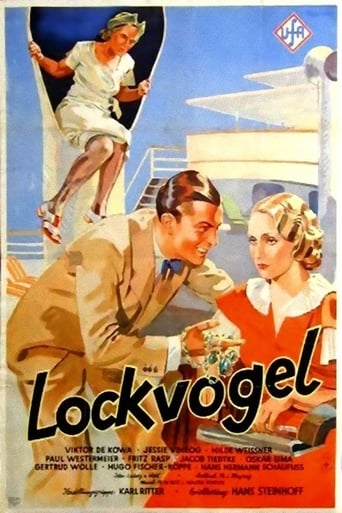
Viktor Schott, daredevil and womanizer, is charged by his father, a jeweler, to go to Istanbul and purchase a valuable emerald necklace from a rich Persian and to bring it back by ship to Marseille. A pair of criminals are watching him and attractive Delia, with whom Viktor is in love, is used as bait. His boyhood friend Sibyl, who is in love with Viktor, warns him of the criminal ship owner and the captain, who intend to steal the jewel during a masked ball on board. Shortly before reaching the coast of France, an explosion causes the ship to capsize.
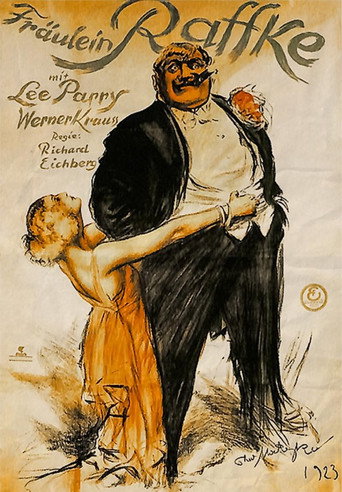
"Raffke" was a war profiteer, shifter, the white-collar criminal, who came to wealth with not very clean methods in a short time and also likes to show it. And this film tells the story of Raffke's daughter Lilli, who, instead of marrying the Baron chosen by the father of vanity, marries a simple employee who is about to perish.
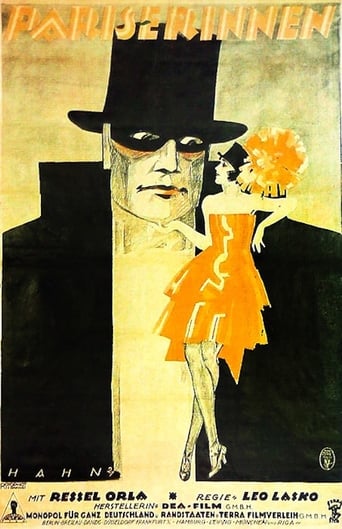
Parisian Women (German: *Pariserinnen*) is a 1921 German silent film directed by Léo Lasko. Ressel Orla, Xenia Desni, and Ralph Arthur Roberts starred in the film. The film premiered at the Marmorhaus cinema in Berlin.
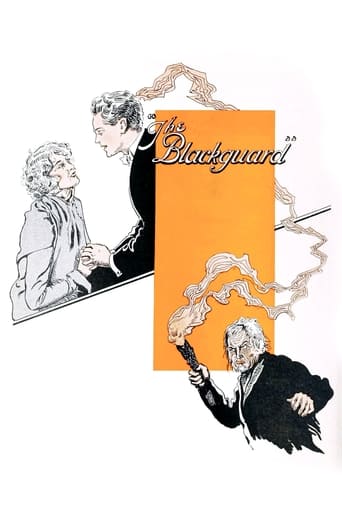
A French violinist saves his beloved princess from the Russian revolution..

Country Dr. Robert Koch is desperate: a tuberculosis epidemic is decimating the children in his district and no one is able to do anything about it. Every fourth child is already sick and the parents must helplessly watch as their young ones die. Now Koch is undertaking to find the cause of the tuberculosis --- something he has already been working on for years --- which has been causing this plague of illness. His work is made more difficult by envy; for example, that of his teacher, who was wounded defending his honor. But his greatest obstacle is the famous Berliner scientist and Reichstag deputy, Privy Councilor Rudolf Virchow: He is extraordinarily skeptical of Koch's theory, that the cause for tuberculosis is a bacteria.

The daughter of a revolutionary runs away with a married prince.

After her brother is sent to Siberia, Sonja heads to Moscow to participate in a revolution.

A couple, Hasia and Otto, are brought together by their loss of wealth and status as the imperial era ends, but torn apart by an unusual offer from a wealthy man. The man wishes Otto to marry his daughter, as Otto bares a striking resemblance to his daughter's fiancee who was killed in WWI. In exchange, Otto will want for nothing.
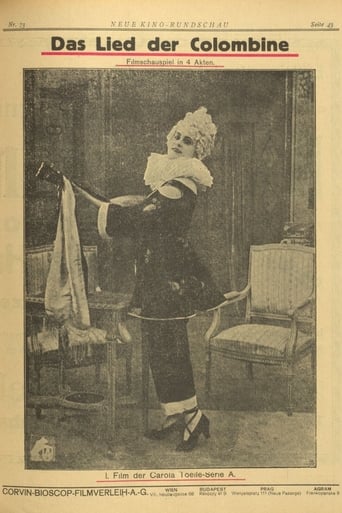
Melodrama about alleged adultery, jealousy and honor.
The daughter of a revolutionary runs away with a married prince.
Shares a lead actor · Same director
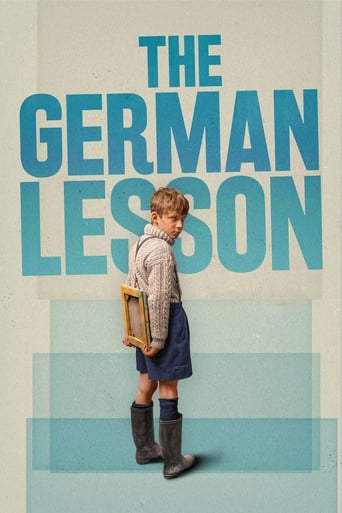
In a small North German village a drama played out during and shortly after the Second World War about duty versus individual conscience and morality.
Viewers also picked

Shares a lead actor · Same director

A pair of twin brothers from East L.A. choose to live their lives differently and end up on opposite sides of the law.
Viewers also picked

In New York City, a young girl is caught in the middle of her parents' bitter custody battle.
Viewers also picked

An uninterrupted rehearsal of Chekhov's 'Uncle Vanya' plays out by a company of actors. The setting: their run-down theater with an unusable stage and crumbling ceiling. The play is shown act by act with the briefest of breaks to move props or for refreshments. The lack of costumes, real props and scenery is soon forgotten.
Viewers also picked
In 1921, we follow two women - Marie and Grete - from the same poor Viennese neighborhood, as they try to better the lives of themselves and their families during the period of Austrian postwar hyperinflation.
Shares a lead actor

Set in a warm summer in 1990 in former East Germany, it follows a young woman who begins a relationship with a charismatic farmer who is twice her age.
Viewers also picked

When Tragedy Strikes three Families, their Destiny forces them on a coverging path and mercy as the challenges of their fate could also resurrect their beliefs
Viewers also picked

Evangelist Carlton Pearson is ostracized by his church for preaching that there is no Hell.
Viewers also picked
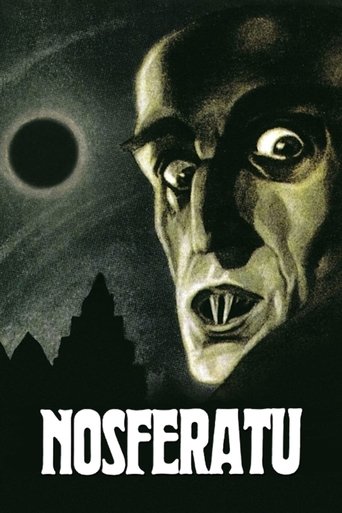
The mysterious Count Orlok summons a happily married real estate agent to his castle, located up in the Transylvanian mountains, to finalise a terrifying deal.

Harry Steele (Charlton Heston) is a tourist guide determined to make his fortune by finding the Sunburst, an Inca treasure.
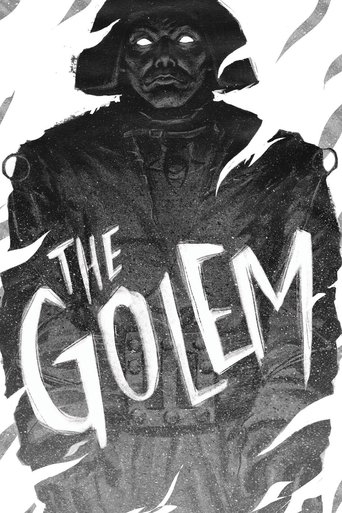
In 16th-century Prague, a rabbi creates the Golem - a giant creature made of clay. Using sorcery, he brings the creature to life in order to protect the Jews of Prague from persecution.

Bud and Lou, two stranded American archaeologists, run afoul of an Egyptian cult with big plans to resurrect the mummified corpse of Klaris, guardian of his Princess Ara's treasure-filled tomb. When Lou accidentally eats the cursed medallion needed to find the ancient treasure, the two become targets of the cult's leader, his goons, a mysterious femme fatale, and the mummy of Klaris himself!

After being buried in quicksand for the past 25 years, Kharis is set free to roam the rural bayous of Louisiana, as is the soul of his beloved Princess Ananka, still housed in the body of Amina Mansouri, who seeks help and protection at a swamp draining project.

Orphaned as a young child and adopted by a band of notorious thieves, now-grown Ali Baba sets out to avenge his father’s murder, reclaim the royal throne, and rescue his beloved Amara from the iron fist of his treacherous enemy.

A British bomber crew, including Australian and American, is shot down over Germany during a bombing run. The five make their way across a perilous Germany, intent on reaching the UK with the war secrets they have learned, battling Nazis along the way.

Strange things happen in a revue theatre. The dancer Maria seems to be hunted by an invisible admirer. When the body of a probable FBI agent is found in a trunk the police asks FBI man Joe Como for help. Como gets interested in the revue theatre and an ominous transport firm soon. When he is receiving mysterious threatening letters he is sure that Dr. Mabuse has risen again. But what is going on at "Enterprise X" so that both the goverment and the mad genius in crime are interested in it?
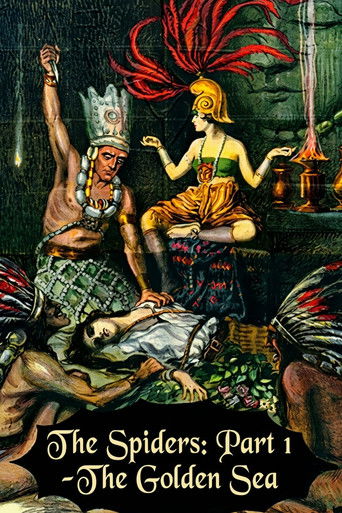
In San Francisco, well-known sportsman Kay Hoog announces to a club that he has found a message in a bottle with a map drawn by a Harvard professor who has gone missing. The map tells of a lost Incan civilization that possesses an immense treasure. Hoog immediately plans an expedition to find it. But Lio Sha, the head of a criminal organization known as the Spiders, is determined to get the treasure for herself and plans a rival expedition.

A strangler is loose on a British estate, and he not only strangles his victims but brands an "M" onto their foreheads before he decapitates them.


Two nine-year-old girls—rude Luise Palfy and respectful shy Lotte Körner—meet on a summer camp. Apart from their different hair-do, they look alike. They have never seen each other before, but soon find out that they are identical twins. It turns out that their parents divorced, each keeping one of the girls. They decide to trade places at the end of the summer. Lottie curls her hair, Lisa braids hers, and both go off to where they have never been before. The adventure begins.
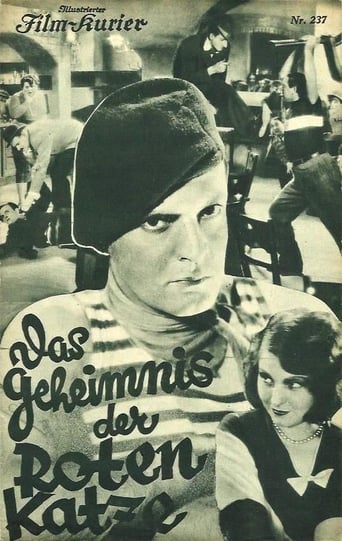
“The Red Cat” is a seedy dive. The rich American, Jefferson, who shows up there one day with his family and who recently became the proud owner of the famous Halifax emerald, particularly attracts the attention of the patrons of the “Cat”. One of them approaches the Americans disguised as a marquis, but he has not reckoned with Jefferson’s daughter, Jessie.
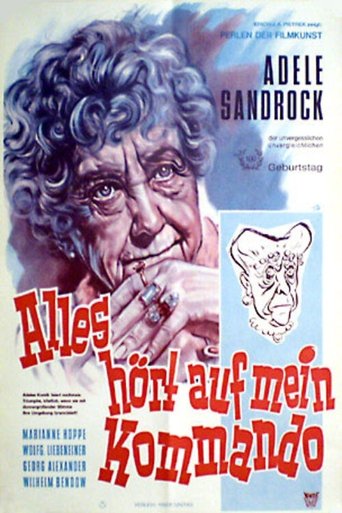
For more than 50 years, Pauline Neuber has directed the "Olympia" theatre, but lately, business has been bad. It appears that no one will be able to make it better either: the audience doesn't seem to like the plays; the press even less so; and the shareholders of the theatre want to sell their shares. In short, the "Olympia" has one foot in the grave. Erich, grandchild of Pauline and always underestimated by her, gets to know Hella Bergson, the daughter of the theatre critic Peter Bergson, and falls in love with her - but doesn't have an idea whose daughter she is. He plays her some melodies from the first operetta he's ever composed and Hella convinces him to have the operetta performed in the "Olympia". During rehearsal of the operetta, however, a fight breaks out between Erich and Hella over a stupid misunderstanding.

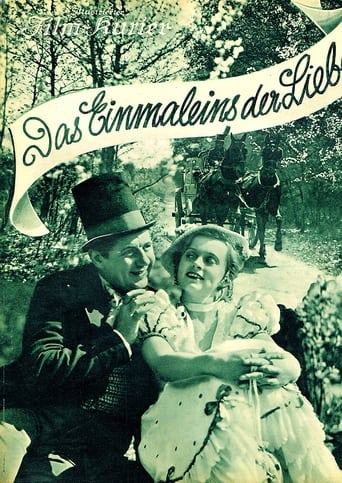
Identities are changed in the Austrian countryside. A simple woman does this to test the affections of a store manager, he too changes character several times and there are other locals who do this as well.

Sherlock Holmes and Dr. Watson look into reports that a huge, vicious hound has killed Lord Charles Baskerville and that Lord Henry Baskerville is the next to be killed.
