
7.2
TV
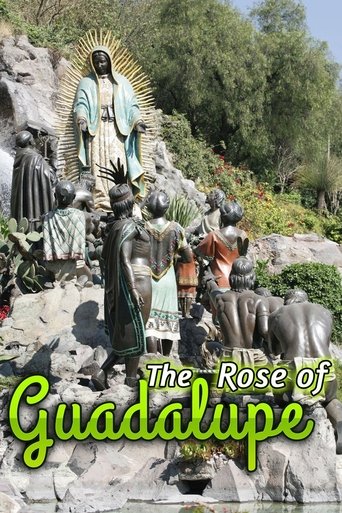
Stories about people who get into problems who use the help of Virgin Mary and where a rose appears and their problems are solved.

Cuna de lobos is a Mexican soap opera produced by Televisa and broadcast by Canal de las Estrellas in 1986 to 1987. The serial, about the struggle for power within a wealthy Mexican dynasty, was enormously popular in its native Mexico. It was also a hit in several foreign countries, including the United States, Germany and Australia. The soap opera starring antagonistically María Rubio as the main villain interpreting the evil "Catalina Creel", with Gonzalo Vega, Diana Bracho, Alejandro Camacho and Rebecca Jones.
Stories about people who get into problems who use the help of Virgin Mary and where a rose appears and their problems are solved.

The adventures of Vicenta Acero, the feared coyote who now leads the dynasty of illicit dealings once under the control of her father.

Alma de Hierro is a 2008–2009 Mexican telenovela produced by Televisa. It is a remake of the Argentinian soap opera Son de Fierro, with the character's names rewritten and adapted to the Mexican audience. The main actors were Blanca Guerra, Alejandro Camacho, Christian Vega, Flavio Medina, Lisardo and Alejandra Barros, with Jorge Poza, Zuria Vega, Adamari López, Angelique Boyer, Eddy Vilard, Martha Julia and Luz María Aguilar playing supporting roles. The show earned 8 awards at the "TV y Novelas" award celebration, becoming the highest-awarded production of the 2009 season.
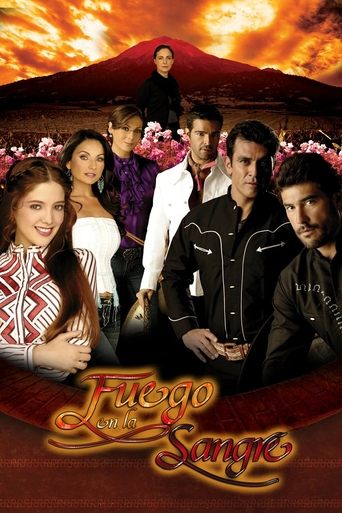
Fuego en la sangre is a telenovela that began transmissions on January 21, 2008, through Mexico's Canal de las Estrellas network. Starring Adela Noriega, Eduardo Yáñez, Diana Bracho, and Guillermo García Cantú. It is the Mexican remake of the Colombian soap operas Las Aguas Mansas and Pasion de Gavilanes. The theme song called "Para Siempre" is sung by Vicente Fernández. The telenovela received TVyNovelas Award for Best Telenovela, in 2009.

A Mexican telenovela based on the Argentinean telenovela Los Roldán.

Para Volver a Amar is a Televisa telenovela that aired on the Canal de las Estrellas channel in Mexico from July 12, 2010 to January 30, 2011. It stars Rebecca Jones, Rene Strickler, Alejandro Camacho, Alejandra Barros, and Africa Zavala. The Mexican version however is taken from the original Colombian soap opera series "El Último Matrimonio Feliz". The story is about six women who befriend each other and help each other deal with the pains of life, particularly in regards to marriage and relationships. They'll realize that even amidst their problems, happiness is not impossible to attain. It won seven Premios TVyNovelas awards for Best Telenovela of the Year, Best Male Villain, Best First Actress, Best First Actor, Best Co-Star Actress, Best Co-Star Actor, and Best Young Lead Actor. Para Volver a Amar aired in the United States on Univision from March 8, 2011 to October 28, 2011 at 12am/11pm central.

Julieta is quite happy in her relationship with her live in boyfriend, Robert... and thrilled that she won't have to deal with in-laws since Robert doesn't know his family. Things start going downhill for the couple when they rent an apartment from a very eccentric family dealing with a traumatic incident from their past.

A story of revenge and ambition, seduction and betrayal; all told from the perspective of an offended and abused woman named Altagracia. Altagracia represents the hundreds of thousands of Mexican women who have been victims of the violence by faceless men who are protected by impunity. But Altagracia, transformed into a strong-willed, ruthless man-eater known as La Doña, will seek out each and every one of these men to bring them to justice.

Rosendo Arango, the owner of Grupo La Anita, is married to Alfonsina. They have one son, Damian. Estefanía Bouvier is married to Augusto Castanon and they have one daughter, Elisa. Rosendo cheats on his wife with Carmina Bouvier, Estefanía's sister. Damian and Elisa become friends because Augusto and Rosendo were best friends. But one day, Rosendo and Carmina try to go away from La Ermita, the pueblo in which they live in. But, Estefanía, who had found out about their plans, wants to prevent this, shuts Carmina in her room and then goes with Rosendo in his car, trying to convince him not to run away with Carmina. They have an accident and die and everyone thinks they were lovers.

El extraño retorno de Diana Salazar is a 1988 Mexican telenovela starring Lucía Méndez and Jorge Martinez. It is an unusual example of a telenovela which addresses supernatural topics.

Fernanda Quiñones, whose stage name is Salomé, is a dancer who works at the D'Rubí cabaret in Mexico City with her friend Karicia. One day, Salomé meets Julio, son of the millionaire Montesino family, who is married to Ángela, a sickly woman who cannot have children. Lucrecia, Julio's mother, who is obsessed with the idea of having a grandson who will inherit the family fortune, proposes to Salomé that she be the mother of that grandson. But, when she finds out that Julio, even though he loves her, will not only not leave Angela, but that she will be the one to raise the child as if it were her own, she flees far away with her son and two other babies abandoned by a neighbor. Twenty years later, Salomé becomes a wealthy business woman who lives with her three children. When he returns to Mexico, Julio and his mother will try to find out who Salomé and Julio's son is.
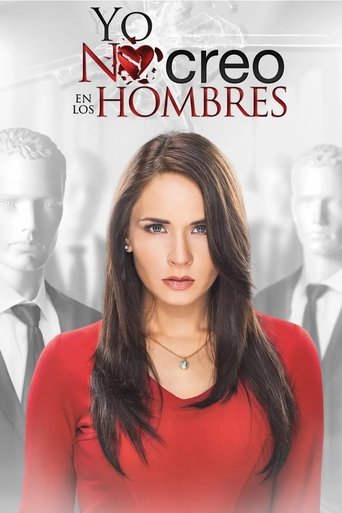
Yo no creo en los hombres (I don't trust men anymore) is a Mexican telenovela produced by Giselle González for Televisa. It is based on Yo no creo en los hombres (1991), produced in México.

Alondra is a Mexican telenovela shown in 1995, written by Yolanda Vargas Dulché and produced by Carla Estrada, starring with Ana Colchero and the late Beatriz Sheridan. This telenovela contains 78 episodes.

The story of Renata Flores del Angel, a young woman from a wealthy family who falls for Pablo Ramos, the foreman of her father's estate.
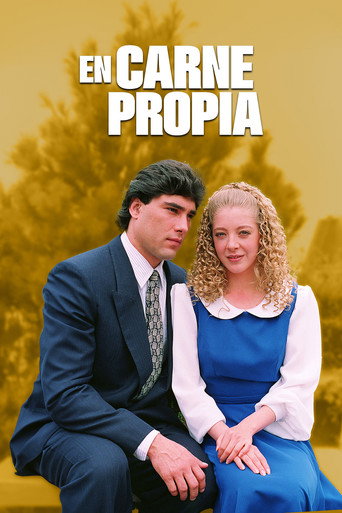
The year is 1972: Magdalena Dumont and Octávio Muriel are celebrating the birthday of their daughter, little Estefanía, at a party in the family mansion. However, this party is merely a backdrop and an opportunity to commit a crime.

Huracán is a Mexican telenovela shown in Mexico from October 13, 1997 to March 27, 1998, starring with the late Jorge Russek, Fernando Balzaretti, and Eduardo Palomo.

Sofía Peralta-Avitia Villaseñor, a successful businesswoman and great mother, who feels lonely in her marriage to Gonzalo Balmori-Ricci Nava. At the same time, her daughter, Bárbara Balmori-Ricci Peralta-Avitia, and her young bodyguard, Salvador "Chava" Reyes Encino, will transform their rebelliousness into passion. But none of them know that the evil, ambitious people around them will try to meddle in their paths on their road to love.

Infierno en el paraíso is a Mexican telenovela produced by Carlos Sotomayor for Televisa and originally broadcast on Canal de las Estrellas from June 21 to October 22, 1999. Created by Nora Alemán, with co-writing by Nora I. Sánchez and literary editing by Alejandra León de la Barra and Martín Támez, the telenovela stars Alicia Machado and Juan Ferrara, with Diana Bracho and Julieta Rosen as the main antagonists. The story follows Alejandro Valdivia, a wealthy tobacco plantation owner whose wife, Fernanda, disappears after a car accident and is presumed dead. Haunted by guilt, Alejandro eventually falls in love with the kind-hearted Marian Ordiales and marries her. However, as Marian settles into the Valdivia estate, she faces hostility from Alejandro's family and begins to suspect that Fernanda's disappearance hides a dark secret, leading to a story of love, betrayal, greed, and deception.

Las Dos Caras de Ana is a Mexican telenovela produced by Televisa and Fonovideo that debuted in 2006, starring: Ana Layevska and Rafael Amaya. The telenovela was made, filmed and set in Miami, Florida. The title is upon the phrase Las Dos Caras de Jano.
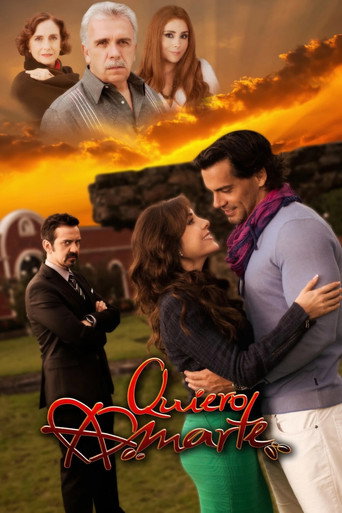
Karyme Lozano, Cristian de la Fuente and Adriana Louvier will star as the protagonists, while Diana Bracho, Flavio Medina and Salvador Zerboni will star as the antagonists, and with the stellar participations of Alejandra Barros, José Elías Moreno and Olivia Bucio.

A young woman visits Dr. Alberto Limonta seeking an abortion because she does not want to have the child, but the doctor attempts to dissuade her by telling her a story. It is the story of the Del Junco family—one of the wealthiest in the city of Veracruz—comprising Don Rafael, the strict patriarch; his devoted wife, Clemencia; and their daughters, María Elena and Matilde, who are in the care of their Black nanny, María Dolores.


Pasión Prohibida is a Spanish-language telenovela produced by United States-based television network Telemundo Television Studios, Miami. It is a remake of the Turkish telenovela Aşk-ı Memnu by Ece Yörenç and Melek Gençoğlu. It has been adapted from Halit Ziya Uşaklıgil's novel Aşk-ı Memnu, published in 1900, but takes place in the modern-day Miami, instead of the novel's late 19th century setting. Jencarlos Canela and Mónica Spear starred as the protagonists.

Imperio de Cristal is a Mexican telenovela that aired on Televisa in 1994 with 124-episode from the plot to the main cast it was officially first launched on Monday, 29 August 1994 & ceased transmission on Friday, 17 February 1995 was aired runtime of 45-minutes with commercial on weekday at 21:00 to 22:00 CST/22:00 to 23:00 MST/23:00 to 00:00 PST.

Story about a woman that is unhappily married and with two daughters. She constantly reprimands Cristina and baby Raquel. What the people around her don't know is that Raquel is not her husband's daughter as everyone believes. Raquel is Eugenia and León's daughter. She has always loved him, not her husband. That is the reason she's always angry at Cristina.

Isabella is a sweet woman whose greatest dream is to become a mother. After the sudden death of her husband, she meets Eugenio, a generous man. Their lives take an unexpected turn when an angelic being appears, offering them the chance to become parents.


The story follows Rina, a young hunchback who sells flowers to support her father and siblings after being abandoned by her mother. One day, while selling her flowers, she is beckoned from a window by Leopoldo—a wealthy, elderly, bitter, and invalid man—who manipulates her into marrying him because he refuses to leave his inheritance to his sister-in-law, Rafaela. Rina agrees to the marriage due to financial hardship. Shortly thereafter, Leopoldo dies, and Rina inherits a vast fortune. She undergoes surgery to correct her hunchback and transforms into a beautiful woman. Unwilling to accept the loss of the inheritance, Rafaela devises a scheme with the help of her son, Carlos Augusto, who has recently been widowed.

Laberintos de pasión is a Mexican telenovela produced by Televisa in 1999. Starring Leticia Calderon, Francisco Gattorno, César Évora, in addition to the participation of Manuel Ojeda, Monika Sanchez and Azela Robinson.


Tenías que ser tú is a Mexican telenovela produced by Carlos Téllez for Televisa and originally broadcast on Canal de las Estrellas from November 23, 1992, to March 12, 1993. Created by Jorge Patiño and Gerardo Sánchez Luna, it was the last telenovela produced by Carlos Téllez. The story follows Gabriela Beltrán, whose life changes dramatically after the tragic death of her father leaves her family in poverty. As she and her family struggle to rebuild their lives, Gabriela falls in love with her childhood friend, Gorka Charachaga. Their romance is threatened by Santa, an ambitious young woman determined to separate them, leading to a story of love, sacrifice, and perseverance in the face of adversity.

El extraño retorno de Diana Salazar is a 1988 Mexican telenovela starring Lucía Méndez and Jorge Martinez. It is an unusual example of a telenovela which addresses supernatural topics.
Shares a lead actor · Same director
The adventures of Vicenta Acero, the feared coyote who now leads the dynasty of illicit dealings once under the control of her father.
Shares a lead actor · Viewers also picked
The year is 1972: Magdalena Dumont and Octávio Muriel are celebrating the birthday of their daughter, little Estefanía, at a party in the family mansion. However, this party is merely a backdrop and an opportunity to commit a crime.
Shares a lead actor · Same director
Tenías que ser tú is a Mexican telenovela produced by Carlos Téllez for Televisa and originally broadcast on Canal de las Estrellas from November 23, 1992, to March 12, 1993. Created by Jorge Patiño and Gerardo Sánchez Luna, it was the last telenovela produced by Carlos Téllez. The story follows Gabriela Beltrán, whose life changes dramatically after the tragic death of her father leaves her family in poverty. As she and her family struggle to rebuild their lives, Gabriela falls in love with her childhood friend, Gorka Charachaga. Their romance is threatened by Santa, an ambitious young woman determined to separate them, leading to a story of love, sacrifice, and perseverance in the face of adversity.
Shares a lead actor · Same director
Imperio de Cristal is a Mexican telenovela that aired on Televisa in 1994 with 124-episode from the plot to the main cast it was officially first launched on Monday, 29 August 1994 & ceased transmission on Friday, 17 February 1995 was aired runtime of 45-minutes with commercial on weekday at 21:00 to 22:00 CST/22:00 to 23:00 MST/23:00 to 00:00 PST.
Shares 4 cast members

Las Amazonas is a Mexican telenovela produced by Salvador Mejía Alejandre for Televisa and originally broadcast on Las Estrellas from May 16 to September 4, 2016. It is based on the Venezuelan telenovela Amazonas (1985). The story follows ranch owner Victoriano Santos and his three daughters, whose lives are transformed by love, family rivalries, and long-hidden secrets. As old betrayals resurface and unexpected romances develop, they must confront painful truths that will test their relationships, reshape their family, and change their future forever.
Viewers also picked

A respected and renowned businesswoman and philanthropist, considered one of the most sought-after brides in the country, who is left at the altar on her wedding day. Humiliated, betrayed, and turned into a target of public scrutiny, Doménica decides to flee and take refuge in one of her parents’ old estates. There, marked by pain, she faces new challenges and meets Luis Fernando, the owner of the neighboring estate, who also carries a painful past. Between them, an explosive relationship develops, marked by pride, misunderstandings, and growing attraction, where land disputes intertwine with their shared desire to rebuild, heal, and give new meaning to their lives.
Viewers also picked

Alejandra and Rafael come from completely different worlds, but a life-changing accident brings them together. A massive debt forces them to stay close, sparking a relationship full of tension, passion, and unexpected emotions. Between jealousy, heartbreak, and fate’s twists, their story takes unpredictable turns that will test their connection.
Viewers also picked
Huracán is a Mexican telenovela shown in Mexico from October 13, 1997 to March 27, 1998, starring with the late Jorge Russek, Fernando Balzaretti, and Eduardo Palomo.
Shares 5 cast members

María Teresa, a successful and attractive businesswoman, faces a dilemma when she discovers that her father, Esteban, has been falsely accused of fraud. Determined to clear his name, María Teresa takes charge of "La Esperanza," a coveted property in the village of Puerto Bravo. There, she encounters Santos, the estate's caretaker, who initially perceives her as rude and entitled. Despite their initial differences, María Teresa and Santos join forces to confront Marco, a greedy neighbor attempting to seize control of “La Esperanza,” and Rutilio, the town’s corrupt mayor. As they battle to safeguard the estate, María Teresa and Santos gradually develop deep feelings for one another, falling in love. Amidst their challenges, their love and the hope embodied by "La Esperanza" become their guiding light in a tempest fueled by passion.
Viewers also picked

Isabel and Diego, two complete strangers, must assume the identity of a married couple in order to flee the state of Sonora.

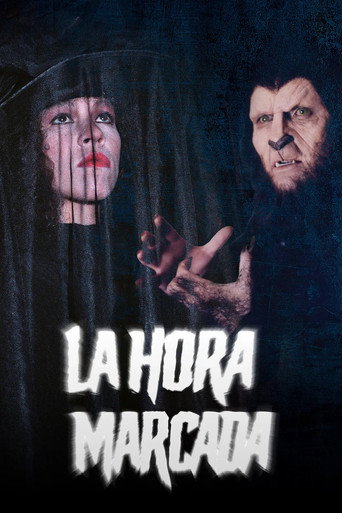
La Hora Marcada was a 1986 Mexican television anthology series famous for its horror and science fiction themes in the vein of the Twilight Zone. Although virtually unknown outside the country, it achieved a popular and critical success in Mexico. It had a series of rotating writers and directors, among them Emmanuel Lubezki, Guillermo del Toro and Alfonso Cuarón.

Querida Enemiga is a telenovela distributed by Televisa. It starts Ana Layevska, Gabriel Soto, Carmen Becerra and Jorge Aravena. The telenovela is a production of Lucero Suárez.