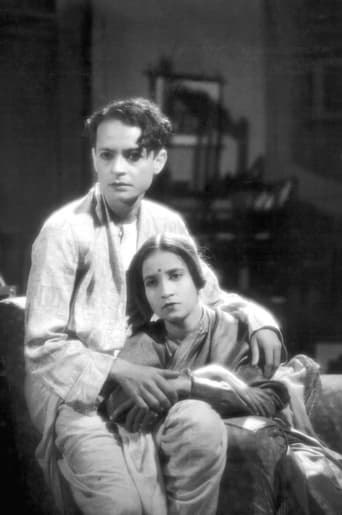
A devout upper-class Hindu has a vision in a dream that his daughter-in-law is the human incarnation of the Goddess Kali and begins worshipping her.
The film is a romantic story about a wealthy Brahmo woman and a poor but intelligent Hindu man. It explores their growing love despite societal obstacles. Sarat Chandra Chattopadhyay, combines humor with serious themes and social commentary, creating a timeless story that respects women.
A devout upper-class Hindu has a vision in a dream that his daughter-in-law is the human incarnation of the Goddess Kali and begins worshipping her.
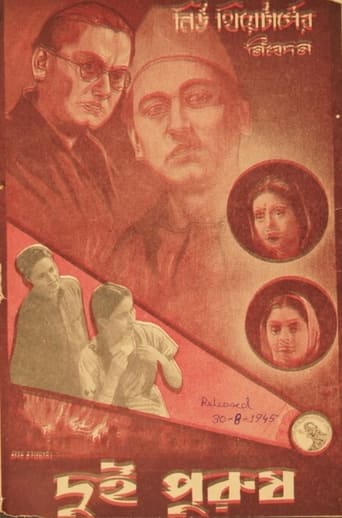
The spirit of a condemned 20-year-old student wanders through time, linking together four stories of people struggling for survival in this gritty meditation on poverty, natural disaster and political strife in India. A middle-class family's home is no match for the monsoons, while another clan's morality is compromised when famine strikes. Young boys smuggle rice, and politicians pity the poor while living in the lap of luxury.
The rustic girl left this world and went to heaven. Her Painful memories are what remains behind. The injustice exploitation is suffocating. These conflicts within the unfortunate soil of India have taken many lives. There’s cruelty amongst mankind. There’s injustice and exploitation everywhere. People struggle for their rights. There’s a storm raging in every heart and soul. The earth shivers and wreaks havoc. The raging waves clash on the shores. This enlightens the soul. We can hear the song of a great soul at a distance. It calls out. It calls out to us, to break free from the shackles. We can hear his call. Come Forward. Break free from the shackles. Fight back for freedom. Set yourself free. We’ve sacrificed our lives for the freedom of new India.
A 1949 Indian Bengali Drama Film directed by Deb Narayan Gupta.
Pratap Chandra is an extremely wealthy businessman. While he is averse to poverty, he trusts his servant Gora with his life. His only daughter Buli, falls in love with Alok, a poor journalist. Unable to convince her father for the marriage, Buli leaves home. Will Gora now be able to reconcile the father-daughter?
A jobless man reaches a village where he finds work in a doctor's office. Later, he learns that the doctor has murdered many people and cons them of their wealth on false pretenses. He decides to expose the doctor and save the villagers.
Subho O Debotar Gras was a film in 2 parts- one was the story of the deaf-mute Shubha who features in a short story by Rabindranath Tagore & the second part was based on the poem titled "Debotar Gras", in which Tagore describes the frantic desire of a dip in holy waters during the Ganga Sagar pilgrimage as well as the selfishness of the pilgrims.
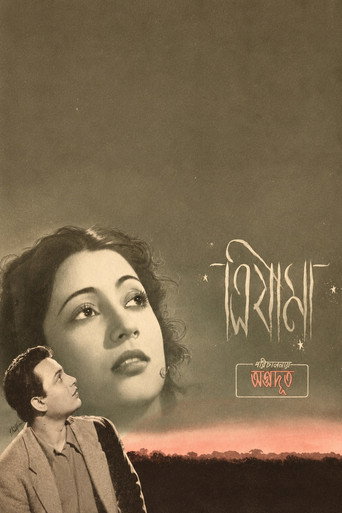
Kakoli and Sukanto meet in a library reading room. They gradually grow closer to each other and start meeting frequently. One day, she visits Sukanto at his home and her appearance moves everyone in his family. Sukanto's mother wants them to marry but Kakoli's parents refuse the proposal. So, Kakoli leaves the home of her father and begins working as a receptionist. However, misunderstandings soon develop between her and Sukanto.
Devdas, the son of a zamindar, and Parvati, his neighbour's daughter, are childhood sweethearts. However, class and caste differences prevent their marriage. Devdas is sent off to Calcutta, while Paro is married off to an aged rich widower. In Calcutta, as remorse drives him to alcohol, Devdas meets Chandramukhi, a prostitute. All Indian prints of this Bengali version were destroyed in a fire that ravaged New Theatre’s studios. Today, only one copy of the film survives which belongs to the Bangladesh Film Archives. Of that copy almost forty percent is destroyed.
Set in 1941, the film delves into the complexities of rural life in Bengal. It sheds light on the oppressive Zamindari system, a social structure that perpetuates inequality and suffering. By exploring the lives of individuals caught within this system, the film offers a poignant commentary on the changing social dynamics and the growing discontent that would ultimately lead to significant transformations.
The story follows two friends, Mohan and Bhola, who stumble upon a mysterious garden house called "Mayakanan." The house is owned by Dr. Naresh Ray, a wealthy scientist with a dark secret. When Ray sets his sights on Shanta, Mohan's fiancée, he resorts to sinister tactics to win her over.
The wealthy, self-obsessed, and possibly crazed Manoj (Barua) is sent by his concerned family to the rural estate of his future father-in-law. Along the way, however, he gets lost and soon finds himself taking shelter in the abode of the railroad stationmaster whose beautiful, down-to-earth daughter, Meena (Kenan Devi), Manoj finds irresistible. When his haughty, progressive-minded fiancée gets wind of this, she freaks out and soon there is a showdown between the two women. In the aftermath, Manoj finds reason to go with his heart and marry Meena.
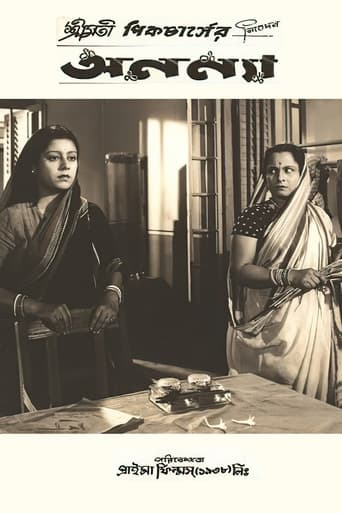
When Mr. Mukherjee's wife drowns herself in the Ganges to save her ailing husband, people start showering her with respect. Years later, things head towards the same direction for her daughter. Uma meets her rival Mrinaal with almost compassion, keeps her son at her refuge and follows the same path of her mother Kangkabati.
One of the early films of Chhabi Biswas featuring him as a leading man, before he came to be associated with the dominating patriarch roles that have become iconic in Bengali cinema, the film is a tale of the love, relationships and ideals of two generations. Nutubihari is an idealist who has given up his love for Kalyani for the sake of his beliefs. He marries Bimala and becomes a lawyer, fighting for the rights of the poor against the feudal lords. Meanwhile, Kalyani comes to ask refuge after she becomes a widow and is inexplicably accepted by Bimala with a lot of warmth. As the years pass Kalyani's daughter Mamata and Nutu's oldest son Arun fall in love and wish to get married. However, the new-found fame and fortune turns his head and Nutu begins to resemble all the ideals and vices that he had always despised. On the other hand in an ironical turn of events, Arun comes to occupy the position once held by his father, highlighting the generational conflict of ideals.
Played out in real time, several complex family dramas intersect in the landscape of the Himalayan foothills, allowing the Bengali auteur to examine the class and generational differences of postcolonial India while celebrating the hopes of a society in transition.
Swarupa, an introvert, fails to express her love to Kushal, who falls for Nabola, a rich and beautiful woman. However, things take a sharp turn when greedy Nabola leaves him for a wealthier man.
Burning with a desire to be a journalist, a young man gets his chance when a publisher -- the father of a friend -- suggests that he write a story on the daily life of the people in his house (several families worth of people). The material turns out to be too incohesive and abundant to work into a pointed, thematic article, and just when he is about to give up, his younger brother asks him a simple question: "How many coal burners are there in Calcutta?" This triggers an idea for a story about Calcutta's pollution -- and the aspiring journalist dreams of myriads of burner-toting citizens invading the publisher's home demanding redress. Maybe he is finally on the way to a story that matters.
The story revolves around a group of hardened bachelors who meet regularly, and eventually settle for marriage. Purna is a newcomer to the group of bachelors at Professor Chandra Basu's house. Also attending are three other bachelors Akshay, Bipin, and Shirish. Akshay is ousted from the committee when he gets married. He suggests that all members meet at his place instead. Nirmala, the Professor's daughter also joins the crowd becoming the only female member. Purna is attracted to Nirmala and suggests marriage, which Nirmala refuses. Akshay has three sisters Shailabala a child widow, Nripabala and Nirabala. His mother is busy fixing matches for Nripabala and Nirabala. Finally, the two sisters are matched with Shirish and Bipin, while Nirmala and Purna get together.
This film is about Chandidas, a legendary 15th-C. Bengali Vaishnavite poet whose biography remains obscure but was an influence on the better documented Chaitanya (1486-1533), a school teacher who promoted the Vaishnavite ideology in Bengal, mostly through hymns about the Radha-Krishna legend.
Uttam Kumar's debut film. A tragic tale of love, loss, and redemption.
Bikash never devotes enough time to his wife, Karuna. Soon, she begins to find solace in the company of her childhood friend, Ashok, destroying their marriage all the more.
Four sets of friends spend Halloween weekend at the Beautiful Creekside "Kamp of Antietam". Each attending is promised a "Once In A Lifetime" experience, but there's more than just fresh air and fishing going on at the K.O.A.
Gora and Mahim were two sons of Krishna Dayal Babu. From childhood, Bijay and Gora were friends. Through an accident, Bijay was introduced to Paresh Babu's family. Paresh was a Bramhin. So Gora did not like Bijay's visit to that house. Gora's mother was very anxious about Gora's Hindusim. Krishna Dayal was also very annoyed being an orthodox Hindu. As per his father's request, Gora went to Paresh Babu's house. Paresh babu's wife Bhadra Sundari was not happy seeing Gora there. But Gora had a real conflict with Haran Babu. The marriage of Haran Babu and Suchitra was almost fixed. The reason of the conflict was that, Haran Babu always thought of himself to be a social reformer and saviour of Brahma religion.
A 1939 Mythological Bengali Drama film directed by Hari Bhanja.
When a local mining company dares to provide its workers a fair wage for a fair day's work, and lets its workers unionize, the kingdom's villainous potentate is less than pleased. After considerable pressure, the company agrees to blame unrest in the region on a blameless worker collective.
Naina is a three months pregnant woman, and her husband, Raj, is a college professor. Somehow Naina finds out that Raj is having an extramarital affair with his college student Rii, so she asks him to break up with Rii, a psychopath girl.
A 1939 Bengali Mythological Film directed by Phani Burma.
The story shows the rivalry with the family of Sukhadas, first over who Dinadas' only daughter will marry, and then, more seriously, over the Anglo-Indian prostitute Flora, with whom the sons of both patriarchs fall in love.
A Bengali Drama Film directed by Sabyasachi (Ajoy Kar & Binoy Chattopadhyay).
A devout upper-class Hindu has a vision in a dream that his daughter-in-law is the human incarnation of the Goddess Kali and begins worshipping her.
Shares a lead actor · Viewers also picked
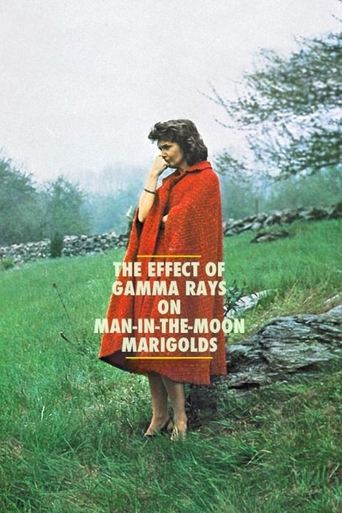
Middle-aged widow Beatrice Hunsdorfer and her daughters Ruth and Matilda are struggling to survive in a society they barely understand. Beatrice dreams of opening an elegant tea room but does not have the wherewithal to achieve her lofty goal. Epileptic Ruth is a rebellious adolescent, while shy but highly intelligent and idealistic Matilda seeks solace in her pets and school projects, including one designed to show how small amounts of radium affect marigolds.
Viewers also picked
A street smart runner develops an intense rivalry with an equally ambitious wealthy young athlete.
Viewers also picked
The relationship of a couple who meet by chance in New York City is put to the test when they encounter a life or death circumstance.
Viewers also picked
A teenager faces an uphill battle when she fights to give women the opportunity to play competitive soccer.
Viewers also picked
When Mr. Mukherjee's wife drowns herself in the Ganges to save her ailing husband, people start showering her with respect. Years later, things head towards the same direction for her daughter. Uma meets her rival Mrinaal with almost compassion, keeps her son at her refuge and follows the same path of her mother Kangkabati.
Shares 2 cast members
A jazz musician seeks refuge from a lynch mob on a remote island, where he meets a hostile game warden and the young object of his attentions.
Viewers also picked
Based on the true story of a black girl who was born to two white Afrikaner parents in South Africa during the apartheid era.
Viewers also picked
94-year-old Eleanor Morgenstein tries to rebuild her life after the death of her best friend. As a result, she moves back to New York City after living in Florida for decades.
Viewers also picked
When a local mining company dares to provide its workers a fair wage for a fair day's work, and lets its workers unionize, the kingdom's villainous potentate is less than pleased. After considerable pressure, the company agrees to blame unrest in the region on a blameless worker collective.
Shares 2 cast members