Skip to content
Das kleine und das große Glück poster
Recommendations based on

Das kleine und das große Glück

1953 Movie Drama

Schwalk, the new shaft foreman of a road construction brigade, is a go-getter and used to success - both at work and with women. But this time things don't go so smoothly. Although he initially has an easy time with the brigadier Erika, who falls in love with him, things come to a head at work. His ambition to win a competition causes him to slip up during road construction. Erika is outraged by his selfish behavior and suspects that he is just looking for an erotic adventure with her. She turns her back on him. However, Schalk recognizes his mistakes and does everything he can to make up for the damage - to the building site and to Erika. The road is handed over on schedule.

Same cast & genre

30 Shares actors and at least one genre with this title
Ernst Thälmann – Leader of the Working Class poster
FILM

This film is the second of a two-part historical and biographical portrait of the communist politician and anti-fascist Ernst Thälmann. Autumn, 1918: Somewhere on Germany’s western front, Ernst Thälmann, age twenty-four, is calling on his fellow soldiers to put down their guns and join him in the communist struggle at home. When Hamburg’s Police Commissioner blocks a much-needed food shipment to the workers of Petrograd, Ernst battles to see it allowed through. Until his murder on August 18, 1944, Ernst remained true to his political convictions in the face of many setbacks.

Ernst Thälmann – Leader of the Working Class

1955 History
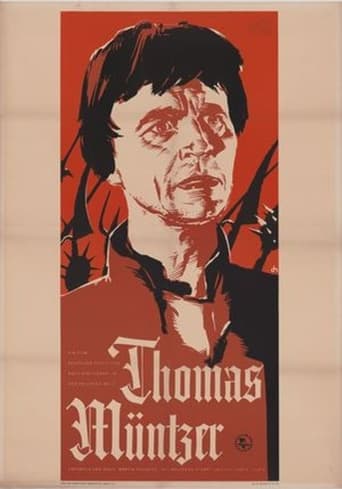
Thomas Müntzer poster
FILM

In 1523, young Thomas Müntzer arrives with his wife Ottilie in the Thuringian village Allstedt to assume the rectorate. As a follower of Luther′s teachings, he finds in the Bible not only reasons for clerical, but also for secular reforms. But when Luther turns away from the rural population after a discord with Müntzer, it is Müntzer who becomes the peoples′ spokesman. He is forced to go to Southern Germany, where he convenes with revolting farmers. But his way leads him back to Thuringia. In 1525, he and Heinrich Pfeiffer form the centre of the Thuringian peasant uprising in Mühlhausen, but their success is diminished by the fact that peasants and craftsmen don′t seem to be able to work together. In Frankenhausen, Müntzer becomes the leader of a peasants′ army that is set to fighting the ruler′s army – and sustains a devastating loss. Müntzer is arrested and sentenced to death by decapitation for his insurgency.

Thomas Müntzer

1956 Drama
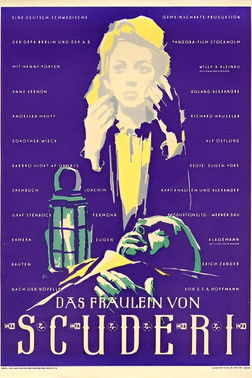
The Lady of Scuderi poster
FILM

Several men have been murdered lately, mostly rich lovers on their way to meet their mistresses with gifts of fine jewelry. To fight this scourge, King Louis XIV decides to create a special court named "La chambre ardente", designed to find and punish the perpetrators of such heinous crimes. An unexpected person, Mademoiselle de Scudéry, the famous poetess, will find herself entangled in the web of a criminal intrigue linked with the jewel murders, along with a a goldsmith, his daughter and her fiancé...

The Lady of Scuderi

1955 Drama
Duped Till Doomsday poster
FILM

East Germany's contribution to the 1957 Cannes Film Festival was the wartime melodrama Betrogen bis zum Juengsten Tag. Had the film been released in the U.S., the title would probably have translated to Duped Till the Last. The film condemns the Nazi mindset by concentrating on a particularly odious cover-up. When his son is involved in the accidental killing of a girl, a Gestapo general pulls strings to save the boy from prosecution. The general manages to pin the blame for the killing on a group of Russians, whereupon he gives the men under his command carte blanche to round up and execute as many innocent Russians as they wish. This act of brutality is contrasted with the pangs of guilt suffered by the son and his co-conspirators.

Duped Till Doomsday

1957 Drama
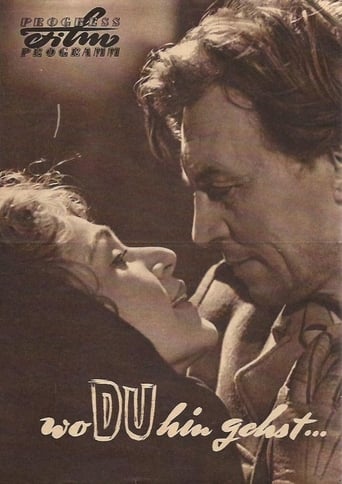
Wo Du hin gehst... poster
FILM

Berlin, 1936. Athletes and visitors from all over the world have come to the city to take part in the Olympic Games. Anti-Fascists use the opportunity to tell the foreign guests about the situation in Germany by distributing leaflets. Being cornered by the Gestapo, the wounded resistance fighter Jakob manages to go into hiding with the help of the Swiss doctor Thea. They fall in love with each other and when Jakob joins the International Brigades in Spain to fight against Franco, Thea follows him and becomes a dedicated fighter against Fascism. The enduring battle, however, keeps preventing them from becoming a real couple.

Wo Du hin gehst...

1957 Drama
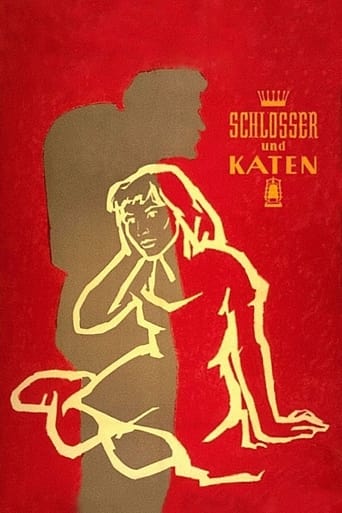
Castles and Cottages poster
FILM

Lifelong hard work for the count makes the servant Anton a cripple. Everybody calls him Crooked Anton. When, after the end of the war, the land of the count gets divided amongst the farmers, Anton receives a piece and hopes to be able to work freely. But an old debt and intrigue keep Anton and his family from finding peace. The farmers of the village begin to discover their own power when Annegret, Anton's daughter, leaves. Is a new beginning possible for Anton? This film paints an impressive panorama of the development of a minor village in Mecklenburg from the end of the war to the uprising of 17 June 1953.

Castles and Cottages

1957 Drama
52 Weeks Make A Year poster
FILM

Krestan Serbin, a 64-year-old Sorbian farm-worker, considers himself non-political. He owns a few acres, a few pigs and a cow, and intends to pass all this on to his daughter Lena. Lena, however, shows only little interest. Krestan’s situation becomes more difficult when he is meant to become integrated into the agricultural production cooperative. He even gets offered a position as Training Supervisor. Although Krestan does not oppose the new policy, he is unwilling to surrender his properties. When the political die-hards who intend to hinder the progressive movement try to win him over, Krestan realizes that it is time to show colours.

52 Weeks Make A Year

1955 Drama
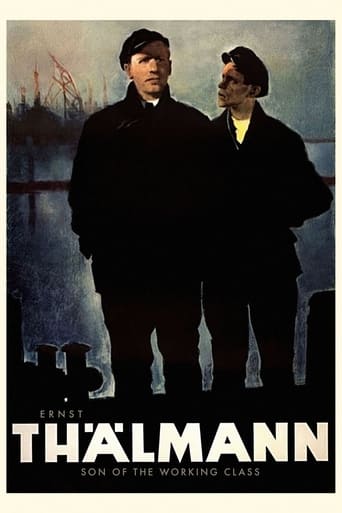
Ernst Thälmann – Son of the Working Class poster
5.7 FILM

This film is the first of a two-part historical and biographical portrait of the communist politician and anti-fascist Ernst Thälmann. In early November 1918, Ernst Thälmann is an unwilling soldier serving on the western front. As the revolutionary movement at home is threatened by the betrayal of the Social Democrats and fissures in the working class, Thälmann calls on his fellow soldiers to put down their weapons and unite with the workers in the communist struggle at home. Thälmann’s qualms about which side he is fighting on continue, but when the local police attempt to prevent a shipment of provisions and supplies from reaching the people in Petrograd, he intervenes and the ship is unloaded. With this moment of clarity, Thälmann continues to follow his political convictions and joins the workers at the Hamburg uprising in October 1923.

Ernst Thälmann – Son of the Working Class

1954 History
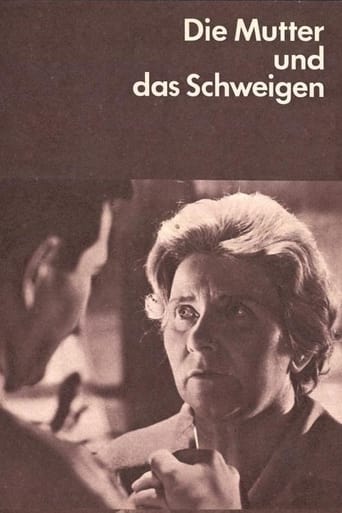
Die Mutter und das Schweigen poster
FILM

Based on a true story from 1936: Klara Baumann, a working-class woman, communist and mother, flees her German homeland for neighboring Czechoslovakia. When a party courier is arrested in Berlin, Klara agrees to return to Germany with illegal material. On behalf of the central courier service, she returned to Germany illegally many times, risking her life, in constant fear of being caught. When the illegal party cell in a large Berlin factory is arrested, Klara distributes the latest issue of the Red Signal on her own. She wants to prove to the Gestapo that she has imprisoned the wrong people. Authentic story of a communist and mother who flees her German homeland for neighboring Czechoslovakia in 1936.

Die Mutter und das Schweigen

1966 Drama
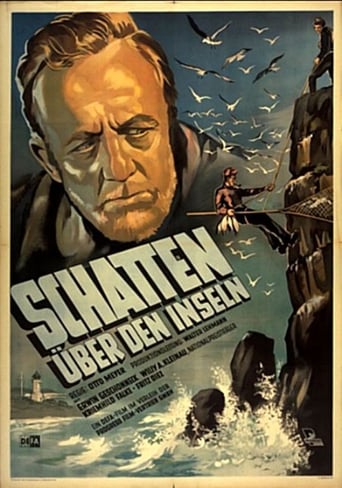
Schatten über den Inseln poster
FILM

On the Faroe Islands, people eke out a meagre existence by catching birds. Merchant Brause pays them little and does a good business. This comes under threat when Dr. Sten Horn suspects that the dangerous annual plague, which kills dozens of inhabitants, is transmitted by birds. Brause forces the people to work anyway and conceals the telegram from the Copenhagen research institute that confirms Horn's suspicions. Horn, supported by his cousin Arne, enlightens the islanders and the greedy Brause can only flee.

Schatten über den Inseln

1952 Drama
Der Prozeß wird vertagt poster
FILM

In 1955, Michael Vierkant, a Jew who had emigrated during the Nazi era, returns from abroad to the Federal Republic of Germany to obtain the conviction of Korn, the former informer responsible for the murder of his sister. Korn is back in office; Michael's efforts remain unsuccessful. There is a direct confrontation between the two, and Michael shoots Korn in self-defense. He flees and is hidden by the young, reclusive artist Marie Jäger, but is then caught by the police and charged with premeditated murder. The case is taken out of the hands of the criminal investigation department by the Office for the Protection of the Constitution, which constructs an act of political revenge on behalf of the communists. Michael manages to escape from prison. Marie and her friends organize a press conference at which Michael reveals the connections. The trial is postponed.

Der Prozeß wird vertagt

1958 Drama
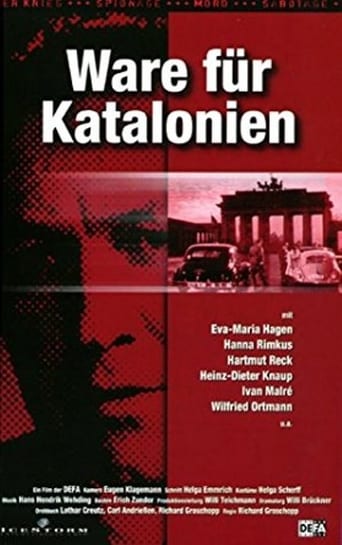
Ware für Katalonien poster
FILM

At the end of the 1950s, the production of optics in the German Democratic Republic has reached top quality and instigates interest in the West. When national demand rises strongly and at the same time the export to South America heavily decreases, the Volkspolizei - the GDR police force - starts to look into the case. Two seemingly unrelated cases are the starting point for the investigation by second lieutenant Schellenberg of the department for optics racketeering: An old woman who was arrested in the Berlin city railway for trying to smuggle a pair of binoculars to West Berlin, and a dead person in an area of allotments who was involved in obscure dealings with optical devices.

Ware für Katalonien

1959 Crime
Gefährliche Fracht poster
FILM

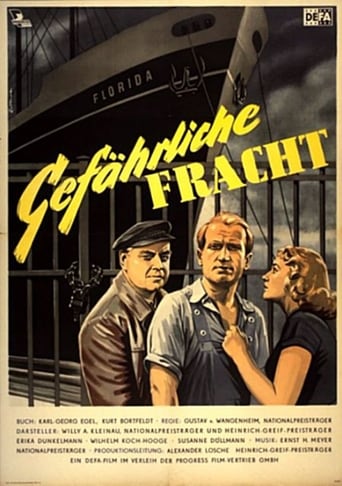
During the unloading of the freighter "Florida", West German dock workers discover napalm bombs instead of the specified precision machines - and a deceptive maneuver by the American occupying forces: the workers had already refused to unload the ship in France, where it was named "Chicago". It was refloated on the voyage to Germany. The German dockers also went on strike. Among them was Hein Jensen, who found it particularly difficult to take part. He had just found work again with difficulty. He needs the money because he wants to get married. His bride Helga has just given birth. When the Americans try to blackmail him into changing his colleagues' minds, he knows where his place is. The strike turns into a huge peace demonstration.

Gefährliche Fracht

1954 Drama
Damals in Paris poster
FILM

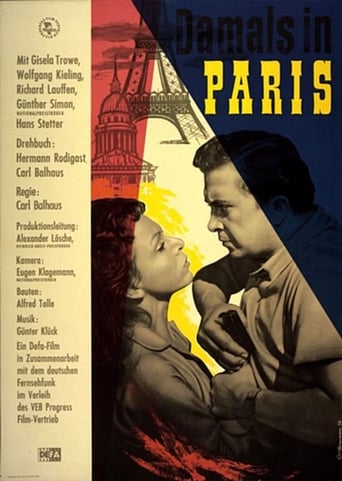
1944: Geneviève and René live in occupied Paris. They love each other, and the young woman looks fearfully at René's activities in the Resistance. She wants to stay out of it, and sometimes there are arguments about it. After one such argument, René goes to a meeting with a German comrade. While he is away, the Gestapo come to the house to take the resistance fighter Louise away. Geneviève intervenes and is arrested. The men of the resistance are very worried as she knows about a planned bridge demolition. René trusts her, and Geneviève does indeed withstand the torture. The bridge can be blown up as planned, contributing to a decisive defeat for the German army.

Damals in Paris

1956 Drama

Closely Ranked

10 Ranked across franchise, crew, cast, themes, genre, era and audience scores
Thomas Müntzer poster
100% match FILM

In 1523, young Thomas Müntzer arrives with his wife Ottilie in the Thuringian village Allstedt to assume the rectorate. As a follower of Luther′s teachings, he finds in the Bible not only reasons for clerical, but also for secular reforms. But when Luther turns away from the rural population after a discord with Müntzer, it is Müntzer who becomes the peoples′ spokesman. He is forced to go to Southern Germany, where he convenes with revolting farmers. But his way leads him back to Thuringia. In 1525, he and Heinrich Pfeiffer form the centre of the Thuringian peasant uprising in Mühlhausen, but their success is diminished by the fact that peasants and craftsmen don′t seem to be able to work together. In Frankenhausen, Müntzer becomes the leader of a peasants′ army that is set to fighting the ruler′s army – and sustains a devastating loss. Müntzer is arrested and sentenced to death by decapitation for his insurgency.

Thomas Müntzer

1956 Drama

Shares 2 cast members · Same director

Wo Du hin gehst... poster
87% match FILM

Berlin, 1936. Athletes and visitors from all over the world have come to the city to take part in the Olympic Games. Anti-Fascists use the opportunity to tell the foreign guests about the situation in Germany by distributing leaflets. Being cornered by the Gestapo, the wounded resistance fighter Jakob manages to go into hiding with the help of the Swiss doctor Thea. They fall in love with each other and when Jakob joins the International Brigades in Spain to fight against Franco, Thea follows him and becomes a dedicated fighter against Fascism. The enduring battle, however, keeps preventing them from becoming a real couple.

Wo Du hin gehst...

1957 Drama

Shares a lead actor · Same director