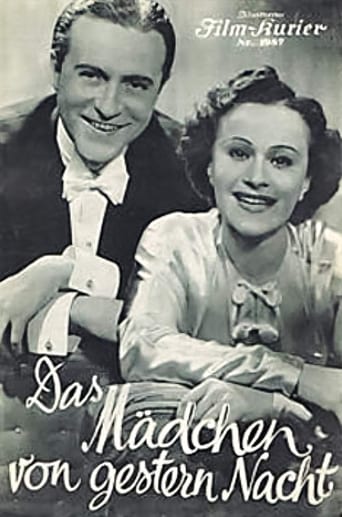
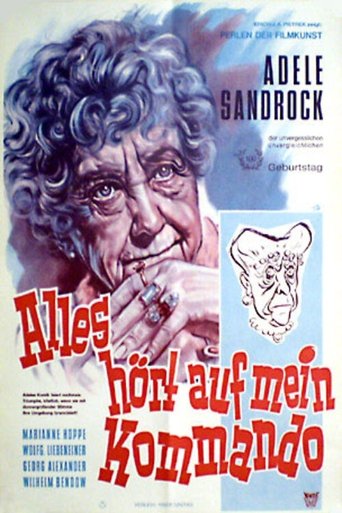
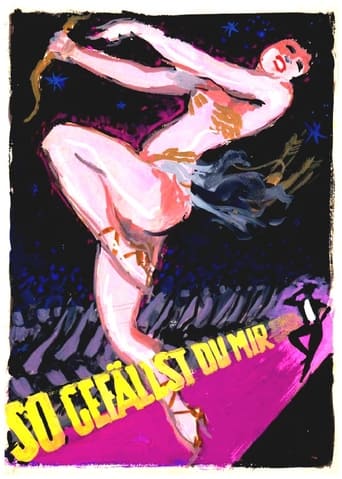
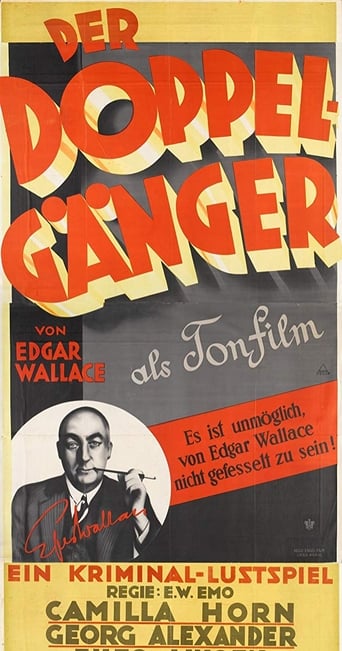
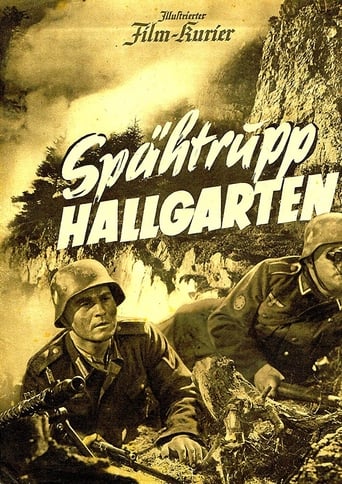
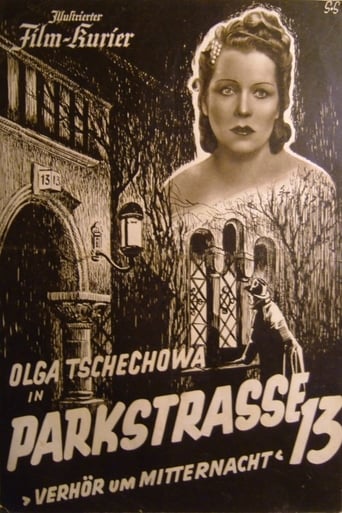
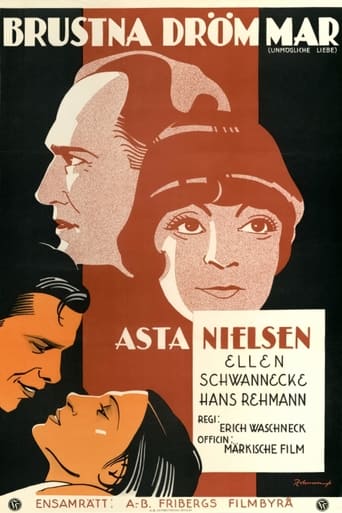
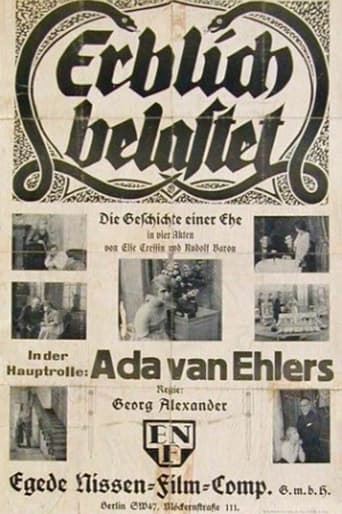
A respectable woman in her 50s inherits a local night club from her husband in a divorce settlement, provided that she shows up there every night at 10:00pm for a month. In spite of eny and provocation, she manages to meet the terms.
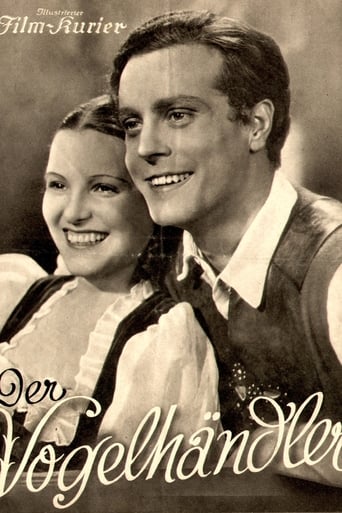
The film is an adaptation of the 1891 operetta Der Vogelhändler by composer Carl Zeller, with libretto by Moritz West and Ludwig Held, though it incorporates few of the original songs, using them mostly instrumentally or in the background. The plot follows Adam, a Tyrolean bird seller in 18th-century Rhineland, who hopes to marry his beloved Christl, a postmaster's daughter; to secure his future, she arranges for him to perform at court, but complications arise when she is mistakenly suspected of an affair with a philandering prince.
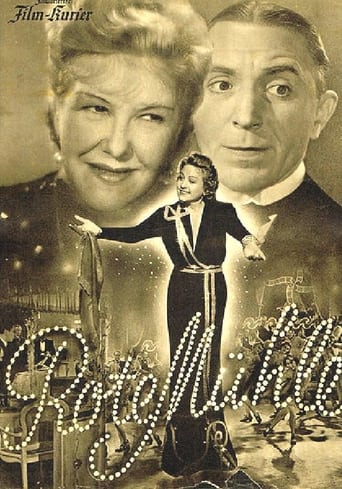
For more than 50 years, Pauline Neuber has directed the "Olympia" theatre, but lately, business has been bad. It appears that no one will be able to make it better either: the audience doesn't seem to like the plays; the press even less so; and the shareholders of the theatre want to sell their shares. In short, the "Olympia" has one foot in the grave. Erich, grandchild of Pauline and always underestimated by her, gets to know Hella Bergson, the daughter of the theatre critic Peter Bergson, and falls in love with her - but doesn't have an idea whose daughter she is. He plays her some melodies from the first operetta he's ever composed and Hella convinces him to have the operetta performed in the "Olympia". During rehearsal of the operetta, however, a fight breaks out between Erich and Hella over a stupid misunderstanding.
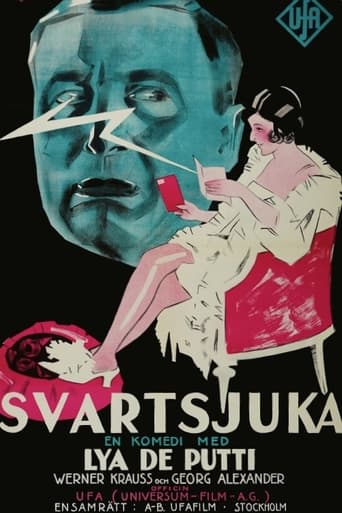
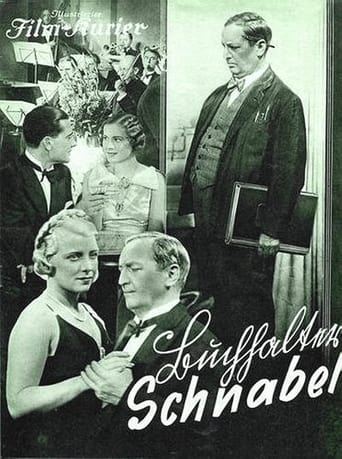
A couple are at the theatre with a playwright friend. At the end of the play the jealous husband strangles his wife to death. When the play ends, the man talks to his friend about such a nonsensical finale, telling the author that no man with any sense ever gets jealous enough to choke his wife in these modern times. The playwright decides to test this supposedly perfect couple about their happy feelings for each other.
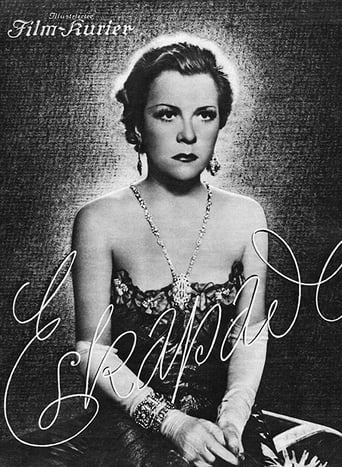
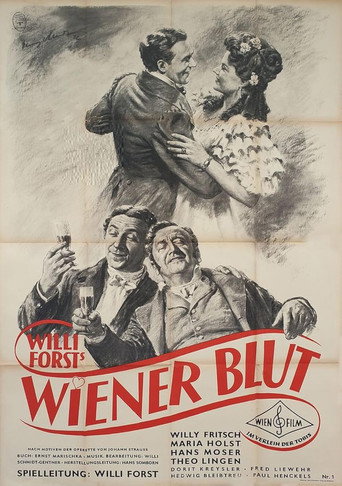
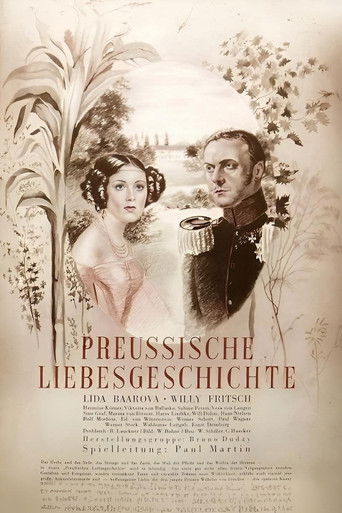
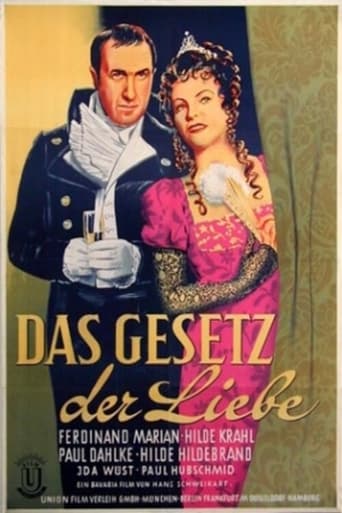
Young Count Georg Wolkersheim is sent to the Congress of Vienna to represent the interests of his country, Reuss-Schleiz-Greiz. Tensions arise between the count, his wife Melanie, and their two chamberlains, and when the four attend a court ball, Melanie leaves Georg, assumes the identity of a famous actress, and attracts the affections of Crown Prince Ludwig of Bavaria.
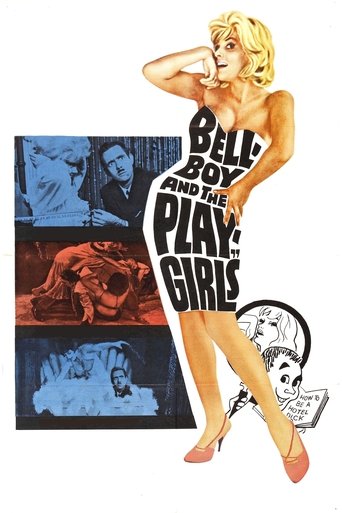
A re-edited U.S. release of the 1958 West German film Mit Eva fing die Sünde an (Sin Began with Eve), The Bellboy and the Playgirls (1962) features roughly fifteen minutes of new color footage directed by Francis Ford Coppola and edited by Jack Hill. The added material follows a bellboy who dreams of becoming a private detective and spies on a group of women at the hotel—lingerie sales representatives who give him more than enough to investigate.
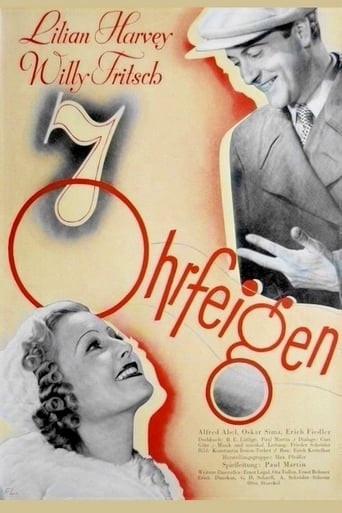
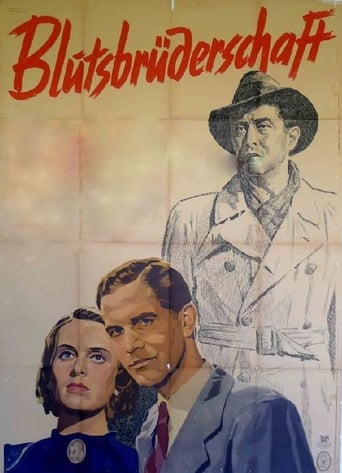
William MacPhab loses seven-pounds in the stock market and decides to slap the man who was responsible for the stock manipulation that caused him to lose his money. Astor Terbanks, the stock-market manipulator is surprised the next day when he gets soundly slapped by MacPhab, and the latter promises to deliver one more a day for the next six days. Terbank's daughter, Daisy, is amused by the procedure and is attracted to MacPhab.
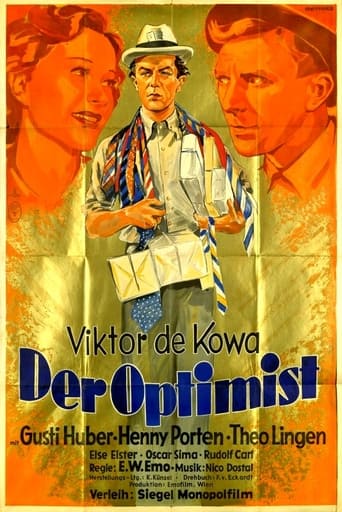
A moron buys a worthless piece of land, which a swindler passed off as an oil field.
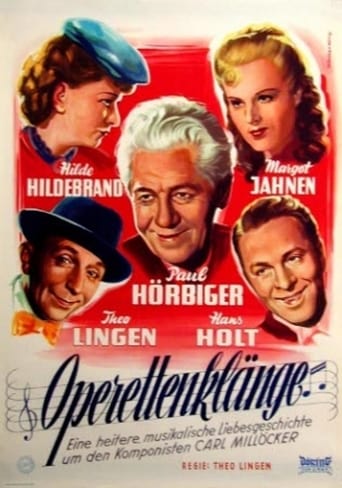
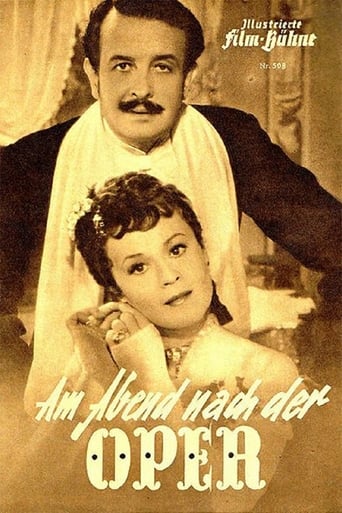
Famous composer Millöcker saves lovesick clerk Ferdinand from killing himself and helps him impress and get close to Henriette, the rich heiress the boy adores. But one day Ferdinand overhears Millöcker confessing his own love to the girl.
Lamenting Thebian women are waiting for the men to come back from war. God Jupiter is attracted to one of them: Alkmene. He goes to earth and tries to seduce her as himself: an old man. Failing in this, he disguises himself as Amphitryon (Alkemene's husband) and tries again. Next morning Amphitryon and his men come back from war; he suspects adultery and wants a divorce. Jupiter's wife Juno now also comes to earth and clears things up.
The young man from Oxford originates from Vienna, where he returned after completing his studies to take over his deceased uncle's construction company. To gain a better overview, he joined the company as a junior employee and, of course, immediately fell in love with a young colleague...
There’s excitement in St. Johann, when the lawyer and notary Dr. Junhnickel from Vienna arrives and brings an offer from a mysterious Brazillian: On the cover of a magazine is a young girl, obviously from the country, and in the background is the village landscape of St. Johann. The Brazilian has fallen in love with the picture and wants to marry the girl. In return for finding her, the village will receive a donation of RM 5,000. Oh boy! The mayor, the shoemaker and the district clerk go off on the search for the girl! They have absolutely no luck in the photo shop, because the photographer is boiling over what he considers unfair intentions and tells them to take a hike. Nevertheless, they find the girl’s address. The model, Christl Wallner is no country girl but rather a ballet dancer, who posed for the photo to earn a litle extra money.
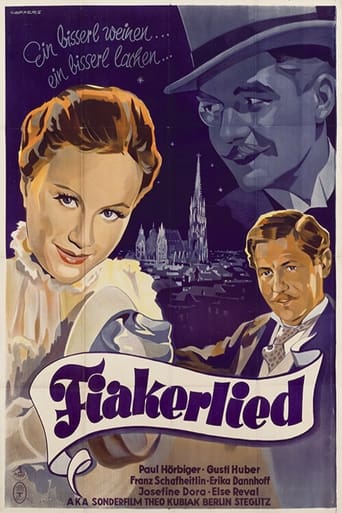
Ferdinand Strödl is the regular coachman for the distinguished Max Jolander, who is constantly on the lookout for romantic adventures. Jolander regularly has Strödl drive him to his rendezvous, during which the coachman witnesses the suffering of many a jilted girl. At such times, Strödl acts as a fatherly friend to Jolander when the consequences of his escapades take on tragic proportions.
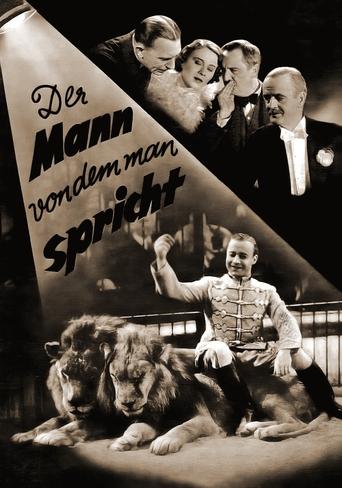
The Man Who is Talked About is the overly agreeable Toni Mathis (Heinz Ruhmann), a gent constitutionally incapable of saying the word "no" (or "nein," this being a German picture). Though he'd rather breeze through life without responsibilities or obligations, Toni agrees to study zoology in college because his uncle (Hans Moser) wants him to. Alas, despite the Herculean efforts by Toni's servant Hassler (Theo Lingen) to prepare his master for his final exams, Toni forgets to show up for the finals and is expelled post-haste. In desperation, his uncle arranges for Toni to get married, and once again our hero just can't say no. Trouble is, he falls in love with trapeze artist Bianca (Gusti Huber), whose father won't let her marry anyone except another entertainer. Undaunted, Toni studies a book on show business and tries out for the vaudeville stage, and the picture isn't even halfway over yet!
Who said a patchwork family is without problems? Two years after the turbulence of Kokowääh, everyday life turns to everyday chaos…
Viewers also picked
Ricky Gervais dishes out controversial takes on political correctness and oversensitivity in a taboo-busting comedy special about the end of humanity.
Viewers also picked
An up-and-coming stand-up comic moves to L.A. to pursue a film career after video clips of his act make him an online sensation.
Viewers also picked
What should have been a romantic getaway turns into one hilarious debacle after another when Michael's woman dumps him in the desert where he gets carjacked by a teenager and he is taken hostage in a stickup at the local Sip and Zip.
Viewers also picked
In what might be his most personal and introspective hour yet, Bill offers hilarious takes on everything from male sadness to dating advice.
Viewers also picked
Ricky Gervais tackles life, death and the state of the world in a brutally honest special that spares no topic, even his own mortality.
Viewers also picked
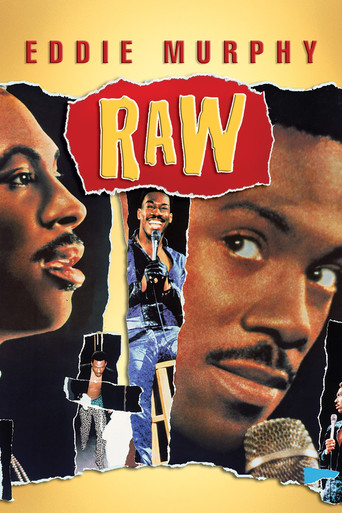
Eddie Murphy delights, shocks and entertains with dead-on celebrity impersonations, observations on '80s love, sex and marriage, a remembrance of Mom's hamburgers and much more.
Viewers also picked
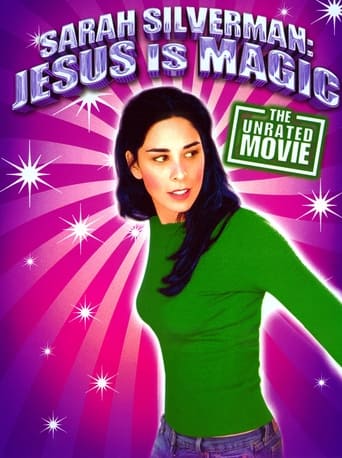
Sarah Silverman appears before an audience in Los Angeles with several sketches, taped outside the theater, intercut into the stand-up performance. Themes include race, sex, and religion. Her comic persona is a self-centered hipster, brash and clueless about her political incorrectness. A handful of musical numbers punctuate the performance.
Viewers also picked
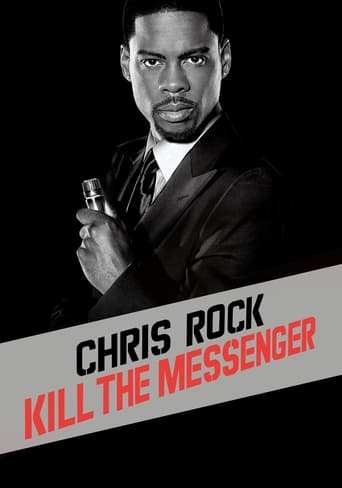
An HBO special edited from three performances from Chris Rock's 2008 comedy tour: London (dark suit, dark shirt), Johannesburg (black suit, white shirt) and New York (shiny jacket). Topics include the ongoing presidential campaign, the possibility of a black president, George W. Bush, gas prices, low-paid jobs, ringtones and bottled water, sex, relationships and the correct use of the n-word
Viewers also picked
Dave Chappelle takes on gun culture, the opioid crisis and the tidal wave of celebrity scandals in this defiant stand-up special.
Viewers also picked