
6.7
FILM
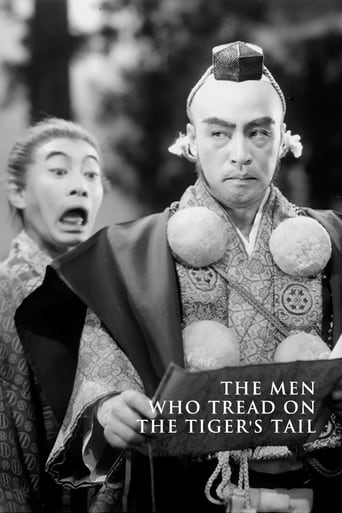
A fugitive lord and his six retainers disguise themselves as monks to bluff their way through a hostile checkpoint.
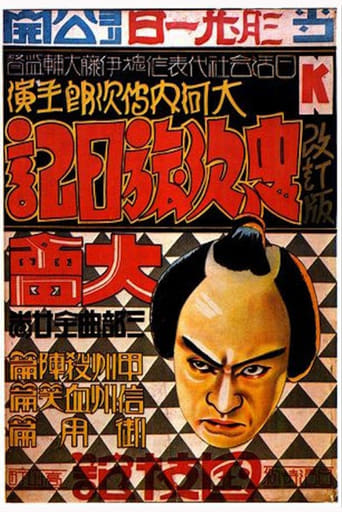
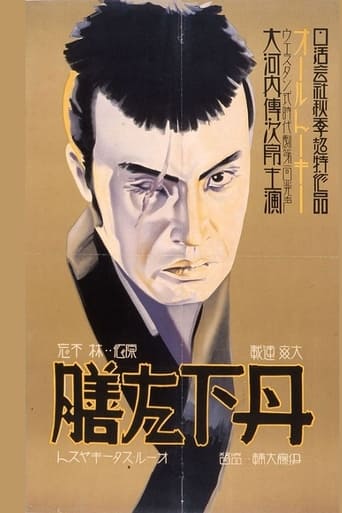
A Diary of Chuji's Travels is a silent Japanese jidaigeki made in 1927 starring Denjirō Ōkōchi and directed by Daisuke Itō. It was originally released in three parts, all of which were long thought to be lost until portions of the second part and much of the third part were discovered and restored in 1991. Since the film had once been voted in a 1959 Kinema Junpō poll as the best Japanese film of all time, its discovery was significant. At the time of its release, Itō was the leader of a new style of samurai films that featured outlaw heroes and fast-cut sword fighting scenes.
A fugitive lord and his six retainers disguise themselves as monks to bluff their way through a hostile checkpoint.
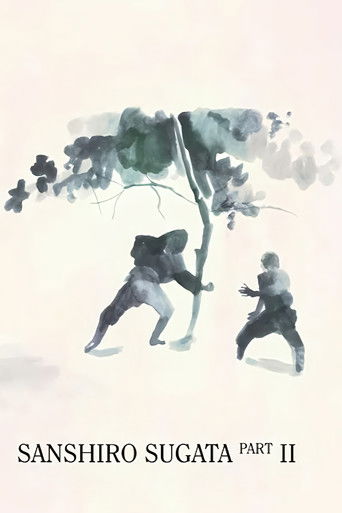
A few years after his breakthrough, Sanshiro resumes his path to judo mastery—testing his discipline against an American prizefighter and later facing vengeful karate brothers. As rival schools and public spectacle push him toward violence, he must reconcile strength with restraint and the true spirit of his art.
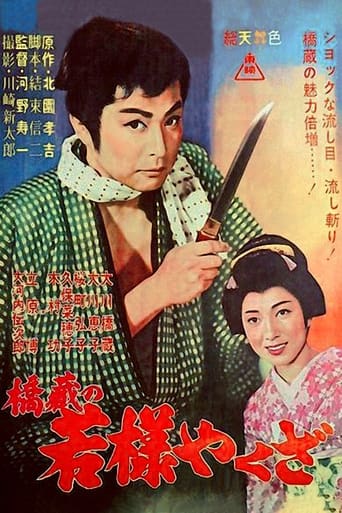
Young Lord Taihei goes to Edo to find the lost family treasure, a plover incense burner, under the disguise of a ronin.
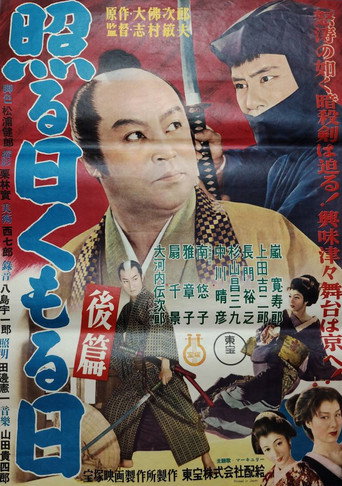
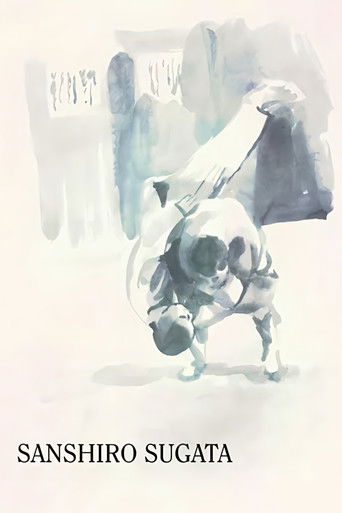
A hotheaded youth in 1880s Meiji Japan apprentices to judo master Shōgorō Yano, trading brute jujutsu bravado for discipline and humility. As Sanshirō matures, he proves judo’s spirit against old-guard challengers—including a deadly duel—while falling for his vanquished opponent’s daughter. Based on the novel by Tsuneo Tomita, son of Tomita Tsunejirō, the earliest disciple of judo.

After her anti-fascist professor father is dismissed, Yukie navigates love, political repression, and wartime upheaval—ultimately forging her own path in pre- and post-WWII Japan.
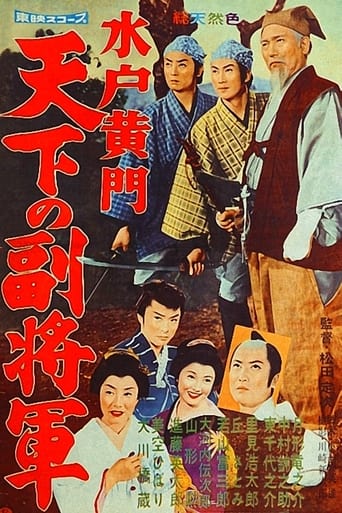
After settling the matter of shogunal succession, the retired Old Lord of Mito finds himself in a sea of trouble when he gets involved in the succession of the Takamatsu clan. The usurpers try by every means to effect their takeover, even if it leads to blood being spilled. Along with Kaku and Suke, the elder must face the most dangerous time of his life, in a battle against those corrupt individuals who would use any means to further their dastardly conspiracy, regardless of how many lives might be destroyed. The great Misora Hibari gives a bravura performance, as does the rest of this all-star cast. This is another outstanding effort on the part of the Toei Films, blending fact and fiction to bright back Japan’s golden era of the Genroku period.

A man gets rid of a cheap pot without knowing it contains a map to a treasure. As word spreads, many join in hunting it.
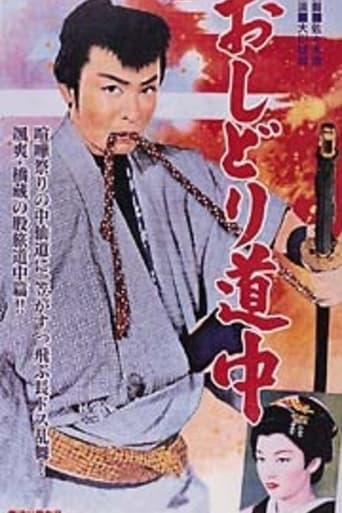
With flashing swordwork and a terrific story, wandering gambler Kusama Hanjiro inspires the wrath of Boss Jirotaro who has been terrorizing travelers along the route through his territory. When Hanjiro steps in to gamble with him one-on-one it leads to a deadly vendetta that will show no mercy. Along the way Hanjiro is called upon to help sisters with no one else to depend on. Will the feud end in tragedy, or can the honest wanderer prevail against the bloodlust of an angry yakuza boss whom he had scarred for life?
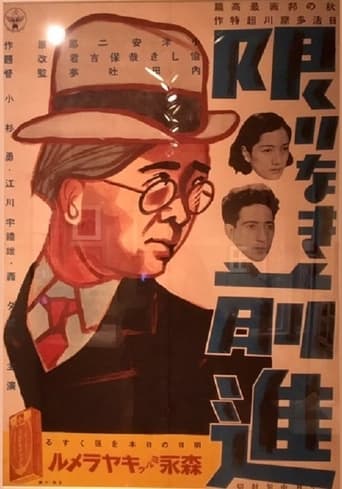
One of Uchida’s early sound films, Unending Advance is based on a curious story by Yasujiro Ozu, in which an examination of the quotidian problems of a middle-aged salaryman and his family segues into an idyllic dream of an implausible future. The surviving print, although incomplete, offers an essential glimpse into Uchida’s prewar period, when he was associated more with realist dramas than with the period films that dominated his work after the war.

A once-dead man is resurrected by a mysterious old man's spiritual magic to take revenge on those who killed him. An unusual and bizarre historical drama with a vaguely Western atmosphere. Starring the sword-fighting star Kozaburo Ramon, directed by Kenji Shimomura.
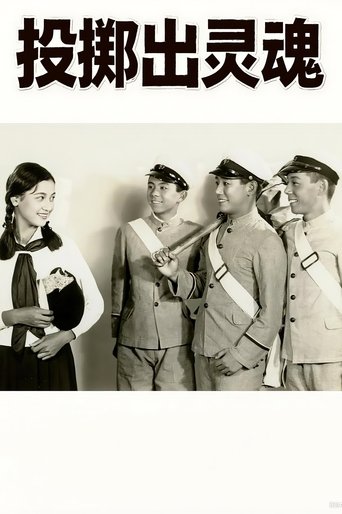
The film centres around junior high school students. They are members of the school's baseball team. They are very good. Izawa's father asks him to stop playing prior to an important game. Hayasaki health deteriorates at this time and he becomes absent. The team decides to speak to Izawa's father to plead their case and ask for the return of their team member.
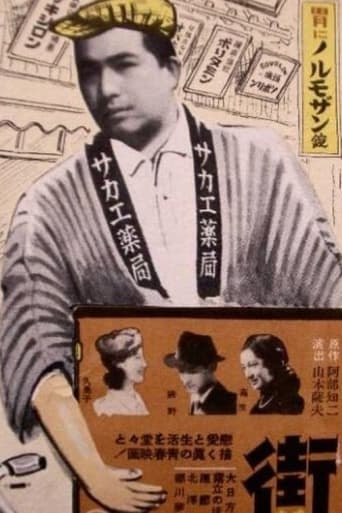
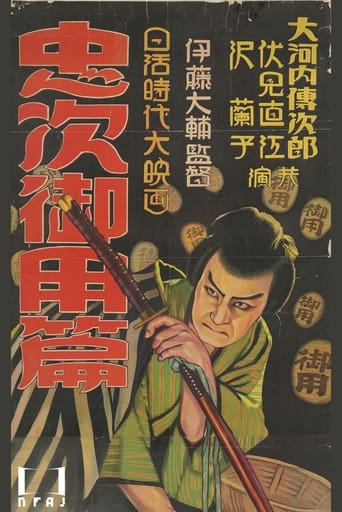
The Japanese equivalent of penny dreadfuls glorifying Jesse James, A Diary of Chuji’s Travels gives a unique gloss to the tale of Chuji Kunisada, the legendary bakuto (or gambler, the precursors to modern-day yakuza). One of the two remaining segments of Ito’s original four-hour trilogy, it depicts Chuji’s attempt to save the geisha Oshina, a rebellion against the rigid social structure of Edo Japan. With socialist overtones, it’s a passionate artifact of early Japanese film.
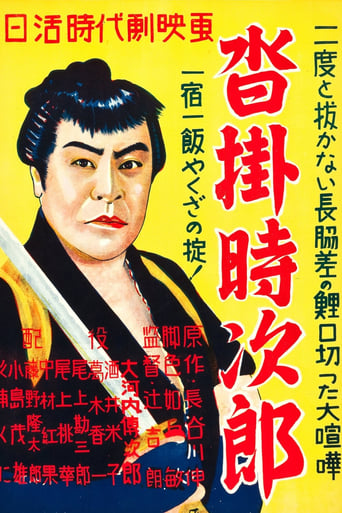
A traveling gambler becomes duty-bound to the wife and child of the yakuza he had slain and desires to leave the criminal life for good. However, with no other skills but his sword, he is forced to hire himself out in the midst of a gang war.
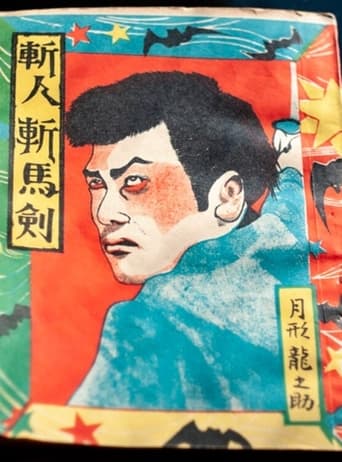
In medieval Japan, a brutal and corrupt magistrate is planning to kill the child who is about to become the heir to the estate and position of the local lord and substitute his own "heir", an orphan, in order to get control of the late lord's estate and rule as the impostor's "regent". However, a mysterious stranger appears and sets out to thwart the magistrate's plans and free the people from his oppressive rule.
The Japanese equivalent of penny dreadfuls glorifying Jesse James, A Diary of Chuji’s Travels gives a unique gloss to the tale of Chuji Kunisada, the legendary bakuto (or gambler, the precursors to modern-day yakuza). One of the two remaining segments of Ito’s original four-hour trilogy, it depicts Chuji’s attempt to save the geisha Oshina, a rebellion against the rigid social structure of Edo Japan. With socialist overtones, it’s a passionate artifact of early Japanese film.
Same franchise · Shares 3 cast members
A hotheaded youth in 1880s Meiji Japan apprentices to judo master Shōgorō Yano, trading brute jujutsu bravado for discipline and humility. As Sanshirō matures, he proves judo’s spirit against old-guard challengers—including a deadly duel—while falling for his vanquished opponent’s daughter. Based on the novel by Tsuneo Tomita, son of Tomita Tsunejirō, the earliest disciple of judo.
Shares a lead actor · Viewers also picked
A fugitive lord and his six retainers disguise themselves as monks to bluff their way through a hostile checkpoint.
Shares a lead actor · Viewers also picked

The first of Chuji's Travels.
Same franchise · Shares a lead actor

Gentle and broken, a homeless man fights others on video for money but soon finds comfort in an unlikely friend and the lost diary of a young girl.
Viewers also picked
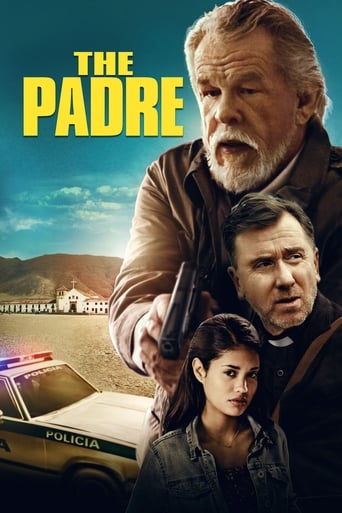
American retired Judge Randall Nemes and his hired gun, Gaspar, track down a con man posing as a priest in a small Colombian town only to be thrown off-course by a scrappy 16-year-old girl intent on reuniting with her sister in the United States.
Viewers also picked

A man reflects on the lost love of his youth and his long-ago journey from Taiwan to America as he begins to reconnect with his estranged daughter.
Viewers also picked
After her anti-fascist professor father is dismissed, Yukie navigates love, political repression, and wartime upheaval—ultimately forging her own path in pre- and post-WWII Japan.
Shares a lead actor
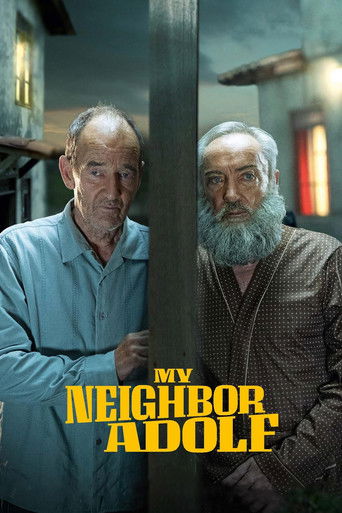
South America, 1960. A lonely and grumpy Holocaust survivor convinces himself that his new neighbor is none other than Adolf Hitler. Not being taken seriously, he starts an independent investigation to prove his claim, but when the evidence still appears to be inconclusive, Polsky is forced to engage in a relationship with the enemy in order to obtain irrefutable proof.
Viewers also picked

A young Japanese woman named Yoko finds her cautious and insular nature tested when she travels to Uzbekistan to shoot the latest episode of her travel variety show.
Viewers also picked
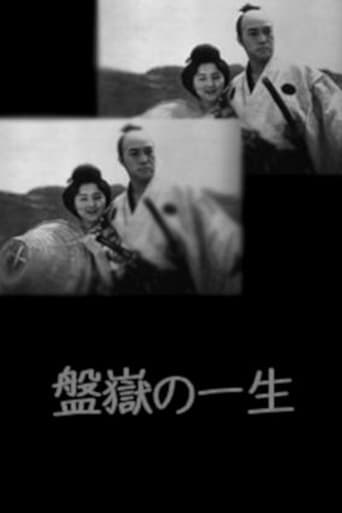
Yamanaka Sadao's fourth feature film. The Life of Bangaku
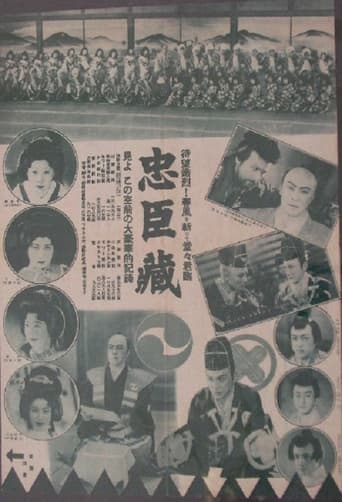
Directed by Daisuke Itō.
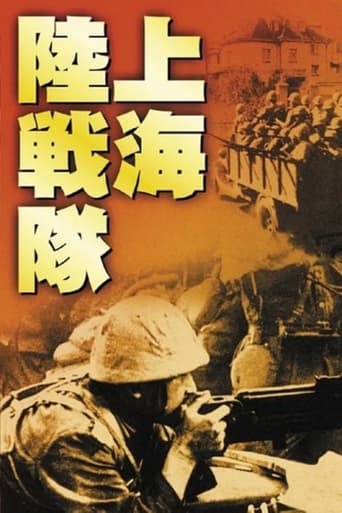
This film attempts to reconstruct the tension of the Battle of Shanghai through an episode in an understated way, introducting its story in a documentary mode. In the film story, Japan's marine regiment protects Japanese residents and Chinese refugees-women and young children-from rampant street fighting, Shanhai Rikusentai unsparingly uses its first eight minutes for an official-mannered self-justification of the war. From the viewpoint of explaining Japan's military operation,the narration refers to the city s spatial division in sync with maps on screen.
Prewar jidaigeki starring Denjiro Okochi
Silent Japanese film.

Akogare no Hawaii kôro