FILM
Germany, 1944. A group of international soldiers are trying to prevent Germans from finalizing research and development of FAU-2 rockets.
The film tells about the struggle of the Donbas miners in Ukrainian SSR with saboteurs.
Germany, 1944. A group of international soldiers are trying to prevent Germans from finalizing research and development of FAU-2 rockets.
In the United States, oil magnate Johnston backs Roberts, a ruthless political candidate who has his main rival murdered and rises to the governorship. When journalist Jack Lawrence exposes Roberts’s corruption, the authorities crush a workers’ strike and silence the newspaper, ultimately framing Lawrence for murder and executing him.
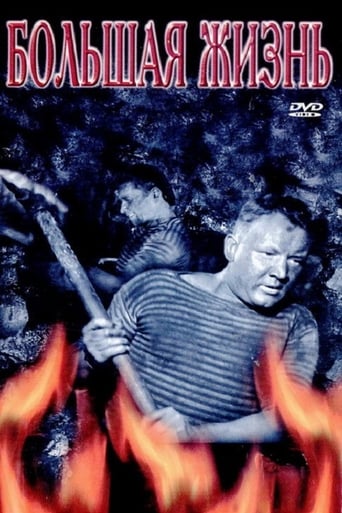
This is a dramatic story of the restoration of the mines after the liberation of Donbass from the Nazis during the Second World War.
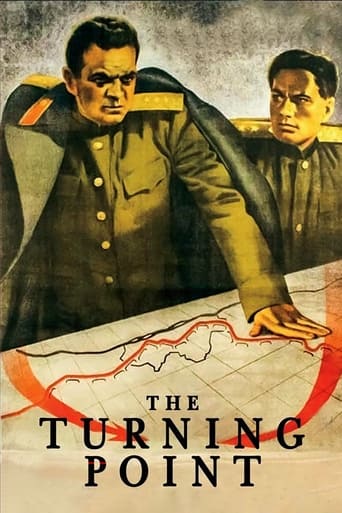
The film tells the story of those who took part in the Battle of Stalingrad in 1942, which became a turning point in the Great Patriotic War. For five months, the city resisted the Nazi offensive. Surrendering Stalingrad to the enemy would have meant losing the war, but holding on to the city seemed almost impossible.
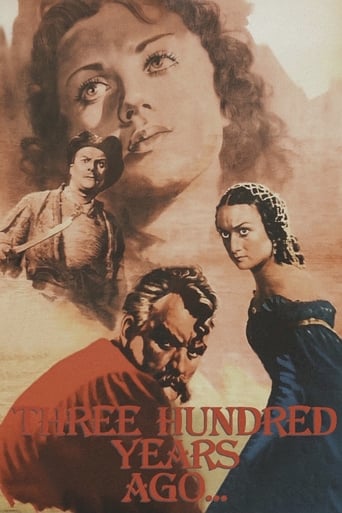
In the middle of the 17th century, Ukrainian peasants and Cossacks rose up to fight against the Polish gentry rule. About the events of the National Liberation War in Ukraine under the leadership of Bohdan Khmelnitsky, who with a firm hand led the insurgent masses to an alliance with Russia.
Katya and Grisha lived in a big city. Grisha was older than Katya, but he respected her and did not hide his secrets from her. And I did not notice at all how the girl was growing up and how completely different feelings were born to her.
About the life and heroic death of the old Bolshevik-Lugansk resident, participant in the civil war, Aleksandr Yakovlevich Parkhomenko. In 1918, capturing Ukraine, the German occupiers sought to use the Haidamaks, the White Guards and the Greens in their struggle. By order of Voroshilov, Aleksandr Parkhomenko from Lugansk arrives in Tsaritsyn. At the same time, the Germans launched an active offensive. The "red" battalions are poorly armed, however, Parkhomenko manages to raise them to the attack and put the enemy to flight.
In 1960, in Moscow, numerous cases of infection with purple pox were recorded. According to doctors, the virus came from eastern countries. In order not to create panic among the population, they tried to hide the fact of the epidemic. Doctors tried to cope with the disease, but the number of deaths increased, and information inexorably leaked into society ...
Paris, the middle of the XIX century. Young Marius Petipa is going on a long journey to St. Petersburg, where he is invited to become the first dancer. He doesn't know that his life will develop both happily and dramatically, and his work will be the glory and pride of Russian ballet.
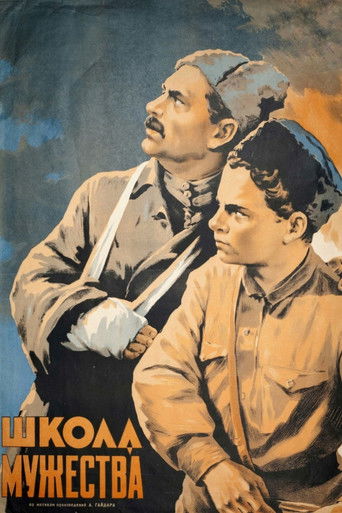
The film centers on the fate of a provincial guy who became a participant in revolutionary events and the civil war.
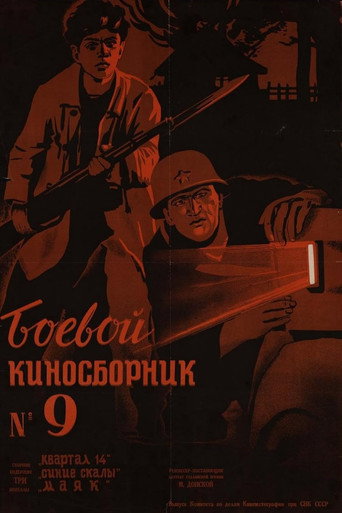
Fighting Film Collection No. 9 (Boyevoy kinosbornik No. 9) is the ninth issue of Boyevoy kinosbornik series, released in May 1942. It contains three segments: "Kvartal No.14/Block 14" (Savchenko), "Siniye skaly/The Blue Cliff" (or "Blue Crags") (Braun) and "Mayak/The Signal" (or "Beacon") (Donskoy).
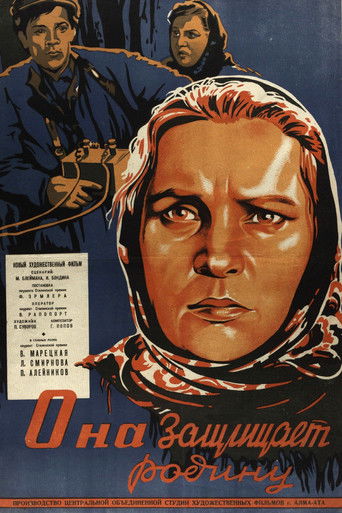
The first day of the war brings tragedy to a peasant woman, Pasha. Her husband and her toddler son die before her eyes. She and the other villagers leave to go into the woods. Pasha leads the villagers to fight some German troops. Coming out victories, the partisans become a feared opponent of the Germans, with the leadership of Comrade P.
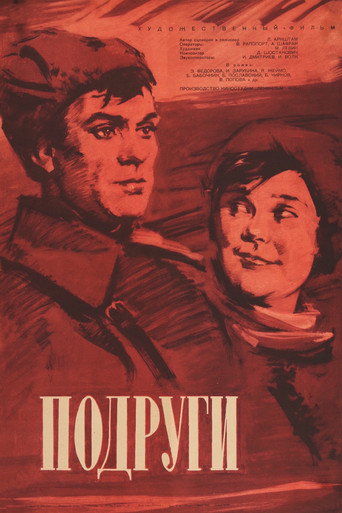
Girlfriends Zoya, Natasha and Asya live in Petrograd. Before the Civil War, young heroines are aware of the social injustice of life. When the war begins, the girls are recorded by the orderlies of the working group to protect the Bolshevik Petrograd from the advance of the whites.
A miners in Donbass embrace new technologies with enthusiasm.
As a response to criticism for the allegedly excessive “mass appeal” of his earlier epic STORM OVER ASIA (1928), Vsevolod Pudovkin unleashed his flair for experimentation in what was supposed to be the director’s first sound feature. Everything went wrong: technical problems forced him to complete the film as a silent; viewers were baffled by the lack of a recognizable plot; then, the ideological climate of the Soviet Union changed. He was now being blamed for catering to bourgeois taste! Time has come to set the record straight. Here’s lyrical cinema at its best, deliberately operatic and yet intimate as it matches the characters’ inner life with the solemn rhythms of nature, and depicted through breathtaking black-and-white photography. A sensation at last year’s Pordenone fest, Pudovkin’s long-forgotten swan song to the art of montage is resurrected by Gabriel Thibaudeau’s emotionally charged live music performance. –PCU (USSR, 1930, 75m)
Don Cossack Stepan Razin vowed to take revenge on the boyars for his tortured friends. Having led the rebellious peasants, he becomes the leader of an entire army. Humiliated and insulted people flock to him from all over the Russian land.
Working with children led Barskaya to create superb direct sound and an inspired style of shooting. Don’t look for conventional cinematic syntax here. The film is chaotic in the way that Soviet films still knew how to be, and Langlois couldn’t help but be seduced by its rebellious spirit, its anarchy and love of children, comparable to Vigo’s Zero de conduite. As well as being a film made with and for children, it offers a complex take on Western society. Pre-Nazi Germany is not named as such but is carefully reconstructed, possibly under advice from Karl Radek, and children offer a playful reflection of class struggle – doubly excluded, as proletarians and as minors. “They play in the same way that they live”, one intertitle says. The interaction between their comical games and the yet more ludicrous ones played by adults is developed on several levels.
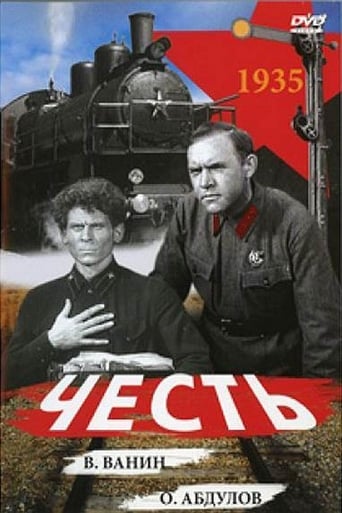
1935. A plan is hatched at a railway depot to sabotage a record-breaking high-speed run that a young locomotive engineer, Mitya Orlov, has volunteered to undertake. The saboteurs attempt to cause a catastrophe by directing the trains of Mitya and his father, Vasily Orlov, toward each other on a collision course.
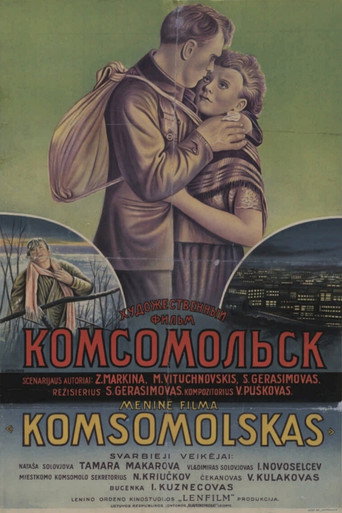
In 1932, thousands of Komsomol members set off for the Far East to build the "city of youth" — Komsomolsk-on-Amur. Among the builders is a saboteur. Soon, fuel depots explode at the new factories in Komsomolsk.
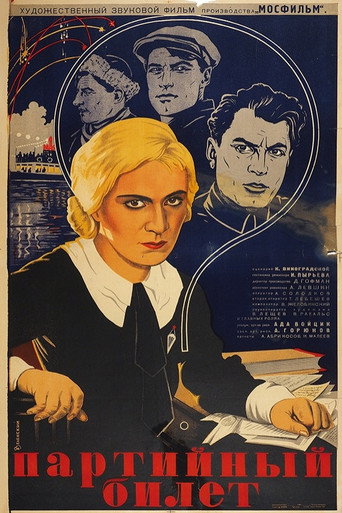
Yasha, who likes Anna, accomodates siberian Pavel Kuganov, which later becomes a class-conscious worker in a factory. Anna refuses Yasha's offer of marriage and he therefore runs off to Siberia. After Pavel is hailed as a hero because he survives a fire accident in factory (which is in fact effect of his sabotage), Anna marries him. Pavel then becomes a reckless communist careerist, but only on surface. In fact, he is a traitor of the country and a spy, and gives Anna's party ID card to anti-communist movement. In spite of that, Anna is expelled from the communist party. Yasha returns from Siberia, only to find her love Anna desperate. They reveal the truth about Pavel (that he is a kulak who killed a kolchoz co-op leader), which means an end for Pavel.
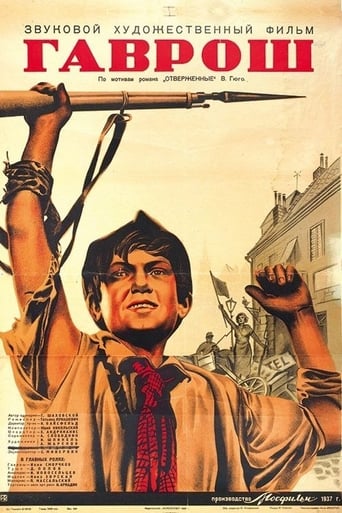
Gavroche learns that his father, who was exiled to hard labor, dies. Hatred of the tyrant-king leads the boy to the barricades of Montmartre.
This is a dramatic story of the restoration of the mines after the liberation of Donbass from the Nazis during the Second World War.
Same franchise · Shares 4 cast members
About the life and heroic death of the old Bolshevik-Lugansk resident, participant in the civil war, Aleksandr Yakovlevich Parkhomenko. In 1918, capturing Ukraine, the German occupiers sought to use the Haidamaks, the White Guards and the Greens in their struggle. By order of Voroshilov, Aleksandr Parkhomenko from Lugansk arrives in Tsaritsyn. At the same time, the Germans launched an active offensive. The "red" battalions are poorly armed, however, Parkhomenko manages to raise them to the attack and put the enemy to flight.
Shares 3 cast members · Same director
A miners in Donbass embrace new technologies with enthusiasm.
Shares 2 cast members · Same director
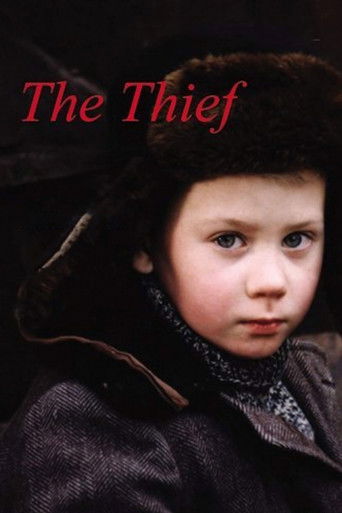
Katya and her 6-year-old son Sanya, who, in 1952, meet a veteran Soviet officer named Tolyan. Katya falls in love with Tolyan, who turns out to be a small time criminal, but who also becomes a father figure to Sanya ...
Viewers also picked
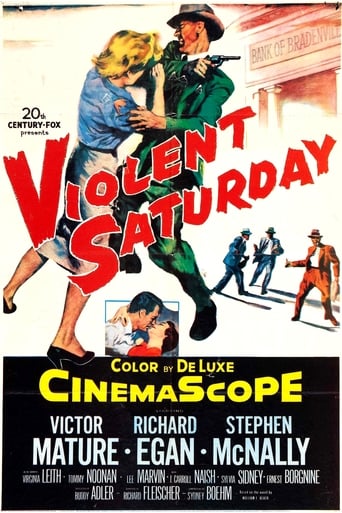
Three men case a small town very carefully, with plans to rob the bank on the upcoming Saturday, which turns violent and deadly.
Viewers also picked
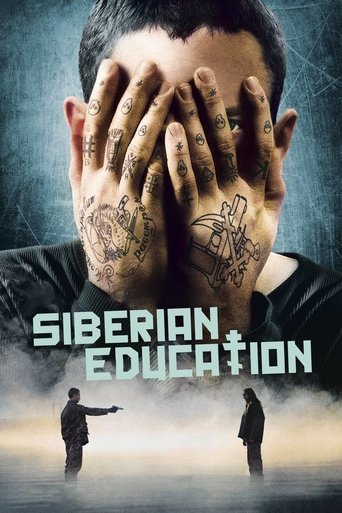
The story of a gang of children growing up in a community of banished criminals, in a forgotten corner of the former Soviet Union. This community rejects the world outside. The only law it obeys… is its own. Against this backdrop two best friends, Kolyma and Gagarin, gradually become fierce enemies as they find themselves on opposite sides of the strict code of honour of the ‘honest criminal’ brotherhood.
Viewers also picked
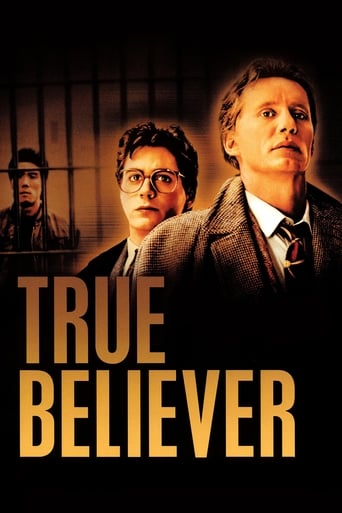
Eddie Dodd is a burnt out former civil rights lawyer who now specializes in defending drug dealers. Roger Baron, newly graduated from law school, has followed Eddie's great cases and now wants to learn at his feet. With Roger's idealistic prodding, Eddie reluctantly takes on a case of a young Korean man who, according to his mother, has been in jail for eight years for a murder he didn't commit.
Viewers also picked
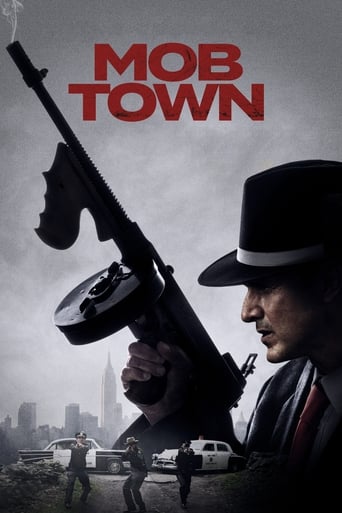
Based on the true story of the notorious 1957 ‘mob summit’ in upstate New York. Spearheaded by Vito Genovese, more than 50 leaders of the organized crime syndicates from around the country converged on the sleepy town to discuss upcoming expansion plans. Their plans are foiled when local police trooper Ed Croswell discovers their activities and, consequently, exposes the mob to the American public. Croswell’s actions shed light on the massive web of corruption and changed the face of law enforcement forever.
Viewers also picked

A woman is released from prison after serving a sentence for a violent crime and re-enters a society that refuses to forgive her past.
Viewers also picked
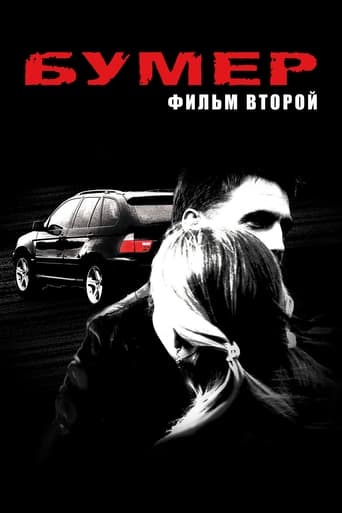
The film takes place a few years after the events shown in Bummer. Kostyan "Kot", who lost all his friends, the woman he loved and was nearly killed in the first installment of the film tries to begin a new, peaceful life. But is it possible to do? Has Russia changed and do "bratki" on black "bummers" no longer control business? Can he escape his past?
Viewers also picked
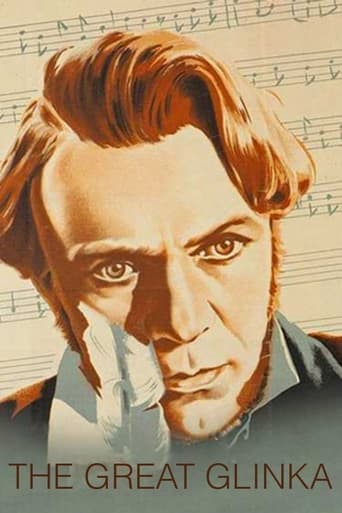
About the life of the Russian composer Mikhail Glinka.
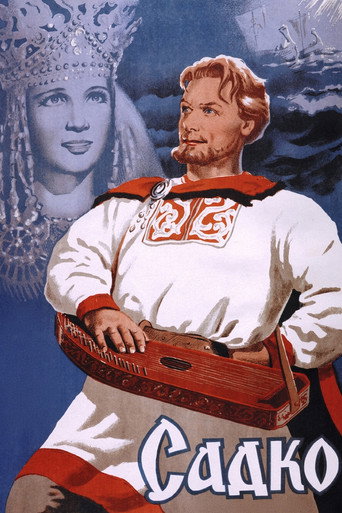
In the old Russian city of Novgorod, the merchants are feasting in a gorgeous palace and Sadko is bragging that he can bring to their land a sweet-voiced bird of happiness. They laugh at him, but he is offered help by the Ocean King's daughter, who is mesmerized by Sadko's singing and is in love with him. The hero is destined to visit many lands in his search of the bird.
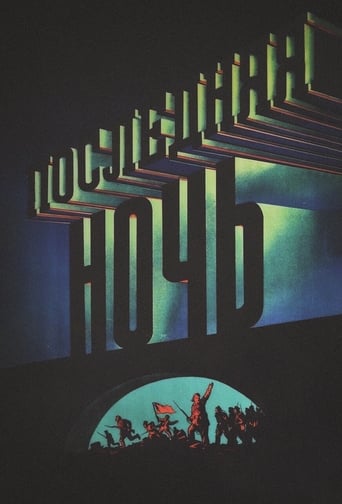
On one of the October nights at the ball, gymnasium pupils and officers scoff at the love of Kuzma Zakharkin, the “cook's son”, to Lena, the daughter of the manufacturer. Cannon volley interrupts the fun. In the city begins the Moscow armed uprising of workers. At the center of the fate of two families is the capitalist Leontyev and the worker Zakharkin, whose sons became the organizers and participants of this uprising.
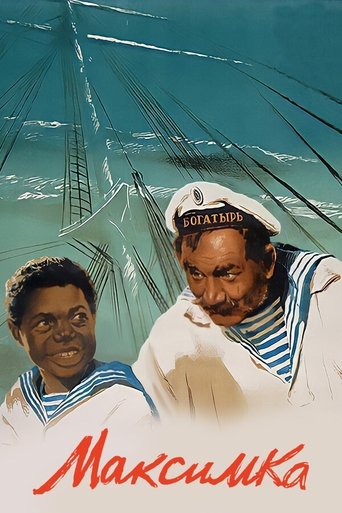
A black child rescued from by Russian sailors, whom they name Maksimka, having overcome his fear of white people, turns out to be an unusually smart and kind little boy. The rude drunken sailor Ivan Luchkin was especially attached to the boy. Once it was Maksimka who managed to save Luchkin from foreign recruiters of labor. For resourcefulness and courage, the young hero is enlisted in the team of the corvette and becomes the cabin boy of the Russian fleet.
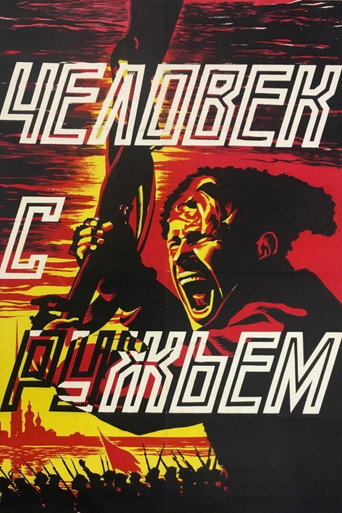
The story of the Bolshevik revolution through the eyes of a peasant who, as a soldier, gets caught up in the proceedings under the tutelage of Lenin.
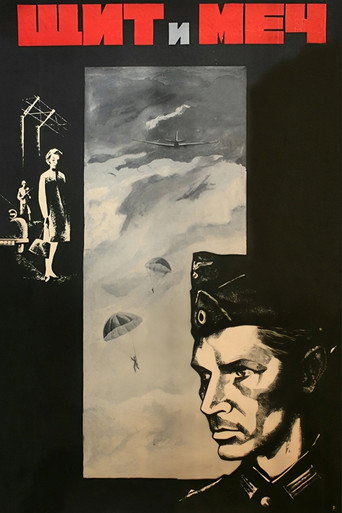
The year is 1940 and Nazi Germany is at the height of its military prowess, having captured most of Europe and eyeing the Soviet Union to the East. The Russian military command suspects hostile intent from Germany and so arranges for its spies to infiltrate ranks of the German military and the SS. Alexander Belov is a Russian spy, who travels from Soviet-held Latvia to Nazi Germany under an alias of Johann Weiss. His mastery of the German language, steel nerves and an ability to manipulate others help him to use his connections in the SS to ascend the ladder of the German intelligence. He uses his position to identify sympathetic Germans, who help him to procure vital intelligence, and to help local resistance movements in their collective fight against Nazism.

Documentary essay about the First Moscow International Film Festival, held in August 1959, about its participants and guests - Soviet and foreign actors, directors who came to the film forum.
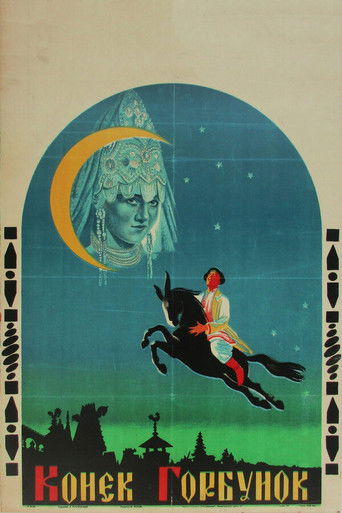
Surreal Soviet fantasy movie about a man whose love is kidnapped by the Tsar and he must save her with the help of a humpbacked horse.
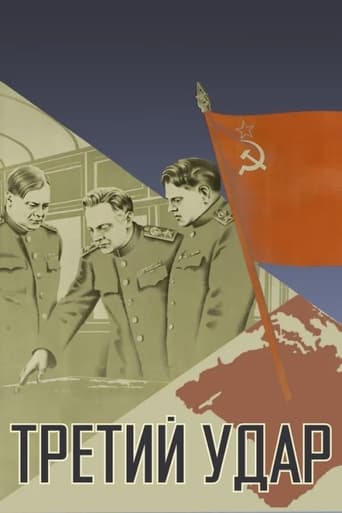
On April 1944, Joseph Stalin orders the Red Army to liberate the Crimea from the German occupiers. The Wehrmacht's local commanders beg Hitler to allow them to retreat from the vulnerable position, but he refuses. After a fierce battle, the Soviet forces destroy the German and Romanian units defending the peninsula and retake Sevastopol.
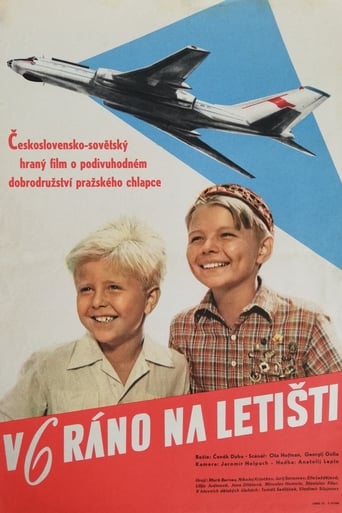
The nine-year-old Prague boy Pepiček flies to Moscow as an involuntary stowaway on an airplane. Together with the Soviet pioneer Mischa, he pursues an alleged agent in the hustle and bustle of the World Festival and is flown back to Prague in the evening.
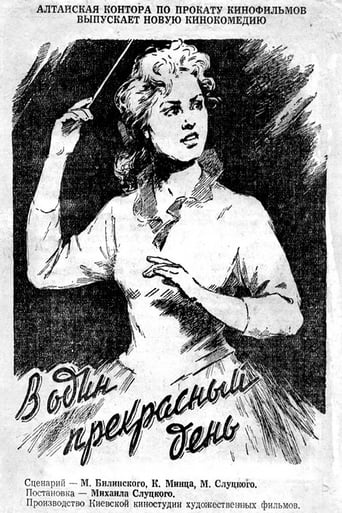
In the ordinary Ukrainian collective farm comes a new music worker, graduated from the Conservatory energetic young girl. She led the fight with the Chairman of the collective farm and accountant, who believed that Amateur music for farmers — something quite optional…
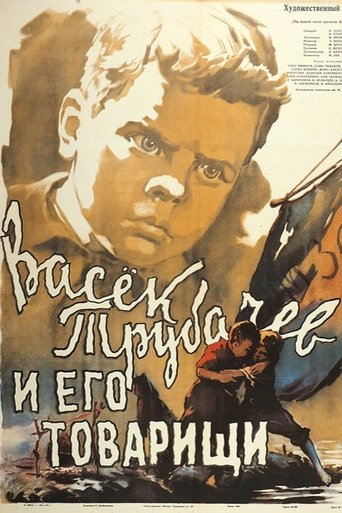
A family movie about a life of Trubachyov's pioneers detachment during the years before WWII.
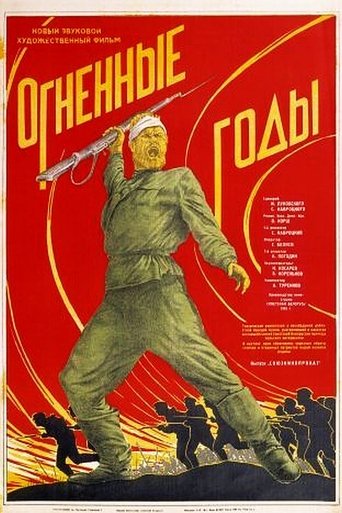
Follows the story of the 26 Artillery Division of the Soviet Red Army.
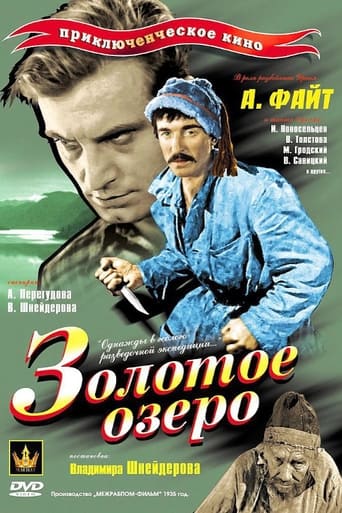
A geological expedition looking for gold in the Russian taiga is beset by a gang of thieves.
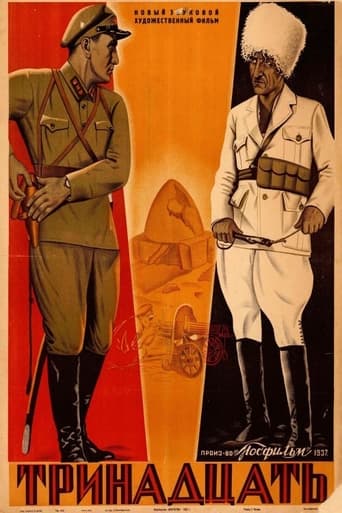
The film tells about a band of demobilized Red Army men and two civilians who cross a Middle Asian desert. They are forced to do battle with superior forces of Basmachi rebels for the dry draw-well.