Skip to content
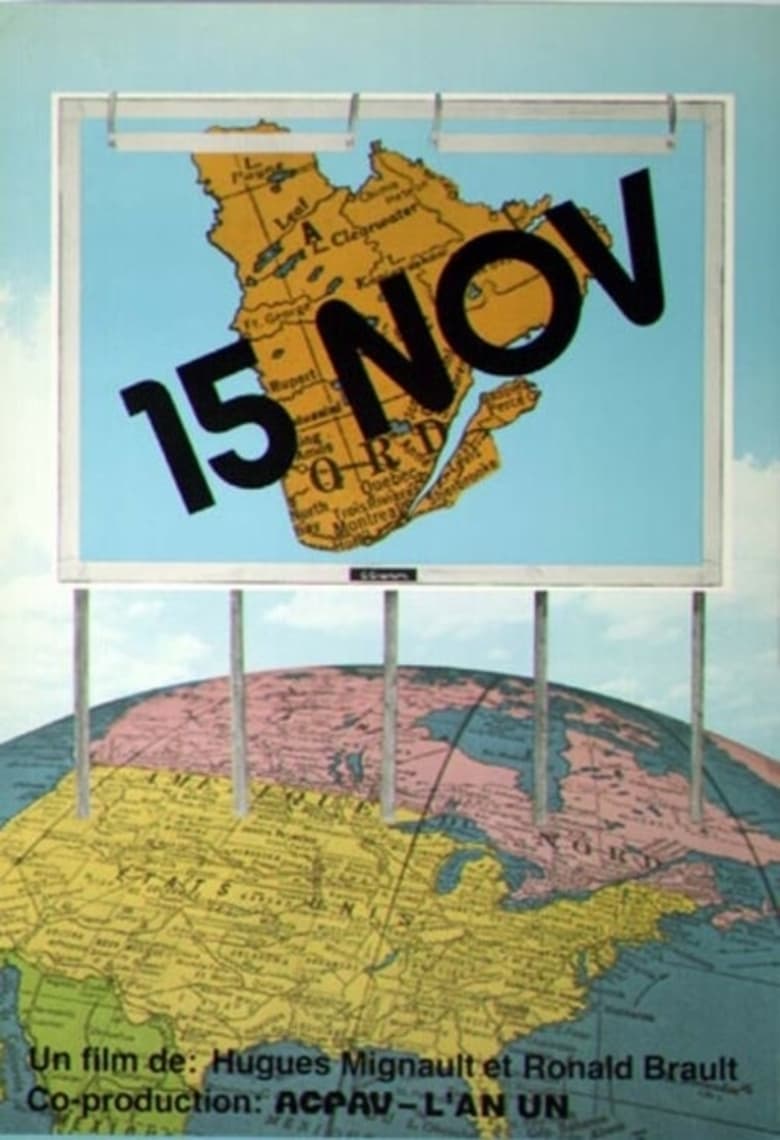
15 Nov poster
Recommendations based on

15 Nov

1977 Movie Documentary

A look at November 15, 1976, the date the Parti Québécois seized power in the provincial elections, a victory that gave rise to an unprecedented outburst of joy at the Center Paul-Sauvé, a place where PQ sympathizers gathered.

Same cast & genre

16 Shares actors and at least one genre with this title
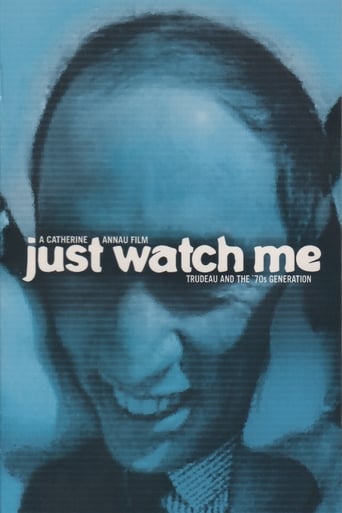
Just Watch Me: Trudeau and the 70's Generation poster
FILM

Canadian director Catherine Annau's debut work is a documentary about the legacy of Pierre Trudeau, the long-running Prime Minister of Canada, who governed during the 1970s. The film focuses particularly on Trudeau's goal of creating a thoroughly bilingual nation. Annau interviews eight people in their mid-30s on both sides of the linguistic divide. One tells of her life growing up in a community of hard-core Quebec separatists, while another, a yuppie from Toronto, recalls believing as a child that people in Montreal got drunk and had sex all day long. Annau has all of the interviewees discuss how Trudeau's policies affected their lives and their perceptions of the other side, in this issue that strikes to the heart of Canada's national identity.
Just Watch Me: Trudeau and the 70's Generation

1999 Documentary
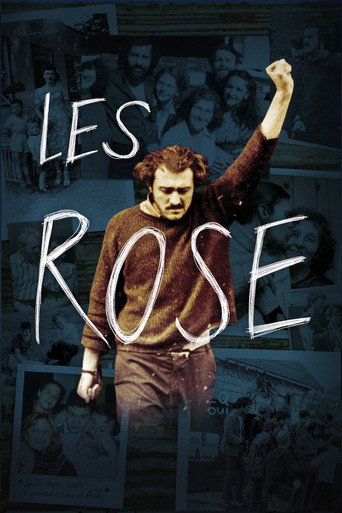
Les Rose poster
FILM

In October 1970, members of the Front de Libération du Québec (FLQ) kidnapped and murdered Minister Pierre Laporte, part of an unprecedented crisis in Quebec. Fifty years later, Félix Rose tries to understand what could have led his father and uncle to commit such crimes. Thanks to his uncle Jacques, who agrees for the first time to speak on the subject, and to the traces left by his father Paul, he revives the heritage of a Quebec working class family. The fruit of ten years of research, Les Rose allows us to revisit a time and people that we knew through clichés, and gives a glimpse of the experiences of a rebellious youth and the crimes that followed.

Les Rose

2020 Documentary
The Black Sheep poster
FILM

From coast to coast, from St. John's, Newfoundland to Vancouver, British Columbia, Jacques Godbout films a documentary chronicle of the political turnaround that was to follow the Meech Lake Accord. Following the Meech referendum, Quebec and Canada found themselves at an impasse after a long and ultimately fruitless negotiation, various social and political actors spoke out. Their comments, linked to film clips on the lives of important Canadian politicians (Sir Georges-Étienne Cartier, John A. Macdonald, Louis-Joseph Papineau...), draw parallels between the speeches of yesterday and those of the post-Meech era.

The Black Sheep

1992 Documentary
Action : The October Crisis of 1970 poster
FILM

A long and thoughtful look at those desperate days of October 1970, when Montréal awaited the outcome of FLQ terrorist acts. This film puts the October Crisis in the long perspective of history. Compiled from news and other films, it shows independence movements past and present, and their leaders; it reflects the mingled relief, dismay, defiance, when the Canadian army came to Montréal; and it shows how political leaders viewed the intervention.

Action : The October Crisis of 1970

1974 Documentary
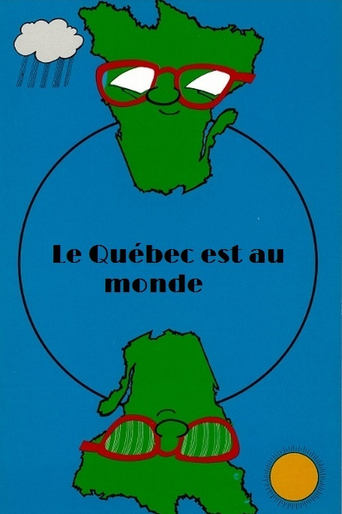
Le Québec est au monde poster
FILM

This film covers the transitional political period between the election of the Parti Québécois on November 15, 1976, and the Canadian federal election that brought Joe Clark to power. Featuring some of our most colourful politicians, historians, journalists, artists and citizens, this film highlights in parallel the convictions of each on the national political question, on the eve of the first Quebec referendum. Montage of newsreels shot between the election of the Parti Québécois on November 15, 1976, and the federal election of 1979.

Le Québec est au monde

1979 Documentary

Closely Ranked

10 Ranked across franchise, crew, cast, themes, genre, era and audience scores
56 Up poster
79% match FILM

When a cross-section of seven-year-olds were interviewed for 7 Up in 1964 it was immediately evident that their social backgrounds influenced their attitudes towards life. While the upper class children were confident and self-assured, those from middle and working class backgrounds were resigned to a challenging life of hard work. This premise was put to the test every seven years when the same group were interviewed about the progression of their lives. 49 years in the making, the changes that occurred to the original 14 make for fascinating television and are in many ways the stories of all our lives. From success and disappointment, marriage and childbirth, to poverty and illness, nearly every facet of life has been captured on film. Now, at the age of 56, the group are once more brought together and, with the benefit of hindsight, assess whether their lives have been ruled by circumstance or self-determination.
56 Up

★ 7.2 2012 Documentary

Viewers also picked